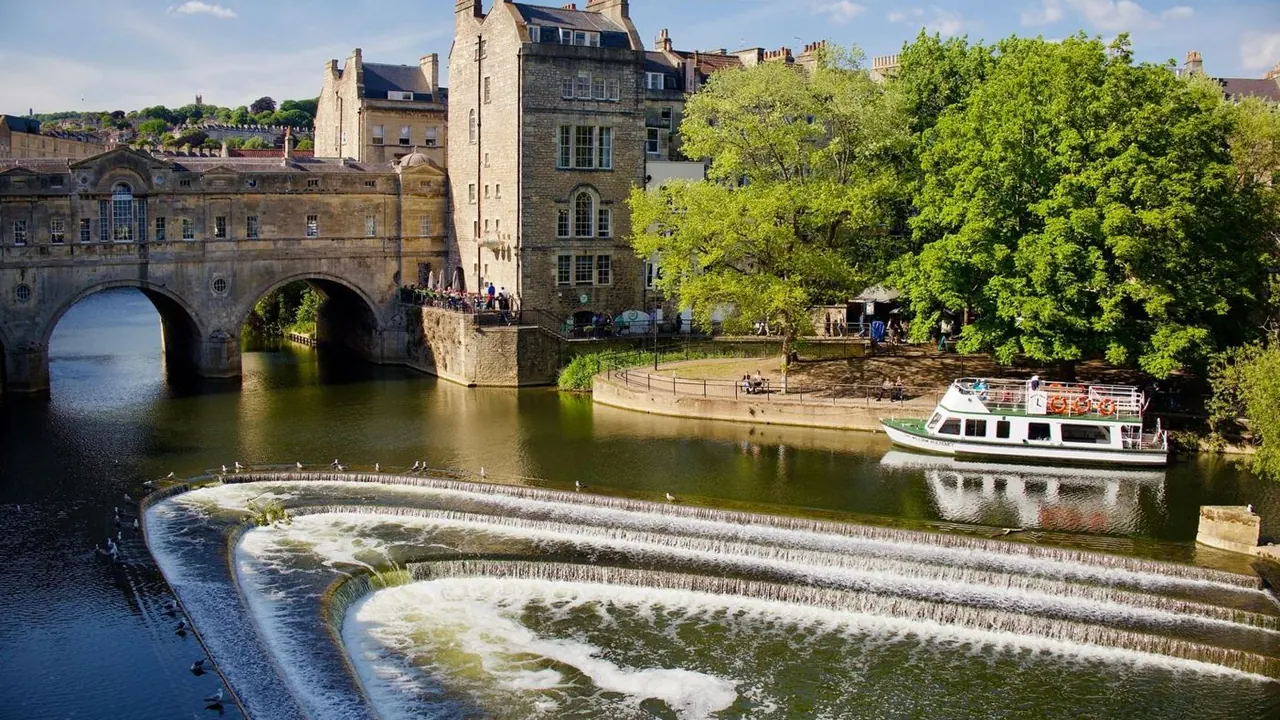
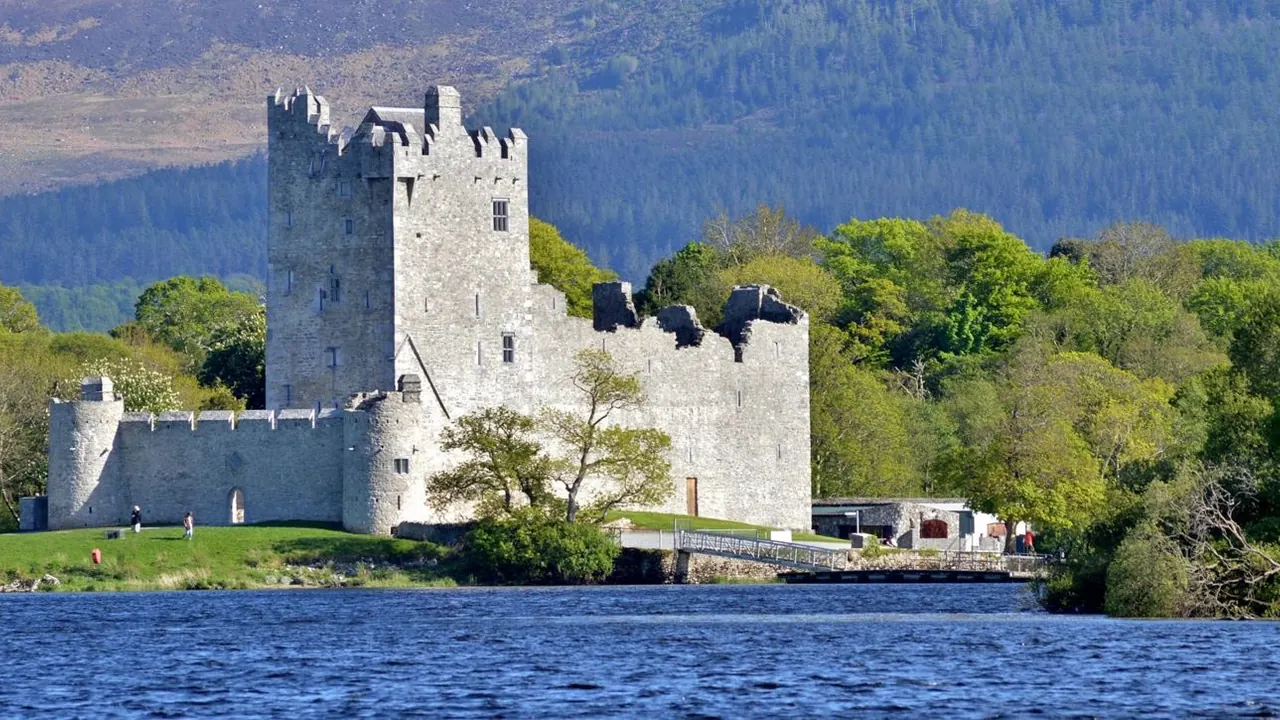
Photos: Bath by Lucas Carlini, Pexels License; Killarney by NicholasH, CC BY-SA 4.0, cropped.
Bath or Killarney?
Our verdict in twelve categories, each scored against the same fixed benchmark cities, and the climate month by month, so you can choose for your trip.
Choose Bath for
- culture and sights
- wellness
- shopping
Bath suits a traveller who wants the town itself to be the attraction. Its Georgian crescents, the Roman Baths and the Abbey are all a short walk from each other, and the hot springs give it a spa you will find nowhere else in Britain. Outings are plentiful too: Bristol is a quick train ride away, while Wells, Stonehenge and the Cotswold villages are best reached by car or on a small-group tour. Bath is a place for strolling, browsing, taking tea and soaking, and you need no car in the city itself.
Choose Killarney for
- nature and the outdoors
- beaches
- prices
Killarney is for people who come to be outside. The national park begins where the streets end, with lakes, old oak woods, red deer and the Reeks rising behind, and the Ring of Kerry and Dingle coasts lie within an hour's drive. The town has few sights of its own and it rains often. Still, walkers and cyclists get far wilder country than Bath's gentle hills, and a crowded pub with a traditional session makes a good end to the day.
Scoreboard
Twelve categories on one fixed scale from 0 to 100. The shaded stretch is the gap between the two.
Your match
Pick a travel style or drag the sliders, and both match scores follow your weighting.
Wins on culture and sights and wellness with your weighting.
Wins on nature and the outdoors and beaches with your weighting.
What matters to you?
Category by category
What the scores mean for a trip.
Beaches & swimming
Neither town has a beach, so this matters only for a day out. From Bath the nearest seaside is Weston-super-Mare, where the water is brown, shallow and the tide retreats a long way. For decent sand you face a long day trip to Dorset or Devon, and a summer river swim in the Avon is the more local option.
Killarney comes out ahead because its nearest beaches are genuinely good to visit. Inch and Rossbeigh are about 40 minutes away, long and wild, good for walking and beginner surf lessons, even if the Atlantic is too cold for most swimmers.
Food & drink
Bath eats better. Its independent restaurants, gastropubs and bakeries around the Abbey and Walcot Street draw on West Country cheese, Somerset cider and south-coast fish, and it has baked goods of its own, the Bath bun and the Sally Lunn bun, plus afternoon tea and a farmers' market at Green Park station.
Killarney has plenty of tables for its size and good raw materials, with Kerry lamb, Dingle seafood, chowder and brown bread, but many menus aim at coach parties. Keen eaters often drive to Kenmare or Dingle. Neither town has much street food or international cooking.
Culture & sights
This is where the two differ most. In Bath the city itself is the sight: the Circus, Royal Crescent, Pulteney Bridge and Assembly Rooms in honey-coloured stone, the Roman Baths and temple beneath them, and the Abbey alongside. Smaller museums such as the Holburne and No. 1 Royal Crescent fill two or three days.
Killarney's heritage lies at the park's edge rather than in town: Muckross House and its gardens, Ross Castle on Lough Leane and the ruined Muckross Abbey, with Pugin's cathedral in the centre. It makes a pleasant day, but the streets themselves have little to visit.
Nightlife
Both have small-town evenings, but they feel different. Bath's nights revolve around old coaching inns, real-ale pubs and a few wine and cocktail bars, with student clubs in term time, and it goes quiet early on weeknights. Bristol, fifteen minutes by train, is the place for a bigger night.
Killarney is louder and more sociable in summer, with the pubs on High Street and Plunkett Street packed with visitors and locals, and a few late bars after closing. It is a pint-and-conversation town with no cocktail or club scene, and winter weeknights are subdued.
Nature & outdoors
Killarney is the stronger choice for scenery, by a wide margin. The national park offers three lakes, ancient oak and yew woods, Torc Waterfall and native red deer on flat paths, with MacGillycuddy's Reeks, Ireland's highest peak and the Gap of Dunloe beyond. The Kerry Way and the Dingle and Beara coasts add cliff walks and sea kayaking.
Bath's countryside is softer and closer to hand: the Skyline loop over the ridges, the Kennet and Avon towpath, the Two Tunnels Greenway for cyclists and the southern Cotswolds and Cheddar Gorge within an hour. It is lovely rolling England, but not wild.
Day trips
Bath has the richer choice. Bristol is fifteen minutes away by train, and Stonehenge, Avebury, Wells, Glastonbury, Lacock, Bradford-on-Avon, Salisbury and the Cotswold villages are all within about an hour, so you could fill a week with cathedrals, stone circles and stately homes.
Killarney's outings are mostly drives through landscape: the Ring of Kerry, Kenmare over Moll's Gap and the port of Dingle. Skellig Michael is the great prize when summer seas allow a landing, and Cork with Blarney Castle is the main city trip.
Good for families
Bath is a little easier with children, mostly because of what lies close by. The steaming Roman Baths and Royal Victoria Park's playground please younger visitors, and Bristol's science centre, aquarium and wildlife park and the Longleat safari park are short trips away, though the steep streets are hard on pushchairs.
Killarney's best family days are outdoors: flat lakeside paths for bikes and buggies, deer, jaunting cars, boat trips and Muckross Traditional Farms. A wet day is harder to fill, with few indoor attractions within reach.
Getting around
Both centres are compact, but Bath is easier to manage overall. The main sights are about twenty minutes end to end, largely pedestrianised, with direct trains to Bristol and London, and park-and-ride for drivers. A car only becomes useful for the outlying villages.
In Killarney you can walk the town and cycle traffic-free paths to Muckross House, about 6km out, but the wider region needs a hire car or a tour, on narrow roads shared with summer coaches.
Shopping & style
Bath is far better for a day of browsing. Milsom Street's Georgian shopfronts, the chains at SouthGate, antiques on Bartlett Street, the makers and salvage dealers of Walcot Street, the old Guildhall Market and the shops on Pulteney Bridge give real variety, if no luxury tier.
Killarney's shopping is a few streets of knitwear, tweed, Celtic jewellery and souvenirs. It is good for an Aran sweater and an hour's wander, but serious shoppers head to Cork.
Affordability
Neither is cheap, but Killarney goes a little further. Its many family-run B&Bs keep rooms reasonable outside July and August, and the national park costs nothing to walk or cycle, though meals, drinks and car hire add up.
Bath's central hotels are dear and fill early on summer weekends and at Christmas, and the Roman Baths and spa are costly. Walking everywhere and eating pub lunches help, and sleeping in Bristol saves the most.
Live music & performing arts
Bath offers the broader stage. The gilded Georgian Theatre Royal runs drama, opera, dance and pantomime year-round, with a studio and a children's theatre, and there are concerts in the Abbey and Assembly Rooms and festivals of literature, music and Mozart.
Killarney's strength is traditional music: fiddle and bodhrán sessions in the pubs most nights in season, plus dinner shows with set dancing. There is no theatre scene in town, but the National Folk Theatre, Siamsa Tíre, is in Tralee nearby.
Wellness & relaxation
Bath is in a class of its own here, because it sits on Britain's only natural hot springs. You can soak in the rooftop pool at Thermae Bath Spa with the Abbey lit up after dark, or in the small Georgian Cross Bath, then take tea in the Pump Room.
Killarney has no bathing tradition, but it does have plenty of country and lakeside hotels with full spas and mountain views. A slow stay of long walks and spa afternoons works well, best away from the busy summer centre.
When should you go?
Pick your month. The climate figures are measured averages, not a forecast.
Bath in July
Killarney in July
Daytime high, °C
Rainfall in the month, mm
Where the figures come from
Bath's temperatures are measured 29 km from the centre, at Lyneham.
Bath has no rain gauge within 25 km of the centre, so its rainfall comes from a gridded climate dataset read at the city rather than from a gauge further away.
Killarney's temperatures are measured 53 km from the centre, at Valentia Observatory.
Killarney has no rain gauge within 25 km of the centre, so its rainfall comes from a gridded climate dataset read at the city rather than from a gauge further away.
Temperature and rainfall are climate normals, averaged over the years shown. Bath: 1991-2020 normals, Lyneham (29.2 km from centre). Killarney: 1991-2020 normals, Valentia Observatory (52.7 km from centre).
Neither city is a beach destination at any time of year. The sea stays cool even in late summer, a little warmer on the Bristol Channel than off Kerry, so the coast is for walking rather than swimming. Bath has the warmer and sunnier summer, with afternoons around 21°C in July and August, so May to September are the easy months for walking the streets and the Skyline. Winter is colder, around 7°C, and October to January is its wettest stretch. A grey December day is a good excuse for the rooftop thermal pool.
Killarney is milder and much wetter. Summer highs reach only about 18°C and winters stay near 10°C, but from October to January the rain runs close to 160mm a month, roughly twice what Bath gets in its own wettest season. Even the drier stretch from April to June brings frequent showers. May has the most sunshine of the year, though, and is often the best month for the hills, the Gap of Dunloe and the lakes.
Which traveller are you?
On a culture and arts trip, Bath is the clear choice. The whole city is a World Heritage townscape, with the Roman Baths, the Royal Crescent, the Abbey, small museums and a Georgian theatre, all reachable on foot within a few minutes.
For an outdoors trip, Killarney wins comfortably. The national park's lakes, woods and waterfall start at the edge of town, Carrauntoohil and the Gap of Dunloe are close by, and the Kerry Way and coastal cliff walks offer days of walking and cycling.
On a relaxing and wellness trip, Bath has the edge thanks to its natural hot springs. Bathing in real thermal water on a rooftop above the Abbey is unique in Britain, though Killarney's lakeside hotel spas suit a slow stay of walks and treatments.
Before you go
| Measure | Bath | Killarney |
|---|---|---|
| Official language | English | English, Irish |
| Currency | Pound Sterling (GBP) | Euro (EUR) |
| Sockets | G230 V, 50 Hz | G230 V, 50 Hz |
| Driving side | Left | Left |
| Time zone | UTC, UTC+1 in summer | UTC, UTC+1 in summer |
| Emergency number | 112 or 999 | 112 |
| Elevation | 132 m | 50 m |
| Main airport | Bristol Airport (BRS)25 km from centre117 non-stop destinations | Kerry Airport (KIR)14 km from centre10 non-stop destinations |
| Public holidays this year | 8 days | 11 days |
By the numbers
| Measure | Bath | Killarney |
|---|---|---|
| City population | 94,092 | 14,412 |
| People per km² | 3,245 | - |
| Museums within 10 km | 17 | 1 |
| UNESCO World Heritage sites within 50 km | 2 | 0 |
| Swim season, months above 21 °C | None | None |
Where else could you go?
Every comparison below shares a destination with this one, so you can follow Bath or Killarney somewhere new.