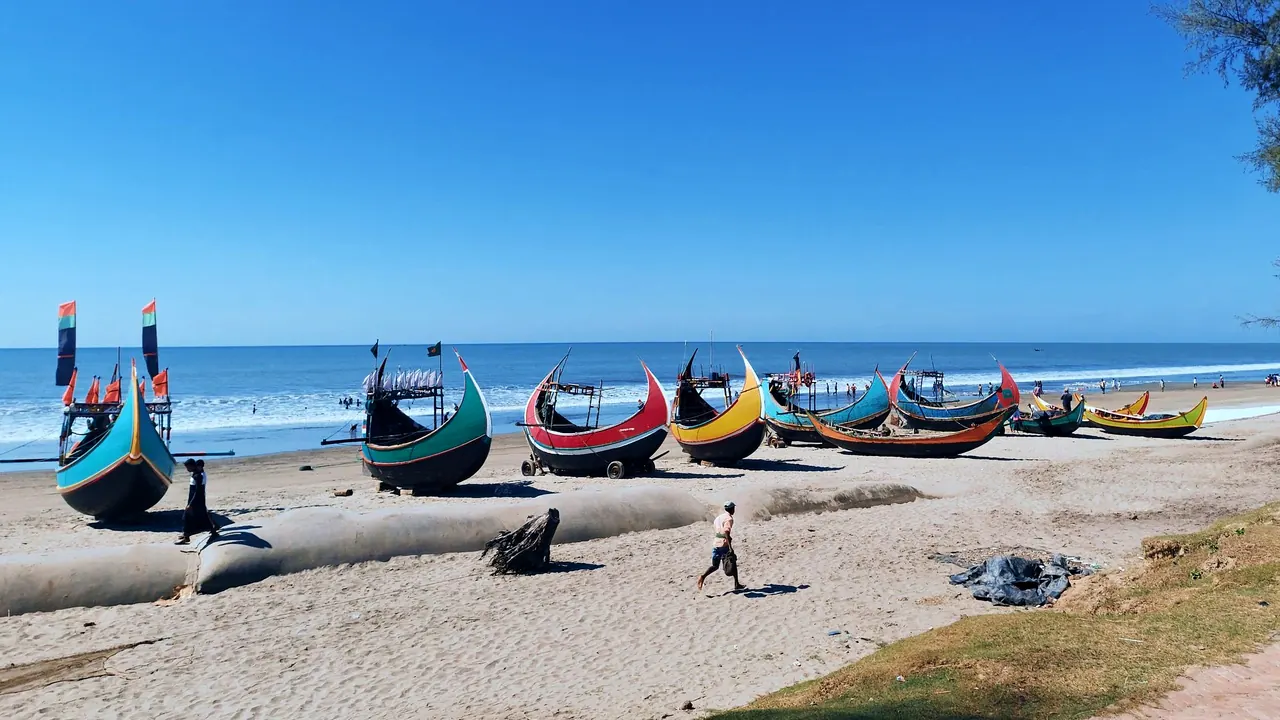
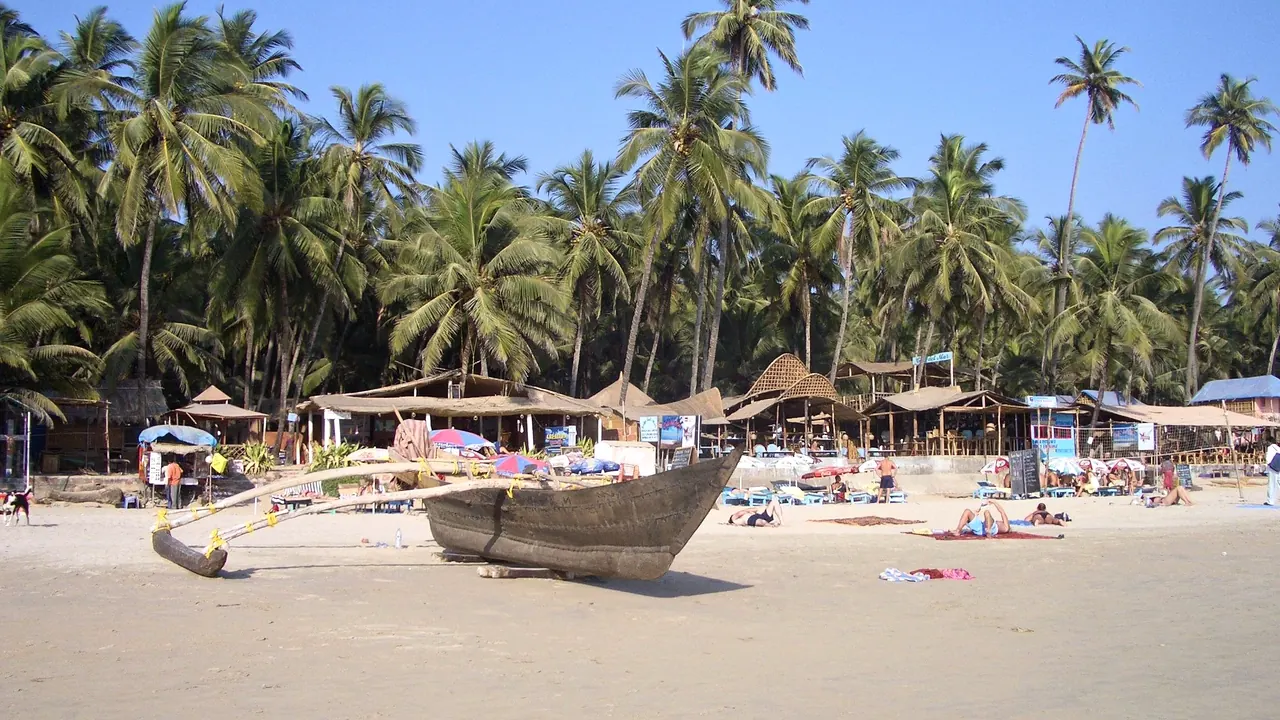
Photos: Cox's Bazar by Jubayer Ahmed, Pexels License; Goa by Klaus Nahr from Germany, CC BY-SA 2.0, cropped.
Cox's Bazar or Goa?
Our verdict in twelve categories, each scored against the same fixed benchmark cities, and the climate month by month, so you can choose for your trip.
Choose Cox's Bazar for
- prices
- getting around
Cox's Bazar suits a traveller who wants to see Bangladesh at the seaside rather than an international resort. Its pull is one enormous strand of sand running south towards Teknaf, the Marine Drive between beach and forested hills, and the Rakhine monasteries at Ramu, all at very low cost. Go knowing that the town has a domestic crowd, beachwear is modest, alcohol is scarce and evenings end early.
Choose Goa for
- nightlife
- wellness
- culture and sights
For almost any other kind of beach vacation, Goa is the better pick. The winter sea is calmer and the skies clearer, and the coast has variety, from palm-fringed coves in the south to club strips in the north. On top of that come a cuisine of its own, the Portuguese churches of Old Goa and yoga in quiet villages like Mandrem and Agonda. It costs more, and the coast is long enough that you should choose one stretch and stay there.
Scoreboard
Twelve categories on one fixed scale from 0 to 100. The shaded stretch is the gap between the two.
Your match
Pick a travel style or drag the sliders, and both match scores follow your weighting.
Wins on prices and getting around with your weighting.
Wins on nightlife and wellness with your weighting.
What matters to you?
Category by category
What the scores mean for a trip.
Beaches & swimming
Cox's Bazar has one beach, but a remarkable one: a continuous strand running far down towards Teknaf. In town, Laboni, Sugandha and Kolatoli fill with families at sunset. The sea is murky, rips are strong, and bathing is done in clothes, so foreign women in swimwear will be stared at.
Goa's coast is better for actually swimming. In season the surf is gentler, the sea is warmer and the beaches vary: busy Baga and Calangute, wide Morjim and Mandrem, and the palm-backed coves of Palolem and Agonda in the south. Swimwear raises no eyebrows on its tourist beaches.
Food & drink
Goa eats far more interestingly. Its cooking blends Konkan coastal food with Portuguese influence: vindaloo, sorpotel, chouriço, poi bread in the mornings and bebinca for dessert. The best of it is found in family restaurants in Panjim, Margao and the inland villages.
In Cox's Bazar a meal means pomfret or prawns fried at a beach stall, Bengali fish curries and bhortas, or Rakhine noodles. The choice is narrow beyond that, and with alcohol confined to a few hotels there is nothing like Goa's beer on the sand or feni.
Culture & sights
The gap here is wide. Cox's Bazar is a strip of concrete hotels whose main sight is the wooden Aggmeda Khyang monastery. Its richer Buddhist heritage lies out of town at Ramu and on Maheshkhali.
Goa can fill several days. There are the UNESCO-listed churches of Old Goa, including Bom Jesus with the relics of St Francis Xavier, the coloured lanes of Fontainhas in Panjim, the old mansions of Chandor and Loutolim, and Hindu temples around Ponda. The catch is that these sights are scattered rather than gathered in one historic centre.
Nightlife
Nights in Cox's Bazar mean a sunset stroll, snacks from the stalls and the lit-up markets. There are no clubs, and the town goes quiet once the restaurants close.
North Goa is one of India's best-known places for a night out. It has club strips at Baga and Calangute, electronic music on the clifftops at Anjuna and Vagator, and cocktail bars around Assagao. Christmas and New Year are loudest. If you want quiet evenings, South Goa still has them.
Nature & outdoors
These two are roughly even, but the outdoors differs in kind. Cox's Bazar has the Marine Drive running between surf and forested hills, paragliding from Himchari, wild elephants in the Teknaf sanctuary and boat trips through mangroves to Maheshkhali and Sonadia.
Goa looks inland to the Western Ghats. It has jungle sanctuaries, the tiered Dudhsagar Falls, kayaking on the Mandovi and Zuari rivers, hornbills in the dry months and dolphin boats from Palolem. In both places the heat and the monsoon keep walks short.
Day trips
Goa has more within easy reach. Most outings stay in the state: an afternoon in Panjim, market day in Mapusa, spice farms near Ponda and the ferry to Divar island. Gokarna and the Sindhudurg sea fort are two hours across the state borders.
From Cox's Bazar, the good half day is Ramu's monasteries and reclining Buddha, and the boat to Maheshkhali's hilltop Adinath temple is another option. Teknaf makes a long day. The best-known excursions, Saint Martin's Island and the Bandarban hills, both need a night away, as Hampi does from Goa.
Good for families
Goa works better with children, mainly because the resorts on the long, flat sands of Benaulim, Varca and Cavelossim have pools and the winter water is shallow and warm. Beyond that there is little made specially for children.
Cox's Bazar gives children plenty of sand, kites and pony rides, plus the Dulahazara safari park an hour away. But the surf is dangerous for small swimmers and the beaches are packed over Eid. On both coasts, the roads and the care needed with food and water take some managing.
Getting around
Cox's Bazar is a little easier, because its hotels are concentrated. The strip from Laboni to Kolatoli can be walked along the sand, and battery rickshaws and CNGs cover the rest cheaply. Anything further, such as Ramu or the Marine Drive, means a car with a driver.
Goa is spread along a long coast with weak buses and taxis that cost more than you expect, so most visitors rent a scooter. Driving from the northern beaches to the southern ones can take two hours, which is why it pays to base yourself in one area.
Shopping & style
Neither coast is a place for fashion, but Goa has more to browse. The Anjuna flea market and the Arpora night market sell shawls, textiles and silver. Mapusa's Friday market is more local, and a few boutiques in Panjim and Assagao stock linen and tiles.
Cox's Bazar's shopping centres on its Burmese markets, which sell Myanmar sandals, lacquerware and lungis, along with shell craft and cultured pearls on the beach road and sacks of dried fish in the bazaar.
Affordability
Cox's Bazar is the cheaper of the two for a foreigner. Guesthouses, seafood suppers and hired drivers cost very little, though the better resorts are pricey for Bangladesh and fill up in winter and over Eid. Goa is good value internationally but not by Indian standards. Rates jump around Christmas, and on a budget it is best to stay in a hut in the quieter southern or far northern villages.
Live music & performing arts
Goa has a modest stage life where Cox's Bazar has almost none. Panjim's Kala Academy holds concerts, dance and drama on the riverfront, and there is a December arts festival in the old buildings, Carnival parades and Konkani tiatr. In Cox's Bazar, the best you will find is Rakhine dancing at the Buddhist new year or a resort cultural evening.
Wellness & relaxation
Goa is one of India's centres for yoga and ayurveda. Shalas and treatment centres cluster in Mandrem, Arambol, Agonda and Patnem, with polished resort spas at Cavelossim, and the southern beaches have a hammock-and-early-night pace.
Cox's Bazar has no comparable tradition, and its town is noisy in season. Peace there means a garden resort out on the Marine Drive with a pool and a massage room, or coming after the winter crowds have gone.
When should you go?
Pick your month. The climate figures are measured averages, not a forecast.
Cox's Bazar in July
Goa in July
Daytime high, °C
Rainfall in the month, mm
Temperature and rainfall are climate normals, averaged over the years shown. Cox's Bazar: 1982-2025, 17 years observed (sunshine 1991-2020, rainfall 1991-2020) normals, Cox's Bazar (4.1 km from centre). Goa: 1991-2020 normals, Goa / Panjim (9.4 km from centre).
Both coasts follow the same monsoon rhythm, so both are dry-season destinations, roughly November to March. They feel different in that season, though. Cox's Bazar is pleasantly warm in winter, around 27°C in January, which makes walking the markets and the Himchari trails comfortable. Its sea cools to about 24°C, fine for paddling but less inviting for long swims. On Goa's resort coast it stays hot right through the season, in the low to mid 30s, with a bath-warm sea and more sunshine, so midday is for the water and sightseeing is for the mornings.
Goa also stays dry for longer. April is still almost rainless there, while Cox's Bazar is already getting regular showers, and by May the Bangladeshi coast is properly wet while Goa has only pre-monsoon showers. From June to September both are soaked, with July bringing more than 900mm to each, rough seas and no swimming. October is a wet, muggy shoulder month on both coasts.
Which traveller are you?
For a food and nightlife trip, Goa is the clear choice. It has Goan dishes like xacuti and balchão, feni and beer at the shacks, and clubs and clifftop parties in Baga, Anjuna and Vagator. Cox's Bazar offers fried seafood and quiet streets after dinner.
On a relaxing and wellness trip, Goa again. Yoga shalas sit among the palms at Arambol, Mandrem, Agonda and Patnem, with ayurvedic treatment centres alongside. In Cox's Bazar, rest means retreating to a resort pool along the Marine Drive, away from the noisy town.
On a trip on a tight budget, Cox's Bazar goes further. Seafood dinners, rickshaw rides, guesthouses and a driver for the day all cost very little. Goa is cheap by international standards but pricier for India, and taxis especially add up.
Before you go
| Measure | Cox's Bazar | Goa |
|---|---|---|
| Official language | Bangla | Hindi, English |
| Currency | Taka (BDT) | Indian Rupee (INR) |
| Sockets | ACGK220 V, 50 Hz | CM230 V, 50 Hz |
| Driving side | Left | Left |
| Time zone | UTC+6 | UTC+5:30 |
| Emergency number | 999 | 108 or 112 |
| Elevation | 3 m | - |
| Main airport | Cox's Bazar Airport (CXB)6 km from centre1 non-stop destination | Goa Dabolim International Airport (GOI)24 non-stop destinations |
| Public holidays this year | 7 days | - |
By the numbers
| Measure | Cox's Bazar | Goa |
|---|---|---|
| Population | 196,374 | 1,458,545 |
| People per km² | 303 | 394 |
| Museums within 10 km | 0 | - |
| UNESCO World Heritage sites within 50 km | 0 | - |
| Swim season, months above 21 °C | 12 months | 12 months |
Where else could you go?
Every comparison below shares a destination with this one, so you can follow Cox's Bazar or Goa somewhere new.
- Baganvs Cox's Bazar
- Dhakavs Cox's Bazar
- Kolkatavs Cox's Bazar
- Mumbaivs Goa
- Bengaluruvs Goa
- Lakshadweepvs Goa