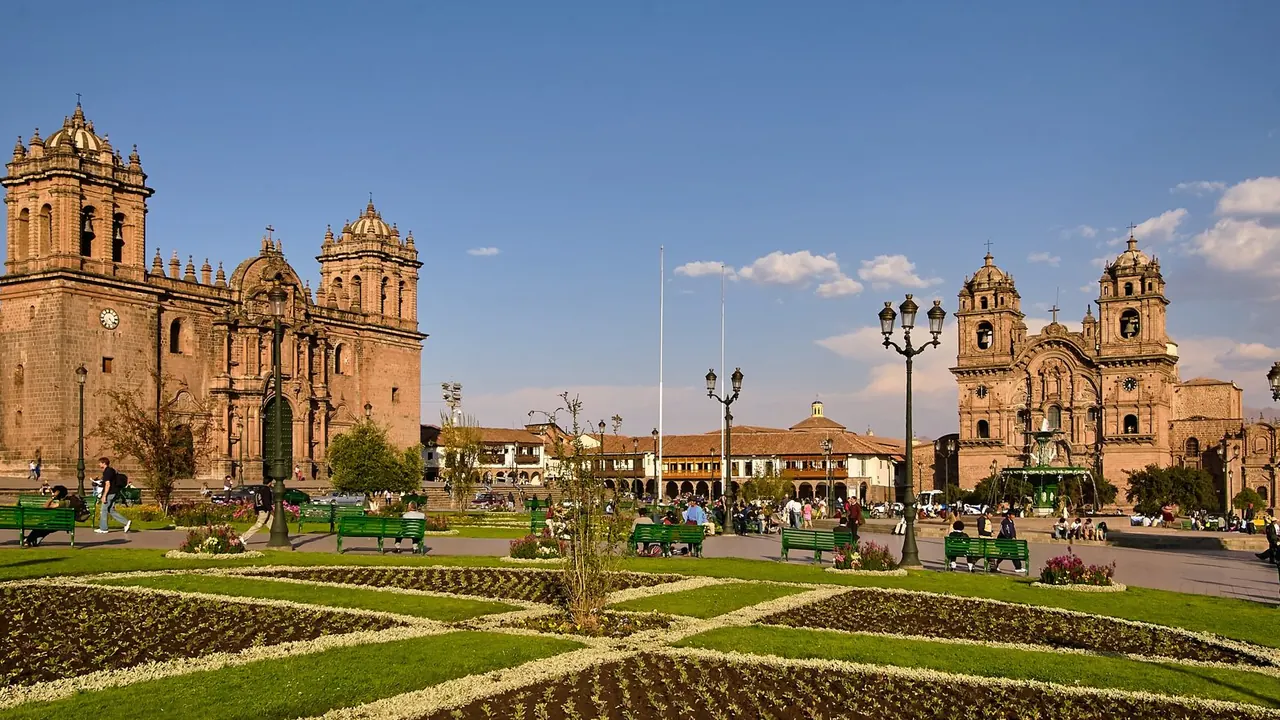
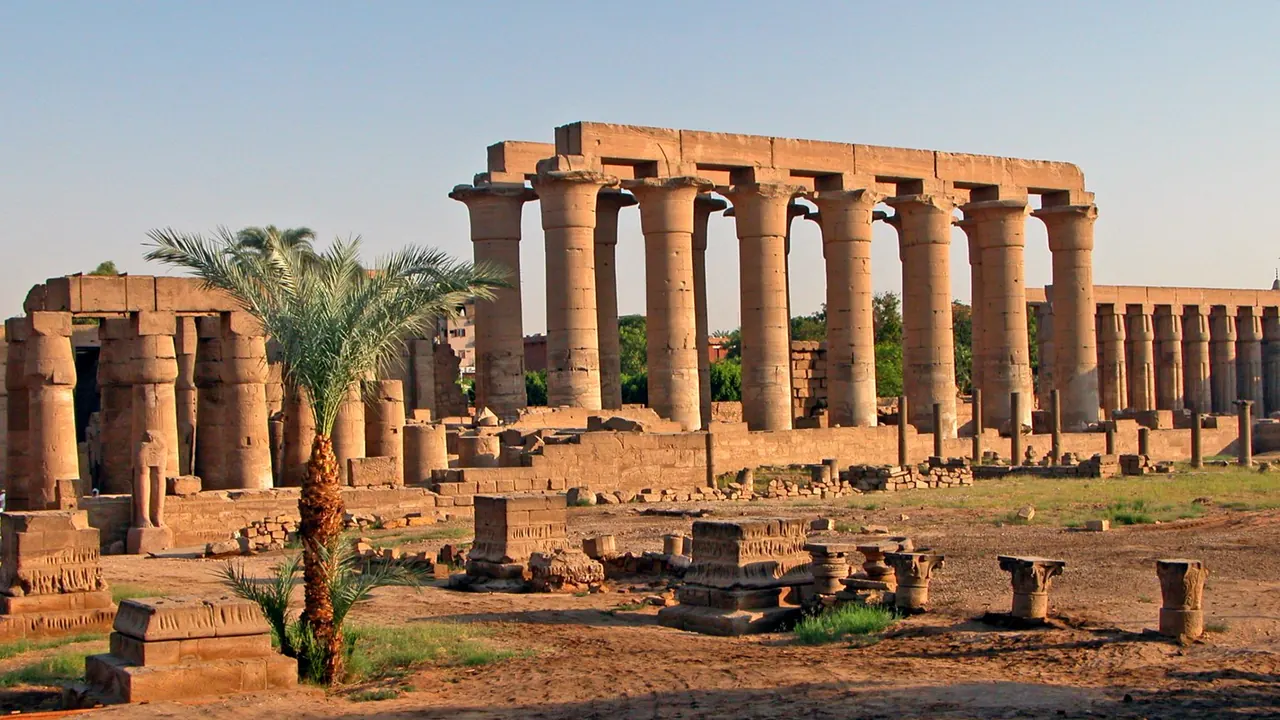
Photos: Cusco by Pedro Szekely, CC BY-SA 2.0, cropped; Luxor by Dennis G. Jarvis, CC BY-SA 2.0, cropped.
Cusco or Luxor?
Our verdict in twelve categories, each scored against the same fixed benchmark cities, and the climate month by month, so you can choose for your trip.
Choose Cusco for
- nature and the outdoors
- nightlife
- shopping
Cusco suits travellers who want mountains as much as monuments. The Inca city is the base, but the trip is just as much the Sacred Valley, Machu Picchu and the high treks to glacial lakes and coloured ridges. It also eats better, shops better for textiles and has more going on after dark. The cost is altitude: thin air, steep cobbles and cold nights make it a poor choice for small children or anyone after an easy pace.
Choose Luxor for
- families
- prices
- culture and sights
Luxor is for the traveller whose main interest is ancient Egypt. Karnak, Luxor Temple and the tombs and temples of the West Bank make up one of the richest concentrations of monuments anywhere, and the stay costs very little apart from the entry fees. Beyond the sites there is little: plain food, quiet evenings and fierce summer heat. In the cool months, with a felucca at sunset and a hotel pool in the afternoon, it is a simpler and more restful trip than Cusco.
Scoreboard
Twelve categories on one fixed scale from 0 to 100. The shaded stretch is the gap between the two.
Your match
Pick a travel style or drag the sliders, and both match scores follow your weighting.
Wins on nature and the outdoors and nightlife with your weighting.
Wins on families and prices with your weighting.
What matters to you?
Category by category
What the scores mean for a trip.
Beaches & swimming
Neither city has any beach life, so a sea day means a separate trip from both. Cusco is the harder case. It lies high in the Andes with cold nights and glacial water, and the Pacific is a flight away.
Luxor at least gives you somewhere to swim. Most riverside hotels have a good pool, which is welcome in the desert heat, and the Red Sea coast around Hurghada is about four hours away by road, close enough to add a few days of sand and warm water at the end.
Food & drink
Cusco is the better place to eat. Highland cooking has real depth, with many kinds of potato and maize, river trout, alpaca, picantería stews and the San Pedro market. San Blas and the streets around the Plaza de Armas add Novoandino tasting menus that do interesting things with native ingredients.
Luxor eats simply. Ful, taameya, koshari and fresh flatbread are good and honest, and the home cooking in West Bank guesthouses is often the best meal of a stay. Visitor dining, though, relies on hotel buffets and rooftop views more than on the cooking, and there is little drinking culture.
Culture & sights
Both are ancient capitals, but Luxor's heritage is on another scale. Ancient Thebes covers both banks of the Nile. Karnak's Great Hypostyle Hall, the floodlit Luxor Temple, the painted royal tombs and the temples at Deir el-Bahari and Medinet Habu fill several full days.
Cusco is more compact, and two eras are layered on top of each other. Inca walls such as Hatun Rumiyoc carry Spanish churches, Qorikancha holds up the Santo Domingo monastery, and Sacsayhuamán looms above the town. Cusco also has a colonial old town worth wandering in its own right, while modern Luxor is plain.
Nightlife
Cusco has a real if small night scene. Bars and clubs just off the Plaza de Armas fill with backpackers and trekkers, some stay open late at weekends, and San Blas has quieter cocktail and craft beer bars.
In Luxor, an evening out means a hotel bar or a rooftop terrace, or tea and shisha in a street café while families stroll the corniche. In both places the early starts for tours keep nights short, but only Cusco offers anything you could call a night out.
Nature & outdoors
This is where the two cities differ most. Cusco opens onto the high Andes: the terraced Sacred Valley under the Cordillera Urubamba, Humantay lake, Vinicunca at over 5,000m, multi-day treks, rafting, and condors and vicuñas on the puna.
Luxor's landscape is one striking contrast, a green strip along the Nile set against bare desert cliffs. The pleasures are gentle: a felucca at sunset, birds on the river islands, cycling past West Bank fields and a walk over the Theban hills. For much of the year the heat limits even these to early mornings.
Day trips
Cusco has more good days out within reach. Pisac, Ollantaytambo, Chinchero, Moray and the Maras salt pans are all in the Sacred Valley, Tipón and Andahuaylillas lie to the south-east, and Machu Picchu is the great prize, though it really needs an overnight stay.
Luxor's excursions are temple runs along the river. Dendera, Esna and Edfu are each outstanding and all can be reached in under two hours. Abydos makes a longer day. Both lists stick to one theme, but Cusco's mix of living villages, farmland and ruins gives more variety than temple after temple.
Good for families
Neither is easy with young children, but Luxor is the less difficult of the two. The main dangers there are heat and long walks with no shade, which a hotel pool, short morning outings and a winter visit can deal with. Older children who love mummies will remember the tombs, a felucca and a balloon at dawn.
Cusco adds altitude sickness, which small children may not be able to describe, as well as steep cobbles and narrow pavements. Families with young children often spend most of their time in the lower Sacred Valley, where the llamas and alpacas are the highlight.
Getting around
Cusco's centre is small and walkable from the Plaza de Armas, and taxis are cheap for the climb back uphill. The challenge is the gradient in thin air, plus cobbles. Trips into the valley rely on tours, drivers or shared minibuses, and Machu Picchu has its train.
Luxor is split by the river. The East Bank sights are a walk or a calèche ride apart, and the ferry crossing is simple. The West Bank sites, though, are spread across kilometres of desert edge, so you need a driver for the day, and agreeing fares before every ride makes getting about more tiring than in Cusco.
Shopping & style
Cusco gives you a real reason to shop: alpaca knitwear, woven blankets and naturally dyed textiles from cooperatives such as those in Chinchero, plus ceramics and silverwork from the San Blas workshops. You still need to look past the factory-made stock around the main square.
Luxor's souk and site stalls sell spices, scarves, papyrus and galabiyas, much of it mass-produced, and the sellers are persistent. The hand-carving at the West Bank alabaster workshops is the one thing worth seeking out.
Affordability
Both are cheap places to stay and eat, and in both the big sights take most of the money. Luxor goes further for everyday spending. Even its grand riverside hotels are good value, and the ferry costs almost nothing. The main expense is entry fees at every temple and tomb, which add up over several days.
Cusco's daily costs are also low, and a combined ticket covers many sites. The Machu Picchu train and entry, and guided treks such as the Inca Trail, are heavier and hard to avoid, so a Cusco trip usually costs more overall.
Live music & performing arts
Cusco's festival calendar gives it a stage that Luxor has no equivalent for. Inti Raymi re-enacts the Inca sun festival at Sacsayhuamán around the June solstice, and Corpus Christi and the Qoyllur Rit'i pilgrimage fill the streets and high hills with masked dancers. On ordinary evenings there are folkloric dance shows in the centre and panpipe and charango bands over dinner, though there is little formal theatre or classical music.
Luxor's one regular performance is the sound-and-light show at Karnak, where you walk through the floodlit temple. Beyond that, belly dance and tanoura whirling are staged in hotels and on cruise boats, so the evening entertainment here is the monuments rather than anything on a stage.
Wellness & relaxation
In Cusco, rest usually means leaving the city. Around the main square there is cheap massage on every street and there are hotel spas, some pumping oxygen into the rooms, but the altitude, cold nights and pre-dawn tour departures make the city itself a tiring base. The real calm is down in the Sacred Valley, where riverside lodges offer yoga and gardens.
In Luxor, rest comes from the shape of the day rather than from treatments: a long afternoon by the pool, then sunset on the water. Spas are found in the larger riverside hotels, some with a hammam, and the mud-brick guesthouses among the West Bank fields are the quiet place to stay, while the East Bank's traffic and touts are anything but restful. Neither has a bathing tradition, and the two come out about even. Each is restful only once you get away from its busy centre.
When should you go?
Pick your month. The climate figures are measured averages, not a forecast.
Cusco in July
Luxor in July
Daytime high, °C
Rainfall in the month, mm
Where the figures come from
Cusco's station stands 151 m below the city centre, so the centre is likely a little cooler than the figures say.
Luxor has no rain gauge within 25 km of the centre, so its rainfall comes from a gridded climate dataset read at the city rather than from a gauge further away.
Temperature and rainfall are climate normals, averaged over the years shown. Cusco: 1991-2020 normals, Cuzco (3.7 km from centre). Luxor: 1998-2020 (rainfall 1991-2020) normals, Luxor (6.5 km from centre).
The two cities have nearly opposite climates. Cusco stays mild by day all year, with highs around 20°C in every month, so the question there is rain. May to September is the dry season, with clear skies and freezing nights, and it is the best time for trekking and long days in the Sacred Valley. Rain builds from October and peaks in January at about 159mm, when trails turn muddy and the mountains hide in cloud, though the valley is at its greenest.
Luxor has almost no rain at all, so the question there is heat. November to February is the time for walking the temples, with highs from the low to high twenties. From April the heat builds, and from June to August it reaches about 41°C, which limits sightseeing to the first hours after dawn. The best months for each city barely overlap. Cusco is at its best in the southern winter and Luxor in the northern one.
Which traveller are you?
On an outdoors trip, Cusco is the clear choice. The Inca Trail, Salkantay and Ausangate, day hikes to Humantay and Rainbow Mountain, and rafting on the Urubamba add up to real mountain country. Luxor's outdoor life is mostly felucca sailing and gentle cycling.
On a culture and arts trip built around great sights, Luxor goes further. Karnak, the Valley of the Kings, Hatshepsut's temple and the Tombs of the Nobles take several days to see properly. Cusco's Inca stonework is superb but smaller in scale, although it does have more live dance and festivals.
On a trip with a tight budget, Luxor stretches money further. Guesthouses, local food and the river ferry cost very little, and temple fees are the main expense. Cusco is cheap day to day, but the Machu Picchu train and guided treks take a large share of any budget.
Before you go
| Measure | Cusco | Luxor |
|---|---|---|
| Official language | Spanish, Aymara, Quechua | Arabic |
| Currency | Sol (PEN) | Egyptian Pound (EGP) |
| Sockets | ABC220 V, 60 Hz | CF220 V, 50 Hz |
| Driving side | Right | Right |
| Time zone | UTC-5 | UTC+2, UTC+3 in summer |
| Emergency number | 111 or 911 | Police 122, ambulance 123, fire 180 |
| Elevation | 3,399 m | 89 m |
| Main airport | Alejandro Velasco Astete International Airport (CUZ)5 km from centre6 non-stop destinations | Luxor International Airport (LXR)7 km from centre29 non-stop destinations |
| Public holidays this year | 16 days | 15 days |
By the numbers
| Measure | Cusco | Luxor |
|---|---|---|
| City population | 428,450 | 202,232 |
| People per km² | - | 486 |
| Museums within 10 km | 11 | 4 |
| UNESCO World Heritage sites within 50 km | 2 | 1 |
Where else could you go?
Every comparison below shares a destination with this one, so you can follow Cusco or Luxor somewhere new.