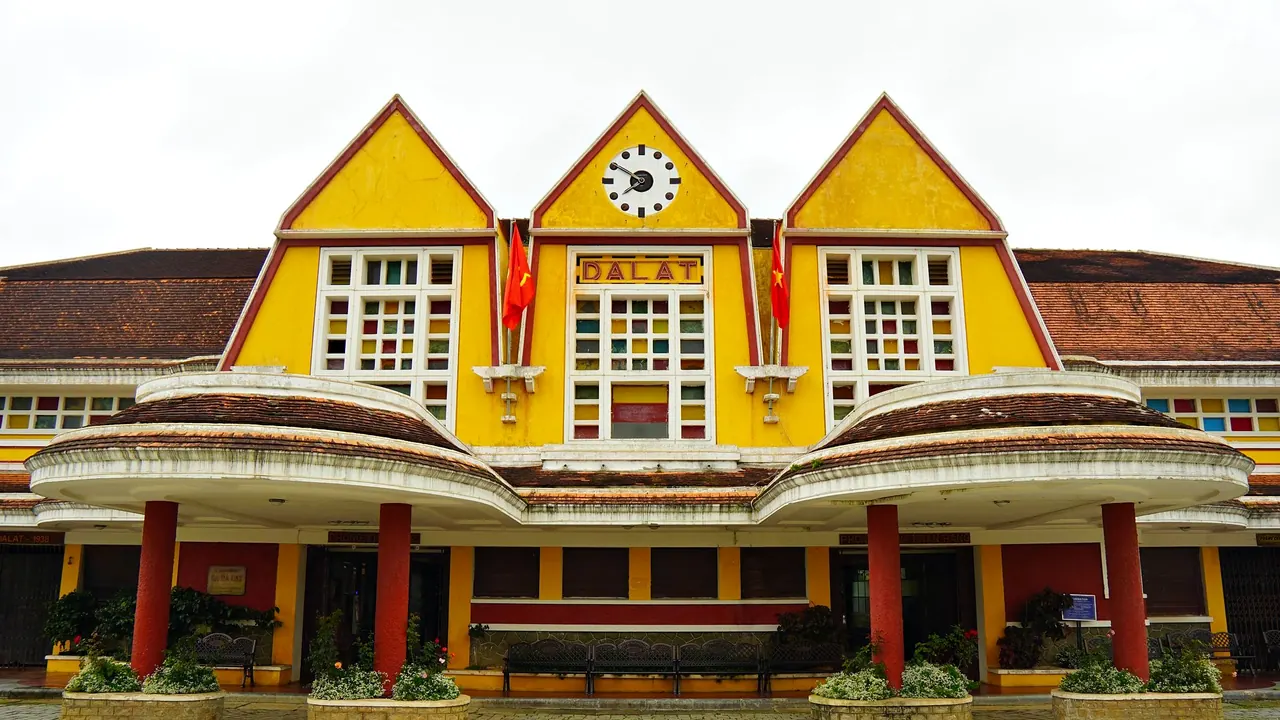
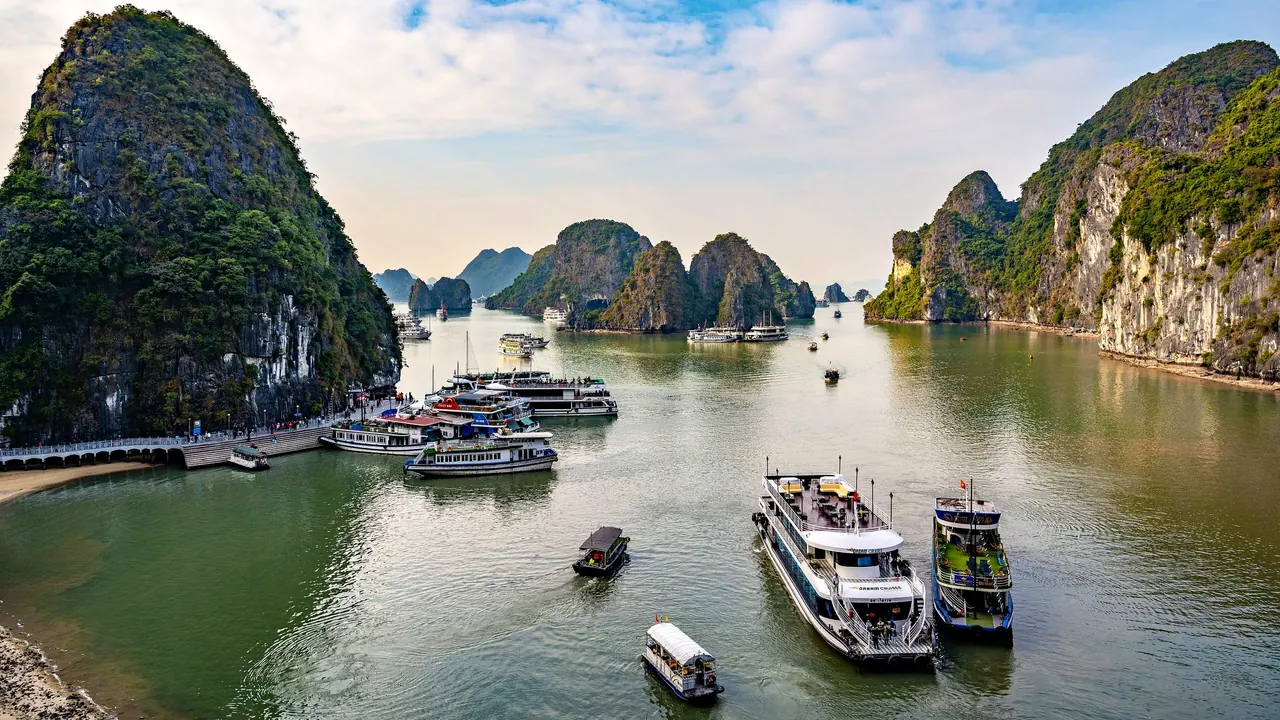
Photos: Da Lat by Pham Huynh Tuan Vy, Pexels License; Ha Long by Takeshi Aida from Hong Kong, Hong Kong, CC BY-SA 2.0, cropped.
Da Lat or Ha Long?
Our verdict in twelve categories, each scored against the same fixed benchmark cities, and the climate month by month, so you can choose for your trip.
Choose Da Lat for
- culture and sights
- prices
- food and drink
Da Lat suits travellers who want to slow down in cool mountain air. Its pine hills, French villas and terrace cafés make an easy base for a few gentle days, and it has the better everyday eating, the more interesting sights in town and the lower costs overall. Choose it for café mornings, canyoning or trekking, and walks among colonial architecture, with no wish to be near the sea.
Choose Ha Long for
- beaches
- day trips
- nature and the outdoors
Ha Long is the pick for anyone who wants water and spectacle. The bay's limestone towers are the stronger landscape, and an overnight cruise brings kayaking, caves and swimming off the deck, none of which Da Lat can offer. Yen Tu, Hai Phong and the Quang Hanh hot springs are all within easy reach, so the trip has more variety beyond the town, though the cruise is where most of the money goes.
Scoreboard
Twelve categories on one fixed scale from 0 to 100. The shaded stretch is the gap between the two.
Your match
Pick a travel style or drag the sliders, and both match scores follow your weighting.
Wins on culture and sights and prices with your weighting.
Wins on beaches and day trips with your weighting.
What matters to you?
Category by category
What the scores mean for a trip.
Beaches & swimming
Da Lat has no beach to speak of. Its lakes are for pedal boats, not swimming, and the nearest sea at Ninh Chu Bay or Nha Trang is hours away down mountain passes, which means moving on rather than going for the day.
Ha Long does not have a great beach either, but swimming fits naturally into a visit. The imported sand at Bai Chay is shallow and often murky, so the better swimming is off the cruise boats in quiet coves or at small island beaches such as Ti Top. Quan Lan has cleaner sand for anyone willing to stay overnight. In winter the water is too cool for most people.
Food & drink
Da Lat eats better day to day. The cool valleys supply avocados, artichokes, strawberries and greens, the evening market around the central market steps serves grilled rice paper and bánh căn from clay moulds, and arabica grown on the nearby slopes supports a proper café culture with terraces over the pines.
Ha Long does one thing well: seafood. You choose crabs, mantis shrimp and clams from the tanks in the halls near Ha Long market, and the springy squid cakes called cha muc are worth trying. Outside that, cruise set menus and big tourist restaurants make eating out here less varied, and there are few cafés.
Culture & sights
Da Lat has more to see in town. Its French hill-station past is visible in hundreds of villas, the cathedral, the Domaine de Marie church and the Art Deco railway station. Bao Dai's Summer Palace, the Crazy House and the mosaic-covered Linh Phuoc pagoda add some character, and they fill two or three days.
Ha Long is a young city, and the bay is its main draw rather than any monument. The black-glass Quang Ninh Museum in Hon Gai and the floating fishing village of Cua Van are the highlights, and after those the town sights soon run out.
Nightlife
Neither is a place for a big night out, and both are quiet before midnight. In Da Lat, the cold sends people indoors early. The night market, a few backpacker bars near the centre (one of them a famous maze of rooms) and some karaoke make up the evening.
Ha Long's evenings are more local and beery: beer halls, karaoke rooms and noisy seafood dinners along Bai Chay. If you spend the night on a cruise, the evening is a drink on the sundeck and squid fishing off the stern.
Nature & outdoors
Ha Long Bay is the more remarkable landscape. Close to two thousand forested limestone towers rise straight out of the water, with kayak routes under arches into hidden lagoons, caves such as Sung Sot, and quieter scenery in Lan Ha and Bai Tu Long. Cat Ba adds trails and rock climbing. On land around the town itself, though, there is little beyond a few viewpoints.
Da Lat's outdoors is gentler but more varied on foot. You can canyon down waterfalls at Datanla, ride mountain bikes through coffee farms, climb Langbiang, or trek through the montane forest of Bidoup-Nui Ba. The trails are best in the dry months, and greenhouses cover many of the valleys close to town.
Day trips
Ha Long has much better day trips. Yen Tu, the holy mountain where the Truc Lam school of Zen began, is about an hour inland with pagodas climbing through old forest. Hai Phong's colonial streets and the Bach Dang battlefield are also close, and boats run to Cat Ba.
Da Lat is boxed in by its mountains. Most outings stay in the surrounding hills, at K'Ho villages, silk and coffee farms. The one strong excursion is down the Ngoan Muc pass to Phan Rang for the Cham towers and pottery villages, a long drive each way.
Good for families
Both work well for children, but in different ways. Da Lat is a country outing in mild weather: strawberry picking, paddle boats in the Valley of Love, the mountain coaster to Datanla falls and the cable car over the pines. Steep streets and spread-out sights mean plenty of taxis, and teenagers may find the photo spots silly.
Ha Long is about water and excitement. Children love the caves, kayaks and boat decks, and Sun World adds a Ferris wheel and water park. The downsides are summer heat, railings and life jackets on budget boats that need checking, and overnight cruises that are hard with toddlers.
Getting around
Both rely on taxis and ride-hailing, and neither has public transport a visitor would use. Da Lat's centre around Xuan Huong Lake is compact but hilly, and the waterfalls and pagodas are spread across the hills, which is why many people hire a scooter or a driver for the day.
Ha Long is long and flat instead, split between Bai Chay and Hon Gai by a long bridge, with an easy waterfront walk on the Bai Chay side. Cruises usually include transfers from Tuan Chau harbour, so the bay takes care of itself.
Shopping & style
Neither is a reason to shop, but Da Lat has slightly better things to bring home. The central market sells local coffee beans, artichoke tea, strawberry jam and candied fruit, and you can buy embroidered silk pictures and wool scarves for the cold evenings.
Ha Long's options are narrower: cultured pearls in showrooms near the bay, souvenirs at the Bai Chay night market, and dried squid or fish sauce from Ha Long market in Hon Gai.
Affordability
Both cost a fraction of what Western travellers are used to, but Da Lat is cheaper all round. Rooms with pine views, night-market dinners, coffee and scooter hire are all inexpensive, and there are no big-ticket extras. The only time to book early is Tet and the long national breaks.
Ha Long is cheap on land, but the cruise that most people come for is the largest single cost, and boats range from basic to luxurious. At the waterfront seafood places, agree the weight and price before anything is cooked.
Live music & performing arts
Da Lat has a little more, and it feels more genuine. Small cafés host evening acoustic sets of Vietnamese ballads, many of them written about the city. Highland gong music and the Flower Festival's outdoor shows add a bit more.
Ha Long offers staged shows in the Bai Chay entertainment complex and folk singing on some cruise boats. Neither city has a theatre or concert season to plan around.
Wellness & relaxation
Da Lat offers a slower pace rather than treatments. Cool misty mornings, long coffees, cheap massages and a few spa resorts among the pines suit unhurried days, as long as you stay out of the centre at weekends and during the Tet and summer travel peaks.
Ha Long has the edge because it has proper bathing. The mineral hot springs at Quang Hanh, about forty minutes away, feed a large Japanese-style onsen resort. Out on the bay, a quiet night anchored in a cove with tai chi at dawn and a spa on board is the most relaxing part of a stay. The town itself is noisy with traffic.
When should you go?
Pick your month. The climate figures are measured averages, not a forecast.
Da Lat in July
Ha Long in July
Daytime high, °C
Rainfall in the month, mm
Where the figures come from
Da Lat has no weather station within reach, so its figures come from a gridded climate model rather than a measured record, and read a broad area rather than the city itself.
Ha Long's temperatures are measured 50 km from the centre, at Phu Lien.
Ha Long has no rain gauge within 25 km of the centre, so its rainfall comes from a gridded climate dataset read at the city rather than from a gauge further away.
Temperature and rainfall are climate normals, averaged over the years shown. Da Lat: 1991-2020 normals, TerraClimate 4 km grid at the town, no weather station within 90 km. Ha Long: 1991-2020 normals, Phu Lien (49.9 km from centre).
Da Lat barely changes temperature through the year. Afternoons stay between 22°C and 25°C in every month, comfortable for walking at any time but never warm enough to feel like a tropical vacation. What changes is the rain. December to March is dry and settled, April is the turning point, and from May to October heavy afternoon downpours are frequent, turning trails muddy and hill roads slippery.
Ha Long has real seasons. Winter is cool and short of sun, too chilly for swimming, though the mist over the karsts has its own appeal. Spring stays mild and fairly dry, and the air is often clear enough to see far across the bay, but the skies are mostly grey, with less sunshine than at any other time of year. From May the air turns hot and the sea warms to about 29°C, good for swimming off the boats, but the wet season peaks at 553mm in July and summer storms can disrupt cruises. October is the best compromise: still warm, with the sea at 28°C and far less rain. In short, Da Lat is at its best in the northern winter, when Ha Long is at its least appealing.
Which traveller are you?
For a beach and sun trip, Ha Long is the only real option of the two. From May to October the bay is warm, and the cruises stop at island beaches or let you swim off the deck. Da Lat is hours from the sea, up in the mountains.
On a culture and arts trip, Da Lat gives more to see. There are colonial villas, an Art Deco station, the Crazy House and the porcelain-covered Linh Phuoc pagoda, and in the evenings small cafés host acoustic ballad nights. Ha Long's town sights are done in half a day.
On a trip with a tight budget, Da Lat stretches the money further. Rooms, night-market meals, coffee and transport all cost little, and nothing major has to be booked. In Ha Long, the cruise you came for takes a large share of the budget.
Before you go
| Measure | Da Lat | Ha Long |
|---|---|---|
| Official language | Vietnamese | Vietnamese |
| Currency | Dong (VND) | Dong (VND) |
| Sockets | ACFG220 V, 50 Hz | ACFG220 V, 50 Hz |
| Driving side | Right | Right |
| Time zone | UTC+7 | UTC+7 |
| Emergency number | Police 113, ambulance 115, fire 114 | Police 113, ambulance 115, fire 114 |
| Elevation | 1,500 m | 8 m |
| Main airport | Lien Khuong Airport (DLI)22 km from centre7 non-stop destinations | Noi Bai International Airport (HAN)136 km from centre91 non-stop destinations |
By the numbers
| Measure | Da Lat | Ha Long |
|---|---|---|
| City population | 406,105 | - |
| People per km² | 1,032 | - |
| Museums within 10 km | 0 | 1 |
| UNESCO World Heritage sites within 50 km | 0 | 2 |
| Swim season, months above 21 °C | - | 9 months |
Where else could you go?
Every comparison below shares a destination with this one, so you can follow Da Lat or Ha Long somewhere new.
- Nha Trangvs Da Lat
- Hanoivs Ha Long
- Ho Chi Minh Cityvs Da Lat
- Sapavs Ha Long
- Phnom Penhvs Da Lat
- Hoi Anvs Da Lat