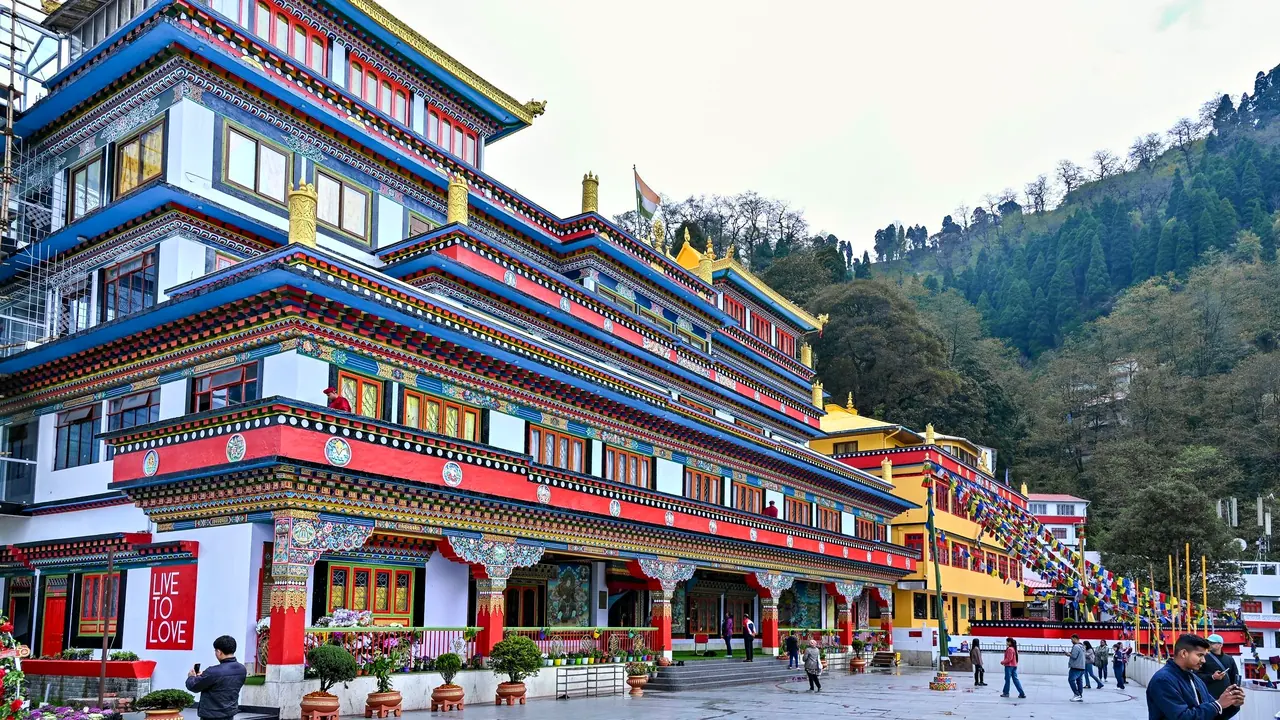
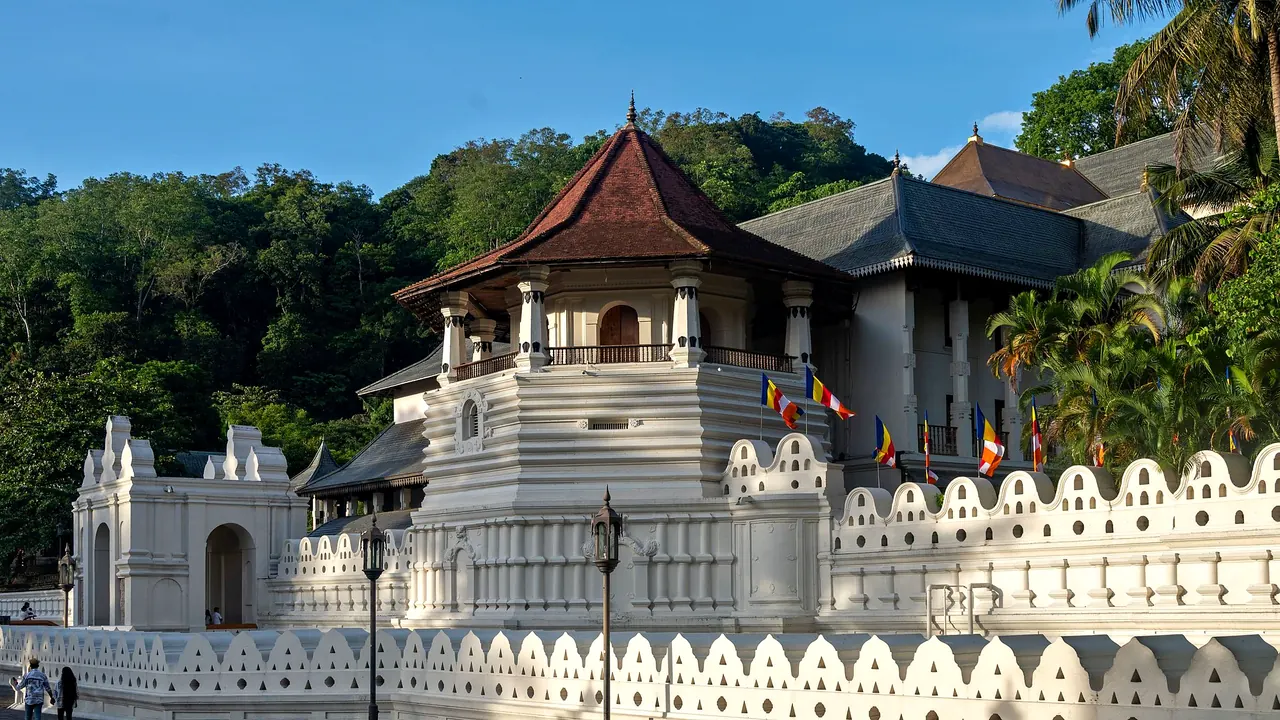
Photos: Darjeeling by Krishnendu Biswas, Pexels License; Kandy by xiquinhosilva, CC BY 4.0, cropped.
Darjeeling or Kandy?
Our verdict in twelve categories, each scored against the same fixed benchmark cities, and the climate month by month, so you can choose for your trip.
Choose Darjeeling for
- nature and the outdoors
- shopping
- families
Darjeeling is for travellers who come for the mountains. Kangchenjunga at dawn from Tiger Hill, walks through the tea terraces and the Singalila Ridge trek towards Sandakphu give it the stronger landscape of the two. Its sights are small and personal: a steam railway, a mountaineering museum and old monasteries. Choose it for cool air, long walks and tea tasted where it is grown, and expect to spend most of your time outdoors rather than at sights.
Choose Kandy for
- day trips
- live music and the arts
- culture and sights
Kandy suits a traveller who wants living religion, ceremony and a base for exploring. The Temple of the Sacred Tooth Relic is a far deeper single sight than anything on the Darjeeling ridge, the Kandyan dancers perform every evening, and the cave temples of Dambulla and the rock of Sigiriya are within a day's reach. Add Ayurvedic treatments on the hills and it rewards a longer, warmer, more varied stay.
Scoreboard
Twelve categories on one fixed scale from 0 to 100. The shaded stretch is the gap between the two.
Your match
Pick a travel style or drag the sliders, and both match scores follow your weighting.
Wins on nature and the outdoors and shopping with your weighting.
Wins on day trips and live music and the arts with your weighting.
What matters to you?
Category by category
What the scores mean for a trip.
Beaches & swimming
Neither works for swimming. Darjeeling is about 2,000m up in the Himalaya, and its valley rivers are cold and fast. Kandy is about three hours inland from the Sri Lankan coast.
The practical difference is that Kandy's hillside hotels often have pools, which suits its warm climate, and the south or east coast is easy to add to the trip. A beach after Darjeeling means a much longer journey.
Food & drink
The two eat at a similar level, and in both cases tea matters more than restaurants. Darjeeling gives you momos, thukpa and thenthuk from the Himalayan kitchens around Chowk Bazaar, and you can taste first and second flush muscatel tea in colonial tea rooms with long breakfasts and cakes.
Kandy's cooking is Sri Lankan rice and curry served with many small dishes, plus hoppers in the morning, kottu off the griddle at night and short eats with sweet milk tea. The food is spicier and warmer, but serious restaurants are rare in either town.
Culture & sights
Kandy has more weight here. The Temple of the Sacred Tooth Relic is the holiest Buddhist shrine in Sri Lanka, and pilgrims, drummers and offerings fill it every day inside a royal city protected as a World Heritage Site. The palace buildings, the lake and the Garrison Cemetery are close by.
Darjeeling's heritage is more spread out: the steam railway to Ghoom and its old monastery, the colonial buildings along the ridge and the Himalayan Mountaineering Institute's museum of Everest history. Each is enjoyable, but none moves you as the temple at Kandy does.
Nightlife
Both towns are quiet by about ten. Darjeeling has a drink by the fire in an old pub, and Kandy a drink on a hotel terrace overlooking the hills, and that is about all. Darjeeling's visitors go to bed early for the dawn trip to Tiger Hill, while in Kandy the evening is spent at a dance show rather than a bar.
Nature & outdoors
Darjeeling is ahead on scale. Kangchenjunga stands over the town, the snow peaks at sunrise reach as far as Everest, and the Singalila Ridge climbs through red panda forest to views of four of the world's five highest mountains.
Kandy's green is lower and gentler, at about 500m. You can walk into Udawatta Kele forest straight from the temple, the Peradeniya gardens have giant bamboo and fruit bats, and the Knuckles Range offers good cloud-forest hiking without the high-mountain backdrop.
Day trips
Kandy has the better outings. It is the gateway to the Cultural Triangle, with the painted caves of Dambulla, Sigiriya's rock fortress and a half-day circuit of the medieval temples at Embekke and Lankatilaka. Spice gardens, tea factories and the Pinnawala elephants add variety.
Day trips from Darjeeling go mostly to similar hill towns. Kurseong, lakeside Mirik and Kalimpong's monasteries are pleasant, but on winding roads they repeat much of what you have already seen.
Good for families
The two are broadly level, and neither is easy with toddlers. Darjeeling has more aimed at children: the toy train, a zoo with red pandas and snow leopards, the ropeway and pony rides on Chowrasta. Against that come the steep steps, pre-dawn cold starts and a long drive that can make children carsick.
In Kandy the gardens at Peradeniya, the elephant visits and the hill-country train are the highlights. Families are made welcome, the heat and congested streets make a hotel with a pool the most useful base, and the temple expects children to be quiet.
Getting around
Both are hard work on foot and equally reliant on hired wheels. Darjeeling has the more pleasant core, a car-free ridge around Chowrasta and the Mall, but everything else means steep steps and shared jeeps. Getting there takes three hours or more by road from the plains.
Kandy's compact centre is choked with traffic and fumes, so tuk-tuks and a car with driver do most of the work. Its advantage is the railway, which links it to Colombo and runs the famous line through the tea country to Ella.
Shopping & style
Darjeeling is somewhat better for shopping, mainly because of its tea. Specialist shops on the Mall and Nehru Road let you compare estates and flushes before you buy, and the Tibetan Refugee Self Help Centre sells carpets and thangkas made on site.
Kandy also has tea, along with spices, batik, lacquerware and masks, and the government craft shop sells at fixed prices. The gem showrooms reached through drivers on commission call for caution, which takes some of the pleasure out of browsing.
Affordability
Both are cheap, and the costs fall in much the same places. Guesthouses, local meals and shared transport cost little, while heritage hotels and hillside resorts charge far more.
The difference is in the extras. In Darjeeling, private taxis for Tiger Hill and peak-season rooms with a mountain view add the most. In Kandy, the separate entrance fees for foreign visitors at the temple and the ancient sites, plus a driver for day trips, are what raise the total.
Live music & performing arts
Kandy has a real performance tradition and Darjeeling has very little. Kandyan dance, with its drummers, fire walkers and silver headdresses, is staged every evening near the lake, and the Esala Perahera brings elephants and torchlit processions through the streets in July or August.
In Darjeeling you would need to time your visit for masked cham dances at a monastery festival or catch an occasional evening of Nepali and Lepcha music.
Wellness & relaxation
Kandy offers more ways to unwind. Ayurveda gives it a real treatment culture, from oil massages and herbal steam baths to week-long programmes, often combined with yoga on the hillside retreats.
Darjeeling's calm comes from the setting: a tea-estate bungalow, cool mornings and a quiet corner at Ghoom monastery. In both towns the centre is noisy, so stay out on the hills.
When should you go?
Pick your month. The climate figures are measured averages, not a forecast.
Darjeeling in July
Kandy in July
Daytime high, °C
Rainfall in the month, mm
Where the figures come from
Darjeeling has no weather station within reach, so its figures come from a gridded climate model rather than a measured record, and read a broad area rather than the city itself.
Kandy has no weather station within reach, so its figures come from a gridded climate model rather than a measured record, and read a broad area rather than the city itself.
Temperature and rainfall are climate normals, averaged over the years shown. Darjeeling: 1991-2020 normals, TerraClimate 4 km grid at the town, no weather station within 90 km. Kandy: 2001-2020 normals, NASA POWER reanalysis grid, no weather station within 90 km.
The two run on almost opposite calendars. Darjeeling is at its best from October to early December and again in March and April, when rain is lighter and the mountains are most often in view. May brings the first heavy pre-monsoon rain. The full monsoon from June to September is far wetter, with around 778mm in July, and cloud can hide the peaks for weeks. Midwinter is dry and clear but cold, with daytime highs near 15°C and colder mornings, so pack warm layers for the sunrise trip.
Kandy is warm all year and peaks at about 32°C in April, so for walking its streets the midday heat is the bigger concern, not the cold. Its wettest stretch runs from October to December, with about 279mm in November, while June to August is the driest. That makes July and August a good time for Kandy just when Darjeeling is at its wettest, while Darjeeling's clear autumn falls in Kandy's rainy season.
Which traveller are you?
For an outdoors trip, Darjeeling is the clear choice. You can walk straight from town into tea estates and rhododendron forest, see Himalayan sunrises from Tiger Hill and do a multi-day trek along the Singalila Ridge. Kandy's forest trails and the Knuckles Range are good, but less dramatic.
On a culture and arts trip, Kandy gives more. The Temple of the Tooth is a working shrine with daily drumming, the old royal city is a World Heritage Site and Kandyan dance is performed every evening. The Cultural Triangle's cave temples and rock fortresses are a day away.
For a relaxing and wellness trip, Kandy has the edge. Ayurvedic oil massages, herbal steam baths and longer retreats with yoga on the hills give rest some structure. In Darjeeling you rest through quiet days at a tea-estate bungalow, with few spa treatments on offer.
Before you go
| Measure | Darjeeling | Kandy |
|---|---|---|
| Official language | Hindi, English | Tamil, Sinhala |
| Currency | Indian Rupee (INR) | Sri Lanka Rupee (LKR) |
| Sockets | CM230 V, 50 Hz | GM230 V, 50 Hz |
| Driving side | Left | Left |
| Time zone | UTC+5:30 | UTC+5:30 |
| Emergency number | 108 or 112 | Police 119, ambulance 110, fire 110 |
| Elevation | 2,115 m | 500 m |
| Main airport | Bagdogra Airport (IXB)40 km from centre13 non-stop destinations | Bandaranaike International Colombo Airport (CMB)84 km from centre57 non-stop destinations |
By the numbers
| Measure | Darjeeling | Kandy |
|---|---|---|
| City population | 118,805 | 120,087 |
| People per km² | 11,208 | 4,214 |
| Museums within 10 km | 7 | 6 |
| UNESCO World Heritage sites within 50 km | 1 | 2 |
Where else could you go?
Every comparison below shares a destination with this one, so you can follow Darjeeling or Kandy somewhere new.
- Ellavs Kandy
- Colombovs Kandy
- Gallevs Kandy
- Kathmanduvs Darjeeling
- Pokharavs Darjeeling
- Varanasivs Darjeeling