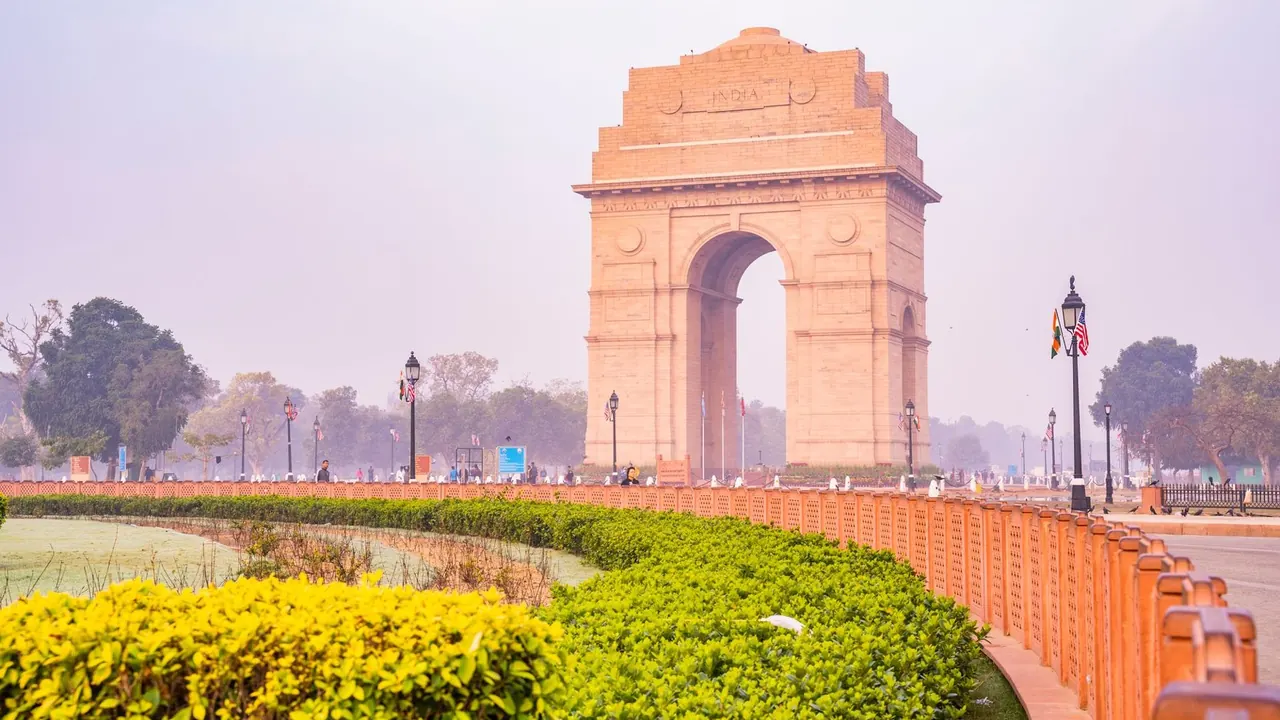
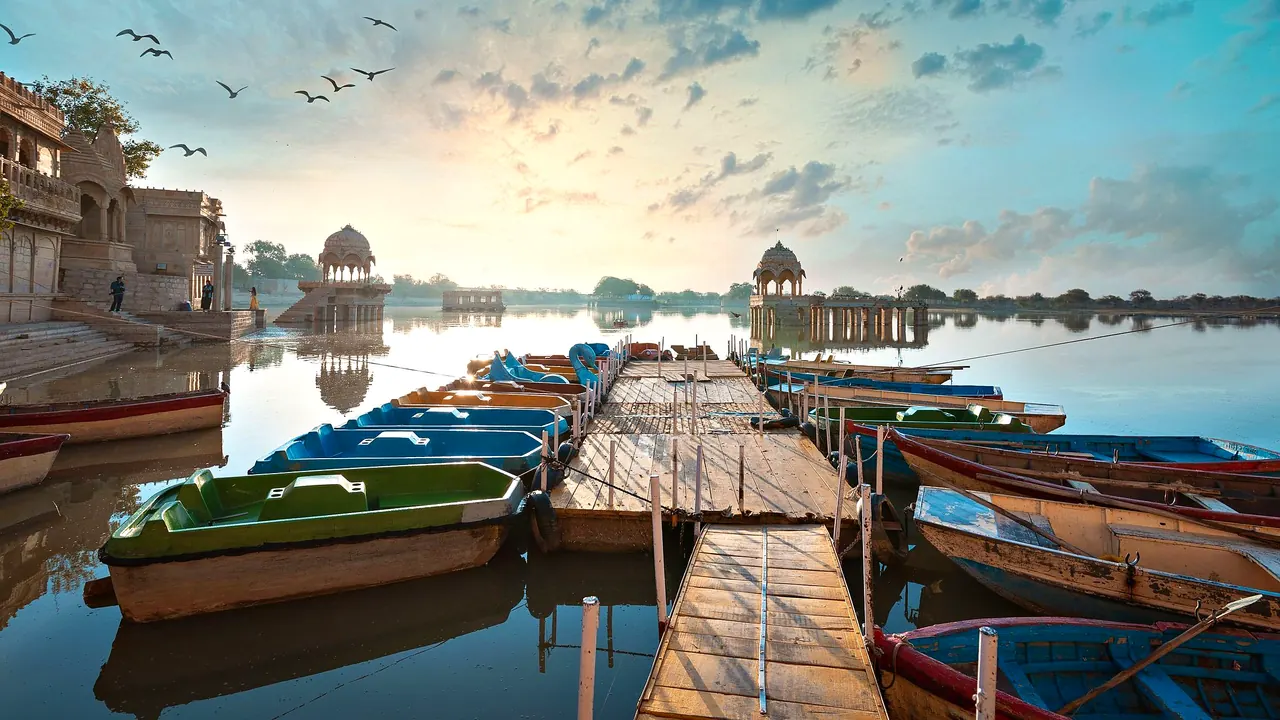
Photos: Delhi by shalender kumar, Pexels License; Jaisalmer by Prakash Yadav, Pexels License.
Delhi or Jaisalmer?
Our verdict in twelve categories, each scored against the same fixed benchmark cities, and the climate month by month, so you can choose for your trip.
Choose Delhi for
- food and drink
- day trips
- shopping
Delhi suits the traveller who wants range and has the patience for a huge, hectic capital. It has Mughal tombs and the Red Fort, some of the best eating in India from Old Delhi's stalls up to tasting menus, serious bazaars and craft emporiums, and the Taj Mahal within an easy train ride. Traffic, distances and the air ask a lot of you, but there is enough here to fill a week.
Choose Jaisalmer for
- nature and the outdoors
Jaisalmer is the slower, more atmospheric stop. A golden fort that people still live in, lace-carved havelis and the Thar dunes make a small, coherent place you can see in a few days, and the highlight is a night out under the desert stars. The food is simple, evenings are quiet, and getting there is a long journey, so it works best as one stop on a wider Rajasthan route.
Scoreboard
Twelve categories on one fixed scale from 0 to 100. The shaded stretch is the gap between the two.
Your match
Pick a travel style or drag the sliders, and both match scores follow your weighting.
Wins on food and drink and day trips with your weighting.
Wins on nature and the outdoors with your weighting.
What matters to you?
Category by category
What the scores mean for a trip.
Beaches & swimming
Neither city has open water to swim in. Delhi's stretch of the Yamuna is not for bathing, and Jaisalmer's Gadisar Lake is for boating and watching the sunset. In both, a hotel pool is what gets you through the hot months.
The difference is what comes after. From Delhi, a beach means flying on to Goa or Kerala. In Jaisalmer, a pool at one of the heritage hotels or resorts on the edge of town is worth choosing your room for.
Food & drink
Delhi is one of India's great places to eat. You can start with nihari, kebabs and jalebi in the lanes around Jama Masjid, try butter chicken and dal makhani in the city that created them, and move up to Kashmiri or Keralan kitchens and modern Indian tasting menus.
Jaisalmer offers one cuisine, and it is a good one to try: dal baati churma, ker sangri and a vegetarian thali in a simple local eatery, with kachori and lassi in the morning. Beyond that, the choice is thin. Many rooftop restaurants fall back on pizza and pancakes, and there is little serious dining outside the heritage hotels.
Culture & sights
Delhi has layer after layer of history: three UNESCO sites in the Red Fort, Humayun's Tomb and the Qutb Minar, plus Jama Masjid, the Lodi tombs, the imperial avenue down to India Gate and the national art collections. It fills many days, though the sights are far apart and need planning.
Jaisalmer has one great sight. Its fort is a citadel of golden sandstone that people still live in, with Jain temples and a royal palace inside, and the carved havelis and Bada Bagh's cenotaphs lie just below. It is beautiful and hangs together well, but you will see it all in two or three days.
Nightlife
Delhi at least gives you a real night out, even if it is spread across the city: rooftop bars at Hauz Khas Village, pubs under Connaught Place's colonnades and bigger clubs out in Gurugram, all reached by taxi and busiest at weekends. Jaisalmer has no bars or clubs to speak of. A beer on a rooftop facing the lit fort, or a campfire show at a dune camp, is the whole evening, and the lanes are empty well before midnight.
Nature & outdoors
Jaisalmer comes out ahead because the desert is right there. You can take an overnight camel trek across scrub and dunes and sleep under a very dark sky, visit the quieter Khuri dunes, or go into the Desert National Park for great Indian bustards and chinkara. There is only the one landscape, though, and no hills, rivers or water sports.
Delhi's outdoors is a matter of gardens and fragments of forest: morning walks in Lodhi Gardens and Sunder Nursery, the Ridge and trails at Sanjay Van. Birders do well at Okhla and Sultanpur in winter, but heat and smog cut down the time you can spend outside.
Day trips
Delhi is a much better base for day trips. Agra and the Taj Mahal are a little under two hours away by express train, and Fatehpur Sikri, the temple towns of Mathura and Vrindavan and the fort at Neemrana are all within reach.
Jaisalmer is too remote for that. Close by, the Jain temples of Lodurva and the abandoned villages of Kuldhara and Khaba fit well into a dune outing, but Pokaran and Tanot are long drives for what you get. Most people treat the town as a stop on the way through, not a base.
Good for families
Both cities are hard work with children, but in different ways. Delhi has places made for them, such as the Rail Museum's steam locomotives, the zoo and the water parks in Noida and Gurugram, but smog, traffic and missing pavements wear families down.
Jaisalmer has nothing designed for children, yet it can be the bigger adventure for school-age ones: a fort like a giant sandcastle, camel rides and a night in a desert tent. The catch is the long journey to get there and the heat outside the cool months.
Getting around
Delhi is easier to get around despite its size, thanks to the metro: air-conditioned, signed in English and stopping near most monuments, with an express line to the airport. Autos and app taxis cover the gaps, but traffic jams and long distances still eat into the day.
Jaisalmer's centre is small enough to walk, from the fort to the havelis and the lake, though the lanes are uneven and shared with motorbikes and cattle. For anything outside town, such as the dunes, Bada Bagh or Kuldhara, there is no public transport, so you need a hired car or a trip arranged by your hotel.
Shopping & style
Delhi is a marketplace for the whole country. You can browse textiles from different states at Dilli Haat, buy at fixed prices in the government emporiums, wander Khari Baoli's spice market and Chandni Chowk's fabric shops, and find Indian designers in Khan Market and Shahpur Jat.
Jaisalmer's shopping is all desert crafts: mirror-work quilts, camel leather sandals, puppets and carved yellow sandstone, sold in the fort's lanes. It is pleasant to browse, but quality varies, the stock repeats and the sellers can be pushy.
Affordability
Both are very cheap for visitors, with inexpensive local meals, rickshaws and guesthouses, and both charge foreigners more at monuments. Where they differ is in what pushes the bill up. In Delhi it is the grand hotels, the smart South Delhi restaurants and imported alcohol. In Jaisalmer it is the restored palace hotels and luxury tented camps, while haggling can bring the price of a camel trek down a long way.
Live music & performing arts
Delhi has a real classical season. In the cooler months the Mandi House auditoriums host Hindustani recitals and Kathak and Bharatanatyam dance, the National School of Drama anchors the theatre scene, and qawwali at the Nizamuddin shrine on Thursday evenings costs nothing.
Jaisalmer's music is folk, and it is very good. Manganiyar and Langa singers with kamaicha fiddles and khartal clappers perform at dune camps and on rooftops most evenings, often in a staged setting. There are no theatres or concert halls, so outside the winter Desert Festival, that is the whole programme.
Wellness & relaxation
Delhi gives you more ways to be looked after. The big hotels run spas with Ayurvedic treatments and Indian massage, and South Delhi has its own yoga and Ayurveda centres, but the city outside never lets up, with traffic, crowds and heavy winter air. Quiet here comes in short spells, such as a walk among the Lodi tombs at first light or a while inside Bangla Sahib, and anyone after a real retreat usually moves on to Rishikesh or Kerala.
Jaisalmer has fewer treatments, mostly hotel spas and a handful of plain massage rooms, and its lanes bring their own touts and heat. What it offers instead is distance. Out in the Thar, after the campfire has burnt down, there is a stillness that a city of Delhi's size cannot give you.
When should you go?
Pick your month. The climate figures are measured averages, not a forecast.
Delhi in July
Jaisalmer in July
Daytime high, °C
Rainfall in the month, mm
Where the figures come from
Jaisalmer has no rain gauge within 25 km of the centre, so its rainfall comes from a gridded climate dataset read at the city rather than from a gauge further away.
Temperature and rainfall are climate normals, averaged over the years shown. Delhi: 1991-2020 normals, New Delhi / Safdarjung (9.4 km from centre). Jaisalmer: 1993-2020 (rainfall 1991-2020) normals, Jaisalmer (1.9 km from centre).
Both cities are at their best in the cooler half of the year, from October to March, though Jaisalmer's most comfortable weeks fall in the middle of that stretch. Delhi's winter days are mild enough for long days of sightseeing, around 20°C in January, but smog often hangs over late autumn and early winter. February and March, with clearer skies and more sunshine, tend to be the most pleasant. From April the heat builds to about 40°C in May. The monsoon follows from July to September and is heaviest in August, with around 236mm of rain, before a dry, sunny October.
Jaisalmer is hotter and much drier all year. October to March is its season for camel treks and dune camps, but the edges are warm: afternoons still reach about 37°C in October and climb back to 34°C by March. November to February, with warm sunny days and cold desert nights, is the best time for walking the fort lanes. From April to June the heat is punishing, and the short monsoon in July and August is humid rather than very wet, so mornings and evenings are the only comfortable times to be outside.
Which traveller are you?
For a food and nightlife trip, Delhi is the clear choice. You can eat parathas and nihari in Old Delhi, chaat at street carts and regional Indian cooking in South Delhi, then go on to rooftop bars in Hauz Khas Village. Evenings in Jaisalmer end early, after a rooftop dinner.
On an outdoors trip, Jaisalmer has the edge, as long as desert is what you want. An overnight camel trek across the Thar, the quieter Khuri dunes and winter birding in the Desert National Park beat Delhi's gardens, where heat and smog cut walks short.
On a shopping trip, Delhi wins easily. Dilli Haat and the state emporiums bring together crafts from all over India, Old Delhi has its specialist bazaars and Shahpur Jat has Indian designers. Jaisalmer's mirror-work and camel leather are appealing, but the same stock repeats from shop to shop.
Before you go
| Measure | Delhi | Jaisalmer |
|---|---|---|
| Official language | Hindi, English | Hindi, English |
| Currency | Indian Rupee (INR) | Indian Rupee (INR) |
| Sockets | CM230 V, 50 Hz | CM230 V, 50 Hz |
| Driving side | Left | Left |
| Time zone | UTC+5:30 | UTC+5:30 |
| Emergency number | 108 or 112 | 108 or 112 |
| Elevation | 221 m | 225 m |
| Main airport | Indira Gandhi International Airport (DEL)17 km from centre144 non-stop destinations | Jaisalmer Airport (JSA)6 km from centre5 non-stop destinations |
By the numbers
| Measure | Delhi | Jaisalmer |
|---|---|---|
| City population | 26,495,000 | 65,471 |
| People per km² | 18,962 | 12,837 |
| Museums within 10 km | 23 | 2 |
| UNESCO World Heritage sites within 50 km | 4 | 1 |
Where else could you go?
Every comparison below shares a destination with this one, so you can follow Delhi or Jaisalmer somewhere new.