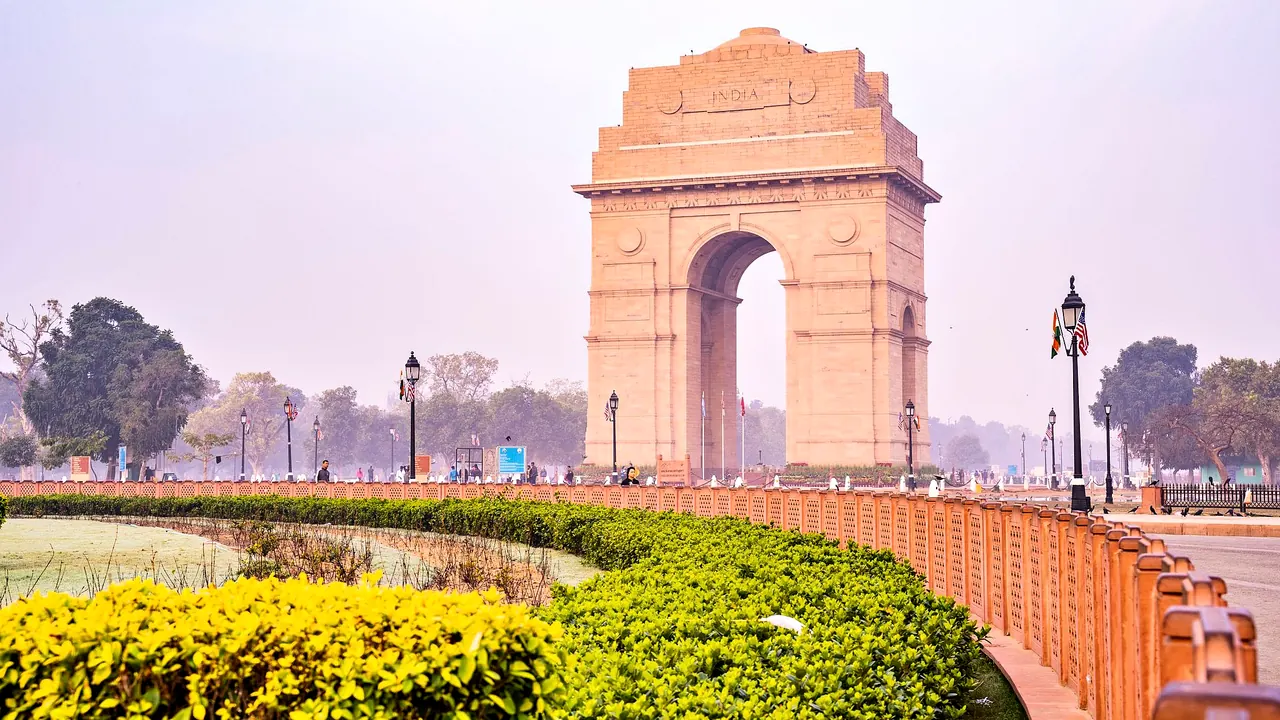
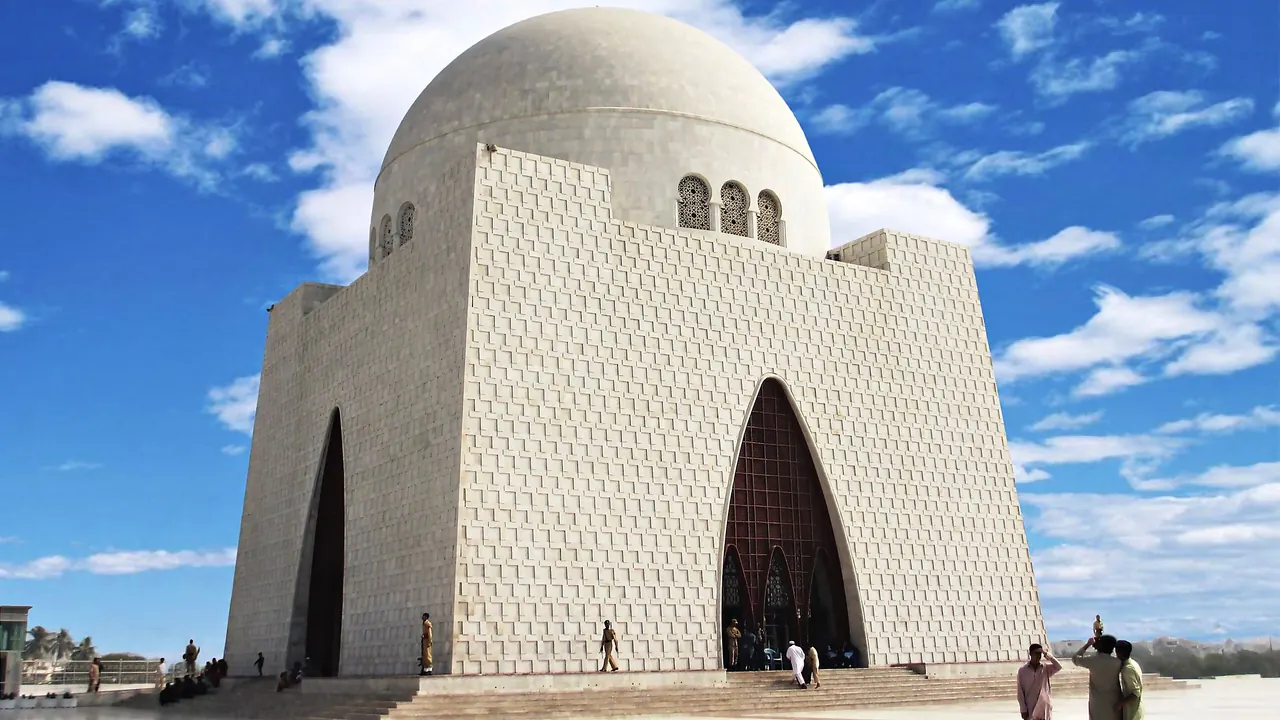
Photos: Delhi by shalender kumar, Pexels License; Karachi by M.irfan44, CC BY-SA 4.0, cropped.
Delhi or Karachi?
Our verdict in twelve categories, each scored against the same fixed benchmark cities, and the climate month by month, so you can choose for your trip.
Choose Delhi for
- culture and sights
- getting around
- day trips
Delhi is the stronger choice for a first trip built around sights, food and shopping. Mughal tombs, the Red Fort and the imperial avenues of New Delhi can fill several days, and the metro reaches most of them. Agra and the Taj Mahal are a train ride away. Rooftop bars, classical recitals and crafts bazaars round out the stay, provided you come in the cooler months.
Choose Karachi for
- beaches
- nature and the outdoors
Karachi suits a traveller already drawn to Pakistan, or one who wants a coastal city where eating is the main event. Its biryani, nihari and seafood at Do Darya are among the best in the region. The coast west of town has warm water, turtle beaches and boat trips through the mangroves, and Delhi has nothing like them. Expect fewer sights, no bars, and a car for nearly every journey.
Scoreboard
Twelve categories on one fixed scale from 0 to 100. The shaded stretch is the gap between the two.
Your match
Pick a travel style or drag the sliders, and both match scores follow your weighting.
Wins on culture and sights and getting around with your weighting.
Wins on beaches and nature and the outdoors with your weighting.
What matters to you?
Category by category
What the scores mean for a trip.
Beaches & swimming
Neither city is a beach destination, but only Karachi is on the sea. Its city shore at Clifton and Sea View is for evening strolls, camel rides and snacks, not swimming. Hawke's Bay, Sandspit and French Beach, about an hour west, have warm, clean water and huts to rent for the day.
Delhi is far from any coast, so a swim means a hotel pool, and people who want sand usually fly on to Goa. Even in Karachi, people bathe fully clothed, and the monsoon months close the water.
Food & drink
Both are serious eating cities and even share dishes such as nihari, but Delhi has the wider range. The lanes around Chandni Chowk are full of parathas, kebabs and jalebi. Butter chicken and dal makhani were invented in Delhi, and South Delhi adds regional Indian kitchens and refined tasting menus.
Karachi's strengths are its spicy biryani with potatoes, the nihari and haleem of Burns Road, and fish and prawns cooked to order at Do Darya, all eaten late into the night. It has fewer upmarket restaurants than Delhi, and alcohol is not part of public life.
Culture & sights
The gap here is wide. Delhi has monuments left by one capital after another: the Red Fort, Humayun's Tomb, the Qutb Minar, Jama Masjid, and the imperial axis from India Gate to Rashtrapati Bhavan. That is enough for a week of sightseeing.
Karachi's history is shorter and more recent: a colonial port that became Pakistan's first capital. Mazar-e-Quaid, Frere Hall, Mohatta Palace and the National Museum's Indus Valley and Gandhara galleries are worth seeing, but a few days covers them.
Nightlife
Delhi offers a modest but real night out: rooftop bars at Hauz Khas Village, pubs under the colonnades of Connaught Place and bigger clubs in Gurugram. Most people go between them by taxi, and weekends are busiest.
Karachi has no public bars or clubs at all. Its nights are long but without alcohol, built around late dinners, roadside chai and family walks on the Clifton seafront until well past midnight.
Nature & outdoors
Delhi's outdoors is gardens and scrub, while Karachi's is the sea, and the sea gives you far more to do. In Delhi you get dawn walks in Lodhi Gardens and Sunder Nursery, trails through the Ridge forest and Sanjay Van, and winter birdwatching at Okhla and Sultanpur. Summer heat and winter smog cut even that short.
Karachi has boat trips through the mangrove creeks, night crabbing, green turtles nesting at Hawke's Bay and Sandspit in the cooler months, and clear water for snorkelling and diving off Churna Island. Inland, the bare ridges of Kirthar and the bird lakes at Haleji and Keenjhar are one to two hours away by car.
Day trips
Delhi has the bigger prize: the Taj Mahal and Agra Fort in a day by express train. Fatehpur Sikri, Mathura and Vrindavan are other options, and Jaipur is better as an overnight trip. Trains make most of these easy.
Karachi has one excellent excursion: the huge necropolis of carved tombs at Makli, near Thatta and its tiled mosque, with stops at Chaukhandi and Banbhore on the way. Beyond that there is little, and every trip needs a car and driver.
Good for families
Delhi's steam locomotives at the National Rail Museum and its science centre give children a little more to do than Karachi's camel and pony rides on Clifton beach. Delhi also has the zoo beside Purana Qila, the evening water show at Akshardham and water parks out in Noida and Gurugram. Late winter and early spring are the kindest weeks, before the heat and after the worst of the smog.
In Karachi, children have the play areas in the malls, a safari park and amusement rides, but none of them is worth the trip on its own. Long car journeys and hot, humid summers make the days tiring. In both cities, take care with food and water.
Getting around
Delhi's metro makes a real difference. It is clean and air-conditioned, signed in English, and has an airport express and stations near most monuments. Distances and traffic are still daunting, but you can cross the city without a car.
Karachi has nothing like it. Its bus rapid transit covers only some routes and there are few pavements outside parts of Saddar, so most visitors rely on ride-hailing apps, rickshaws or a hired driver in heavy traffic.
Shopping & style
Both cities are good for textiles, but in Delhi you can buy crafts from all over India. Dilli Haat, the fixed-price state emporiums, the spice and fabric bazaars of Old Delhi, the designer boutiques of Shahpur Jat and the luxury malls of South Delhi cover every budget.
Karachi's shopping is narrower: embroidered lawn and wedding wear in Zamzama, tailors who finish an outfit in days, and Sindhi ajrak prints and rilli quilts. International luxury brands are mostly absent.
Affordability
Both are very cheap for visitors, with filling meals, rickshaw rides and mid-range rooms costing little. The difference is at the top end. In Delhi, grand hotels, stylish restaurants and imported drinks push costs up. In Karachi, many first-time visitors stay in international hotels in secure compounds, which charge close to global rates and can take up most of the budget.
Live music & performing arts
Delhi has the fuller programme. Through the cooler months the auditoriums around Mandi House host Hindustani recitals and Kathak, the National School of Drama supports a large theatre scene, and the Thursday qawwali at the Nizamuddin shrine is free.
Karachi has the same shrine qawwali, and the Arts Council stages Urdu theatre and classical music. Performances there are occasional, though, rather than a regular programme.
Wellness & relaxation
Delhi at least has places to escape to. You can walk in Lodhi Gardens or Sunder Nursery at dawn, sit in the quiet of a gurudwara or a Sufi shrine, or book a session at an Ayurveda or yoga centre in South Delhi. For a real retreat, though, people go on to Rishikesh or Kerala.
In Karachi, calm is hard to find. It is loud and humid all day, and the choice is mostly hotel spas, Clifton's beauty salons and head massages from local barbers. Its only bathing tradition is the hot sulphur springs at Manghopir, which is a crowded pilgrim site rather than a spa.
When should you go?
Pick your month. The climate figures are measured averages, not a forecast.
Delhi in July
Karachi in July
Daytime high, °C
Rainfall in the month, mm
Temperature and rainfall are climate normals, averaged over the years shown. Delhi: 1991-2020 normals, New Delhi / Safdarjung (9.4 km from centre). Karachi: 1991-2020 (sunshine 1961-1990) normals, Karachi Airport (13.2 km from centre).
Delhi is at its best from November to March, when days are mild, around 20°C in January, and there is little rain. From April the heat builds to about 40°C in May, which is too hot for long walks between monuments. The monsoon follows from July to September, and August is the wettest month at around 236mm. October is a good shoulder month: warm, dry and sunny.
Karachi is warmer in winter, around 26°C in January, and sunnier for most of the year. November to February is the most comfortable stretch for sightseeing. Its monsoon is much lighter than Delhi's and falls mostly in July and August. The sea stays warm all year and reaches about 30°C in June, but swimming bans usually run from June to August. Spring and autumn suit the beach best, though the days are hot then.
Which traveller are you?
For a culture and arts trip, Delhi is the clear pick. Three UNESCO sites, the Lodi tombs, the national art collections and a winter season of Kathak and Hindustani recitals go far deeper than Karachi's colonial buildings and Jinnah's mausoleum.
On a beach and sun trip, Karachi is the only real option, because Delhi has no coast at all. Drive about an hour west to Hawke's Bay or French Beach, rent a hut for the day and swim in warm water, dressed modestly.
For a shopping trip, Delhi wins on range. Dilli Haat and the state emporiums bring together crafts from across India, Old Delhi has its specialist bazaars, and Khan Market sells Indian designers. Karachi offers less, though it is excellent for embroidered lawn and quick tailoring.
Before you go
| Measure | Delhi | Karachi |
|---|---|---|
| Official language | Hindi, English | Urdu, English |
| Currency | Indian Rupee (INR) | Pakistan Rupee (PKR) |
| Sockets | CM230 V, 50 Hz | CGM230 V, 50 Hz |
| Driving side | Left | Left |
| Time zone | UTC+5:30 | UTC+5 |
| Emergency number | 108 or 112 | Police 15, ambulance 1122, fire 16 |
| Elevation | 221 m | 8 m |
| Main airport | Indira Gandhi International Airport (DEL)17 km from centre145 non-stop destinations | Jinnah International Airport (KHI)16 km from centre36 non-stop destinations |
By the numbers
| Measure | Delhi | Karachi |
|---|---|---|
| Population | 26,495,000 | 14,910,352 |
| People per km² | 18,962 | 4,227 |
| Museums within 10 km | 23 | 9 |
| UNESCO World Heritage sites within 50 km | 4 | 0 |
| Swim season, months above 21 °C | - | 12 months |
Where else could you go?
Every comparison below shares a destination with this one, so you can follow Delhi or Karachi somewhere new.