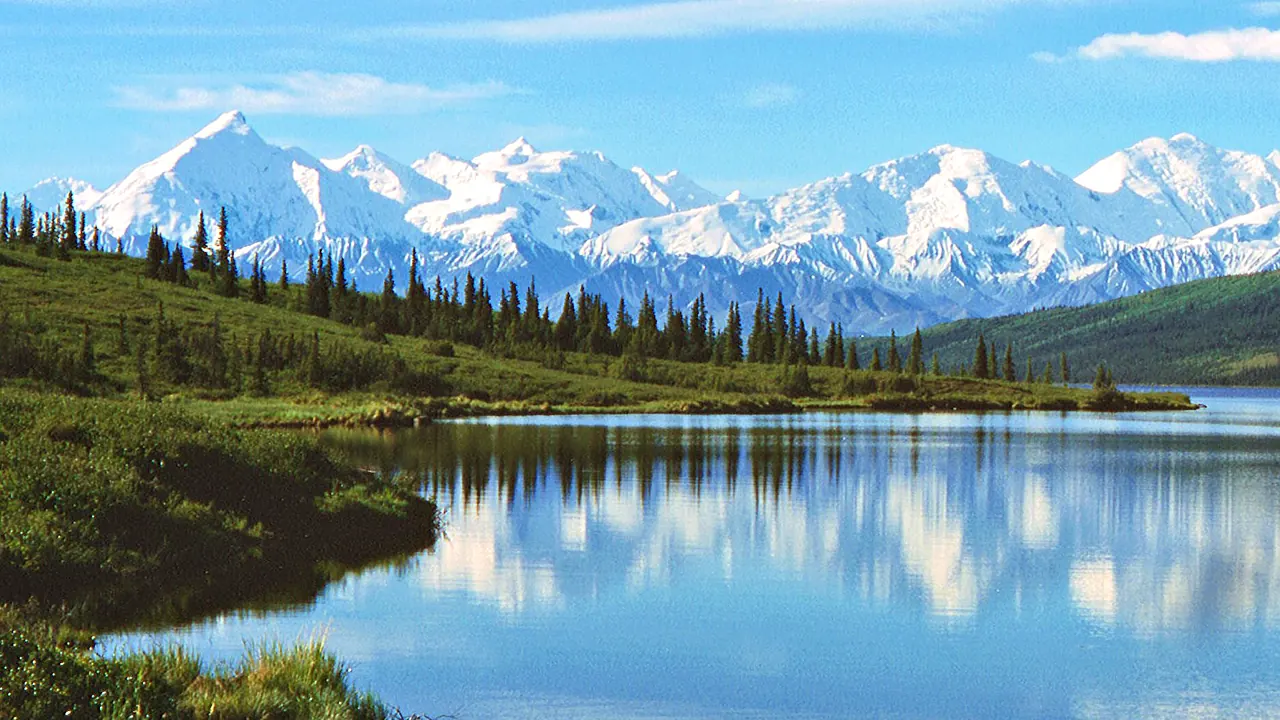
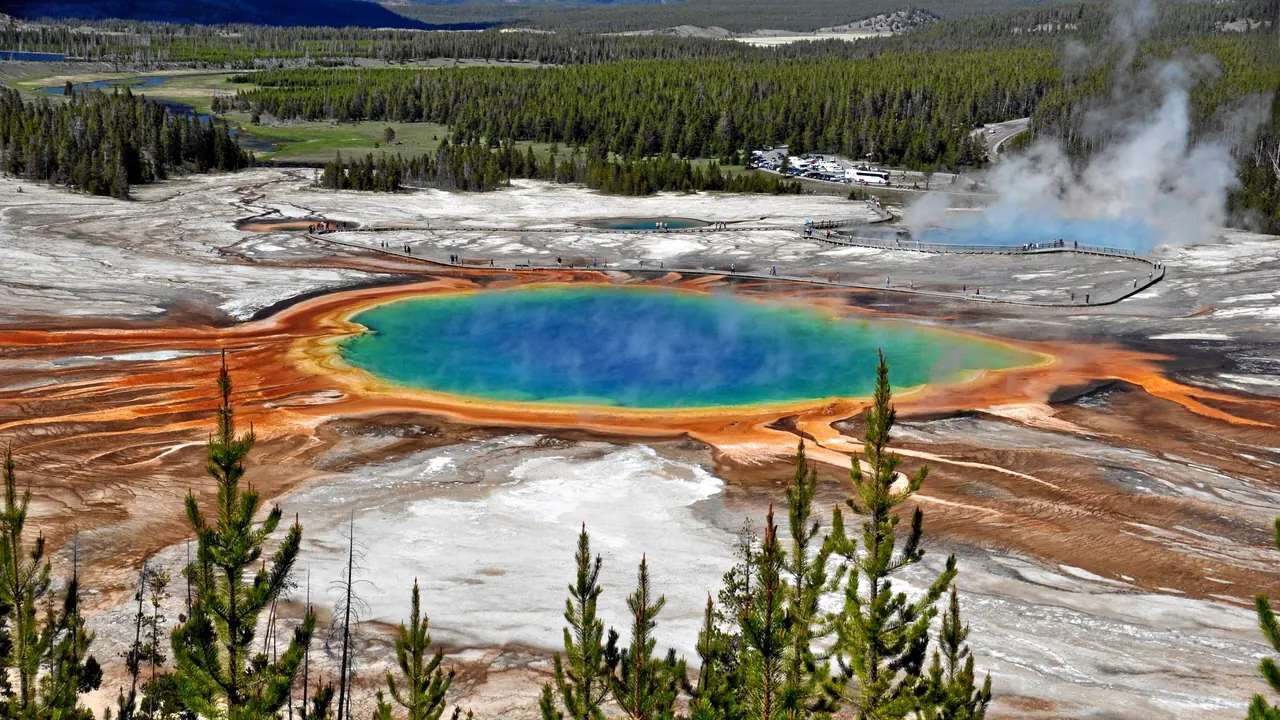
Photos: Denali by Fährtenleser, CC BY-SA 3.0, cropped; Yellowstone by James St. John from Newark, Ohio, CC BY 2.0, cropped.
Denali or Yellowstone?
Our verdict in twelve categories, each scored against the same fixed benchmark cities, and the climate month by month, so you can choose for your trip.
Choose Denali for
- getting around
- nightlife
Denali suits the traveller who wants raw, trackless wilderness and will happily give a whole day to a slow bus ride for the chance of a grizzly, a wolf or a clear view of North America's highest mountain. You can arrive by train from Anchorage or Fairbanks and leave the car behind, which is part of the appeal, and the open tundra beyond the road invites walking with no trail at all. In return it asks for a lot: a short season, high costs and almost nothing to do except be outdoors.
Choose Yellowstone for
- culture and sights
- families
- prices
Yellowstone is the easier and broader choice, especially for families and first-time visitors to the American West. Geysers, hot springs, canyons and roadside bison give children something new at every stop. The historic lodges and Fort Yellowstone add some history, and Cody and Jackson are close enough for a change of scene. You pay for it with hours at the wheel and crowded car parks in high summer, though the trip still costs somewhat less than Denali.
Scoreboard
Twelve categories on one fixed scale from 0 to 100. The shaded stretch is the gap between the two.
Your match
Pick a travel style or drag the sliders, and both match scores follow your weighting.
Wins on getting around and nightlife with your weighting.
Wins on culture and sights and families with your weighting.
What matters to you?
Category by category
What the scores mean for a trip.
Beaches & swimming
Neither is a swimming destination, and the difference lies in what you do instead. In Denali, the glacier-fed rivers and kettle lakes allow a cold plunge at most, so a lodge hot tub is the realistic choice. Yellowstone has a quick summer dip in the Firehole River canyon near Madison and commercial hot-spring pools outside the park, but its lake stays dangerously cold and its thermal pools are off limits.
Food & drink
In both places food is about feeding people before an early start. Denali's local dishes are wild salmon, halibut and reindeer sausage at the seasonal salmon bakes along the Nenana River. Talkeetna's old roadhouse breakfasts are the meals with the most character.
Yellowstone leans towards bison burgers, Rocky Mountain trout and huckleberry pie, and its historic lodge dining rooms give dinner a sense of occasion. Its better kitchens in Jackson and Bozeman are a long drive from the geyser basins, though, so in practice both trips run on packed lunches.
Culture & sights
Denali's sights fit into an afternoon: the visitor centre's exhibits on subarctic ecology, the working sled dog kennels and the false-fronted frontier buildings of Talkeetna. Athabascan history is part of the region's story, but there is little of it to visit.
Yellowstone has a good deal more, as the world's first national park, founded in 1872. The great log lobby of the Old Faithful Inn, the Roosevelt Arch and the stone buildings of Fort Yellowstone at Mammoth tell the story of the park's early years. The Buffalo Bill Center of the West in Cody adds a major museum of Plains Indian cultures and Western art.
Nightlife
Both go to bed early, Denali because of dawn buses and glacier flights and Yellowstone because of dawn wildlife watching in Lamar Valley. The setting is what differs. Denali's saloon-style bars and Talkeetna's old bars liven up a little on summer weekends under a sky that barely gets dark, while a Yellowstone evening is a lodge lounge, a ranger talk or a dark sky full of stars.
Nature & outdoors
Both are among the great wild places of North America, and the choice is between two kinds of spectacle. Denali offers scale and emptiness: a 6,190m mountain rising straight from the tundra, one road into the park, and grizzlies, caribou and Dall sheep seen from the bus. There is off-trail walking and glacier landings for those who want more, but the season is short and the mountain often hides in cloud.
Yellowstone offers variety and strangeness: most of the world's active geysers, Grand Prismatic Spring, the terraces at Mammoth and the canyon at Lower Falls. There are bison in Hayden Valley and wolves in Lamar, marked backcountry trails, the Tetons next door and a winter season by snowcoach.
Day trips
Neither works as a touring base, but Yellowstone has more within driving range. From Denali the choices are Fairbanks, for the university museum and a sternwheeler trip, or Talkeetna, which most people treat as an overnight stop on the way in.
Around Yellowstone there is a day out in each direction: Jackson with its galleries and wildlife art museum, Buffalo Bill's Cody, the university town of Bozeman, the gold-rush settlements of Virginia City and Nevada City, and the Beartooth Highway climbing to Red Lodge. Each one is a long drive for a single stop.
Good for families
Denali works for older children who can manage a full day on a gravel-road bus, and the sled dogs and junior ranger activities are a real highlight. Fierce early-summer mosquitoes, sudden cold rain and age limits on rafting and glacier flights mean families with toddlers mostly stay near the entrance.
Yellowstone is the easier place to bring children of any age. Short, flat boardwalks, a geyser that erupts on time and mud pots that belch keep younger children busy, and the wildlife centre in West Yellowstone shows bears and wolves up close. The trade-off is long car journeys and constant watchfulness around the thermal pools and the bison.
Getting around
Denali is the one you can do without a car. The railway from Anchorage or Fairbanks stops at the park entrance, free shuttles link the visitor centre, kennels and trailheads, and park buses go deep along the gravel road where private cars cannot. You only need a hire car, a coach seat or the train, booked ahead, if you want to add Talkeetna.
Yellowstone depends on your own wheels. The Grand Loop Road is about 230km of slow figure-of-eight with no public transport, frequent stops for bison and full car parks at Old Faithful. The airports at Bozeman, Jackson and Cody are one to two hours from the gates, and in winter the interior can be reached only by snowcoach or snowmobile.
Shopping & style
Shopping hardly matters in either. Denali has summer gift shops at the entrance and a few Talkeetna galleries selling Alaska Native work. Yellowstone's gateway towns add fly-fishing and outdoor gear, and Cody and Jackson sell Western boots, hats and wildlife bronzes. Bring rain gear and insect repellent to Denali from home, as the choice there is thin.
Affordability
Both are expensive, but Denali is harder on the wallet. Nearly everything is trucked in for a short season, the simple lodges at the entrance charge high rates, and bus tickets, rafting and glacier flights pile up. Camping and cooking for yourself is the main way out.
Yellowstone costs a lot in July and August, and Jackson is famously dear, yet the geysers, canyons and wildlife cost nothing beyond park entry. Campgrounds, picnic lunches, a room in a smaller gateway town or a visit in spring or autumn all bring the bill down noticeably.
Live music & performing arts
Neither is a place for an evening at a show, but Yellowstone has a little more. Denali has a gold-rush dinner show near the entrance, the odd weekend band in Talkeetna and the town's long-running bluegrass gathering in high summer. Around Yellowstone there is the nightly summer rodeo in Cody, family musicals in West Yellowstone and a professional orchestra playing a summer classical season at Teton Village near Jackson.
Wellness & relaxation
Denali has no bathing tradition, and its nearest hot springs lie well beyond Fairbanks. Its calm comes from a riverside cabin or a remote lodge deep in the park, with endless evening light and no traffic, though the bus timetables keep most visits on an early schedule.
Yellowstone is a little better for unwinding because it has somewhere to soak. There are open-air hot-spring pools with mountain views near Gardiner and in Paradise Valley. Early mornings by the lake and the quieter weeks of September and October bring real stillness away from the busy loop road.
When should you go?
Pick your month. The climate figures are measured averages, not a forecast.
Denali in July
Yellowstone in July
Daytime high, °C
Rainfall in the month, mm
Where the figures come from
Denali has no rain gauge within 25 km of the centre, so its rainfall comes from a gridded climate dataset read at the destination rather than from a gauge further away.
Yellowstone has no weather station within reach, so its figures come from a gridded climate model rather than a measured record, and read a broad area rather than one spot.
Temperature and rainfall are climate normals, averaged over the years shown. Denali: 2006-2020 (rainfall 1991-2020) normals, McKinley / Mckinley Park (1.2 km from centre). Yellowstone: 2001-2020 normals, NASA POWER reanalysis grid, no weather station within 90 km.
Both are summer destinations, but the summers feel different. Around the Denali park entrance the warmest weeks of June and July reach only about 19°C, and this is also when the rain comes. It peaks at around 76mm in July and stays heavy into August, so you need waterproofs on every bus day. September cools quickly and brings the tundra colour. From October the region is in deep cold, with winter highs far below freezing.
Yellowstone is warmer and drier at its peak. July and August reach around 25°C with only about 36mm of rain, the driest part of its year, which is ideal for long days on the boardwalks and trails. June and September are mild and good for walking. From late autumn through spring, steady snow and cold set in. If you want comfortable walking weather, Yellowstone's window is longer and warmer, and Denali's is shorter and wetter.
Which traveller are you?
On a family trip with children, Yellowstone is the better fit. Old Faithful erupts on schedule, mud pots bubble beside flat boardwalks and bison wander by the road. Denali's long gravel-road bus days and its age limits on rafting and glacier flights suit older children best.
For a trip on a tight budget, Yellowstone is the kinder of two expensive places. Its sights cost nothing beyond park entry, and campgrounds and the smaller gateway towns cut costs. Denali's costly lodges, buses and flights leave few savings beyond camping.
For an outdoors trip, both are superb, but Denali offers the wilder kind. Beyond its single road there are almost no trails, so you pick a ridge and walk across the tundra. Small planes also land on its glaciers, something Yellowstone's geyser basins cannot match.
Before you go
| Measure | Denali | Yellowstone |
|---|---|---|
| Currency | US Dollar (USD) | US Dollar (USD) |
| Sockets | AB120 V, 60 Hz | AB120 V, 60 Hz |
| Driving side | Right | Right |
| Time zone | UTC-9, UTC-8 in summer | UTC-7, UTC-6 in summer |
| Emergency number | 911 | 911 |
| Main airport | Fairbanks International Airport (FAI)15 non-stop destinations | Bozeman Yellowstone International Airport (BZN)27 non-stop destinations |
| Public holidays this year | 12 days | 11 days |
Where else could you go?
Every comparison below shares a destination with this one, so you can follow Denali or Yellowstone somewhere new.
- Grand Tetonvs Yellowstone
- Glacier National Parkvs Yellowstone
- Rocky Mountain National Parkvs Yellowstone
- Archesvs Yellowstone
- Canyonlandsvs Yellowstone
- Bryce Canyonvs Yellowstone