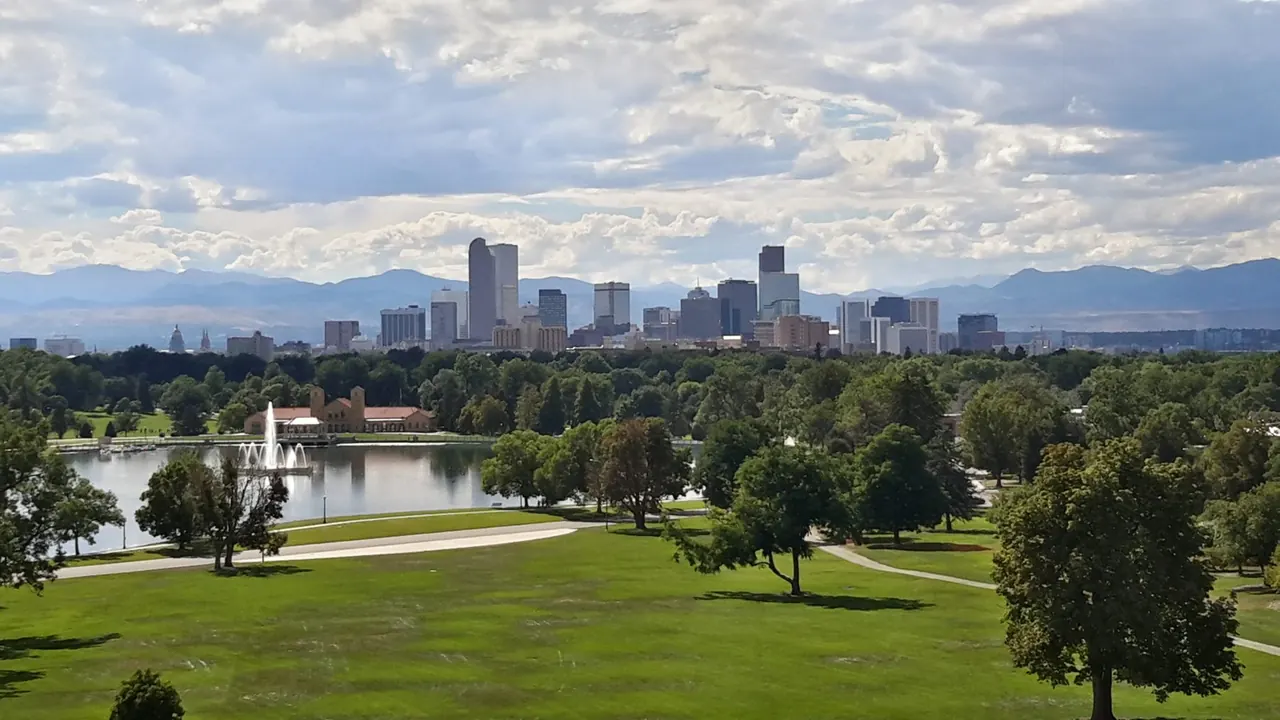
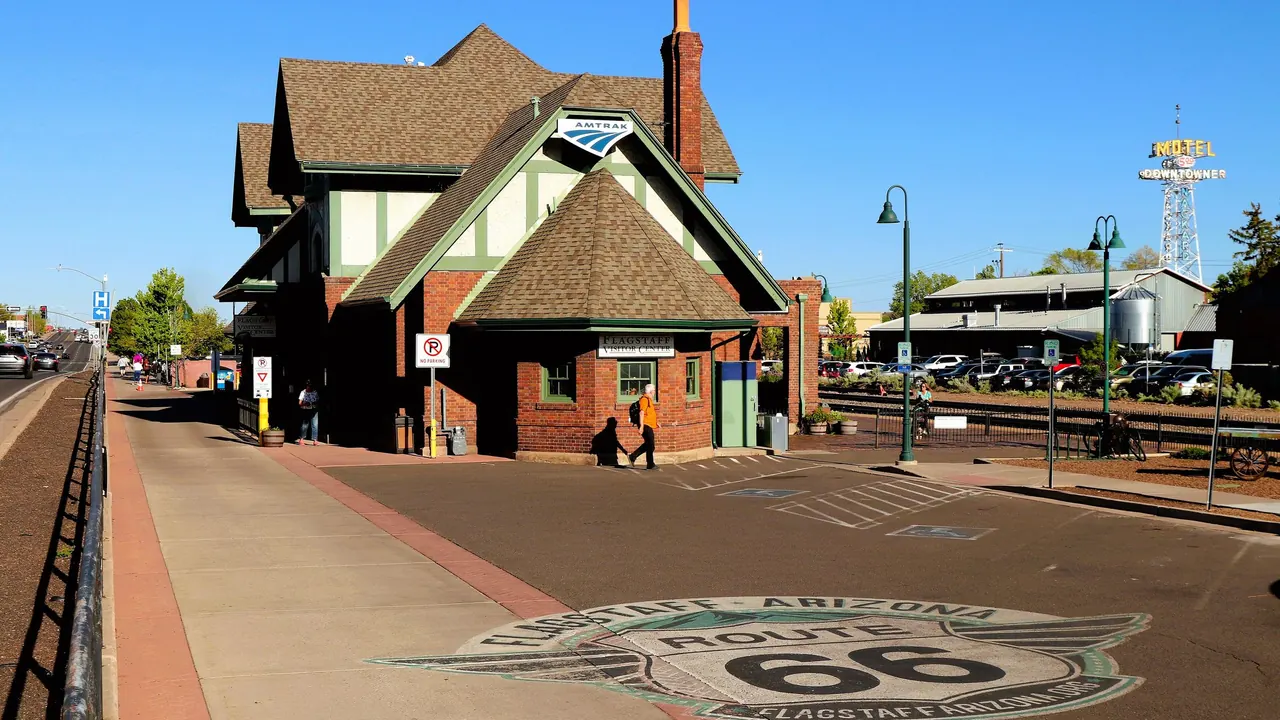
Photos: Denver by Zenhaus, CC BY-SA 4.0, cropped; Flagstaff by Thank You (25 Millions) views, CC BY 2.0, cropped.
Denver or Flagstaff?
Our verdict in twelve categories, each scored against the same fixed benchmark cities, and the climate month by month, so you can choose for your trip.
Choose Denver for
- live music and the arts
- food and drink
- nightlife
Denver suits travellers who want the mountains and a proper city on the same trip. Days can go on Red Rocks, the foothills or the ski resorts, and evenings on things Flagstaff can't match: taprooms in RiNo, a theatre district covering several blocks, concerts between sandstone walls and a broader spread of museums. It is also the easier choice with younger children, who get a zoo, an aquarium and a dinosaur hall between drives into the mountains.
Choose Flagstaff for
- nature and the outdoors
- prices
- beaches
Flagstaff is for the traveller who has come for the landscape. This small town in a pine forest is a base for the Grand Canyon, Sedona's red rock, the San Francisco Peaks and ancient pueblo ruins, and the Lowell Observatory and very dark skies fill the evenings. Food, nightlife and shopping are modest, the drives are long and nights end early. Come for early starts on the trail and starry skies, not for the town itself.
Scoreboard
Twelve categories on one fixed scale from 0 to 100. The shaded stretch is the gap between the two.
Your match
Pick a travel style or drag the sliders, and both match scores follow your weighting.
Wins on live music and the arts and food and drink with your weighting.
Wins on nature and the outdoors and prices with your weighting.
What matters to you?
Category by category
What the scores mean for a trip.
Beaches & swimming
Neither city is anywhere near the sea, and swimming is a small extra in both. What differs is the kind of water. Denver has sandy reservoir beaches at Cherry Creek and Chatfield on the edge of the city. Flagstaff's swimming is the cold creek pools and rock slides of Oak Creek Canyon, on the road down to Sedona, which are scenic but slippery and crowded at weekends.
Food & drink
Beer leads in both places, but Denver eats much better. Its taprooms fill whole warehouse blocks in RiNo, and there is real cooking beyond them: green chile poured over burritos, Colorado lamb and bison, chef-run restaurants in Highland and LoHi, and a long run of Vietnamese and Mexican places along Federal Boulevard.
Flagstaff has patio breweries downtown and in the Southside, plus diners, barbecue and the odd Navajo taco. That is enough to refuel after a day on the trail, but you would not choose the town for its food.
Culture & sights
Denver has the deeper set of sights. The Denver Art Museum's Native American collection, the single-artist Clyfford Still Museum and the gold-domed Capitol sit together around Civic Center Park, and LoDo's warehouses and the Beaux-Arts Union Station add a couple of days of walking.
Flagstaff's list is shorter but distinctive. The Lowell Observatory, where Pluto was found in 1930, and the Museum of Northern Arizona's Hopi, Navajo and Zuni art are both worth a visit. The ancient pueblo ruins around the town add a kind of history Denver doesn't have.
Nightlife
Both towns go out in bars and breweries rather than clubs, but Denver offers much more of it. Game nights in LoDo, cocktail bars in RiNo, dive bars on East Colfax and quieter neighbourhood rounds in Highland give real choice, and bars stay open until 2am.
In Flagstaff, a night out is a short walk between taprooms and old Route 66 saloons downtown. Students liven it up during term, but it is usually over early, which suits people getting up for the Grand Canyon.
Nature & outdoors
Both are true mountain bases, and Flagstaff has a slight edge because so much is close by. The San Francisco Peaks, a huge ponderosa forest, the lava fields of Sunset Crater and trails starting in town are all on its doorstep. The Grand Canyon's South Rim, Sedona and Meteor Crater are close enough for day outings, and the town's dark skies make stargazing part of the trip.
Denver's mountain country is bigger and higher, but you drive further to reach it. Red Rocks and the foothills above Golden are close, while Rocky Mountain National Park and the major I-70 ski resorts take about two hours. Skiers will find far more terrain from Denver than at Flagstaff's single ski area.
Day trips
The two are about equal for day trips, but the outings are of different kinds. Denver's are Western towns: Boulder under the Flatirons, the Victorian mining streets of Georgetown and Idaho Springs, Colorado Springs and the gateway town of Estes Park.
Flagstaff has the ancient Southwest that Denver can't reach in a day: Sinagua ruins at Walnut Canyon and Wupatki, the cliff dwellings of Montezuma Castle, and the Hopi mesas. Hillside Jerome and the Grand Canyon railway from Williams add variety. Both need a car.
Good for families
Denver offers families more in town. City Park has the zoo and the Museum of Nature & Science side by side, and the Children's Museum, an aquarium and an amusement park are grouped along the South Platte near downtown.
Flagstaff's attractions are fewer but suit curious children: telescope evenings at the observatory, dinosaurs at the Museum of Northern Arizona, rope courses in the pines and winter snow play. The town sits higher than Denver, so small children may feel the altitude more, and outings involve longer drives.
Getting around
Denver is the easier city to manage without a car, at least around the centre. A commuter train runs from the airport to Union Station, a free shuttle bus runs the length of the downtown pedestrian mall, and light rail reaches the suburbs. LoDo and the Civic Center museums are all within walking distance of each other.
Flagstaff's downtown and Southside are pleasant to walk, and the town's trail network makes cycling practical. Beyond that, the motels along old Route 66 are spread out and the local buses mostly serve the university and main roads. In both places the mountains and day trips need a hire car. Flagstaff's mountain roads can be icy in winter, and Denver's main highway into the mountains is known for heavy weekend traffic.
Shopping & style
Denver has more choice. There are the mall and boutique blocks of Cherry Creek, vintage and record shops on South Broadway, big outdoor gear flagships, and Western wear from boots to hats.
Flagstaff is small-scale, but it has one thing worth buying: Native American craft. Navajo rugs, Hopi kachina carvings and silver and turquoise jewellery are sold through downtown galleries, the museum shop and trading posts outside town.
Affordability
Neither is cheap, but Flagstaff costs somewhat less. Chain motels along old Route 66 keep a basic stay affordable, though prices rise on summer weekends when the town fills with Grand Canyon visitors, and park entry fees add to the bill.
Denver's downtown hotels are expensive during conventions and ski season. Staying near the light rail and eating at taquerias softens the cost. Both need a hire car and both add tips to every meal.
Live music & performing arts
This is where the two differ most. Denver has Red Rocks, a concert stage between two huge sandstone monoliths, plus a downtown arts centre covering several blocks with theatre, touring musicals, the Colorado Symphony, opera and ballet. Five Points adds its jazz heritage.
Flagstaff's calendar is pleasant but small: the symphony and university concerts on campus, touring folk and indie acts at the restored Orpheum, and outdoor summer concerts in the pines.
Wellness & relaxation
Neither has a bathing tradition, but Denver is a little better placed. It has hotel and day spas in town, and Idaho Springs, under an hour away, has historic mineral pools and steam caves.
Flagstaff has no hot springs and only a few spas, so people who want treatments drive down to Sedona's resorts. Its own calm comes from cool evenings, pine air and bright stars. Note that the altitude can disturb sleep for the first night or two.
When should you go?
Pick your month. The climate figures are measured averages, not a forecast.
Denver in July
Flagstaff in July
Daytime high, °C
Rainfall in the month, mm
Where the figures come from
Flagstaff has no rain gauge within 25 km of the centre, so its rainfall comes from a gridded climate dataset read at the city rather than from a gauge further away.
Temperature and rainfall are climate normals, averaged over the years shown. Denver: 1991-2020 normals, Denver / Stapleton International, Co. (11.2 km from centre). Flagstaff: 1991-2020 normals, Flagstaff / Fort Tuthill (7.4 km from centre).
Denver has a real summer. July reaches about 32°C, which makes midday walking hot, and most of the year's rain falls from late spring through summer as short storms. Late May, June and September are the best months for walking around the city and hiking in the foothills. Winters are dry and bright, with mild days often good for walking between snowfalls, and they bring the ski season in the mountains to the west.
Flagstaff stays cooler all year because of its altitude. The warmest summer days reach only about 27°C, which is comfortable for hiking. June is the driest month at around 6mm, and July and August bring monsoon storms in the afternoons, with August near 64mm, so hikes are best started early. Winters are colder and snowier than Denver's, with January highs near 5°C. Late spring and early autumn are the best times for walking and canyon trips.
Which traveller are you?
On a culture and arts trip, Denver is clearly ahead. Its Civic Center museums, the Clyfford Still collection, the Denver Center's theatre, symphony and opera, and summer shows at Red Rocks give far more to fill the evenings than Flagstaff's Orpheum and campus concerts.
For an outdoors trip, Flagstaff is the better base. The San Francisco Peaks, the ponderosa forest trails and Sunset Crater are right on the edge of town, and the Grand Canyon's South Rim and Sedona's red rock canyons are close enough for day outings.
For a food and nightlife trip, choose Denver. It brews on a far bigger scale, Federal Boulevard and Highland add real cooking to the beer, and there are several areas for a night out, from LoDo to East Colfax, open until 2am. In Flagstaff most places are quiet well before then.
Before you go
| Measure | Denver | Flagstaff |
|---|---|---|
| Currency | US Dollar (USD) | US Dollar (USD) |
| Sockets | AB120 V, 60 Hz | AB120 V, 60 Hz |
| Driving side | Right | Right |
| Time zone | UTC-7, UTC-6 in summer | UTC-7 |
| Emergency number | 911 | 911 |
| Elevation | 1,609 m | 2,106 m |
| Main airport | Denver International Airport (DEN)30 km from centre231 non-stop destinations | Flagstaff Pulliam Airport (FLG)7 km from centre2 non-stop destinations |
| Public holidays this year | 12 days | 12 days |
By the numbers
| Measure | Denver | Flagstaff |
|---|---|---|
| City population | 715,522 | 76,831 |
| People per km² | 1,783 | 464 |
| Museums within 10 km | 26 | 1 |
| UNESCO World Heritage sites within 50 km | 0 | 0 |
Where else could you go?
Every comparison below shares a destination with this one, so you can follow Denver or Flagstaff somewhere new.