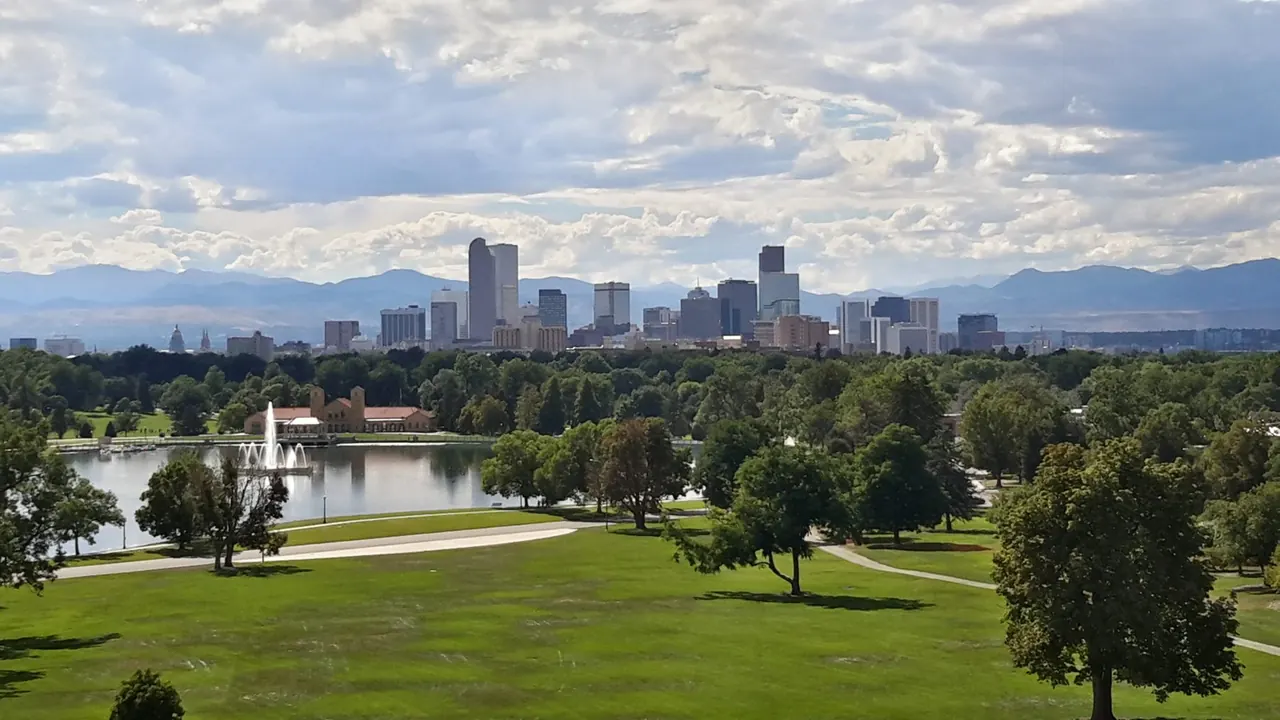
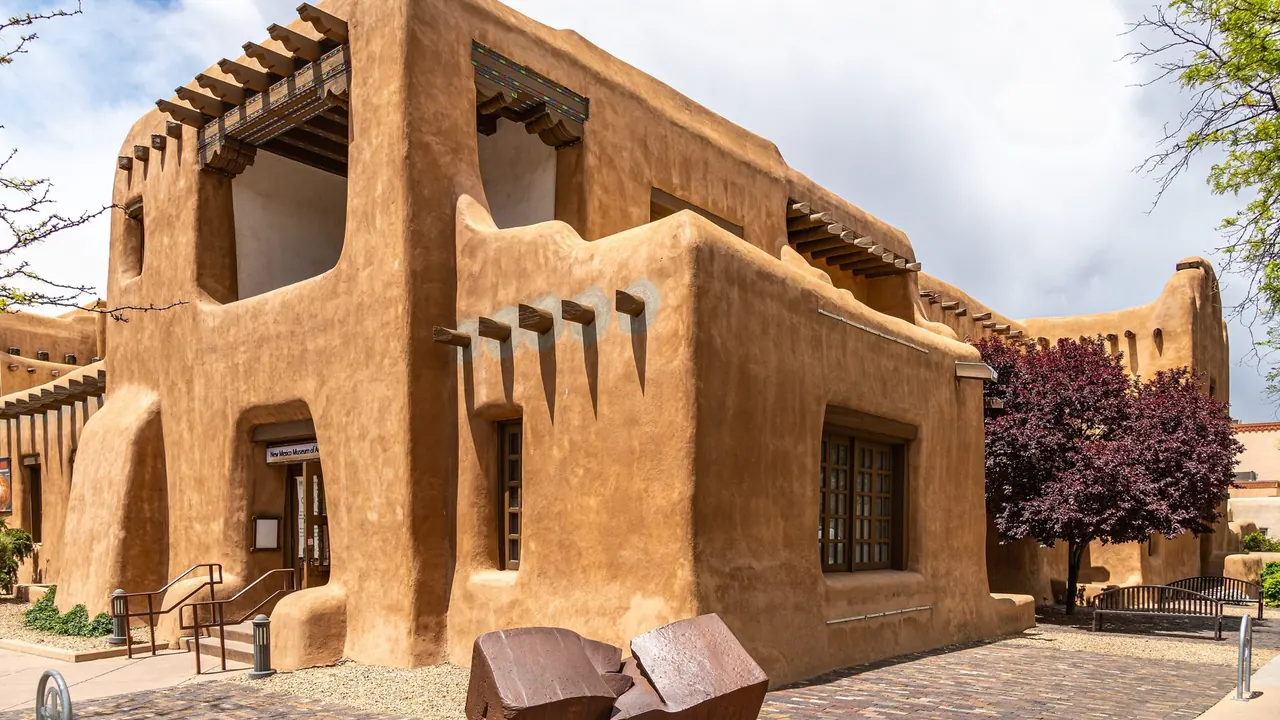
Photos: Denver by Zenhaus, CC BY-SA 4.0, cropped; Santa Fe by dconvertini, CC BY-SA 2.0, cropped.
Denver or Santa Fe?
Our verdict in twelve categories, each scored against the same fixed benchmark cities, and the climate month by month, so you can choose for your trip.
Choose Denver for
- nightlife
- families
- live music and the arts
Denver is the better base for a sociable, active trip with a bigger city behind it. Evenings in its brewery districts, concerts at Red Rocks and a theatre complex that runs all year, plus a zoo and science museum for children, give it more to fill the hours after a day in the Rockies. It suits groups, families and anyone who wants a lively evening as well as a mountain view.
Choose Santa Fe for
- culture and sights
- shopping
- wellness
If you would rather spend your days among adobe churches, pueblos and galleries, Santa Fe is the stronger pick. Its four centuries of history, its own regional cuisine, its art and craft markets and its slower, soak-and-unwind pace make it the choice for couples and culture lovers. It is quieter after dark, and it repays a hire car and a curiosity about the Southwest.
Scoreboard
Twelve categories on one fixed scale from 0 to 100. The shaded stretch is the gap between the two.
Your match
Pick a travel style or drag the sliders, and both match scores follow your weighting.
Too close to call, level with your weighting
Wins on nightlife and families with your weighting.
Wins on culture and sights and shopping with your weighting.
What matters to you?
Category by category
What the scores mean for a trip.
Beaches & swimming
Neither city is a beach destination, and on that they are level. What differs is how close the water is. Denver's sandy reservoir beaches at Cherry Creek and Chatfield sit on the edge of the city, and it has outdoor public pools for a summer afternoon. In Santa Fe, swimming means a hotel pool or an outing of about an hour to Abiquiu Lake or a float on the Rio Grande.
Food & drink
Santa Fe has the more distinctive table. New Mexican cooking, with red or green chile, blue corn, posole and sopaipillas, is a cuisine of its own, served in old adobe dining rooms around the Plaza. The town also has a fine-dining tier unusual for somewhere so small, and the Railyard farmers' market is worth a morning.
Denver eats more widely but less memorably. Beer is its real speciality, poured in taprooms across RiNo and around Coors Field, and Federal Boulevard adds a long run of Vietnamese and Mexican cooking. Green chile turns up here too, but few dishes are unique to the city.
Culture & sights
Santa Fe is the richer place for sightseeing. Founded as a Spanish capital in 1610, it keeps a low adobe centre around the Plaza, where the Palace of the Governors stands near the cathedral and the Loretto Chapel. Museum Hill's folk and Native American collections and the Georgia O'Keeffe Museum go well beyond what its size would suggest.
Denver, a gold-rush city from 1858, offers a tidier set of sights around Civic Center Park: the gold-domed Capitol, the Denver Art Museum with its Native American holdings, and the Clyfford Still Museum. Add LoDo's warehouses and Union Station and it fills two good days rather than shaping a whole trip.
Nightlife
Denver is far better for going out. It has taprooms and cocktail bars in RiNo's warehouses, crowds in LoDo on game nights and dive bars along East Colfax, and bars stay open until 2am. The club scene is small, but there is always somewhere to go.
Santa Fe winds down early. A night out there usually means a long dinner and a margarita with a sunset view over the Jemez Mountains, and the streets are quiet before midnight. People who want more drive to Albuquerque.
Nature & outdoors
Both sit right against serious mountains, so the difference is in the landscape rather than the quality. Denver looks onto the Rockies proper. Red Rocks and the Golden foothills are half an hour away, there are high summits over 4,000m and Rocky Mountain National Park's tundra and elk, and city bike trails follow Cherry Creek. The big ski resorts are about two hours away along a busy I-70.
Santa Fe mixes mountain and desert. Aspen forest and the Pecos Wilderness rise behind town, and its ski area is under an hour from the Plaza. To the west there are mesas and badlands, the volcanic bowl of Valles Caldera, rafting in the Rio Grande Gorge and the red cliffs around Abiquiu.
Day trips
Santa Fe has the stronger list of excursions, and many of them carry real historical weight. The High Road runs through Chimayo and Truchas to Taos Pueblo, a World Heritage Site. Bandelier's cliff dwellings, the Pecos pueblo ruins, O'Keeffe country at Ghost Ranch and Los Alamos's atomic history are all within a day.
Denver's outings are pleasant small Western towns: Boulder under the Flatirons, Georgetown with its narrow-gauge railway, Manitou Springs and Estes Park at the national park gate. The great Southwestern heritage sites are out of reach from there.
Good for families
Denver is much the easier city with children. City Park pairs the zoo with a museum of dinosaurs, a planetarium and dioramas, and the Children's Museum, an aquarium and an amusement park sit together near downtown. In summer the parks and splash fountains add more.
Santa Fe is built around art and long dinners, which suit few children. The children's museum, the toys in the folk art collection and the ladders at Bandelier help, but it works best for older children who like hiking and history. Its 2,100m altitude can tire little ones for the first day or two.
Getting around
The two are much alike: a walkable centre surrounded by sprawl, and a hire car for nearly everything beyond it. Denver has more transit in the city itself, with a train from the airport to Union Station, light rail to the suburbs and a free shuttle along the 16th Street Mall.
Santa Fe's adobe core is smaller and more pleasant on foot, with the Plaza, Canyon Road and the Railyard within about twenty minutes of each other. Its buses are infrequent, though, and only the Rail Runner to Albuquerque reaches out of town without a car.
Shopping & style
Santa Fe is the better place to shop, as long as you are after art or craft. Denver does better on the everyday range: the upscale mall at Cherry Creek and the boutiques around it, vintage clothes and records along South Broadway, and large flagship stores for outdoor gear, which Santa Fe cannot match, along with cowboy boots and hats.
In Santa Fe, Native American artists sell silver, turquoise jewellery and pottery directly under the portal of the Palace of the Governors, and galleries crowd Canyon Road and the Railyard. In summer the Indian, Spanish and folk art markets bring serious buyers from across the country. Fashion, department stores and luxury brands are scarce, though, and the galleries charge what a real art market charges.
Affordability
Neither is cheap, but Denver is a little easier on the budget. Its prices are those of a typical American big city, and taquerias, breweries, a bed out along the light rail and free trails keep costs down.
Santa Fe charges resort rates around the Plaza, and its restaurants and galleries are priced for well-off visitors. Staying along Cerrillos Road helps, but in both places a hire car adds to the bill.
Live music & performing arts
Denver has more going on through the year. Red Rocks Amphitheatre, with its stage between sandstone monoliths, is a summer concert pilgrimage. The Denver Center for the Performing Arts hosts theatre, touring musicals, symphony, opera and ballet, and Five Points has deep jazz roots.
Santa Fe has one showpiece, the open-sided opera house on a hill north of town, known for rare and new works staged as the sun sets. Add the chamber music festival and flamenco, and midsummer is rich. Outside that season, its calendar shrinks to the Lensic theatre and church concerts.
Wellness & relaxation
Santa Fe is the more restorative stay. Onsen-style soaking tubs sit among the pines on the road to the ski area, and the old mineral pools at Ojo Caliente are about an hour north. It has plenty of spas and healers, and its adobe courtyards and early nights slow the pace on their own.
In Denver, wellness means hotel spas and yoga studios in the city. The nearest real soak is in the historic pools and steam caves at Idaho Springs, under an hour into the mountains.
When should you go?
Pick your month. The climate figures are measured averages, not a forecast.
Denver in July
Santa Fe in July
Daytime high, °C
Rainfall in the month, mm
Where the figures come from
Santa Fe's station stands 199 m below the city centre, so the centre is likely a little cooler than the figures say.
Santa Fe has no rain gauge within 25 km of the centre, so its rainfall comes from a gridded climate dataset read at the city rather than from a gauge further away.
Temperature and rainfall are climate normals, averaged over the years shown. Denver: 1991-2020 normals, Denver / Stapleton International, Co. (11.2 km from centre). Santa Fe: 1991-2020 normals, Santa Fe / Cieneguilla (12.4 km from centre).
Both cities are high and dry, with cold winters, hot summers and the most pleasant walking in late spring and early autumn. Denver climbs to about 32°C in July, which makes midday sightseeing tiring, and its rainiest stretch runs from May through August. Winters there are cold but dry, better suited to the ski slopes than to strolling the streets. The reservoir beaches are only really warm enough for a swim from June to August.
Santa Fe warms up sooner, reaching 31°C by June, and its spring is very dry. The rain comes late instead, with July and August bringing around 60mm each, so mornings are the best time for trails in high summer. September and October are mild and drier in both cities and make the most comfortable time for either trip, while December and January are cold enough in both to keep walks short.
Which traveller are you?
On a culture and arts trip, Santa Fe is the clear choice. A Spanish colonial Plaza, old adobe chapels, Museum Hill, the O'Keeffe museum and the galleries of Canyon Road give it much more depth than Denver's younger Western sights.
On a family trip with children, Denver works better. City Park pairs the zoo with a dinosaur-filled science museum, the riverside cluster near downtown adds an aquarium and an amusement park, and easy mountain outings are close by. Santa Fe is mostly galleries and long dinners.
For a relaxing and wellness trip, Santa Fe is the gentler place. It has onsen-style soaking tubs in the pines above town, the old mineral pools at Ojo Caliente, plenty of spas and yoga studios, and evenings that end early. Denver's hot springs are a drive into the mountains.
Before you go
| Measure | Denver | Santa Fe |
|---|---|---|
| Currency | US Dollar (USD) | US Dollar (USD) |
| Sockets | AB120 V, 60 Hz | AB120 V, 60 Hz |
| Driving side | Right | Right |
| Time zone | UTC-7, UTC-6 in summer | UTC-7, UTC-6 in summer |
| Emergency number | 911 | 911 |
| Elevation | 1,609 m | 2,134 m |
| Main airport | Denver International Airport (DEN)30 km from centre231 non-stop destinations | Santa Fe Municipal Airport (SAF)12 km from centre5 non-stop destinations |
| Public holidays this year | 12 days | 13 days |
By the numbers
| Measure | Denver | Santa Fe |
|---|---|---|
| City population | 715,522 | 87,505 |
| People per km² | 1,783 | 645 |
| Museums within 10 km | 26 | 10 |
| UNESCO World Heritage sites within 50 km | 0 | 0 |
Where else could you go?
Every comparison below shares a destination with this one, so you can follow Denver or Santa Fe somewhere new.