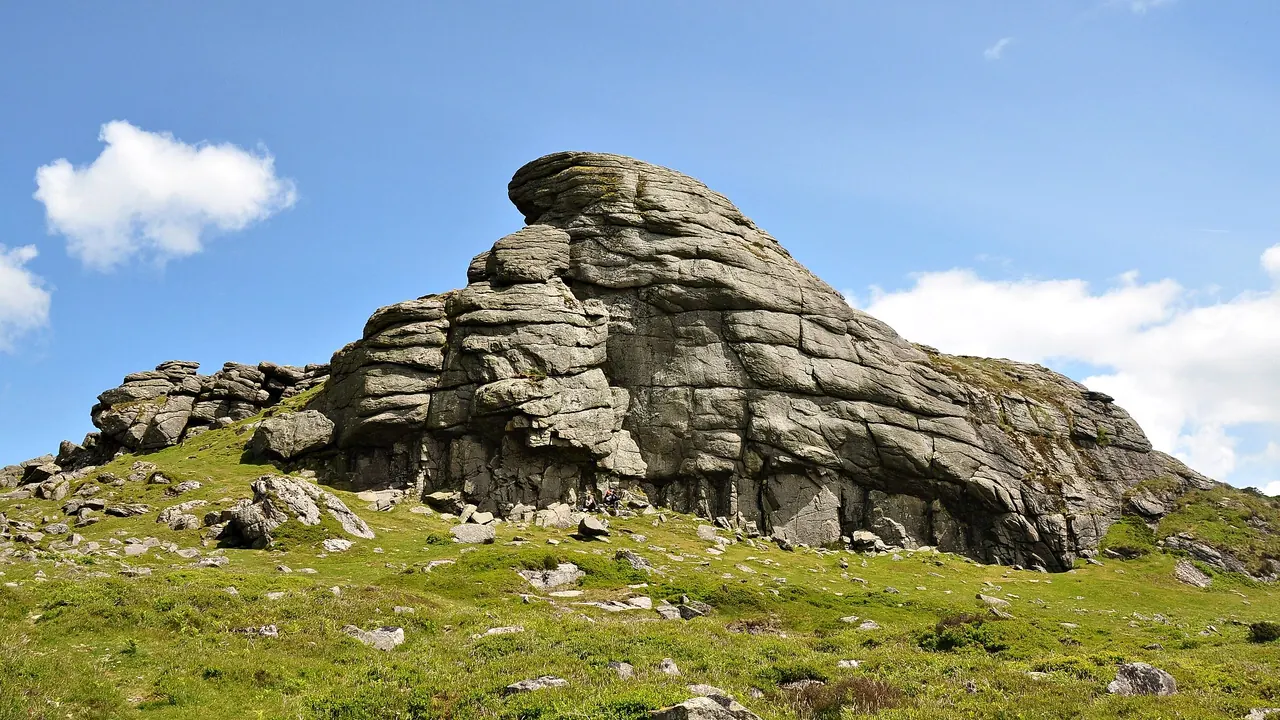
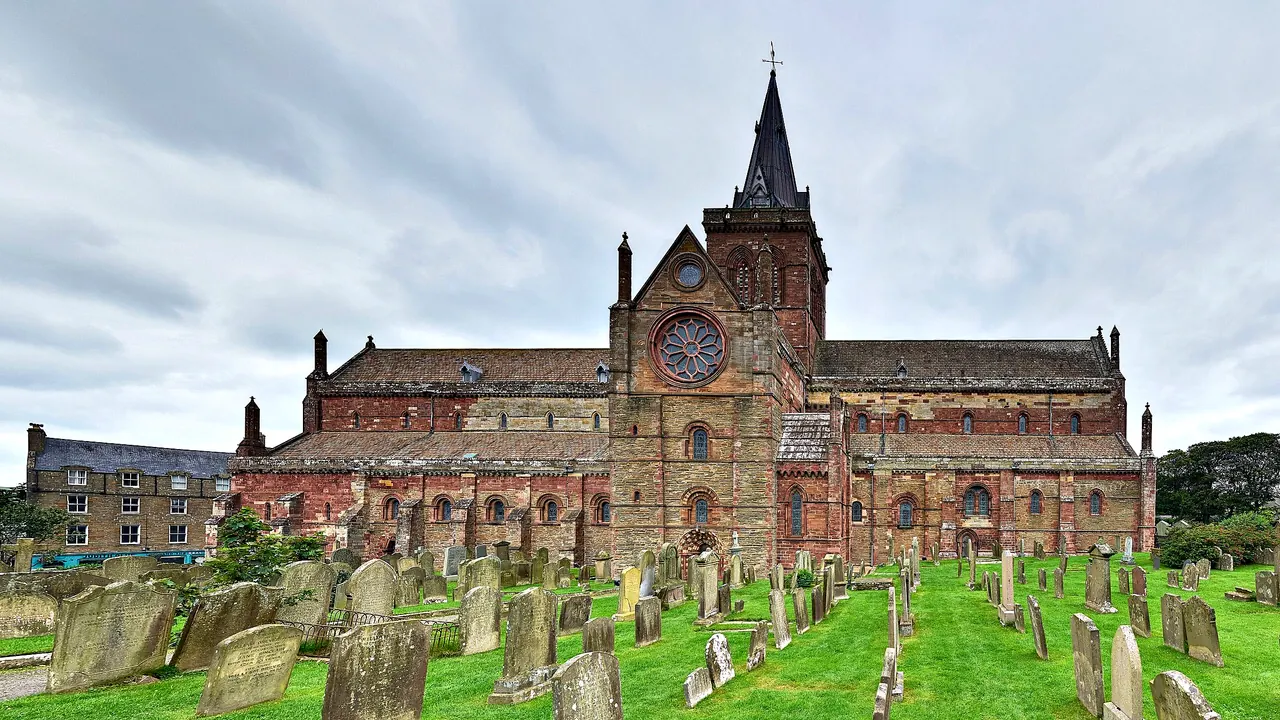
Photos: Devon by Nilfanion, CC BY-SA 3.0, cropped; Orkney by Virtual-Pano, CC BY-SA 4.0, cropped.
Devon or Orkney?
Our verdict in twelve categories, each scored against the same fixed benchmark cities, and the climate month by month, so you can choose for your trip.
Choose Devon for
- families
- beaches
- day trips
Devon suits a classic British summer by the sea, especially with children or walking boots. It has two coasts of sand and coves, Dartmoor and Exmoor inland, the coast path tying them together, and a wide spread of outings from a Dart river boat to Bath or Cornwall. It is warmer and sunnier than Orkney, with more places to eat, stay and keep a family busy. The cost is a car, steep narrow lanes and patience on August roads.
Choose Orkney for
- culture and sights
- getting around
- prices
Choose Orkney for history and remoteness. The Neolithic monuments of the West Mainland, St Magnus Cathedral and the wartime remains of Scapa Flow make a far richer trip into the past than anything in Devon, and the seabird cliffs and empty shell-sand bays come with them. In return, expect cool wind, few restaurants and early nights, and plan around the ferries. On the Mainland itself, the empty roads make every site quick to reach.
Scoreboard
Twelve categories on one fixed scale from 0 to 100. The shaded stretch is the gap between the two.
Your match
Pick a travel style or drag the sliders, and both match scores follow your weighting.
Wins on families and beaches with your weighting.
Wins on culture and sights and getting around with your weighting.
What matters to you?
Category by category
What the scores mean for a trip.
Beaches & swimming
Devon has beaches you can actually spend a day on. There is surf sand backed by dunes at Woolacombe, Saunton and Croyde, sheltered estuary sand at Bantham and Bigbury, and family resort beaches in Torbay, with lifeguards and rock pools in summer. The sea is cold by any measure, but in late summer it is a few degrees warmer than Orkney's.
Orkney's pale shell-sand bays at Waulkmill, Birsay and on Sanday are just as lovely to look at and much emptier. The water stays so cold, and the wind so frequent, that they are for a brisk walk, beachcombing and watching seals rather than for swimming.
Food & drink
Both live on what they produce, but Devon gives you far more places to eat it. Crab in Dartmouth and Salcombe, Brixham fish, cream teas in village tea rooms and pub dinners on the edge of Dartmoor are easy to find, and Exeter and Plymouth widen the range.
Orkney's larder is excellent, with hand-dived scallops, grass-fed beef, farmhouse cheese and the whisky of Kirkwall's two distilleries. The trouble is finding a table: there are a modest number in Kirkwall and Stromness and sometimes none at all on the outer islands, so cooking local produce in a cottage is often the better plan.
Culture & sights
This is Orkney's great strength. Skara Brae, the Viking-scratched tomb of Maeshowe and the stone circles of Brodgar and Stenness make up a Neolithic landscape of European importance. Kirkwall adds St Magnus Cathedral and its ruined palaces, and the Italian Chapel and Scapa Flow carry the story into the twentieth century.
Devon's heritage is gentler and more spread out. Exeter Cathedral's long Gothic vault and Plymouth's cobbled Barbican are the high points, and Castle Drogo, Greenway and Dartington Hall lie scattered across the county. All of it rewards a visit, but nothing in Devon takes you back five thousand years the way Orkney's stone village and tombs do.
Nightlife
Neither is a place for going out, but Devon at least has some choice. Exeter and Plymouth have student-driven weekend scenes, with the Barbican and Union Street the busiest, and Torquay has a few summer bars and clubs. Elsewhere it is a harbourside pint or a village inn.
Orkney has no clubs at all. A night out means a pub or hotel bar in Kirkwall or Stromness, perhaps with a fiddle session, and on midsummer nights the lingering daylight often makes a late walk the better choice.
Nature & outdoors
Devon has the greater range. Dartmoor's open granite tors fill the middle of the county, Exmoor's cliffs and red deer the north, and the South West Coast Path runs along both coasts to the Jurassic Coast cliffs at Sidmouth and Beer. Surfing at Croyde, sailing on the Dart and Salcombe estuaries, and long cycle rides on the Tarka Trail add variety.
Orkney's appeal lies at the edges of low, treeless islands. It has the Old Man of Hoy, seabird colonies at Marwick Head and Noup Head, puffins, seals everywhere and the chance of passing orcas. It offers fewer kinds of outing, but the wildlife is closer and far less shared.
Day trips
Devon is well placed for outings in every direction. Bath, Wells and Bristol are reachable from Exeter, the Dorset coast is just to the east and Cornwall to the west. Inside the county there is the river trip between Dartmouth and Totnes, cobbled Clovelly and a sail to Lundy.
Orkney's day trips are island-hops by small ferry or plane. There are the cairns of Rousay, Westray's sandy bays and the Knap of Howar on Papa Westray, or a full day on Hoy. They are memorable, but each island holds a handful of sights and every outing is tied to the timetable.
Good for families
Devon is one of Britain's classic family counties, and it shows. There are gently shelving lifeguarded beaches, rock pools, Paignton Zoo, Plymouth's aquarium, farm parks and a steam line to Kingswear, with Dartmoor ponies and letterboxing for older children.
Orkney is safe and calm, and children enjoy the seals, the puffins, the replica house at Skara Brae and the ferry crossings. Beyond Kirkwall's pool, though, nothing is built for them, and a run of wet, windy days leaves few indoor options.
Getting around
Orkney is easier to get around once you have a car. The Mainland's roads are quiet, Kirkwall, Stromness and the Neolithic sites are all within half an hour of each other, and the Churchill Barriers carry you south without a ferry. The outer islands are the effort, with booked ferries and small planes that the weather can cancel.
Devon has main-line trains between Exeter, Plymouth and Torbay, including the sea-wall run at Dawlish, but the coast and moor still need a car. That means single-track lanes between high hedges, reversing to passing places, summer queues and tight parking in the harbour towns.
Shopping & style
Neither county is a reason to go shopping, and neither has a clear edge over the other. The difference is in the kind of browsing. Devon has the wider mix: independent and alternative shops on Totnes's steep high street and its weekly market, antique dealers in Honiton, galleries and sailing clothes in Dartmouth and Salcombe, craft studios at Dartington, and the familiar chains in Exeter and Plymouth when you need something ordinary.
Orkney's range is much narrower but more particular to the place. Silversmiths in Kirkwall and Stromness work Norse and Neolithic patterns into their jewellery, and knitwear, pottery and the straw-backed Orkney chair are all made on the islands, with a craft trail out to workshops on the Mainland. There is nothing for fashion or a big-store afternoon, but a piece of island silver or a bottle of Orkney whisky makes a souvenir that Devon cannot match.
Affordability
Devon's costs follow the calendar. The school summer break pushes up cottage and hotel prices, especially in the harbour towns and surf villages, while Torbay, Plymouth, inland villages and the spring and autumn months are much kinder.
Orkney's costs come from its remoteness. The shortage of rooms makes summer beds dear, and the journey adds a flight or ferry, a hire car and inter-island crossings. In both places the walks, cliffs and beaches are free, and Orkney's stone circles cost nothing to visit.
Live music & performing arts
Devon has the steadier offer. Plymouth's Theatre Royal stages touring musicals, opera and ballet through the year, Exeter has the Northcott and choral evensong in the cathedral, and Dartington keeps up its summer music.
Orkney's arts come in bursts. The St Magnus International Festival brings classical music and drama around midsummer, and the Orkney Folk Festival fills Stromness in late spring. Fiddle music lives on in pub sessions, but outside those weeks there is little to plan an evening around.
Wellness & relaxation
Devon gives you more ways to unwind. It has spa hotels in country houses and on cliff tops, Plymouth's Art Deco Tinside Lido, and quiet estuary villages that slow the pace outside the peak weeks.
Orkney offers almost no pampering, only a few hotel treatments and the pool in Kirkwall. What it has instead is stillness: empty roads, long light evenings and island life, best suited to someone who relaxes with a walk and a book.
When should you go?
Pick your month. The climate figures are measured averages, not a forecast.
Devon in July
Orkney in July
Daytime high, °C
Rainfall in the month, mm
Where the figures come from
Devon's temperatures are measured 31 km from the centre, at Exeter Airport.
Devon has no rain gauge within 25 km of the centre, so its rainfall comes from a gridded climate dataset read at the destination rather than from a gauge further away.
Devon's sunshine is measured 44 km from the centre, at Plymouth.
Temperature and rainfall are climate normals, averaged over the years shown. Devon: 1973-2025 (sunshine 1981-2010, rainfall 1991-2020) normals, Exeter Airport (31.1 km from centre). Orkney: 1991-2020 normals, Kirkwall Airport (4.9 km from centre).
Devon is at its best from June to September, when daytime highs reach about 22°C in July and the sunniest months, May to July, give long bright days on the coast. This is the only stretch warm enough for beach days, and even then the sea peaks at about 17°C in August, so most people swim in short bursts or in a wetsuit. From October the rain picks up sharply and stays heavy through the winter, a time for coastal and moorland walks rather than the sand.
Orkney, measured around the Mainland where most visitors stay, is several degrees cooler all year, with highs of about 16°C in July and August and a sea that never gets above 13°C. Its sunniest month is May, which together with June suits the seabird cliffs and long light evenings best. Its autumn and early winter are wetter and much darker than Devon's, so a visit between November and February means short grey days.
Which traveller are you?
For a culture and arts trip, Orkney is the stronger choice. Skara Brae, Maeshowe and the stones of Brodgar and Stenness sit a short drive apart on the West Mainland. Devon's cathedral, old quarters and country houses are spread far more thinly.
On a family trip with children, Devon is easier. A rented cottage or caravan park makes a flexible base, the warmer summers allow real days on the sand, and indoor outings are close by when it rains. Orkney suits only outdoorsy families happy to self-cater.
On a beach and sun trip, Devon is the clear choice of the two. Its summers are warmer and noticeably sunnier, and you can surf, swim in a wetsuit or spend the whole day on the sand. Orkney's lovely bays are for walking rather than lying on.
Before you go
| Measure | Devon | Orkney |
|---|---|---|
| Official language | English | English |
| Currency | Pound Sterling (GBP) | Pound Sterling (GBP) |
| Sockets | G230 V, 50 Hz | G230 V, 50 Hz |
| Driving side | Left | Left |
| Time zone | UTC, UTC+1 in summer | UTC, UTC+1 in summer |
| Emergency number | 112 or 999 | 112 or 999 |
| Main airport | Exeter International Airport (EXT)25 non-stop destinations | Kirkwall Airport (KOI)9 non-stop destinations |
| Public holidays this year | 8 days | 10 days |
By the numbers
| Measure | Devon | Orkney |
|---|---|---|
| Population | 1,209,773 | 22,270 |
| People per km² | 180 | 22 |
| Swim season, months above 21 °C | None | None |
Where else could you go?
Every comparison below shares a destination with this one, so you can follow Devon or Orkney somewhere new.
- Jurassic Coastvs Devon
- Cornwallvs Devon
- Isle of Wightvs Devon
- Pembrokeshirevs Devon
- Scottish Highlandsvs Orkney
- Cotswoldsvs Devon