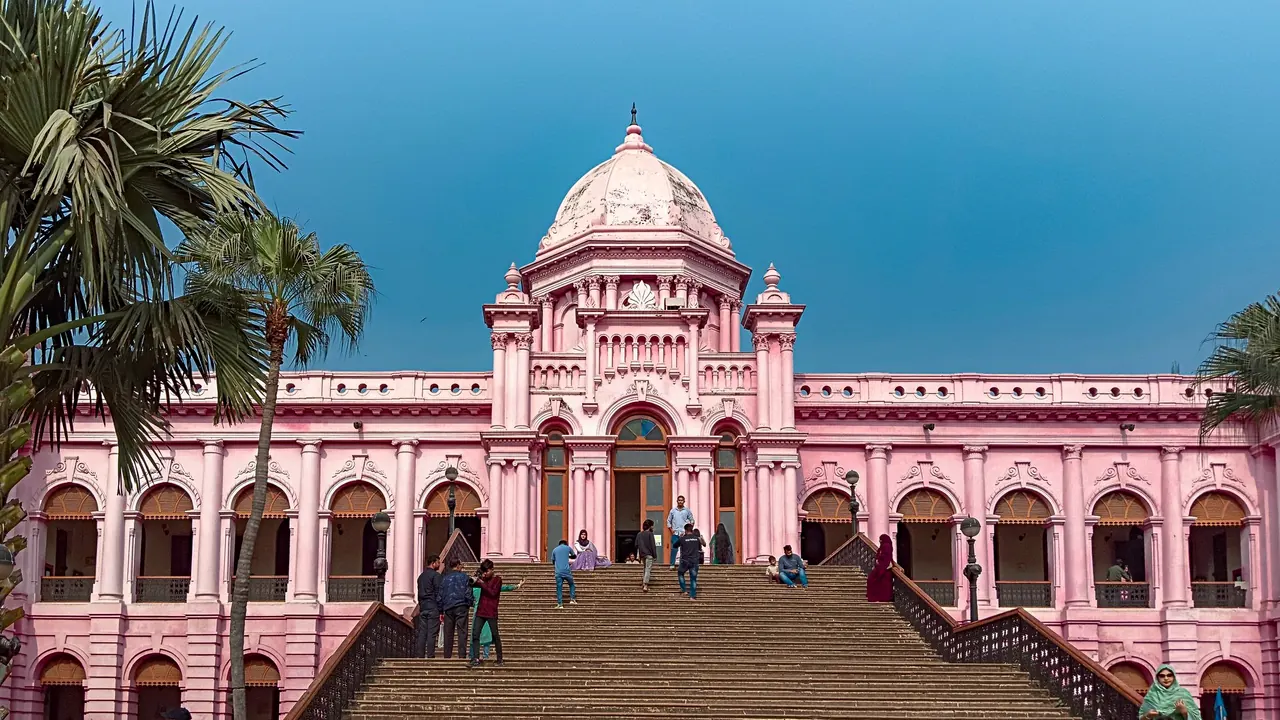
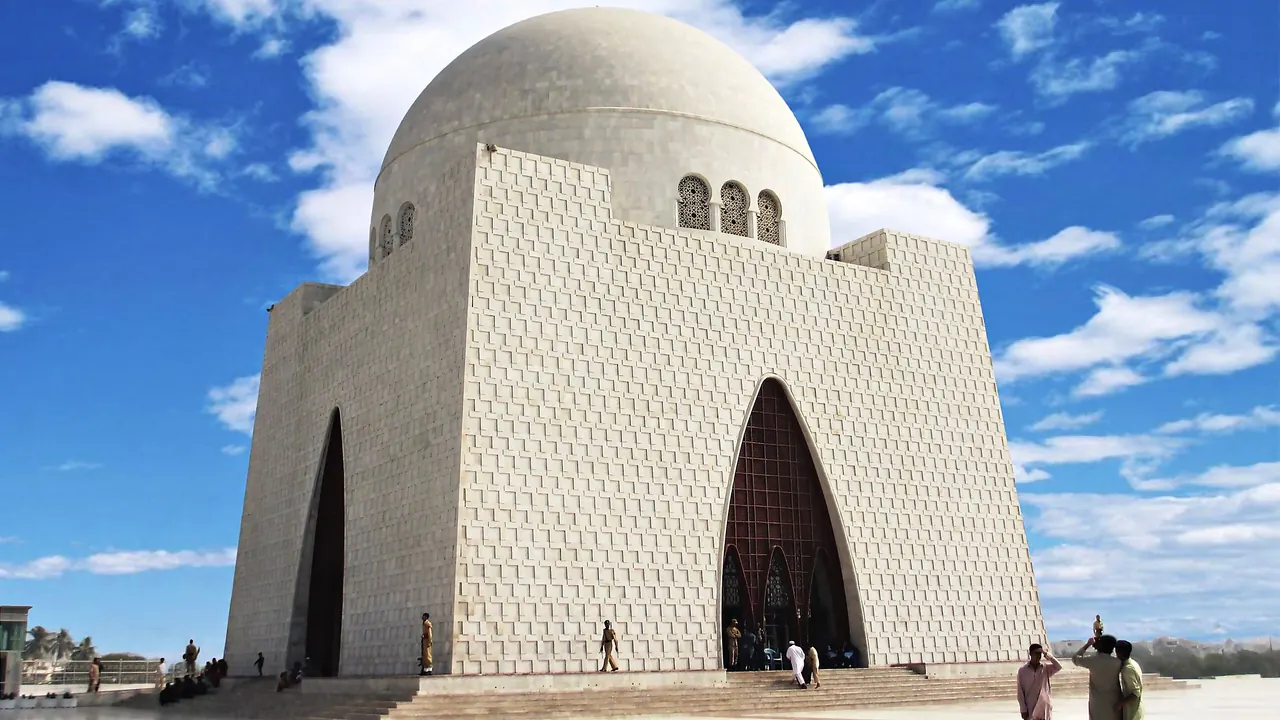
Photos: Dhaka by Riyad Hossain Hridoy, Pexels License; Karachi by M.irfan44, CC BY-SA 4.0, cropped.
Dhaka or Karachi?
Our verdict in twelve categories, each scored against the same fixed benchmark cities, and the climate month by month, so you can choose for your trip.
Choose Dhaka for
- culture and sights
- live music and the arts
Dhaka suits the traveller who wants history with some depth to it. Old Dhaka along the Buriganga holds Mughal forts, a Nawab palace and mosaic mosques, Louis Kahn's Parliament House is a pilgrimage for anyone who cares about architecture, and the textile tradition behind jamdani gives shopping a real story. It asks for patience, with heavy traffic and a long monsoon, but rewards people who come for the city itself.
Choose Karachi for
- beaches
- food and drink
- nature and the outdoors
Karachi is the better pick if eating out and the sea matter more than monuments. Its migrant food culture, from Burns Road nihari to seafood at Do Darya, runs later and wider than Dhaka's. There is also a swimmable coast an hour west, mangrove creeks to explore by boat, and a far drier climate. The sights are fewer and more colonial than ancient, but the city gives you more to do outdoors.
Scoreboard
Twelve categories on one fixed scale from 0 to 100. The shaded stretch is the gap between the two.
Your match
Pick a travel style or drag the sliders, and both match scores follow your weighting.
Wins on culture and sights and live music and the arts with your weighting.
Wins on beaches and food and drink with your weighting.
What matters to you?
Category by category
What the scores mean for a trip.
Beaches & swimming
Dhaka has no beach to speak of. Its rivers are working waterways, and the sand at Cox's Bazar is a separate journey, so swimming in the city means a hotel pool.
Karachi at least has a coast. The city shore at Clifton and Sea View is for evening strolls and camel rides rather than swimming, but the coves to the west, such as Hawke's Bay, Sandspit and French Beach, have warm water and day-hire huts. Expect modest dress and monsoon swimming bans in summer, so it is a day by the sea rather than a sunbathing vacation.
Food & drink
Both are serious food cities with biryani at their core, and each claims its own version: Dhaka's kacchi is rich and slow-cooked with mutton, Karachi's is spicier. Dhaka's strength is its Mughal-descended cooking in Old Dhaka and Bengali home food built on river fish, with hilsa in mustard, bhorta, and a deep sweet-shop tradition of roshogolla and mishti doi.
Karachi has the edge for eating out. Being a city of migrants gives it a wider range, from Burns Road nihari and haleem to charcoal-grilled bun kebabs and fresh seafood at Do Darya, and meals run late into the night as a social event. In both, alcohol plays no part and street food calls for a careful stomach.
Culture & sights
Dhaka has the richer heritage. Old Dhaka packs a Mughal fort, the pink Ahsan Manzil palace, the Star Mosque and the Armenian Church into its lanes by the Buriganga, and the National Parliament House by Louis Kahn is one of the great buildings of the twentieth century. The Liberation War Museum and the Shaheed Minar add the story of language and independence.
Karachi's sights are fewer and mostly more recent: the marble Mazar-e-Quaid, British-era sandstone such as Frere Hall and Empress Market, and Mohatta Palace. Its National Museum reaches back to the Indus Valley, and the Abdullah Shah Ghazi shrine shows living devotion, but a few days covers it all.
Nightlife
Neither city has bars or clubs open to the public, and alcohol is confined to hotels or private settings. The difference is in how late things run. Dhaka's evenings centre on a long family dinner, dessert shops and tea stalls, while Karachi stays out well past midnight, with roadside chai, drives along the Clifton seafront and families walking the promenades.
Nature & outdoors
Karachi has more to do outside. Boats leave the harbour for the mangrove creeks and night crabbing, turtles nest at Hawke's Bay in the cooler months, Churna Island offers snorkelling and diving, and Kirthar National Park and the bird lakes of Haleji and Keenjhar are within a couple of hours.
Dhaka's flat, crowded delta leaves little open space beyond Ramna Park, the Botanical Garden and the lake parks. Its best outdoor moment is a country boat on the Buriganga past paddy fields, while the Sundarbans and Sylhet's tea hills need several days.
Day trips
Each city has one standout outing and traffic that makes it slow. From Dhaka it is Sonargaon, the medieval Bengal capital with the decaying merchant houses of Panam Nagar and a folk art museum, with Dhamrai's brass workshops as a smaller option.
Karachi's run east is a little stronger. Makli near Thatta is one of the world's largest necropolises, its ridge covered with carved tombs, and the Shah Jahan Mosque, the Chaukhandi tombs and the ruins of Banbhore can all be fitted into the same day.
Good for families
Children get a warm welcome in both, but neither is easy with them. Dhaka is the harder of the two: gridlock, missing pavements, polluted dry-season air and humid heat wear families out, and the zoo and mall play areas are most of what is on offer.
Karachi has a little more to fill a day. Clifton beach at weekends means camel and pony rides, and the coves to the west let children paddle in warm water. Distances, traffic and summer heat still make it tiring, and it works best for families visiting relatives.
Getting around
Both are hard work, with heavy traffic, few pavements and visitors relying on ride-hailing, auto-rickshaws or a hired car and driver. Dhaka's advantage is its elevated metro, a fast and calm north to south line when it suits your route, and cycle rickshaws make Old Dhaka fun in short hops. Karachi has bus rapid transit on some routes, but its car-built districts and long distances between sights mean more time on the road.
Shopping & style
Karachi has more range. The Zamzama and Clifton boutiques sell embroidered lawn and designer wedding wear, Tariq Road covers mid-range fashion, and bazaars such as Zainab Market and Bohri Bazaar are good for haggling, with Sindhi ajrak and rilli quilts to take home.
Dhaka's case rests on textiles, above all handwoven jamdani, plus nakshi kantha embroidery and jute crafts from fair-trade stores, with fast tailoring. Its malls are among South Asia's biggest, but there is little design beyond that.
Affordability
Where the money goes differs more than how much. In Dhaka the only real splurges are the international hotels and expat restaurants of Gulshan and Banani, and alcohol, which is scarce and dear wherever it is sold. A car and driver for the day stays affordable and saves hours in the traffic.
Karachi's big cost is a bed at the top end, in the secure hotel compounds that many first-time visitors choose and that charge closer to global rates. Below that level the two cities are equally easy on the wallet, with nihari or biryani, rickshaw rides and local guesthouses costing very little.
Live music & performing arts
Bangla stage drama and Tagore's songs set the tone in Dhaka, where the theatre groups of Bailey Road and the Shilpakala Academy keep the tradition going. Almost all of it is in Bangla, and you usually need local contacts to find a show. The easiest time to hear the music is Pohela Boishakh, when singers greet the new year at dawn in Ramna Park, with baul folk song heard widely too.
In Karachi the performance a visitor can most easily join is qawwali, the devotional singing at Sufi shrines on Thursday evenings. The Arts Council and the National Academy of Performing Arts add Urdu theatre, classical music and dance, mostly in the cooler months. Neither city has opera or a regular orchestral season.
Wellness & relaxation
Neither is a place to unwind, and in both, pampering means international hotel spas and salons in the smarter districts. Dhaka's calm comes from a lakeside park at dawn or a slow river boat. Karachi adds two folk traditions: the sulphur springs at Manghopir, a pilgrim's cure rather than a spa, and the head massage given by neighbourhood barbers.
When should you go?
Pick your month. The climate figures are measured averages, not a forecast.
Dhaka in July
Karachi in July
Daytime high, °C
Rainfall in the month, mm
Temperature and rainfall are climate normals, averaged over the years shown. Dhaka: 1945-2025, 18 years observed (sunshine 1991-2020, rainfall 1991-2020) normals, Dhaka (4.4 km from centre). Karachi: 1991-2020 (sunshine 1961-1990) normals, Karachi Airport (13.2 km from centre).
Both cities are at their most comfortable from December to February, when afternoons are warm rather than punishing and almost no rain falls. Dhaka has the gentler winter, around 25°C in January, but from April the heat builds and the monsoon takes over. May to September is very wet, peaking at about 375mm in July, with grey skies and flooded streets that make sightseeing hard work. October is the shoulder month, and by November the city dries out again.
Karachi is dry nearly all year, with only a short, light monsoon in July and August, and far more sunshine than Dhaka in every month. Its problem is heat: April to June and again in October reach around 36°C, too hot for long days on foot. The sea stays warm enough to swim most of the year, from about 30°C in June down to 23°C in winter, but the monsoon currents close the beaches in high summer. Spring and late autumn are the beach seasons, and the cool months suit the city and day trips best.
Which traveller are you?
On a culture and arts trip, Dhaka gives more to see. Lalbagh Fort, Ahsan Manzil, the Star Mosque and Kahn's Parliament House carry more historical and architectural weight than Karachi's colonial sandstone and the Jinnah mausoleum, though neither city polishes its sights for visitors.
For a food and nightlife trip, Karachi is the better choice. Neither city has bars, but Karachi's eating goes on past midnight, from grills and Burns Road nihari to seafood by the shore and late chai, while Dhaka's evenings end earlier around biryani and sweets.
On a beach and sun trip, only Karachi works at all. Hawke's Bay and French Beach have warm, swimmable water an hour from the city, though bathing is modest. Dhaka is inland, and its nearest beach at Cox's Bazar means a flight or most of a day on the road.
Before you go
| Measure | Dhaka | Karachi |
|---|---|---|
| Official language | Bangla | Urdu, English |
| Currency | Taka (BDT) | Pakistan Rupee (PKR) |
| Sockets | ACGK220 V, 50 Hz | CGM230 V, 50 Hz |
| Driving side | Left | Left |
| Time zone | UTC+6 | UTC+5 |
| Emergency number | 999 | Police 15, ambulance 1122, fire 16 |
| Elevation | 4 m | 8 m |
| Main airport | Hazrat Shahjalal International Airport (DAC)13 km from centre31 non-stop destinations | Jinnah International Airport (KHI)16 km from centre36 non-stop destinations |
| Public holidays this year | 7 days | - |
By the numbers
| Measure | Dhaka | Karachi |
|---|---|---|
| Population | 16,800,000 | 14,910,352 |
| People per km² | 45,652 | 4,227 |
| Museums within 10 km | 17 | 9 |
| UNESCO World Heritage sites within 50 km | 0 | 0 |
| Swim season, months above 21 °C | - | 12 months |
Where else could you go?
Every comparison below shares a destination with this one, so you can follow Dhaka or Karachi somewhere new.
- Kolkatavs Dhaka
- Cox's Bazarvs Dhaka
- Thimphuvs Dhaka
- Darjeelingvs Dhaka
- Jaisalmervs Karachi
- Kathmanduvs Dhaka