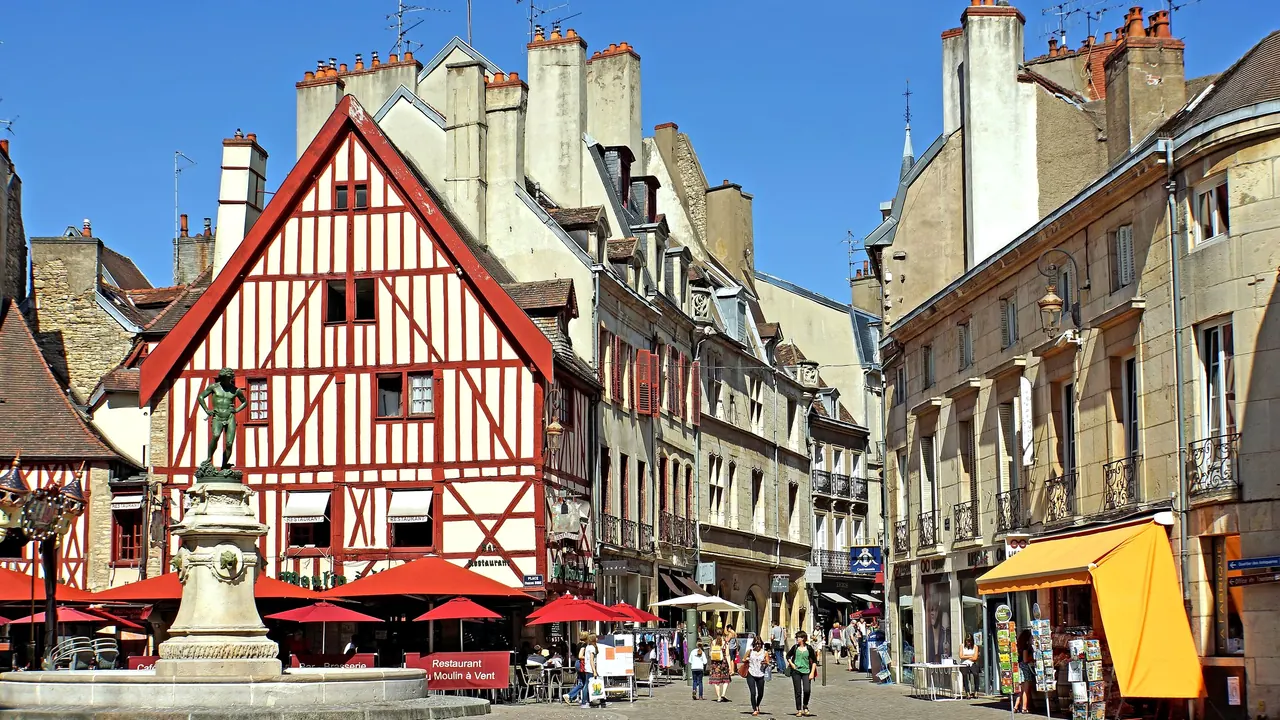
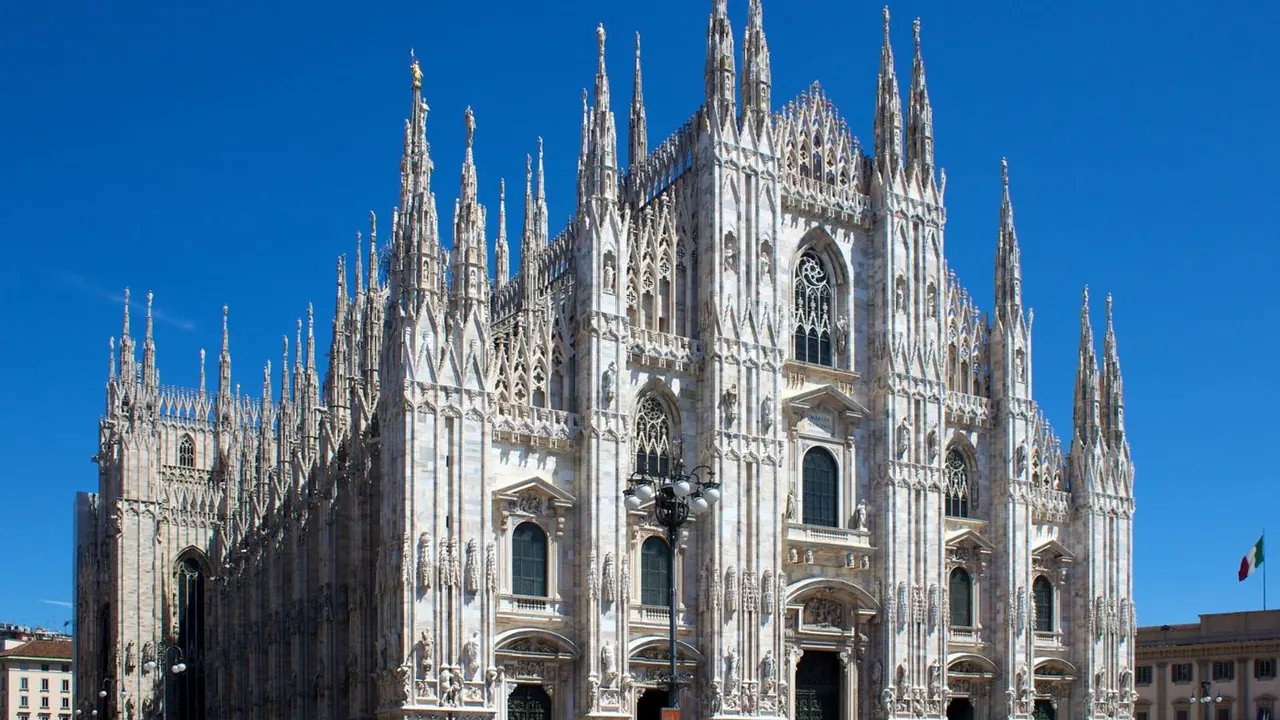
Photos: Dijon by Dennis G. Jarvis, CC BY-SA 2.0, cropped; Milan by Jiuguang Wang, CC BY-SA 3.0, cropped.
Dijon or Milan?
Our verdict in twelve categories, each scored against the same fixed benchmark cities, and the climate month by month, so you can choose for your trip.
Choose Dijon for
- prices
Dijon suits a slower, more affordable trip built around the table. The old ducal centre is small enough to cross on foot in minutes, Les Halles feeds the city on market days, and the Burgundy vineyards begin at its southern edge. It is the better choice for couples and wine lovers who want long lunches, cellar visits and a bike ride towards Beaune, and who are not looking for late nights, big shopping or a packed cultural calendar.
Choose Milan for
- shopping
- live music and the arts
- nightlife
Milan is the larger, broader city and pulls ahead on nearly everything apart from cost. Leonardo's Last Supper, La Scala, the fashion houses of the Quadrilatero and the aperitivo crowds along the Navigli give it range and energy, and fast trains put Lake Como, Verona and Turin within easy reach. Pick it if you want variety from morning to midnight and can accept noticeably higher hotel bills.
Scoreboard
Twelve categories on one fixed scale from 0 to 100. The shaded stretch is the gap between the two.
Your match
Pick a travel style or drag the sliders, and both match scores follow your weighting.
Wins on prices with your weighting.
Wins on shopping and live music and the arts with your weighting.
What matters to you?
Category by category
What the scores mean for a trip.
Beaches & swimming
Neither is a beach destination. Dijon's only real option is the supervised lawn-and-sand area at Lac Kir, which is fine for a hot afternoon with children and little more.
Milan is better placed. Besides the Idroscalo near Linate, it has Lake Como and Lake Maggiore about an hour away by train, with pebbly lidos and swimming platforms in water that warms up nicely by August. That makes a proper swimming day possible in a way it is not from Dijon.
Food & drink
Both cook in the rich, butter-based northern style, but Milan has more range. Alongside saffron risotto and ossobuco it serves the cooking of every Italian region, has a serious fine-dining tier, and turns the early evening into a meal with aperitivo in Brera, Isola and along the Navigli.
Dijon goes deep rather than wide: boeuf bourguignon, jambon persillé, Époisses and Bresse poultry from Les Halles, and village Burgundies poured by the glass because the vineyards start at the edge of town. For wine it can hold its own against Milan, but for variety it cannot.
Culture & sights
Dijon has the more complete old town, an unbroken web of half-timbered houses and Renaissance mansions around the Palace of the Dukes. Its high points are the Valois tombs with their carved mourners and Sluter's Well of Moses, which make two or three good days.
Milan's sights are of a higher order, even if they come in clusters within a modern, businesslike city. The Last Supper, the Duomo's marble spires, the Brera paintings and Michelangelo's Rondanini Pietà at the Castello Sforzesco draw visitors from around the world, which none of Dijon's sights quite manage.
Nightlife
Dijon's evenings depend on its students: small bars and pubs along Rue Berbisey, wine and late dinners on the terraces of Place Émile Zola, and quiet streets by around midnight outside term time.
Milan has a real scene. Aperitivo moves on to the canal-side bars of the Navigli, Porta Venezia has a relaxed mix and the city's gay bars, and the clubs run from dressy places around Corso Como, where appearance counts, to warehouse nights on the edges of the city. Just avoid August, when much of the city leaves.
Nature & outdoors
In Dijon the countryside starts close to the centre. The combes just west of town have trails and climbing cliffs, the Burgundy Canal towpath is flat and green for cycling, and the vineyard route through the Côte de Nuits is a classic ride. It is gentle country, and the Morvan is the wildest it gets.
Milan itself sits on a flat, hazy plain, but an hour north the landscape is far grander: steep wooded shores around Como and Maggiore, sailing and windsurfing, via ferrata on the Grigne ridges, and Alpine skiing in winter for those who will spend a full day on it.
Day trips
Both make excellent bases, but they work differently. Dijon's day trips are a deep dive into one region: the Route des Grands Crus to Beaune, Fontenay Abbey, Semur-en-Auxois and Alésia. Beyond Beaune and Besançon, most of these need a car, a bike or a small tour.
Milan wins on reach and ease. High-speed and regional trains take you to Bergamo's upper town, Verona's arena, Turin's Egyptian Museum, the Lake Como villages and Lugano in about an hour each, and Mantua, Cremona, Parma and the Certosa di Pavia add more variety than Burgundy can offer.
Good for families
Dijon is calm, safe and largely traffic-free, which makes it easy with small children. Once you have visited the planetarium at the Jardin de l'Arquebuse, the play areas of the Colombière and the paddling at Lac Kir, though, the wine and fine-art itinerary has little for them.
Milan offers more to fill the days. The science and technology museum, with its submarine and hands-on labs, works well in any weather, the aquarium and playgrounds are at Parco Sempione, and Leolandia and Gardaland are within reach for older children. Heavy summer heat is the drawback.
Getting around
Dijon is a city you cross on foot. The station, Les Halles, the ducal palace and the cathedral are minutes apart, two tram lines and the buses cover the outskirts and Lac Kir, and regional trains run down the wine route to Beaune. The vineyard villages away from the railway are the gap, and for those you need a car, a bike or a tour.
Milan comes out ahead because it has a proper network beyond its walkable centre. Five colour-coded metro lines with contactless gates, a dense tram web that still includes the old orange cars, and direct trains from Centrale, Garibaldi and Cadorna to the lakes mean almost anywhere you want to go is a simple ride away. The summer heat underground and the long transfer from Malpensa are real irritations, but once you are in town, Milan is easier to get around.
Shopping & style
This is where the gap is widest. Dijon's shopping is mostly edible: flavoured mustards, pain d'épices, cassis, Burgundy from the cellars and cheese from around Les Halles, plus some chains and antiques off Rue de la Liberté.
Milan is a reason to travel in itself. The great Italian houses have their flagships in the Quadrilatero della Moda, the Galleria and La Rinascente have set the standard for Italian style for generations, and furniture and lighting showrooms, Brera boutiques and Porta Ticinese vintage shops add design and second-hand finds.
Affordability
Dijon is the easier city on the wallet. Hotels are moderate, bistro set lunches are a good way to eat well, and wine by the glass is cheap even by French standards. The bill only climbs with tastings, guided wine tours and good bottles.
Milan is Italy's most expensive city, and hotel rooms are the main problem, especially during trade fairs and fashion weeks. You can soften the costs by staying near a metro stop outside the centre, making aperitivo snacks your supper and taking office-worker set lunches.
Live music & performing arts
Milan has La Scala, one of the world's great opera houses, whose season opens each December on the feast of Sant'Ambrogio. It also has the Piccolo Teatro, a fine symphony orchestra, jazz rooms and summer stadium concerts at San Siro.
Dijon does well for its size, with opera, concerts and dance split between the old Grand Théâtre and an Auditorium known for its acoustics. The difference is that Dijon is a pleasant night out, while in Milan the performance can be the reason for the trip. In both cities the main season thins out in summer.
Wellness & relaxation
Dijon's spa options come down to a few hotel spas, some in the wine villages with grape-based treatments. Milan has a full thermal spa complex south of the centre, with outdoor pools and saunas. Add the restored 1930s open-air pools of the Bagni Misteriosi in summer and the quiet lakeside villas an hour away, and Milan is the better choice for a day of real pampering.
Dijon relaxes you in a different way. It has no bathing culture of its own, so rest there comes from the provincial pace: long lunches, quiet squares and slow afternoons among the vines.
When should you go?
Pick your month. The climate figures are measured averages, not a forecast.
Dijon in July
Milan in July
Daytime high, °C
Rainfall in the month, mm
Where the figures come from
Milan has no rain gauge within 25 km of the centre, so its rainfall comes from a gridded climate dataset read at the city rather than from a gauge further away.
Milan's sunshine is measured 41 km from the centre, at Novara / Cameri.
Temperature and rainfall are climate normals, averaged over the years shown. Dijon: 1991-2020 normals, Dijon (7 km from centre). Milan: 1991-2020 normals, Milano / Linate (8 km from centre).
Both cities have cold, grey winters and warm summers, but Milan runs hotter. July and August reach about 30°C on the Po plain, often humid, while Dijon peaks around 27°C, so walking the streets in high summer is more comfortable in Burgundy. Late spring and September are the sweet spot for both: mild, long days and good light for vineyards or lakes. Summer is also the only time swimming makes sense, at Lac Kir in Dijon or on the lakes north of Milan.
Rain falls differently through the year. Dijon spreads its rain fairly evenly across the months, with no real wet season. Milan gets much wetter in autumn, with October and November bringing up to 128mm, so it is a poorer choice then. In midwinter Milan gets a little more sunshine than Dijon, but at around 6°C to 7°C neither city is at its best.
Which traveller are you?
On a shopping trip, Milan is the clear choice. The flagships around Via Montenapoleone, La Rinascente beside the Duomo, the design showrooms and the Navigli antique markets put it in a different league from Dijon, where shopping mostly means mustard, cassis and wine.
For a trip on a tight budget, Dijon goes further. Bistro set lunches, cheap wine by the glass and a centre you can walk end to end keep costs moderate, while Milan's hotels are expensive and become very hard to find at fair rates during trade fairs.
On a culture and arts trip, Milan offers more. The Last Supper, the Brera collection and the Duomo's rooftop come with a night at La Scala or the Piccolo Teatro. Dijon's ducal palace and tombs fill two rewarding days, but the evening programme is smaller.
Before you go
| Measure | Dijon | Milan |
|---|---|---|
| Official language | French | Italian |
| Currency | Euro (EUR) | Euro (EUR) |
| Sockets | CE230 V, 50 Hz | CFL230 V, 50 Hz |
| Driving side | Right | Right |
| Time zone | UTC+1, UTC+2 in summer | UTC+1, UTC+2 in summer |
| Emergency number | 112 | 112 |
| Elevation | 220 m | 138 m |
| Main airport | Lyon Saint-Exupéry Airport (LYS)178 km from centre141 non-stop destinations | Milan Malpensa International Airport (MXP)40 km from centre208 non-stop destinations |
| Public holidays this year | 11 days | 13 days |
By the numbers
| Measure | Dijon | Milan |
|---|---|---|
| City population | 161,830 | 1,354,196 |
| People per km² | 3,890 | 7,453 |
| Museums within 10 km | 8 | 88 |
| UNESCO World Heritage sites within 50 km | 1 | 4 |
Where else could you go?
Every comparison below shares a destination with this one, so you can follow Dijon or Milan somewhere new.