Djibouti
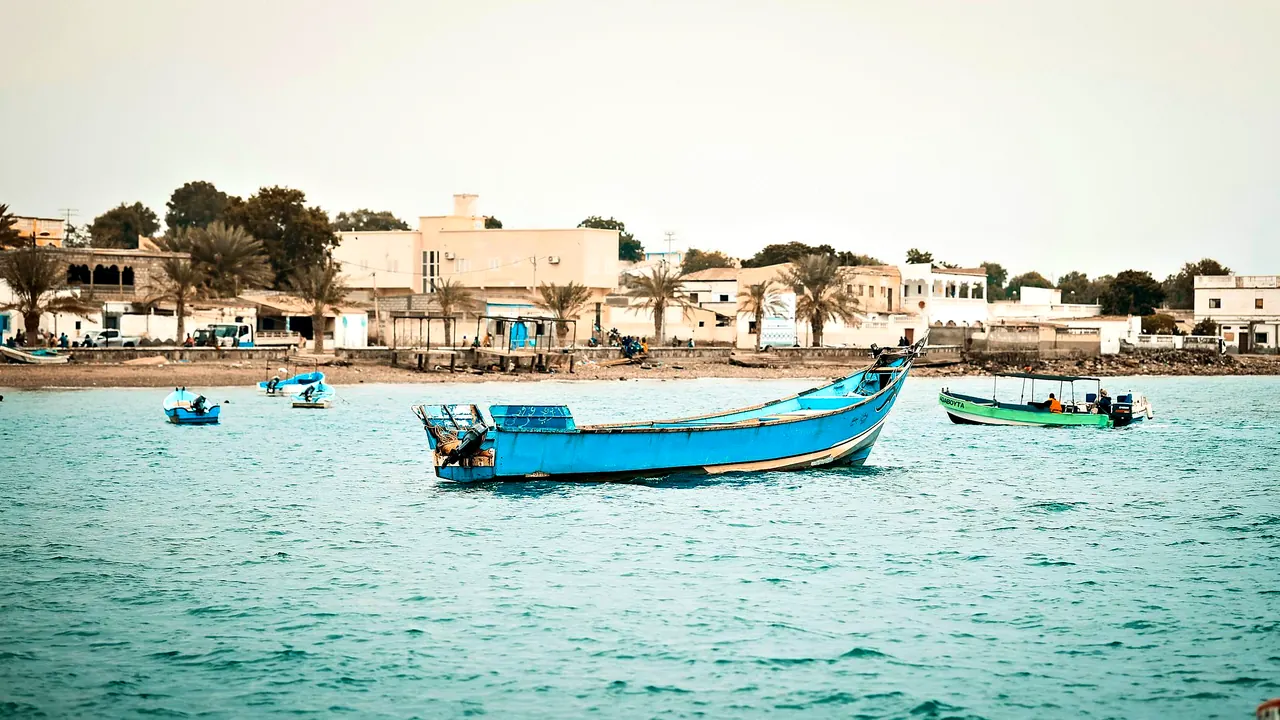
Blue fishing boats on the turquoise water off Tadjoura
- Nature & outdoors70
- Beaches42
- Food & drink30
Photo: Mohamed Badri, Pexels License
Match
25
Every category weighted equally
- Beach & sun29
- Culture & arts21
- Food & nightlife22
- Family trip28
- Outdoors32
- Relax & unwind28
- Shopping & style22
- On a budget25
Djibouti in twelve categories
Our verdict on the country as a whole, scored 0 to 100 against the same fixed benchmark cities as every destination, so a score means the same thing on every page.
Beaches & swimming. Scores 42 out of 100.
Food & drink. Scores 30 out of 100.
Culture & sights. Scores 20 out of 100.
Nightlife. Scores 20 out of 100.
Nature & outdoors. Scores 70 out of 100.
Day trips. Scores 18 out of 100.
Good for families. Scores 18 out of 100.
Getting around. Scores 22 out of 100.
Shopping & style. Scores 15 out of 100.
Affordability. Scores 25 out of 100.
Live music & performing arts. Scores 8 out of 100.
Wellness & relaxation. Scores 15 out of 100.
Djibouti category by category
Under each: where in Djibouti it is best, and our destinations in Djibouti that score highest on it.
Beaches & swimming
42The sea is warm and clear in the Gulf of Tadjoura, but Djibouti has only a handful of beaches you can actually use and very little built around them. The best are on the Moucha and Maskali islands, about forty minutes by boat from Djibouti City, where white sand and reef shallows make a good day of swimming and snorkelling. Across the gulf, the Sables Blancs near Tadjoura have simple beach camps, and the black-rock coves of the Ghoubbet are more striking than they are comfortable.
The swimming season runs from about November to March, when the water is near 26°C and the air is bearable. From June to September the heat is extreme and lying on a beach is hard going. Most of the shore near the capital is port and city front. Swimming is part of a trip here, not the reason for it.
Where: Moucha and Maskali islands, Sables Blancs, Tadjoura, Ghoubbet
Our top destinations in Djibouti
Food & drink
30Eating here means Djibouti City. Its signature dish is Yemeni-style fish, split and baked against the walls of a clay oven, then served with flatbread and a hot sauce in simple open-air places in the African quarter. There is also Somali and Afar cooking (spiced rice, goat, the flatbread called lahoh), Ethiopian injera, and French bakeries and brasseries from the colonial years, mostly around Place Menelik.
The range is narrow and prices in the more polished places are high. Afternoons belong to khat, the leaf chewed socially across the country, rather than to cafés or wine. Outside the capital, food is basic and practical, and on trips into the interior you eat what the camp provides.
Where: Djibouti City
Our top destinations in Djibouti
Culture & sights
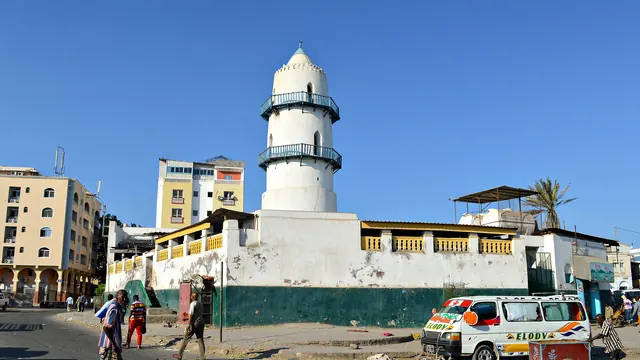
20Djibouti has few sights. In the capital, the European quarter around Place Menelik has arcaded whitewashed buildings in a Moorish colonial style, the Hamoudi Mosque marks the edge of the older African quarter, and the presidential palace and the cathedral stand near the port. There is no museum of note.
Across the gulf, Tadjoura is the oldest town in the country, a quiet place of white houses and small mosques that was once a trading port for slaves and caravans. In the north, the rock engravings at Abourma show giraffes and hunters from a greener past, but reaching them takes a long 4x4 drive and a hike. A visitor interested in heritage will find a few interesting mornings, not a trip.
Where: Djibouti City, Tadjoura, Abourma
Our top destinations in Djibouti
Nightlife
20Going out happens only in Djibouti City, where a few bars, hotel lounges and small clubs around Place Menelik and the European quarter cater mostly to foreign residents and stay open late on weekend nights. The atmosphere is that of a port city, and drinks are expensive. Social life for most Djiboutians centres on khat sessions in the afternoon and on talking in the cooler evening air, not on bars. Outside the capital, evenings end at the campfire.
Where: Djibouti City
Our top destinations in Djibouti
Nature & outdoors
70This is the reason to come. Djibouti sits where three tectonic plates pull apart, and the landscape shows it: Lac Assal, more than 150m below sea level, is a turquoise lake ringed by blinding salt flats and black lava, and Lac Abbé, on the Ethiopian border, is a plain of limestone chimneys that steam at dawn, with flamingos on the water and Afar herders at the edges. Between them run lava fields, the Ardoukoba volcano and the cracks of the rift.
In the sea, whale sharks gather in the Gulf of Tadjoura from about November to February and you can snorkel beside them, and the reefs around the Seven Brothers islands near Obock are among the wildest dive sites in the Red Sea. In the Goda Mountains, the Day Forest has juniper woodland and cool walks. The season is November to March. Almost everything needs a 4x4, a driver and a camp.
Where: Lac Abbé, Lac Assal and the Ghoubbet, Gulf of Tadjoura, Goda Mountains
Our top destinations in Djibouti
Day trips
18Most outings from Djibouti City go to landscapes rather than places. As towns, there is Tadjoura, the old white town across the gulf, reached by boat or a longer drive, and Obock beyond it, a sleepy former French outpost. Arta, in the hills above the capital, has cooler air and views over the gulf, and Ali Sabieh in the south is a market town near the Ethiopian railway. Each is worth an hour or two rather than a day.
Where: Tadjoura, Obock, Arta, Ali Sabieh
Our top destinations in Djibouti
Good for families
18Djibouti is hard work with children. There are no parks, zoos or attractions made for them, and the heat is dangerous for young ones for much of the year. The trips that make the country worthwhile involve long 4x4 drives on rough tracks, basic camps and little medical care outside the capital. Families with older, adventurous children do best in winter, with a boat to the Moucha islands for snorkelling and a whale shark trip in the Gulf of Tadjoura.
Where: Moucha and Maskali islands, Gulf of Tadjoura
Our top destinations in Djibouti
Getting around
22The country is small, but getting around it is not simple. Djibouti City's European quarter is compact enough to walk in the cooler hours, and shared minibuses and taxis cover the rest. Beyond the capital there is no public transport a visitor would use. The main road west towards Lac Assal is paved but busy with Ethiopian trucks, while the tracks to Lac Abbé and the north need a 4x4 and someone who knows them. Most visitors book a driver or a tour, and boats take you to the islands and across the gulf to Tadjoura.
Where: Djibouti City
Our top destinations in Djibouti
Shopping & style
15Shopping is limited to Djibouti City's markets, where stalls in the African quarter sell spices, cloth, imported electronics and household goods brought in through the port. Afar daggers, woven baskets and incense burners are the few crafts worth taking home. There are no shopping streets or boutiques to speak of.
Where: Djibouti City
Our top destinations in Djibouti
Affordability
25Djibouti is a costly place to travel. Hotel rooms in the capital are expensive for what they offer, and the trips that matter, a 4x4 with a driver to the lakes, nights in camps and boat outings to the islands or the whale sharks, add up quickly, especially for one or two travellers. Simple local food and shared minibuses are cheap, but they do not change the overall bill. Travelling in a small group to share vehicles and guides helps most.
Where: Djibouti City
Our top destinations in Djibouti
Live music & performing arts
8There is almost nothing to attend. Somali and Afar music and dance are alive at weddings, national celebrations and the occasional concert in the capital, but there are no theatres, concert halls or regular live venues for a visitor to plan an evening around.
Our top destinations in Djibouti
Wellness & relaxation
15Djibouti offers little for rest in the sense of spas or baths. The capital has a few hotel spas, and there is no tradition of hammams or public bathing. Floating in the dense salt water of Lac Assal and soaking in the hot springs near Lac Abbé are memorable, but they are short stops on a hot, dusty excursion, not a cure. The calmest days are spent on the islands of the gulf in winter.
Where: Lac Assal, Lac Abbé
Our top destinations in Djibouti
Where to go in Djibouti
Djibouti is small enough for one trip, and nearly every visitor uses Djibouti City as the base, heading out by 4x4 or boat and coming back to it between outings. The capital fills a day or two. Walk the arcaded European quarter around Place Menelik in the cooler hours, cross into the African quarter past the Hamoudi Mosque for its markets and clay-oven fish, and go out at night here, because there is nowhere else to.
The main reason to come lies west of the city, in the rift. Lac Assal and the black lava coves of the Ghoubbet make a long day out along the paved road, with a float in the salt water. Lac Abbé, on the Ethiopian border, is further and rougher. It usually means a night in a camp, so you can see the limestone chimneys steam at dawn and soak in the hot springs nearby. This trip is for landscape, walking and photography, and it needs a driver.
The Gulf of Tadjoura suits slower days. The Moucha and Maskali islands, a short boat ride from the capital, give the country's best beaches and snorkelling, and they are the easiest choice for families with older children. In winter, boats from the city also go out to swim with whale sharks. Across the gulf, Tadjoura is a quiet old white town with simple beach camps at the Sables Blancs, and the Goda Mountains above it have cooler juniper woodland for walks. Divers who go on to the Seven Brothers reefs off Obock need several more days.
Arta, in the hills, and Ali Sabieh, in the south, are worth an hour or two on the way somewhere else. The Abourma rock engravings in the north are for committed heritage travellers willing to take a long drive and a hike. A week from November to March covers the city, the lakes, the islands and Tadjoura without hurrying.
When should you go?
Djibouti has no single climate. Its months are measured at Djibouti City; pick one to see it. The figures are measured averages, not a forecast.
Djibouti City in July
Daytime high, °C
Rainfall in the month, mm
Where the figures come from
Djibouti City has no weather station within reach, so its figures come from a gridded climate model rather than a measured record, and read a broad area rather than one spot.
Temperature and rainfall are climate normals, averaged over the years shown. Djibouti City: 2001-2020 normals, NASA POWER reanalysis grid, no weather station within 90 km.
Compare Djibouti with
Every comparison with a written verdict behind it, and any other country below.
Our destinations in Djibouti
Every place in Djibouti with its own page: its twelve scores, its texts and its months.