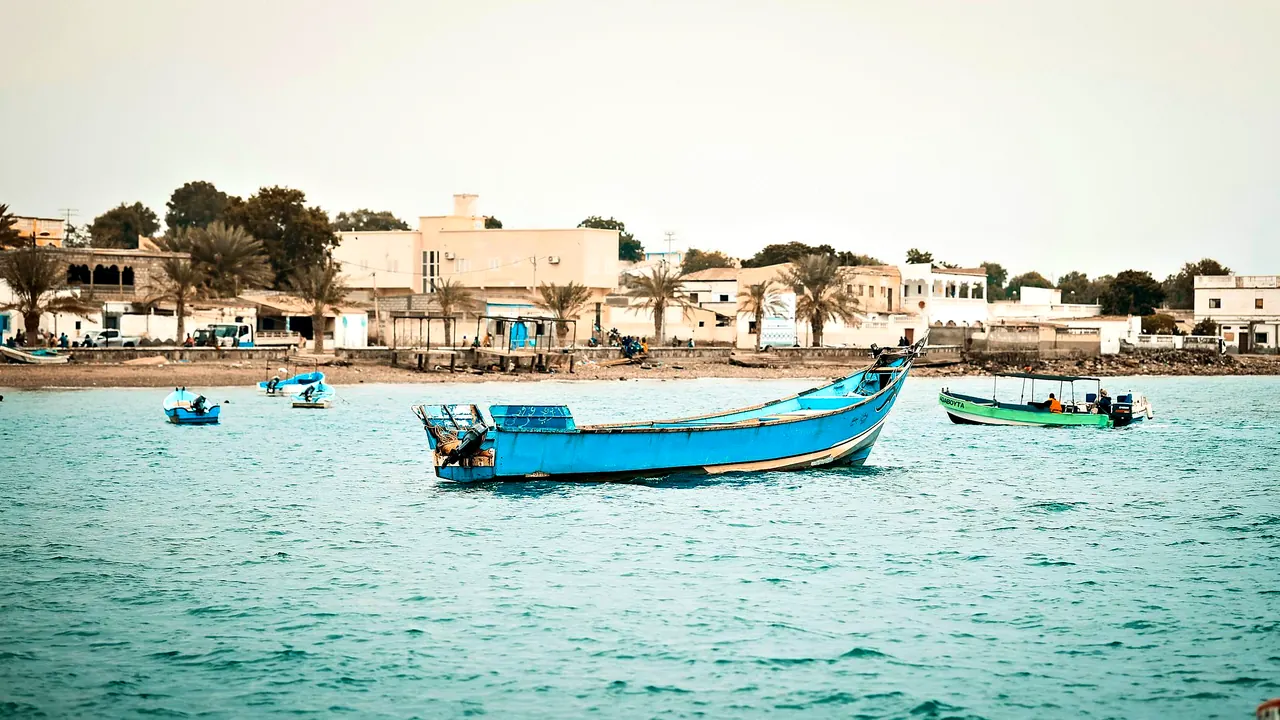
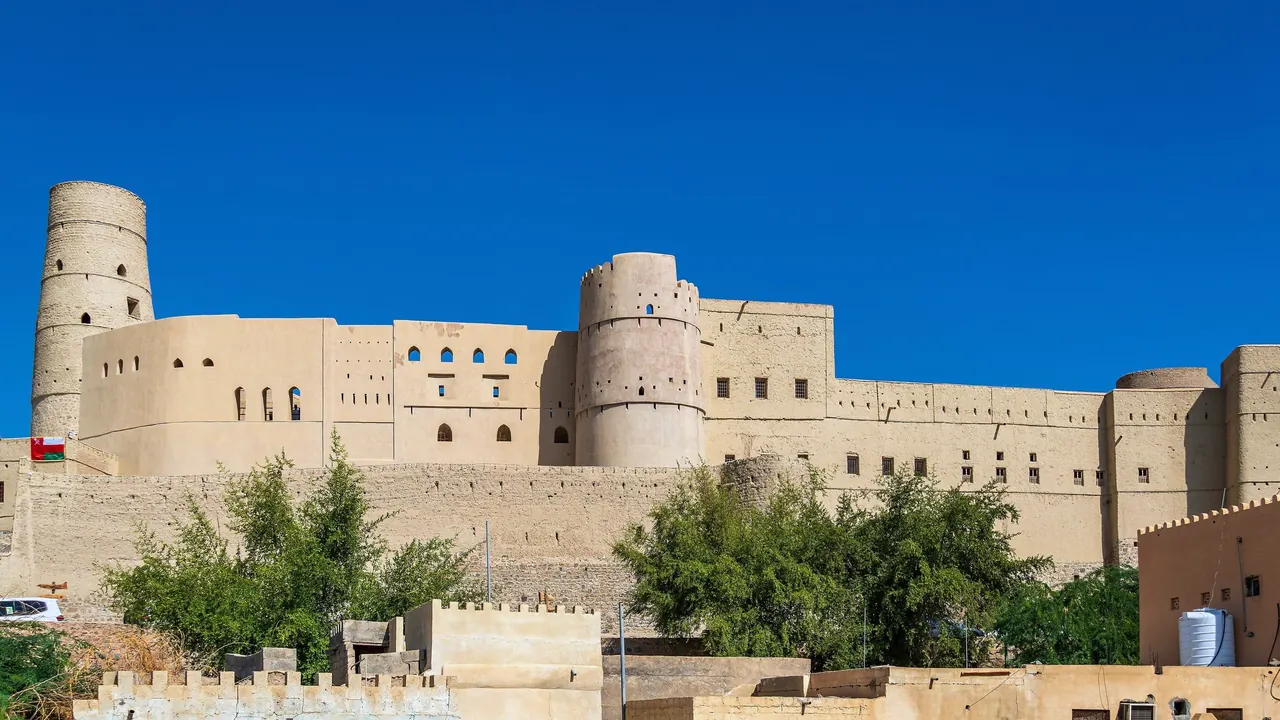
Photos: Djibouti by Mohamed Badri, Pexels License; Oman by dconvertini, CC BY-SA 2.0, cropped.
Djibouti or Oman?
Our verdict in twelve categories, each scored against the same fixed benchmark cities, and the climate month by month, so you can choose for your trip.
Choose Djibouti for
- nightlife
Djibouti suits a traveller who comes for the rift itself and very little else: the salt flats and turquoise water of Lac Assal, the steaming limestone chimneys of Lac Abbé, and winter snorkelling beside whale sharks in the Gulf of Tadjoura. It works best as a short, expedition-style trip built around a 4x4, a driver and desert camps, ideally shared with a small group. In return for those landscapes, you accept a thin offer of food, sights and comfort.
Choose Oman for
- culture and sights
- day trips
- wellness
For almost everyone else, Oman is the easier and fuller choice. Its mountains, wadis and dunes are at least as rewarding, and they come with the forts and oasis towns around Nizwa, proper beaches near Muscat and on the Sur coast, resort spas, and good roads you can drive yourself. Families, first-time visitors to the region and anyone who wants culture alongside the outdoors will get more from a week here, and the overall bill is lower.
Scoreboard
Twelve categories on one fixed scale from 0 to 100. The shaded stretch is the gap between the two.
Your match
Pick a travel style or drag the sliders, and both match scores follow your weighting.
Wins on nightlife with your weighting.
Wins on culture and sights and day trips with your weighting.
What matters to you?
Category by category
What the scores mean for a trip.
Beaches & swimming
Oman has far more coast you can actually use. Muscat has its own sand at Qurum and quieter resort coves towards Bandar Jissah. The Daymaniyat Islands are a boat ride offshore, and the Sur coast has empty pale beaches at Fins and Tiwi below dark cliffs. Salalah's long beaches add a second region for the cooler months.
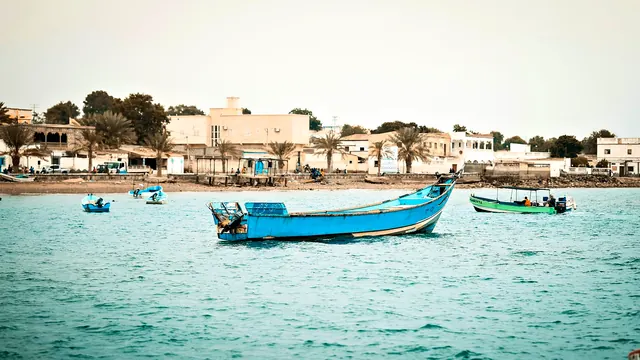
Djibouti's good swimming is concentrated on the Moucha and Maskali islands, reached by boat from the capital, with white sand and reef shallows. Beyond them there are the simple camps at the Sables Blancs near Tadjoura and the black-rock coves of the Ghoubbet. In Djibouti a beach day is one outing on a trip. In Oman you can build several days of the trip around the sea.
Where in Djibouti: Moucha and Maskali islands, Sables Blancs, Tadjoura, Ghoubbet
Where in Oman: Muscat, Daymaniyat Islands, Sur coast, Salalah
Food & drink
Neither country is a food destination, but Oman gives you more to eat well. Shuwa, lamb slow-cooked in an underground pit, cardamom coffee with dates, and Nizwa's sticky halwa are worth looking for. Day to day, Muscat's Indian, Pakistani and Lebanese cafés are cheap and good, with grilled fish on the corniche.
Djibouti's eating is confined to the capital. The dish to try is Yemeni-style fish baked against the wall of a clay oven in the African quarter, and there is Somali, Afar and Ethiopian cooking alongside the French bakeries around Place Menelik. The range is narrower, and outside Djibouti City you eat what the camp provides.
Where in Djibouti: Djibouti City
Culture & sights
Culture is where these two countries differ most. Djibouti's sights fit into a couple of mornings: the arcaded Moorish-style buildings around Place Menelik, the Hamoudi Mosque at the edge of the African quarter, and a boat across the gulf to Tadjoura, the oldest town, with its white houses and small mosques. The rock engravings at Abourma reward the determined, but only at the end of a long 4x4 drive and a hike.
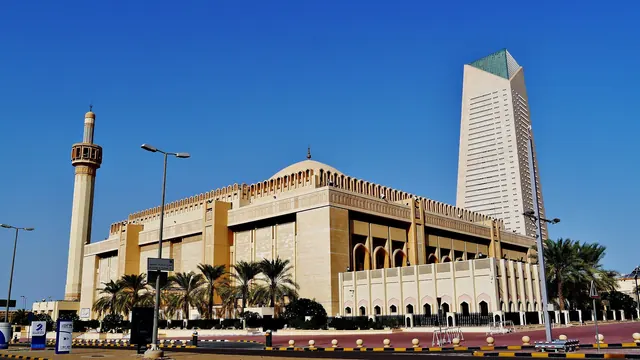
Oman can carry a whole trip on heritage. Muscat has the Sultan Qaboos Grand Mosque, the National Museum and the walled old quarter with its Portuguese forts. Inland, Nizwa's round tower, the UNESCO-listed walls of Bahla, Jabrin's painted ceilings and the falaj channels of Al Hamra and Birkat al Mouz lie close together, and Dhofar adds the old frankincense ports of Al Baleed and Sumhuram.
Where in Djibouti: Djibouti City, Tadjoura, Abourma
Where in Oman: Muscat, Nizwa and the Dakhiliyah, Bahla, Salalah and Dhofar
Nightlife
Nightlife is thin in both, but Djibouti City has a little more to go out for. A handful of bars, hotel lounges and small clubs around Place Menelik keep a port-city crowd of foreign residents out late at weekends. Oman's drinking is limited to licensed hotel bars in Muscat and the resorts, and its evenings are better spent strolling the Muttrah corniche or sitting in a shisha café once the heat lifts.
Where in Djibouti: Djibouti City
Where in Oman: Muscat
Nature & outdoors
Both are countries you visit for the land, and Oman has the greater range. It has the gorge rim walk on Jebel Shams, the rose terraces of Jebel Akhdar, palm-filled wadis with swimming pools such as Wadi Shab and Wadi Bani Khalid, and real dune desert in the Wahiba Sands. Musandam's fjords and Dhofar's monsoon-green hills add two more regions.
Djibouti's appeal is stranger and more concentrated. Lac Assal lies far below sea level among salt and lava, Lac Abbé's chimneys steam at dawn with flamingos on the water, and the cracks of the rift run between them. Its sea has the whale sharks of the Gulf of Tadjoura. Almost all of it needs a 4x4 and a camp.
Where in Djibouti: Lac Abbé, Lac Assal and the Ghoubbet, Gulf of Tadjoura, Goda Mountains
Where in Oman: Hajar Mountains, Wahiba Sands, Musandam, Dhofar
Day trips
From a base in Muscat or Nizwa, Oman gives you a full set of outings. There is the fort loop through Nakhal and Rustaq, the dhow yards at Sur, Bahla and Jabrin within an hour of Nizwa, and the terraced village of Misfat al Abriyeen for a morning.
Djibouti's outings are mostly to landscapes rather than towns. Tadjoura, Obock, the cooler hill air at Arta and the market town of Ali Sabieh each fill an hour or two rather than a day.
Where in Djibouti: Tadjoura, Obock, Arta, Ali Sabieh
Where in Oman: Nizwa, Muscat, Sur
Good for families
Oman is the far better family choice. It is safe and welcoming to children, resort pools and calm water near Muscat make easy beach days, and dolphin boats, the Ras al Jinz turtle watch and a Wahiba camp give children memorable outings. Djibouti suits only families with older, adventurous children, in winter, sticking to the Moucha islands and a whale shark trip, because the heat, rough tracks and basic camps are too much for young ones.
Where in Djibouti: Moucha and Maskali islands, Gulf of Tadjoura
Where in Oman: Muscat, Ras al Jinz, Wahiba Sands
Getting around
Neither has public transport a visitor can rely on outside the capital, but Oman makes driving yourself easy. Its roads are excellent, the signs are bilingual and traffic is calm, so a self-drive loop from Muscat to Nizwa, Wahiba and Sur is simple. You only need a 4x4 for the mountain and desert stretches.
In Djibouti most visitors hire a driver or book a tour. The road west to Lac Assal is busy with trucks, and the tracks to Lac Abbé and the north need local knowledge. Djibouti City does have a compact European quarter you can walk in the cooler hours, which sprawling Muscat does not.
Where in Djibouti: Djibouti City
Where in Oman: Muscat, Nizwa
Shopping & style
Oman has two souqs worth an afternoon each. Muttrah's covered lanes sell frankincense, silver and embroidered caps, and Nizwa's souq by the fort is good for pottery and khanjar daggers. Salalah adds frankincense in every grade. Djibouti City's markets mainly sell spices, cloth and goods unloaded at the port, and Afar daggers, baskets and incense burners are the only crafts worth taking home.
Where in Djibouti: Djibouti City
Affordability
Oman is the cheaper trip of the two, though neither is cheap. Muscat's hotels are its main expense, but fuel costs little, local Indian cafés are cheap, and guesthouses around Nizwa bring the daily cost down further.
In Djibouti there is no such cheaper base. Rooms in the capital are expensive for what they offer, and the 4x4s, drivers, camps and boats that make the trip worthwhile cost a lot for a couple travelling alone. Joining a small group to share vehicles is the main way to save.
Where in Djibouti: Djibouti City
Where in Oman: Nizwa, Muscat
Live music & performing arts
Oman has one real draw: the Royal Opera House Muscat, whose autumn-to-spring season of opera, ballet, orchestras and Arabic music is worth planning an evening around. Djibouti has no theatre or concert hall at all, and its Somali and Afar music and dance are heard mainly at weddings and national celebrations.
Where in Oman: Muscat
Wellness & relaxation
For a restful trip, Oman offers much more. The cliff-top spa hotels on Jebel Akhdar stay cool, Musandam has secluded resorts in its coves, and the beach resorts around Muscat run full spa programmes, while a night in the Wahiba Sands gives you silence and stars. In Djibouti, floating in the dense water of Lac Assal and soaking in the hot springs near Lac Abbé are memorable, but they are stops on hot, dusty excursions. A quiet winter day on the gulf islands is as relaxing as Djibouti gets.
Where in Djibouti: Lac Assal, Lac Abbé
Where in Oman: Jebel Akhdar, Muscat coast, Musandam, Wahiba Sands
When should you go?
Pick your month, and for a country the place in it. The climate figures are measured averages, not a forecast.
Where in Oman
Djibouti City (Djibouti) in July
Muscat (Oman) in July
Daytime high, °C
Rainfall in the month, mm
Where the figures come from
Djibouti City (Djibouti) has no weather station within reach, so its figures come from a gridded climate model rather than a measured record, and read a broad area rather than one spot.
Muscat (Oman)'s sunshine is measured 32 km from the centre, at Seeb, International Airport.
Temperature and rainfall are climate normals, averaged over the years shown. Djibouti City (Djibouti): 2001-2020 normals, NASA POWER reanalysis grid, no weather station within 90 km. Muscat (Oman): 1991-2020 normals, Qaboos Port (3.4 km from centre).
Both are winter destinations, and neither gets much rain at any time of year. Djibouti City is at its best from November to March, when days sit around 27°C and the sea is pleasant for swimming and snorkelling. From June to September highs reach 39°C, too hot for walking the streets or sleeping in camps. Northern Oman follows the same pattern but runs a little cooler. Muscat is comfortable for sightseeing and the beach from November to March, with January highs near 24°C, and by May and June it climbs to 37°C, when hardly anyone is on the sand by day.
Oman's south keeps a different calendar. Salalah stays mild all year. In July and August the monsoon brings cloud, drizzle and rough seas, the sun all but disappears, and highs stay near 27°C while the north bakes. That makes Dhofar the one part of either country worth visiting in high summer, for the green hills rather than the beach. For swimming, Salalah is best from October through the spring.
Which traveller are you?
On a culture and arts trip, Oman is the clear pick. The forts of Nizwa, Bahla and Jabrin, the mud-brick villages of the Dakhiliyah, Muscat's Grand Mosque and an evening at the Royal Opera House fill a week, where Djibouti offers a few mornings.
On a family trip with children, choose Oman. Beach resorts near Muscat with calm water, dolphin boats, a turtle watch at Ras al Jinz and a night in a desert camp suit children well, while Djibouti's heat, rough tracks and limited medical care make it hard going.
For snorkellers and divers, Djibouti has a real draw in winter. From about November to February whale sharks gather in the Gulf of Tadjoura and you can swim beside them, and the remote reefs of the Seven Brothers near Obock add some serious diving.
More comparisons
Each shares a side with Djibouti or Oman.
Where else could you go?
Set Djibouti or Oman against any other country.