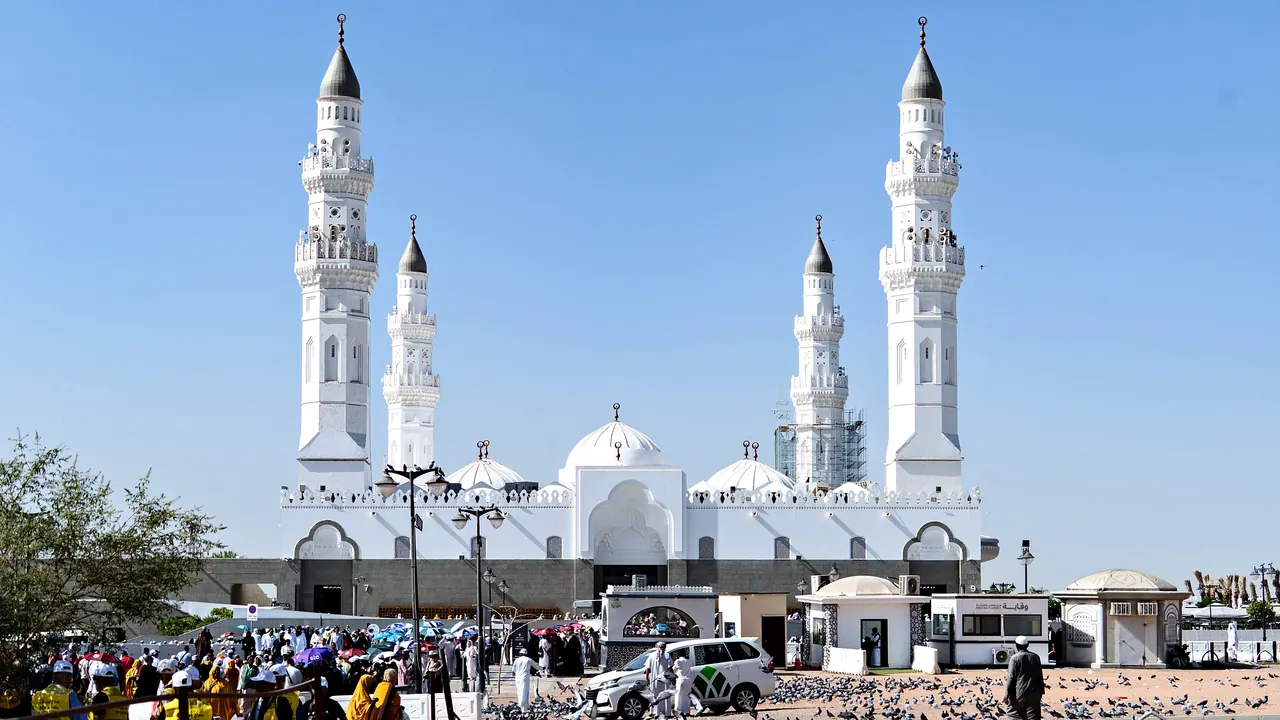
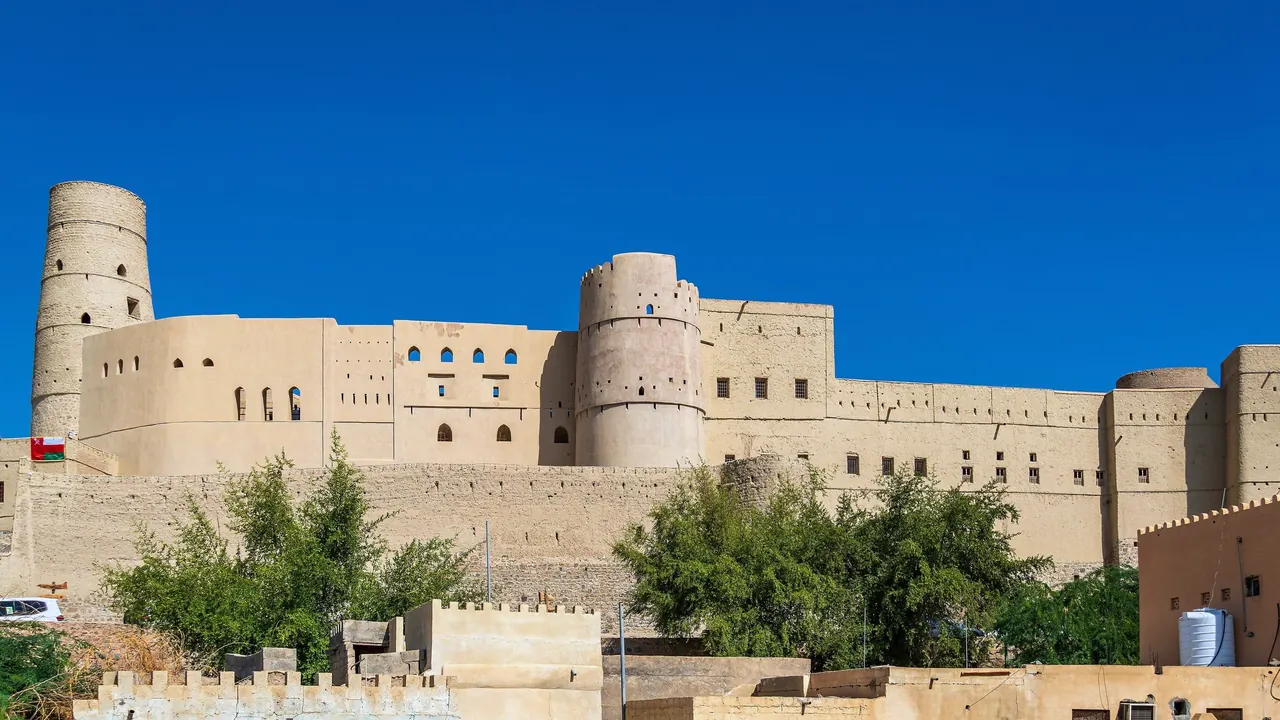
Photos: Saudi Arabia by Musaddek Sayek, Pexels License; Oman by dconvertini, CC BY-SA 2.0, cropped.
Saudi Arabia or Oman?
Our verdict in twelve categories, each scored against the same fixed benchmark cities, and the climate month by month, so you can choose for your trip.
Choose Saudi Arabia for
- shopping
- food and drink
- getting around
Saudi Arabia suits travellers drawn to monumental heritage and big-city life. The rock-cut Nabataean tombs of Hegra at AlUla, the mud-brick lanes of Diriyah and the coral-stone houses of Jeddah's Al Balad are the main draws. Riyadh and Jeddah add a wider range of restaurants, large malls and souks for oud and dates. Plan it as a trip of flights between a few strong places, and expect it to cost more once AlUla or the Red Sea resorts are included.
Choose Oman for
- wellness
- day trips
- nature and the outdoors
For landscapes and slow days, Oman is the better choice. The Hajar Mountains, the palm-lined wadis, the Wahiba dunes and the empty beaches at Fins and Tiwi are all within driving distance of Muscat and Nizwa, so one self-drive loop covers a lot. Its beach and mountain resorts make it the easier country to unwind in, and staying in Nizwa's guesthouses keeps the budget gentler.
Scoreboard
Twelve categories on one fixed scale from 0 to 100. The shaded stretch is the gap between the two.
Your match
Pick a travel style or drag the sliders, and both match scores follow your weighting.
Wins on shopping and food and drink with your weighting.
Wins on wellness and day trips with your weighting.
What matters to you?
Category by category
What the scores mean for a trip.
Beaches & swimming
Oman has the more accessible beaches. Muscat has its own sand at Qurum and quieter coves towards Bandar Jissah, the empty Daymaniyat Islands are a boat ride away, and Fins and Tiwi on the Sur coast have pale sand under dark cliffs with almost no one about.
Saudi Arabia's Red Sea is warmer in winter and its coral starts closer to shore. However, the best swimming around Umluj and north of Jeddah is mostly reached through resorts, boat trips and private beach clubs, and the Gulf coast at Al Khobar is little use.
Where in Saudi Arabia: Umluj and the Red Sea islands, Jeddah, Farasan Islands
Where in Oman: Muscat, Daymaniyat Islands, Sur coast, Salalah
Food & drink
Saudi Arabia has more to eat. Jeddah offers Hijazi cooking, Red Sea fish and street snacks such as mutabbaq in the lanes of Al Balad. Riyadh has whole districts of Levantine, Indian, Turkish and Asian restaurants and a serious specialty coffee scene, and Al-Ahsa's date markets are worth a visit in themselves.
Oman's own cooking, such as shuwa slow-cooked in an underground pit and the halwa of Nizwa, is good but hard to find in restaurants, so most meals in Muscat are Indian, Pakistani or Lebanese. One thing Oman has that Saudi Arabia lacks is wine with dinner, though only in hotels.
Culture & sights
Both are good for a heritage trip, but in different ways. Saudi Arabia has the single grandest site, the tombs and canyons of Hegra at AlUla, along with Diriyah's At-Turaif and Jeddah's Al Balad. These are spread across the country and joined by flights.
Oman's heritage is closer together and more alike in character. Muscat has the Sultan Qaboos Grand Mosque and its old walled quarter, then the forts of Nizwa, Bahla and Jabrin and the mud-brick villages of the Dakhiliyah are short drives apart. In both countries, expect impressive settings rather than large museum collections.
Where in Saudi Arabia: AlUla, Riyadh and Diriyah, Jeddah, Al-Ahsa
Where in Oman: Muscat, Nizwa and the Dakhiliyah, Bahla, Salalah and Dhofar
Nightlife
Neither country is a place for a night out. In both, evenings mean coffee shops, shisha and late dinners once the heat lifts. Muscat's licensed hotel bars will serve a drink, sometimes with a band, while Saudi Arabia has no bars at all. On the other hand, the winter entertainment zones in Riyadh and Jeddah, with concerts, food stalls and fairground rides, make evenings there busier than a stroll along the Muttrah corniche.
Where in Saudi Arabia: Riyadh, Jeddah
Where in Oman: Muscat
Nature & outdoors
Nature is Oman's main draw, and it is easier to reach. Jebel Shams and the Wadi Ghul gorge, the green wadis with their pools, the Wahiba Sands and the Daymaniyat reefs are all within a few hours of Muscat. Musandam's fjords and the hills of Dhofar, green in the monsoon, can be added as separate trips.
Saudi Arabia has fine landscapes too, from AlUla's sandstone arches and the cliffs at the Edge of the World to excellent Red Sea diving and the terraced Asir mountains. Each is a journey of its own, though, and the Empty Quarter is a full expedition.
Where in Saudi Arabia: AlUla, Red Sea coast, Asir mountains, Tuwaiq escarpment
Where in Oman: Hajar Mountains, Wahiba Sands, Musandam, Dhofar
Day trips
Oman is better set up for day trips from a base. From Muscat you can reach Nizwa, the forts of Nakhal and Rustaq, or the dhow shipyard at Sur within a few hours. From Nizwa, Bahla, Jabrin, Al Hamra and Misfat al Abriyeen are all less than an hour away.
In Saudi Arabia the distances are longer. Ushaiqer from Riyadh or Taif from Jeddah each take about two hours each way. The Eastern Province is the best-placed base, with Al-Ahsa and Bahrain both within reach of Al Khobar.
Where in Saudi Arabia: Al Khobar and Dammam, Riyadh, Jeddah, AlUla
Where in Oman: Nizwa, Muscat, Sur
Good for families
Both countries welcome children warmly, and both are best with young ones in winter. Saudi Arabia's offer is mostly indoors and in the big cities: mall amusement centres, ice rinks and Jeddah's corniche playgrounds, with lagoon resorts on the Red Sea for a calmer stay.
Oman's offer is outdoors and quieter: a dolphin boat off Muscat, an evening turtle watch at Ras al Jinz, a desert camp and paddling in the wadi pools. It has no theme parks, and the car journeys between places are long.
Where in Saudi Arabia: Red Sea coast, Jeddah, Riyadh
Where in Oman: Muscat, Ras al Jinz, Wahiba Sands
Getting around
In both countries you need a car or a driver. Saudi Arabia has more public transport links. Domestic flights connect Riyadh, Jeddah, AlUla and Abha, Riyadh has a metro and a high-speed line runs from Jeddah to Medina. Its cities sprawl, though, and the driving is assertive.
Oman has no railway and few buses. Calm traffic and bilingual signs make the loop from Muscat to Nizwa, Wahiba and Sur an easy self-drive, and you only need flights for Salalah and Musandam.
Where in Saudi Arabia: Riyadh, Jeddah
Where in Oman: Muscat, Nizwa
Shopping & style
Saudi Arabia is the better place to shop. It has luxury malls along King Fahd Road in Riyadh and Tahlia Street in Jeddah, plus souks for oud, perfume, carpets and dates in Al Balad, Souq Al Zal and Al-Ahsa. Oman's shopping is smaller and based on crafts: Muttrah souq for frankincense and silver, Nizwa for pottery and khanjar daggers, and Salalah for frankincense of every grade.
Affordability
Oman is somewhat easier on the budget. Cheap Indian cafés in Muscat, low fort entry charges and simple guesthouses in Nizwa and the mountain villages keep costs down. Resort hotels, car hire and 4x4 outings still add up.
In Saudi Arabia, day-to-day spending is moderate too, but hotels in Riyadh and Jeddah are priced for business travellers, and AlUla and the Red Sea are mostly upmarket. Al-Ahsa is the one place with truly local prices.
Where in Saudi Arabia: Al-Ahsa, Riyadh, Jeddah
Where in Oman: Nizwa, Muscat
Live music & performing arts
Oman has the one permanent venue worth planning a trip around: the Royal Opera House Muscat, with a season of opera, ballet, orchestras and Arabic music from autumn to spring. Saudi Arabia relies on events instead, with large touring concerts in Riyadh and Jeddah in the cooler months, the mirrored Maraya hall at AlUla and Ithra's programme in Dhahran. In both countries, traditional sword dances with drums are mostly seen at festivals and national celebrations.
Where in Saudi Arabia: Riyadh, Jeddah, AlUla, Dhahran
Where in Oman: Muscat
Wellness & relaxation
Oman is the more restful country, with quiet towns and empty roads, and it has more places to unwind. You can choose between cliff-top spa hotels in the cool air of Jebel Akhdar, secluded resorts in Musandam's coves, beach resorts around Muscat and silent camps in the Wahiba Sands.
In Saudi Arabia, calm is limited to two places: the desert retreats of AlUla and the overwater villas of the Red Sea resorts. The cities offer little beyond hotel spas.
Where in Saudi Arabia: AlUla, Red Sea coast
Where in Oman: Jebel Akhdar, Muscat coast, Musandam, Wahiba Sands
When should you go?
Pick your month, and for a country the place in it. The climate figures are measured averages, not a forecast.
Where in Saudi Arabia
Where in Oman
Riyadh (Saudi Arabia) in July
Muscat (Oman) in July
Daytime high, °C
Rainfall in the month, mm
Where the figures come from
Muscat (Oman)'s sunshine is measured 32 km from the centre, at Seeb, International Airport.
Temperature and rainfall are climate normals, averaged over the years shown. Riyadh (Saudi Arabia): 1991-2020 normals, Riyadh (8.9 km from centre). Muscat (Oman): 1991-2020 normals, Qaboos Port (3.4 km from centre).
For most of their area, both countries are winter destinations. From November to March, Riyadh and AlUla are pleasant for walking around heritage sites, with the capital at about 21°C in January. From May to September the interior bakes at around 43°C and sightseeing outdoors stops. Jeddah stays warm all year and the Red Sea can be swum in every month, at around 26°C even in winter, though summer days on the sand are punishing. Rain is scarce everywhere, with a few showers in November.
Northern Oman follows the same pattern but is a little milder. Muscat is about 24°C in January and comfortable for wadis, forts and beaches from October to April, then too hot from May. The difference is Dhofar. While the north swelters, the monsoon brings cloud, drizzle and green hills to Salalah, where July and August highs stay near 27°C and the sun rarely appears, though the sea is too rough to swim then. In Saudi Arabia, the summer escape is the Asir mountains instead.
Which traveller are you?
On an outdoors trip, choose Oman. Saudi Arabia's landscapes are far apart, with AlUla and the Asir mountains each a flight away, while Oman links canyon hikes, wadi swims and a dune camp in one self-drive loop. Go between October and April.
On a relaxing and wellness trip, Oman suits better. In Saudi Arabia, unwinding means committing to one remote resort for several days. Oman lets you split the stay, with a few nights in cool mountain air and a few more by the sea.
On a shopping trip, Saudi Arabia comes out ahead. Spend the evenings in the malls, as locals do, and the daytime in the souks for perfume and dates to take home. In Oman, shopping is a few craft purchases, not a reason to go.
More comparisons
Each shares a side with Saudi Arabia or Oman.
Where else could you go?
Set Saudi Arabia or Oman against any other country.