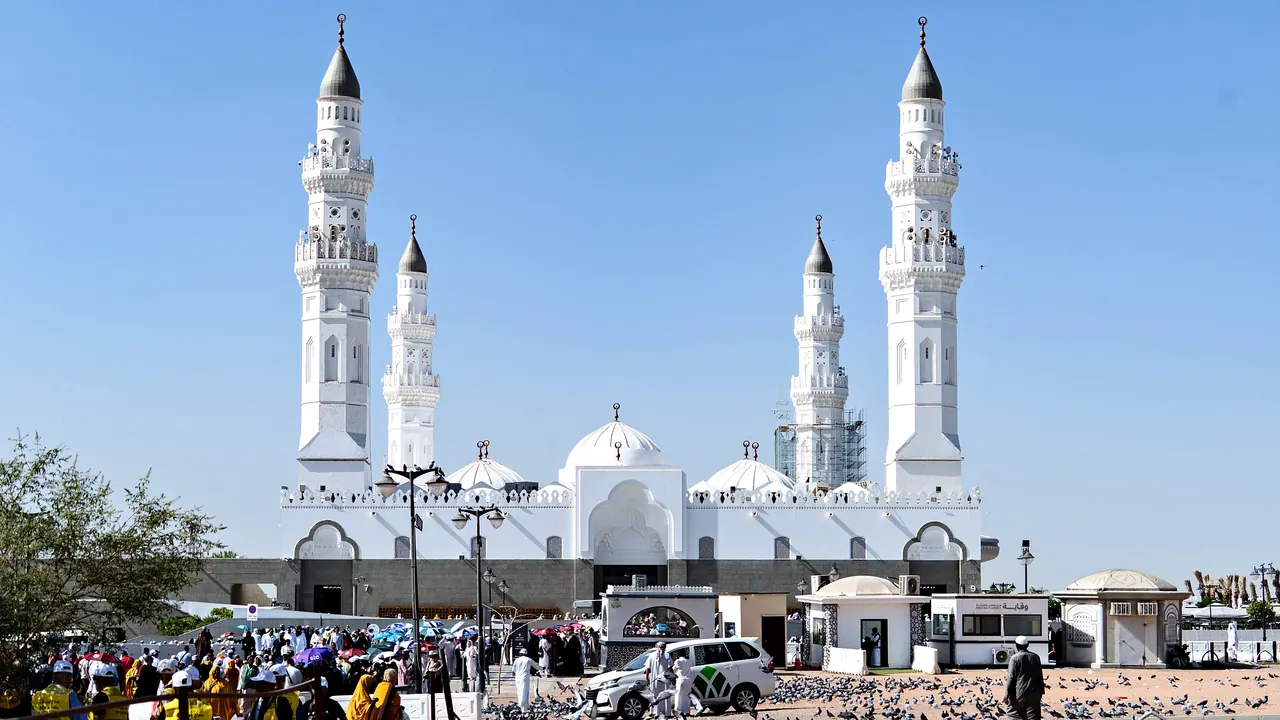
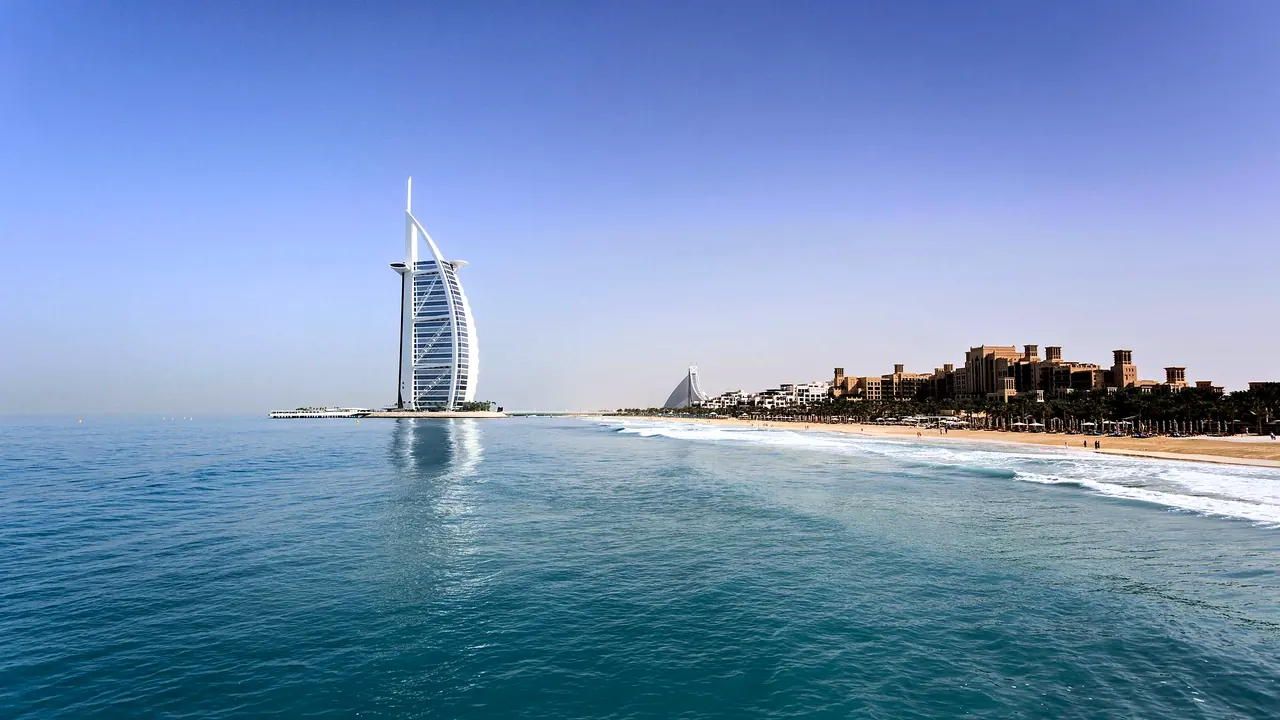
Photos: Saudi Arabia by Musaddek Sayek, Pexels License; United Arab Emirates by Aleksandar Pasaric, Pexels License.
Saudi Arabia or United Arab Emirates?
Our verdict in twelve categories, each scored against the same fixed benchmark cities, and the climate month by month, so you can choose for your trip.
Choose Saudi Arabia for
- nature and the outdoors
- culture and sights
- prices
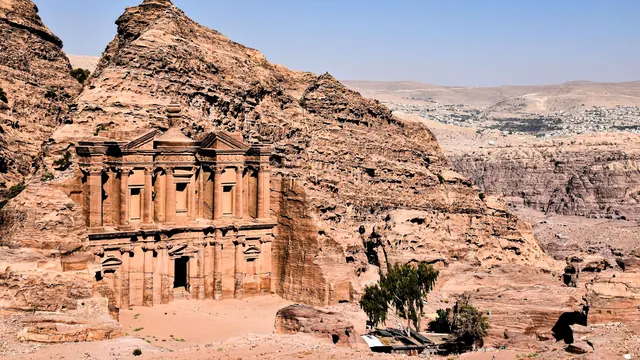
Saudi Arabia suits travellers who come for ancient sites and wide landscapes and don't mind working for them. The Nabataean tombs of Hegra at AlUla, the mud-brick capital at Diriyah, desert canyons, Red Sea reefs and the cool Asir mountains add up to a trip of real discovery. In return you take domestic flights between a few strong places, rely on cars and drivers, and spend quiet evenings in coffee shops rather than bars.
Choose United Arab Emirates for
- nightlife
- families
- beaches
The United Arab Emirates is the easier and more varied vacation. The emirates sit close together, the beaches are long and sandy, Yas Island and Dubai are full of things for children, the malls are among the biggest anywhere, and Dubai has a proper night out. It is the better choice for families, first-timers and anyone who wants a week of sun with little planning, as long as polished hotel life matters more to you than deep history.
Scoreboard
Twelve categories on one fixed scale from 0 to 100. The shaded stretch is the gap between the two.
Your match
Pick a travel style or drag the sliders, and both match scores follow your weighting.
Wins on nature and the outdoors and culture and sights with your weighting.
Wins on nightlife and families with your weighting.
What matters to you?
Category by category
What the scores mean for a trip.
Beaches & swimming
The UAE is the stronger beach destination because its sand is easy to reach. Dubai's shore runs unbroken from Jumeirah to the Marina and the Palm, Saadiyat Island in Abu Dhabi feels more natural, Ras Al Khaimah has quieter resort beaches, and the Fujairah bays add mountains and clearer water. Every city also keeps public beaches.
Saudi Arabia's Red Sea is warmer and richer underwater, with coral often a few metres from the shore. The catch is access: the pale shallows around Umluj are mostly reached through resorts and boat trips, the best swimming near Jeddah is at private beach clubs, and the Farasan Islands take real effort to reach.
Where in Saudi Arabia: Umluj and the Red Sea islands, Jeddah, Farasan Islands
Where in United Arab Emirates: Dubai, Saadiyat Island, Abu Dhabi, Ras Al Khaimah, Fujairah coast
Food & drink
The UAE has more range, almost all of it in Dubai. You can eat hotel fine dining one night and Iranian or Pakistani food in Deira or Karama the next, and licensed restaurants serve wine with dinner. Emirati cooking itself is surprisingly hard to find.
Saudi Arabia keeps its local food much closer to hand. Jeddah has Hijazi dishes, Red Sea fish and mutabbaq in the lanes of Al Balad, Riyadh has a serious specialty coffee scene, and Al-Ahsa sells dozens of kinds of dates. Meals are alcohol-free, and choice narrows quickly outside these cities.
Culture & sights
Saudi Arabia has the deeper history, led by AlUla, where Hegra's tombs carved into sandstone sit alongside the Dadan and Ikmah sites. Add At-Turaif in Diriyah and the coral-stone merchant houses of Jeddah's Al Balad and you have heritage on a scale the UAE cannot match. Reaching it, though, means flights between places that lie far apart.
The UAE's sights are newer and closer together. You have the Sheikh Zayed Grand Mosque and the Louvre Abu Dhabi, Sharjah's museums of Islamic art, the wind-tower houses of Al Fahidi and the oases of Al Ain, all within a short drive of each other.
Where in Saudi Arabia: AlUla, Riyadh and Diriyah, Jeddah, Al-Ahsa
Where in United Arab Emirates: Abu Dhabi, Dubai, Sharjah, Al Ain
Nightlife
The two countries are far apart here. Dubai has rooftop cocktail bars, beach clubs, hotel nightclubs with touring DJs and the weekend brunch, and Abu Dhabi has a smaller scene on Yas Island. Almost all of it happens inside hotels, so it is polished rather than spontaneous.
In Riyadh and Jeddah the streets fill after dark, but people go out for coffee shops, shisha lounges, late dinners and malls, plus seasonal festival zones in winter. There are no bars or clubs to speak of.
Nature & outdoors
Saudi Arabia has more and wilder landscape. There are AlUla's arches and canyons for hiking and stargazing, the Tuwaiq escarpment near Riyadh, the Empty Quarter for those up for an expedition, and reefs along the whole Red Sea coast. The Asir mountains rise above 2,500m and stay cool even in summer.
The UAE packs a smaller version into short drives. You can hike Jebel Jais, kayak on the lake at Hatta, sleep among the tall dunes at Liwa, paddle through Abu Dhabi's mangroves and snorkel off Fujairah. In summer, though, everything outdoors is squeezed into the early morning.
Where in Saudi Arabia: AlUla, Red Sea coast, Asir mountains, Tuwaiq escarpment
Where in United Arab Emirates: Hajar Mountains (Jebel Jais and Hatta), Liwa Oasis, Fujairah and Dibba coast
Day trips
The UAE is easier for days out because the emirates sit so close. From Dubai, Sharjah is next door, Abu Dhabi is about an hour and a half away and Al Ain about two, and Hatta, Fujairah and Ras Al Khaimah are all within reach by motorway.
In Saudi Arabia, each base has one or two good outings at best. From Riyadh you can visit the mud-brick village of Ushaiqer, and from Jeddah the rose farms of Taif, by a route that bypasses Mecca. From Al Khobar there is Al-Ahsa or Bahrain across the causeway. Nearly every one needs a car or driver.
Where in Saudi Arabia: Al Khobar and Dammam, Riyadh, Jeddah, AlUla
Good for families
The UAE is far better set up for children. Yas Island alone has a Ferrari theme park, a Warner Bros. world, a marine park and a water park, and Dubai adds the Palm's water parks, an indoor ski slope and mall aquariums.
Saudi Arabia is just as warm towards children, and families eat out late together. Its offer, though, is mostly mall play centres, Jeddah's corniche and the calm lagoons of the Red Sea resorts, with long drives in between.
Getting around
Neither country is made for walking, but the UAE is simpler to get around. Taxis are plentiful, Dubai has a driverless metro and a tram along the Marina, and an intercity railway links Abu Dhabi, Dubai and Fujairah across short distances.
In Saudi Arabia the cities are far apart, so domestic flights become routine between Riyadh, Jeddah, AlUla and Abha. Once you land, you need a hire car, a driver or ride-hailing, and many visitors find a driver easier than the fast, assertive traffic.
Shopping & style
Shopping is a reason to visit the UAE in its own right. Dubai's biggest malls carry almost every label, and the gold, spice and textile souks along the Creek, plus Sharjah's Central Souk for carpets, add older trading streets.
Saudi Arabia has big malls too, along King Fahd Road in Riyadh and Tahlia Street in Jeddah, but its more distinctive buys are oud, dates and Arabic coffee pots. Look for them in Souq Al Zal, the lanes of Al Balad and Al-Ahsa's Qaisariya souk.
Affordability
Both countries cost about the same overall, but the money goes on different things. In Saudi Arabia everyday spending is moderate and fuel is cheap. The cost comes from business-class city hotels and the upmarket resorts and guided tours at AlUla and on the Red Sea, while Al-Ahsa stays cheap.
In the UAE the cost depends on the season and the extras: winter beachfront hotels, alcohol, brunches and theme-park tickets. Deira, Bur Dubai and Sharjah are cheaper bases, and hotel rates fall sharply in the summer heat.
Where in Saudi Arabia: Al-Ahsa, Riyadh, Jeddah
Where in United Arab Emirates: Sharjah, Deira and Bur Dubai, Ras Al Khaimah
Live music & performing arts
Saudi Arabia has no stage calendar to plan around, so the UAE is the better choice if a show matters to your trip. In Saudi Arabia you get a big winter concert in Riyadh or Jeddah if your dates happen to fall right, or an evening at the Maraya hall in AlUla or at Ithra in Dhahran. The most memorable thing to see is the ardah sword dance, and you will only catch it at a heritage festival or a national celebration, not by buying a ticket.
The UAE has more on because Dubai Opera is a permanent house with a steady stream of visiting companies. On most winter weeks in Dubai you can book a ballet, a musical or an orchestra in advance, and the Yas Island arena and Abu Dhabi's Cultural Foundation add more around it. Almost everything on stage is brought in from abroad, though, and the programme mostly stops in the hot months.
Wellness & relaxation
Saudi Arabia's calm is found away from its cities. AlUla's desert retreats offer yoga, spa treatments and silence among sandstone cliffs, and the Red Sea resorts are built around overwater villas and slow days by the water. In Riyadh and Jeddah, unwinding means a hotel spa and little else.
The UAE's spa offer is much larger and sits mostly in Dubai and Abu Dhabi, where big resort and city-hotel spas often include hammam rooms for steam and black-soap scrubs. Ras Al Khaimah adds the warm pools of the Khatt hot springs and quieter beach resorts, a better base if rest is the point of the trip.
Where in Saudi Arabia: AlUla, Red Sea coast
Where in United Arab Emirates: Dubai, Abu Dhabi, Ras Al Khaimah
When should you go?
Pick your month, and for a country the place in it. The climate figures are measured averages, not a forecast.
Where in Saudi Arabia
Riyadh (Saudi Arabia) in July
Dubai (United Arab Emirates) in July
Daytime high, °C
Rainfall in the month, mm
Temperature and rainfall are climate normals, averaged over the years shown. Riyadh (Saudi Arabia): 1991-2020 normals, Riyadh (8.9 km from centre). Dubai (United Arab Emirates): 1991-2020 normals, Dubai International Airport (3.3 km from centre).
In Saudi Arabia, December to February is the time for Riyadh and AlUla. Daytime highs sit in the low to mid twenties, around 21°C in Riyadh in January, which suits heritage sites and desert walks. November and March are warmer, near 28°C in both places, so sightseeing is best in the morning and evening. Jeddah stays warm right through the winter, and its sea never drops below 26°C, so the Red Sea coast is good for swimming in every winter month. Jeddah's small share of rain falls mostly in November, and Riyadh and Jeddah both get long hours of sunshine all year.
Dubai follows the same pattern on land. It is pleasantly warm from December to February, gets hotter through November and March, and has a few showers in midwinter. Its sea is cooler than Jeddah's in those months, down to about 22°C in February, which is fresh but still fine for swimming. From May to September both countries are fiercely hot, and the Gulf off Dubai warms to 33°C, closer to a bath than a refreshing swim. Saudi Arabia's Asir mountains around Abha are the one summer escape, and the UAE has nothing like them.
Which traveller are you?
On a family trip with children, the UAE wins clearly. Yas Island puts theme parks and a water park side by side, Dubai adds an indoor ski slope and mall aquariums, and calm public beaches are never far. Saudi Arabia's family offer is mostly malls and resort lagoons.
For a food and nightlife trip, choose the UAE. Dubai pairs cheap South Asian canteens in Karama and Satwa with rooftop bars, beach clubs and hotel nightclubs. Saudi evenings are long and sociable but centre on coffee, shisha and rice platters, with no alcohol.
On an outdoors trip, Saudi Arabia offers more. You can hike and stargaze among AlUla's sandstone canyons, look out from the Tuwaiq cliffs at the Edge of the World, dive Red Sea coral walls and walk the cool, terraced Asir mountains in summer, which beats the UAE's shorter list.
More comparisons
Each shares a side with Saudi Arabia or United Arab Emirates.
Where else could you go?
Set Saudi Arabia or United Arab Emirates against any other country.