United Arab Emirates
Abu Dhabi
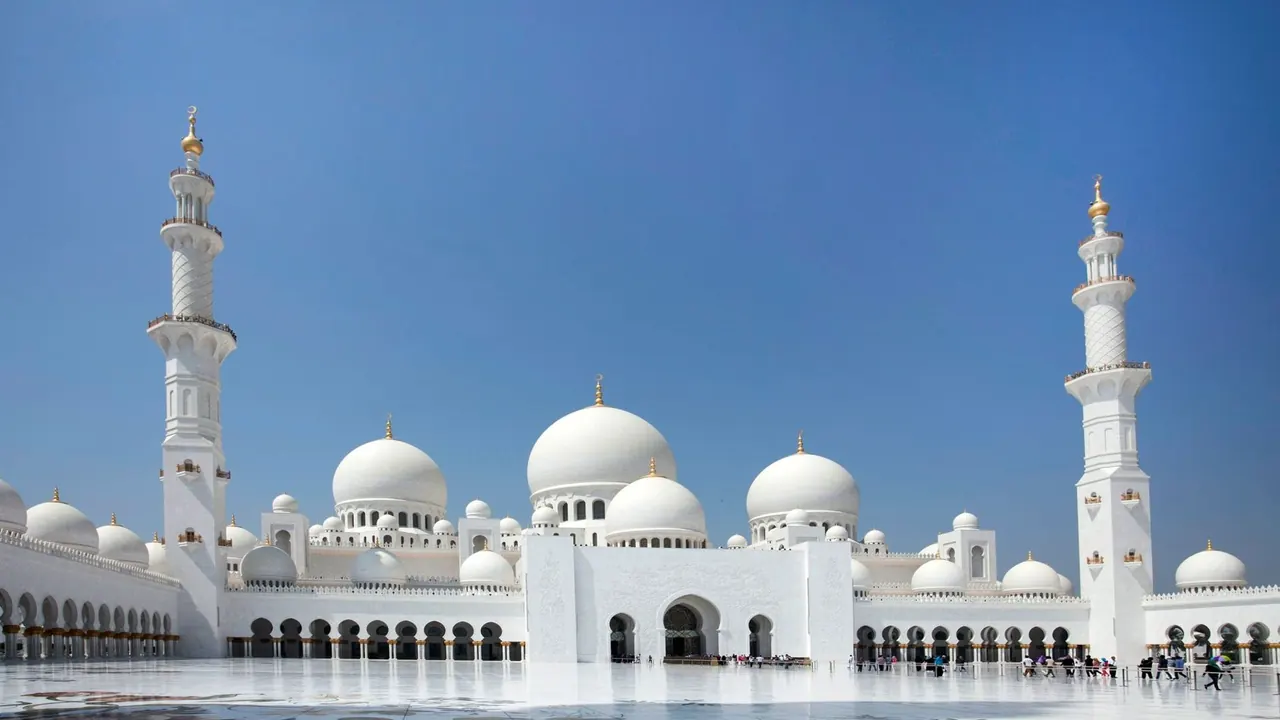
The domes and minarets of the Sheikh Zayed Grand Mosque
- Families82
- Beaches78
- Culture & sights64
Photo: Jeffry Surianto, Pexels License
Match
48
Every category weighted equally
- Beach & sun51
- Culture & arts45
- Food & nightlife44
- Family trip53
- Outdoors47
- Relax & unwind50
- Shopping & style46
- On a budget47
Abu Dhabi in twelve categories
Our verdict on each, scored 0 to 100 against the same fixed benchmark cities, so a score means the same thing on every page.
Beaches & swimming. Scores 78 out of 100.
Food & drink. Scores 55 out of 100.
Culture & sights. Scores 64 out of 100.
Nightlife. Scores 34 out of 100.
Nature & outdoors. Scores 28 out of 100.
Day trips. Scores 45 out of 100.
Good for families. Scores 82 out of 100.
Getting around. Scores 24 out of 100.
Shopping & style. Scores 50 out of 100.
Affordability. Scores 38 out of 100.
Live music & performing arts. Scores 32 out of 100.
Wellness & relaxation. Scores 46 out of 100.
Abu Dhabi category by category
Beaches & swimming
78Abu Dhabi is a city of long, pale sand on the shallow, calm water of the Gulf. The Corniche beach runs along the edge of downtown with lifeguarded sections, and Saadiyat Island has the finest stretch, a wide natural beach backed by dunes where hawksbill turtles nest. Yas Island and the resort strips add more, and many visitors simply stay at a beach hotel and use its sand.
The sea is swimmable all year, around 22°C in winter and well above 30°C in high summer, when the water stops refreshing and the sun makes the middle of the day hard to bear. October to April is the comfortable beach season. There is no surf and little in the way of coves or rocky shore, so it suits people who want easy, safe swimming rather than drama.
Food & drink
55Eating in Abu Dhabi splits into two worlds. One is the hotel and resort dining rooms, where international chefs cook at a high level and Friday brunch is a social institution. The other is the city of its migrant communities: Keralan, Pakistani, Lebanese, Syrian and Iranian kitchens in the older downtown blocks serving biryani, shawarma, grills and fresh juice at very low prices.
Emirati cooking, with dishes such as machboos rice, harees and luqaimat dumplings in date syrup, exists but takes some looking for. The Mina Zayed fish and date markets are worth a morning. Alcohol is served mainly in licensed hotels and some restaurants, so there is little casual wine or bar-food culture, and coffee means Arabic coffee with dates as much as espresso.
Culture & sights
64Abu Dhabi's sights are few but some are genuinely world class. The Sheikh Zayed Grand Mosque, all white marble, inlaid flowers and vast carpet, is one of the great buildings of the Gulf and is open to visitors of any faith. On Saadiyat Island, the Louvre Abu Dhabi sits under a perforated dome that scatters light across galleries telling a single story of world art, and the cultural district around it holds further national museums. Qasr Al Watan, the presidential palace, opens its ceremonial halls.
The older city is thin. Qasr Al Hosn, a white fort from the 18th century, is the main survivor, and the Heritage Village on the breakwater recreates pre-oil life. Expect a handful of major visits rather than a historic centre to wander.
Nightlife
34Going out in Abu Dhabi happens almost entirely inside licensed hotels: lobby lounges, rooftop and beach bars, a few clubs and Irish-style pubs that fill with expatriates at the weekend. Yas Island and Al Maryah Island have the liveliest clusters, and race and concert weekends bring a crowd. There is no bar street or neighbourhood to wander, drinks are expensive and public drunkenness is not tolerated. Evenings for most people mean a long dinner, a shisha café or a stroll on the Corniche when the heat lifts.
Nature & outdoors
28The landscape around Abu Dhabi is flat: low islands, lagoons and sand. Its best natural asset is the mangroves, especially on the eastern side of the main island and at Jubail, where boardwalks and kayak routes lead through quiet channels with herons and crabs. Dune drives and camel rides start within an hour or so of the city, and Jebel Hafeet, a bare limestone ridge near Al Ain, is the only real relief within reach. Cycling along the Corniche and on the Yas Marina Circuit is popular in the cool months. From May to September the heat makes most outdoor activity impractical except at dawn.
Day trips
45Three outings carry the day-trip list. Dubai is about an hour and a half up the coast, with its skyline, the creek and the old souks of Deira. Al Ain, inland on the Omani border and also about an hour and a half away, is the opposite in mood: shaded date-palm oases watered by ancient falaj channels, mud-brick forts and a fine national museum, all part of a UNESCO site. Sharjah, just beyond Dubai, has the most serious set of museums and restored heritage quarters in the Emirates. Beyond those, it is desert and a long drive.
Good for families
82Abu Dhabi is built to welcome families. Yas Island gathers several big parks a short hop apart: a Ferrari-themed park with record-breaking coasters, a Warner Bros world under one roof, a large water park and a marine park with an Arctic zone. Many resorts are designed around children, with shallow pools, clubs and calm sea in front.
The culture is warm towards children, malls and restaurants are stroller-friendly, and the city feels very safe. The difficulties are the climate and distance: from late spring to early autumn, life with children moves indoors, and almost every outing means a taxi or car. The cooler winter months are the time to go.
Getting around
24Abu Dhabi is laid out for cars. The main sights sit far apart, the mosque on the edge of the main island, the Louvre on Saadiyat, the theme parks on Yas, linked by wide highways rather than streets you would walk. Public buses exist but are slow and little used by visitors, and there is no metro. Most people rely on metered taxis and ride-hailing, which are plentiful and reliable, or hire a car. The Corniche is pleasant to walk in the cool season, but for much of the year the heat rules out going anywhere on foot.
Shopping & style
50Shopping in Abu Dhabi means malls: large, air-conditioned and full of international brands, with the luxury houses gathered on Al Maryah Island and the biggest family malls on Yas and by the Corniche. For something local, the modern souk at Qaryat al Beri and the Central Market downtown sell dates, oud, perfume, carpets and Arabic sweets, and the Iranian souk by the port has household goods and pottery. There is little in the way of independent design shops or a street to browse, so it suits brand shoppers more than those looking for discoveries.
Affordability
38Abu Dhabi is costly in some ways and fair in others. Hotel rooms, especially in the large international chains, are often good value for their standard outside the winter peak and the big race and concert weekends. Taxis are reasonable and simple meals in the downtown South Asian and Arab eateries are very cheap. Where it adds up is everything else: drinks are heavily priced, hotel restaurants and brunches are expensive, and the theme parks and some museums charge high entry. A family vacation built around Yas Island and resort dining is far from cheap.
Live music & performing arts
32Abu Dhabi has no opera house or resident orchestra, so live performance is mostly brought in. Large arenas on Yas Island host international pop stars and comedy tours, especially around the Formula 1 weekend, and the long-running Abu Dhabi Festival each spring brings orchestras, soloists and dance companies. The Cultural Foundation theatre, the Louvre's auditorium and the university arts centre on Saadiyat stage concerts and talks through the cooler months. Traditional music and dance appear at heritage festivals. The calendar is real but thin, and summer is largely empty.
Wellness & relaxation
46Rest in Abu Dhabi comes through its resorts rather than any bathing tradition. The grand palace-style hotels and the beach resorts on Saadiyat have large spas with hammam rooms, Arabian and Asian treatments and long pool days, and the pace on those islands is slow and quiet. There are no public bath houses or springs to visit as a local would, and outside the resorts the city is calm but car-bound rather than restorative. It suits a few lazy days at a good hotel more than a wellness trip in its own right.
When should you go?
Pick a month to see what it is like. The climate figures are measured averages, not a forecast.
Abu Dhabi in July
Daytime high, °C
Rainfall in the month, mm
The whole year
Shaded against this city’s own year: the deepest cell is its best month for that figure and the palest its weakest.
Where the figures come from
Abu Dhabi's temperatures are measured 26 km from the centre, at Abu Dhabi International Airport.
Abu Dhabi has no rain gauge within 25 km of the centre, so its rainfall comes from a gridded climate dataset read at the city rather than from a gauge further away.
Temperature and rainfall are climate normals, averaged over the years shown. Abu Dhabi: 1991-2020 normals, Abu Dhabi International Airport (25.7 km from centre).
Before you go
| Measure | Abu Dhabi |
|---|---|
| Official language | Arabic |
| Currency | UAE Dirham (AED) |
| Sockets | CG220 V, 50 Hz |
| Driving side | Right |
| Time zone | UTC+4 |
| Emergency number | 112 |
| Elevation | 14 m |
| Main airport | Zayed International Airport (AUH)26 km from centre147 non-stop destinations |
By the numbers
| Measure | Abu Dhabi |
|---|---|
| City population | 1,570,000 |
| People per km² | 1,615 |
| Museums within 10 km | 3 |
| UNESCO World Heritage sites within 50 km | 0 |
| Swim season, months above 21 °C | 11 months |
Compare Abu Dhabi with
Every comparison with a written verdict behind it.