United Arab Emirates
Dubai
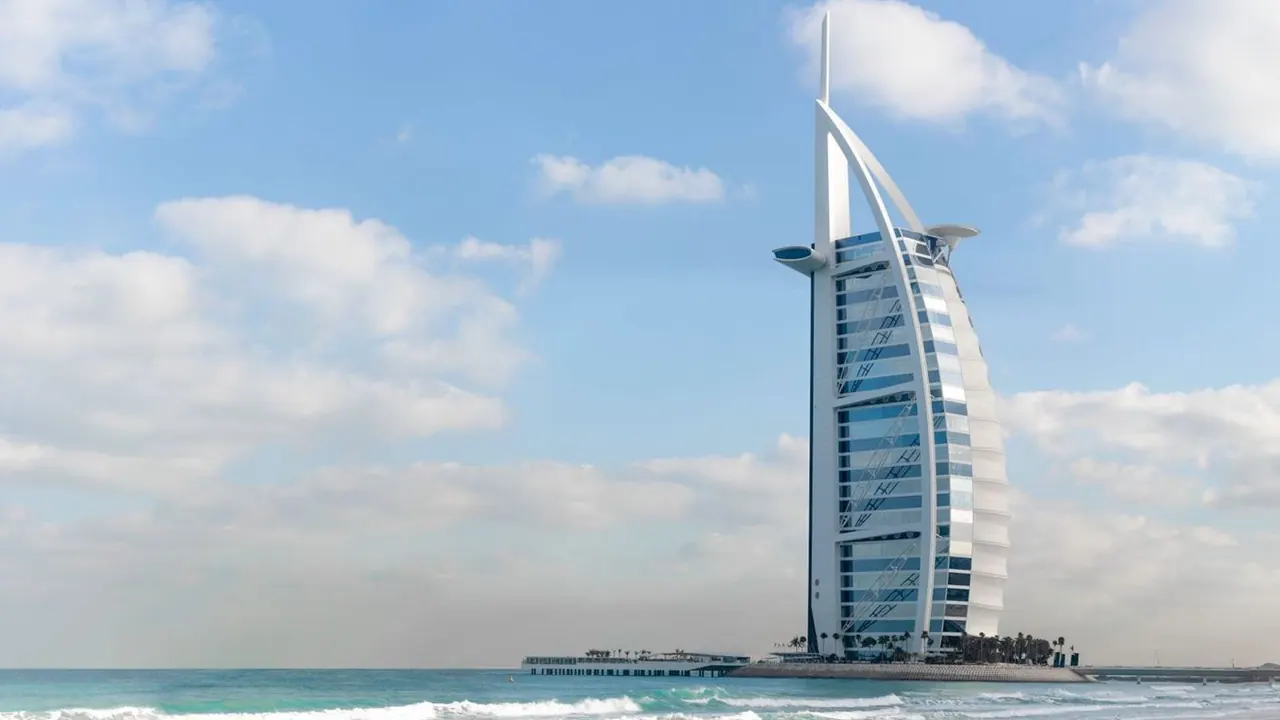
The Burj Al Arab
- Families82
- Shopping82
- Beaches80
Photo: Aleksandar Pasaric, Pexels License
Match
54
Every category weighted equally
- Beach & sun57
- Culture & arts50
- Food & nightlife56
- Family trip55
- Outdoors50
- Relax & unwind54
- Shopping & style58
- On a budget52
Dubai in twelve categories
Our verdict on each, scored 0 to 100 against the same fixed benchmark cities, so a score means the same thing on every page.
Beaches & swimming. Scores 80 out of 100.
Food & drink. Scores 76 out of 100.
Culture & sights. Scores 40 out of 100.
Nightlife. Scores 62 out of 100.
Nature & outdoors. Scores 25 out of 100.
Day trips. Scores 45 out of 100.
Good for families. Scores 82 out of 100.
Getting around. Scores 42 out of 100.
Shopping & style. Scores 82 out of 100.
Affordability. Scores 32 out of 100.
Live music & performing arts. Scores 40 out of 100.
Wellness & relaxation. Scores 46 out of 100.
Dubai category by category
Beaches & swimming
80Dubai's coast is one long run of pale sand on the calm, shallow water of the Gulf. The public beaches are Jumeirah, Kite Beach, the Marina's JBR strip and the stretches around Umm Suqeim, where the Burj Al Arab stands behind the swimmers. Many visitors never use them, because the resort hotels on Palm Jumeirah and along the southern shore have private beaches that are the main point of the stay. The water is clear but has little surf, and the shoreline is engineered rather than wild.
In winter the sea is about 23°C, which is ideal, and the sun is gentle. By midsummer the water passes 32°C and the sand is too hot by mid-morning, so beach life moves to early mornings and evenings. Night swimming areas on some public beaches help.
Food & drink
76Eating in Dubai means eating the cuisines of the people who live there. In Deira, Karama and Al Satwa, cheap canteens serve Keralan fish curry, Pakistani karahi, Afghan bread, Iranian kebabs and Filipino breakfasts, and shawarma counters stay busy late into the night. At the other end are celebrity-chef dining rooms in the hotels and towers of Downtown, DIFC and the Marina, along with an elaborate Friday brunch culture.
Emirati cooking is harder to find: machboos rice, luqaimat dumplings in date syrup and camel-milk sweets turn up in a few heritage restaurants and at Ramadan iftar tents. Alcohol is served only in licensed venues, mostly hotels, so wine and beer are a minor part of the culture. Fresh juice, karak tea and Arabic coffee are everywhere.
Culture & sights
40Dubai's sights are mostly about modern spectacle. The Burj Khalifa, with its observation decks, and the Museum of the Future are landmarks people know before they arrive, and the skylines of Downtown and the Marina are worth seeing at dusk. The older city lies along the Creek. There, the restored wind-tower houses of Al Fahidi, the Al Shindagha heritage area and the abra crossing to the Deira souks give a sense of the trading port Dubai was before oil.
The Jumeirah Mosque welcomes non-Muslim visitors, and the Etihad Museum tells the story of the country's founding. That is about the full list. Two or three days covers it, and the deeper Gulf heritage lies elsewhere.
Nightlife
62Going out in Dubai happens inside hotels and licensed venues, never on the street. Within that frame the scene is large and polished, with big-name DJ clubs, rooftop bars above Sheikh Zayed Road and the Marina, daytime beach clubs that run into the evening on Palm Jumeirah, and lounges in DIFC where the dress code matters. The weekend brunch, a long boozy lunch that spills into the night, is a local institution.
Venues stay open late, and the cooler months bring the busiest calendar of parties. Drinks are very expensive, and there is little of the casual or alternative scene: no dive-bar districts and no drinking outdoors. Public drunkenness is treated seriously, so the night is glamorous rather than loose.
Nature & outdoors
25The landscape around Dubai is desert. The red dunes of the Al Marmoom and Lahbab areas, an hour inland, are the main outdoor draw, for dune drives, sandboarding, camel rides and a night under the stars. On the water there is kitesurfing at Kite Beach, paddleboarding along the Marina, and boat and jet-ski trips around the Palm. The Ras Al Khor sanctuary on the Creek has flamingos in winter.
The only real relief is the Hajar range around Hatta, about ninety minutes away, which has kayaking on the dam, mountain-bike trails and short hikes. Green space in the city is limited to irrigated parks. From May to September the heat makes most outdoor activity impractical except at dawn.
Day trips
45The best day out is Abu Dhabi, about ninety minutes down the coast road. There you can see the Sheikh Zayed Grand Mosque, the Louvre Abu Dhabi on Saadiyat Island and the presidential palace of Qasr Al Watan. Sharjah sits right next to Dubai and is easily overlooked, though its restored heritage quarter, its Museum of Islamic Civilization and its arts foundation make it the most cultured of the emirates.
Al Ain, on the Omani border, has UNESCO-listed oases, mud-brick forts and old falaj irrigation channels in the palm groves. Past those three outings the list thins quickly. The northern emirates have a few forts and quiet old towns, but most of what lies within two hours is desert and road.
Good for families
82Dubai is built for families who want attractions. A theme-park cluster near Jebel Ali includes Legoland, and there are big water parks on Palm Jumeirah and in Jumeirah. Downtown has the giant aquarium inside the Dubai Mall. There is also indoor skiing and snow play in the Mall of the Emirates, along with indoor theme parks for the summer months. The calm, shallow sea suits small children well, and many beach resorts run kids' clubs.
The city is very safe, and Gulf culture is warm towards children, who are welcome in restaurants late into the evening. What holds it back is the heat, which keeps families indoors for much of the summer, and the distances. Most outings mean a taxi rather than a walk.
Getting around
42Dubai stretches some 50km along the coast and was designed around the car. The driverless metro is clean, cool and easy. Its Red Line runs along Sheikh Zayed Road from the airport through Downtown to the Marina, and the Green Line serves the old town around the Creek. A tram loops around the Marina, and wooden abras still cross the Creek between Bur Dubai and Deira.
The gaps lie between the stations. Walkways are long, the roads are wide and hard to cross, and for much of the year the heat makes even short walks tiring. Palm Jumeirah, the beaches and the theme parks usually mean a taxi or ride-hail, and taxis are plentiful. Only a few areas, such as the Marina promenade, Al Fahidi and Downtown's boulevard, are pleasant on foot.
Shopping & style
82Shopping is one of the main reasons people come to Dubai. The Dubai Mall and the Mall of the Emirates are vast, and they hold nearly every luxury and high-street brand, as well as department stores and whole wings of designer flagships. The jewellery and watch market is especially deep. The Dubai Shopping Festival fills the winter calendar with sales.
The older trade survives in Deira. In the Gold Souk, shop windows are packed with jewellery sold by weight, and the nearby spice and perfume souks sell saffron, frankincense and oud. Across the Creek, the textile souk of Bur Dubai sells fabrics and pashminas. What is missing is street-level independent shopping. Apart from a few design studios in Alserkal Avenue, almost everything happens indoors.
Affordability
32Dubai is an expensive place for a visitor, though how expensive depends a lot on the season and on how you choose to spend. In the winter high season, beach resorts and hotels in Downtown or the Marina cost a lot, and so do the headline attractions, the observation decks and the theme parks. Alcohol is among the dearest anywhere, and a meal in a hotel restaurant matches the priciest European capitals.
There are ways to cut costs. Meals in the South Asian and Arab eateries of Deira and Karama are very cheap, the metro and abras cost little, and taxis are moderate. In the hot summer months, hotel rates fall sharply.
Live music & performing arts
40Most of what plays in Dubai comes from abroad. The dhow-shaped Dubai Opera in Downtown hosts touring ballet, opera, musicals, orchestras and comedy, mainly in the cooler months. A large indoor arena and the outdoor venues bring international pop and rock tours. Hotel lounges have resident jazz and cover bands.
There is very little home-grown scene. The city has no resident orchestra or opera company and no theatre district. Traditional Emirati performance, such as the ayyala stick dance, appears mainly at heritage festivals. If you plan around a particular show the programme is reliable, but you will not find much by chance on an ordinary evening.
Wellness & relaxation
46Wellness in Dubai means the luxury hotel spa. The large resorts on Palm Jumeirah and along the Jumeirah coast have whole floors given to treatments, with hammam rituals, Moroccan scrubs, hydrotherapy pools, steam rooms and long massage menus. The standard is high and the choice is wide. Because these spas are indoors and air-conditioned, they work just as well in the summer heat as in winter.
Outside the hotels there is little else. Dubai has no public bathhouses, no thermal springs and no bathing tradition of its own, and the city is fast, traffic-heavy and built around shopping and spectacle. You rest here by staying put in a resort and letting the days pass, not by joining a local custom. For real quiet, the desert retreats an hour inland offer silence, starry nights and treatments among the dunes.
When should you go?
Pick a month to see what it is like. The climate figures are measured averages, not a forecast.
Dubai in July
Daytime high, °C
Rainfall in the month, mm
The whole year
Shaded against this city’s own year: the deepest cell is its best month for that figure and the palest its weakest.
Temperature and rainfall are climate normals, averaged over the years shown. Dubai: 1991-2020 normals, Dubai International Airport (3.3 km from centre).
Before you go
| Measure | Dubai |
|---|---|
| Official language | Arabic |
| Currency | UAE Dirham (AED) |
| Sockets | CG220 V, 50 Hz |
| Driving side | Right |
| Time zone | UTC+4 |
| Emergency number | 112 |
| Elevation | 0 m |
| Main airport | Dubai International Airport (DXB)7 km from centre294 non-stop destinations |
By the numbers
| Measure | Dubai |
|---|---|
| City population | 3,944,751 |
| Museums within 10 km | 14 |
| UNESCO World Heritage sites within 50 km | 0 |
| Swim season, months above 21 °C | 12 months |
Compare Dubai with
Every comparison with a written verdict behind it.