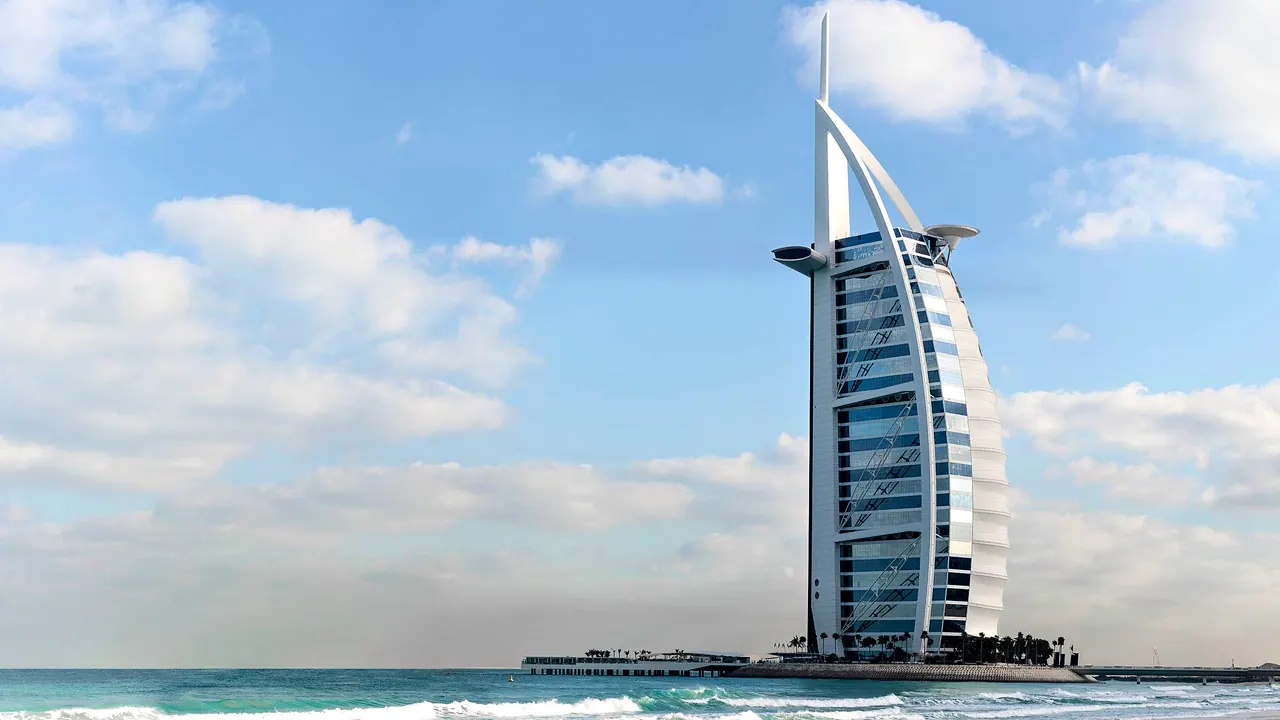
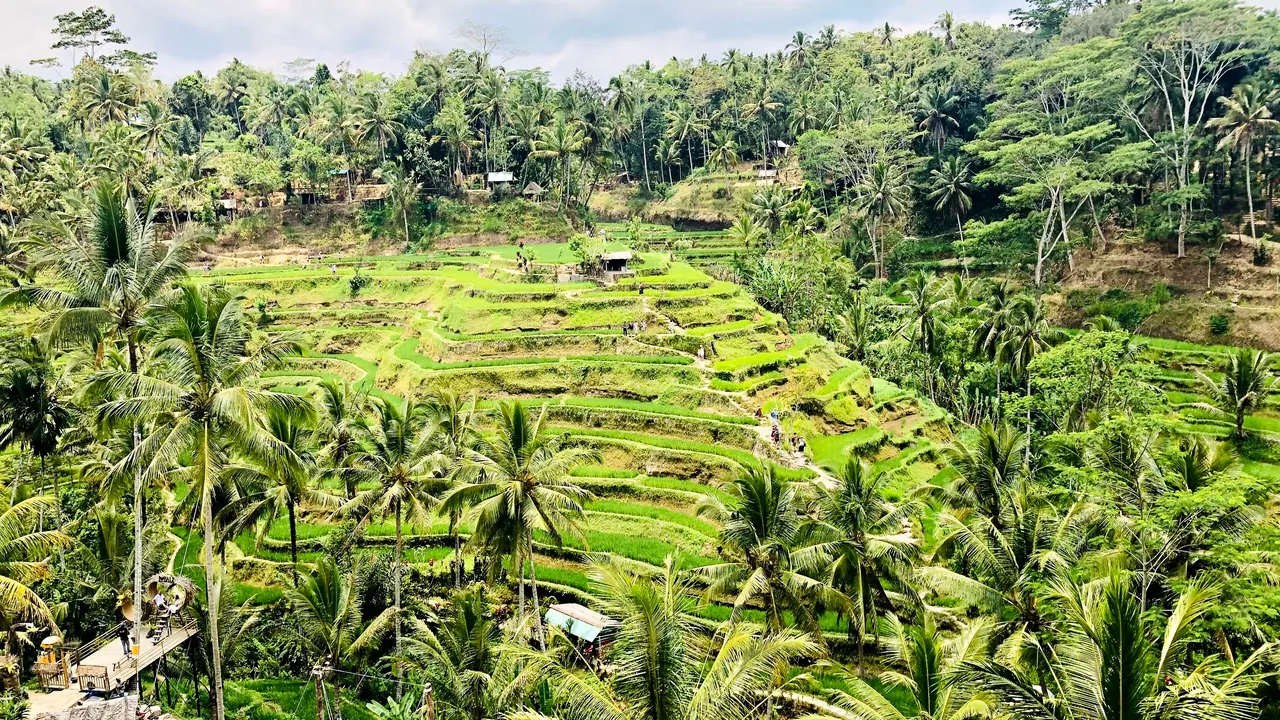
Photos: Dubai by Aleksandar Pasaric, Pexels License; Ubud by Pinterpandai, CC BY-SA 3.0, cropped.
Dubai or Ubud?
Our verdict in twelve categories, each scored against the same fixed benchmark cities, and the climate month by month, so you can choose for your trip.
Choose Dubai for
- nightlife
- beaches
- families
Dubai suits a winter sun trip built around a resort beach, serious shopping and a polished night out. It is also the easier choice for families with young children, thanks to the shallow sea, theme parks, kids' clubs and a metro and taxis that keep the logistics simple. Expect to pay for all of it, and to see the old city in a couple of days.
Choose Ubud for
- nature and the outdoors
- wellness
- prices
Choose Ubud for rice terraces, yoga at dawn and temples that are part of daily life rather than spectacle. It costs far less, its dance and craft traditions are still practised, and trips across Bali to Tirta Empul, Besakih or Mount Batur can fill a week. In return you get no beach in town, very quiet evenings and a driver for almost every outing.
Scoreboard
Twelve categories on one fixed scale from 0 to 100. The shaded stretch is the gap between the two.
Your match
Pick a travel style or drag the sliders, and both match scores follow your weighting.
Too close to call, 1 point apart
Wins on nightlife and beaches with your weighting.
Wins on nature and the outdoors and wellness with your weighting.
What matters to you?
Category by category
What the scores mean for a trip.
Beaches & swimming
Dubai has the beach on its doorstep. There is long pale sand at Jumeirah, Kite Beach and JBR, and the resorts on Palm Jumeirah have private beaches, all on calm, shallow Gulf water. The drawback is summer, when sand and sea get too hot outside early mornings and evenings.
Ubud is inland in the hills, so most swimming happens in a villa pool overlooking the rice fields. Sanur, about an hour away, gives a calm swim inside the reef, while the black-sand Gianyar coast is better for watching surfers. If the beach matters most, spend part of the stay on the coast.
Food & drink
Dubai has the wider range at both ends of the market. Keralan, Pakistani, Iranian and Afghan canteens fill Deira and Karama, while chef-led dining rooms in DIFC and the Marina and the Friday brunch cover the other end. Wine and beer stay mostly inside hotels.
Ubud does one cuisine very well: babi guling at lunchtime counters, slow-cooked bebek betutu and warung nasi campur, alongside a large plant-based café scene. It offers less variety but tastes more of the place, as long as you eat a lane or two away from the main street.
Culture & sights
Dubai's sights are mostly modern spectacle: the Burj Khalifa, the Museum of the Future and the skyline at dusk. The old trading port survives along the Creek in Al Fahidi and Al Shindagha, and it does not take long to see.
Ubud gives more to a curious visitor because its culture is lived rather than displayed. You see offerings on doorsteps, temple processions and the palace at Puri Saren, and the Neka, ARMA and Puri Lukisan collections trace a century of Balinese painting. The eleventh-century Goa Gajah cave is on the edge of town.
Nightlife
Dubai has a real night out, if a formal one. There are DJ clubs, rooftop bars above Sheikh Zayed Road, beach clubs on the Palm and the long weekend brunch, all inside licensed venues with dress codes and very high drink prices.
Ubud has almost no nightlife. Evenings end with dinner in a garden and perhaps a band, the town is quiet before midnight, and anyone who wants clubs makes the long drive to Seminyak or Canggu.
Nature & outdoors
This is where Ubud pulls furthest ahead. Around Dubai the outdoors means desert: dune drives and nights under the stars at Al Marmoom or Lahbab, kitesurfing off Kite Beach, and the Hajar hills at Hatta about ninety minutes away. Through the summer the heat rules out most of it after dawn.
Ubud is surrounded by green. Rice terraces line the hillsides, the Ayung gorge offers rafting, and waterfalls such as Tegenungan and Tibumana are close by. There is also the pre-dawn climb up Mount Batur, and the Monkey Forest's patch of jungle is right in the centre of town.
Day trips
From Dubai, three outings stand out: Abu Dhabi for the Grand Mosque and the Louvre, Sharjah next door for its heritage quarter and Islamic museum, and Al Ain for its oases and mud-brick forts. Beyond those, it is mostly desert and road.
Ubud sits in the middle of a much richer map. Tirta Empul and Gunung Kawi are nearby, and further out are Besakih on the slopes of Agung, Tanah Lot, the Jatiluwih terraces and Tirta Gangga. You will need a driver, and Bali's slow roads limit how many stops fit into a day.
Good for families
Dubai is the easier choice with children, especially young ones. It has Legoland and big water parks, the aquarium in the Dubai Mall, indoor snow at Mall of the Emirates, resort kids' clubs and a shallow sea. In summer all of this moves indoors.
Ubud welcomes children warmly, and villa pools make the hot afternoons easy. Narrow pavements, scooter traffic and bag-grabbing macaques make it hard going with toddlers, though older children who like rafting, rice-field walks and the dance shows will enjoy it.
Getting around
Neither is a walking city, but Dubai at least has a backbone. The driverless metro links the airport, Downtown, the Marina and the Creek, and abras and plentiful taxis fill the gaps. Outside a few promenades, the wide roads and the heat make walking tiring.
Ubud has no public transport worth relying on. With broken pavements and steep valley roads, most visitors plan their days around a hired driver or ride-hailing. Stay near the centre if you want to walk to dinner.
Shopping & style
Dubai is a shopping destination in its own right. The Dubai Mall and Mall of the Emirates carry nearly every brand, the choice of watches and jewellery is deep, and in Deira the Gold Souk and the spice and perfume souks keep the older trade alive.
Ubud's shopping is handmade. There is the Art Market opposite the palace, silver in Celuk, woodcarving in Mas and painting in Batuan, plus linen and yoga-wear boutiques on Jalan Hanoman. It has no luxury brands, but it is the better place for craft to take home.
Affordability
Dubai is costly in the winter high season. Resort rooms, observation decks, theme parks and above all alcohol add up quickly. The canteens of Karama and Deira and the metro are cheap, though, and hotel rates fall sharply in summer.
A budget goes much further in Ubud. Homestays with breakfast, warung meals, massages and a driver for the day all cost little. The luxury resorts above the valleys and the tasting menus can be expensive, but you can skip them.
Live music & performing arts
Dubai's stage is largely imported. Touring ballet, musicals and orchestras play the dhow-shaped Dubai Opera, and international pop tours fill the arena. This is reliable if you book a particular show, but there is little home-grown work.
Ubud has the edge for performance rooted in its place. Every evening, Legong, Barong or Kecak is danced to live gamelan in the palace courtyard or beside the Saraswati lotus pond, performed by village troupes. Beyond dance there is little else, with no theatre or concert hall.
Wellness & relaxation
In Dubai, wellness means the luxury hotel spa. The resorts on Palm Jumeirah offer hammam rituals, hydrotherapy pools and long massage menus, all air-conditioned and as good in August as in January, and desert retreats inland add silence.
Ubud is built around wellness. It has dawn yoga in open pavilions, retreats lasting from a weekend to several weeks, Balinese massage on every street, flower baths, traditional healers and the purification ritual at Tirta Empul. The whole town keeps early, quiet hours to match.
When should you go?
Pick your month. The climate figures are measured averages, not a forecast.
Dubai in July
Ubud in July
Daytime high, °C
Rainfall in the month, mm
Where the figures come from
Ubud's temperatures are measured 29 km from the centre, at Denpasar / Ngurah-Rai.
Ubud's station stands 209 m below the city centre, so the centre is likely a little cooler than the figures say.
Ubud has no rain gauge within 25 km of the centre, so its rainfall comes from a gridded climate dataset read at the destination rather than from a gauge further away.
Temperature and rainfall are climate normals, averaged over the years shown. Dubai: 1991-2020 normals, Dubai International Airport (3.3 km from centre). Ubud: 1991-2020 normals, Denpasar / Ngurah-Rai (29 km from centre).
Dubai is a winter destination. From November to March the days are warm rather than hot, from about 25°C in January, and the Gulf is pleasant for swimming even at its coolest, around 23°C. The little rain it gets falls mainly in December and January. From May to September highs reach 42°C and the sea feels like warm bathwater, so beach time and walking move to dawn and dusk.
Ubud is warm and humid all year, and its daytime highs barely change from month to month. What changes is the rain. The wet season runs roughly from November to March, and January is the wettest month at about 297mm. August is the driest, at 36mm, and also the sunniest. May to September is the best time for trekking and temple trips. The rainy months bring the greenest terraces but also muddy trails and afternoon downpours.
Which traveller are you?
On a beach and sun trip, Dubai wins easily. Pale public sand and private resort beaches face calm, clear water, and in the cooler months the sea is ideal for swimming. Ubud has no beach of its own, and the nearest good swim is an hour's drive away.
For an outdoors trip, Ubud is the far better base. You can walk Campuhan Ridge and the Tegallalang terraces, raft the Ayung, visit jungle waterfalls and climb Mount Batur for sunrise. Dubai has dunes and the Hatta hills, but in summer the heat ends most days by mid-morning.
On a relaxing and wellness trip, choose Ubud. Yoga, retreats, Balinese massage and the quiet of the rice fields set the rhythm of the whole town, and none of it costs much. Dubai's resort spas are excellent, but resting there mostly means staying inside a hotel.
Before you go
| Measure | Dubai | Ubud |
|---|---|---|
| Official language | Arabic | Indonesian |
| Currency | UAE Dirham (AED) | Rupiah (IDR) |
| Sockets | CG220 V, 50 Hz | CF50 Hz |
| Driving side | Right | Left |
| Time zone | UTC+4 | UTC+8 |
| Emergency number | 112 | 112 |
| Elevation | 0 m | 210 m |
| Main airport | Dubai International Airport (DXB)7 km from centre293 non-stop destinations | Denpasar I Gusti Ngurah Rai International Airport (DPS)29 km from centre64 non-stop destinations |
By the numbers
| Measure | Dubai | Ubud |
|---|---|---|
| Population | 3,944,751 | - |
| Museums within 10 km | 14 | 14 |
| UNESCO World Heritage sites within 50 km | 0 | 1 |
| Swim season, months above 21 °C | 12 months | 12 months |
Where else could you go?
Every comparison below shares a destination with this one, so you can follow Dubai or Ubud somewhere new.