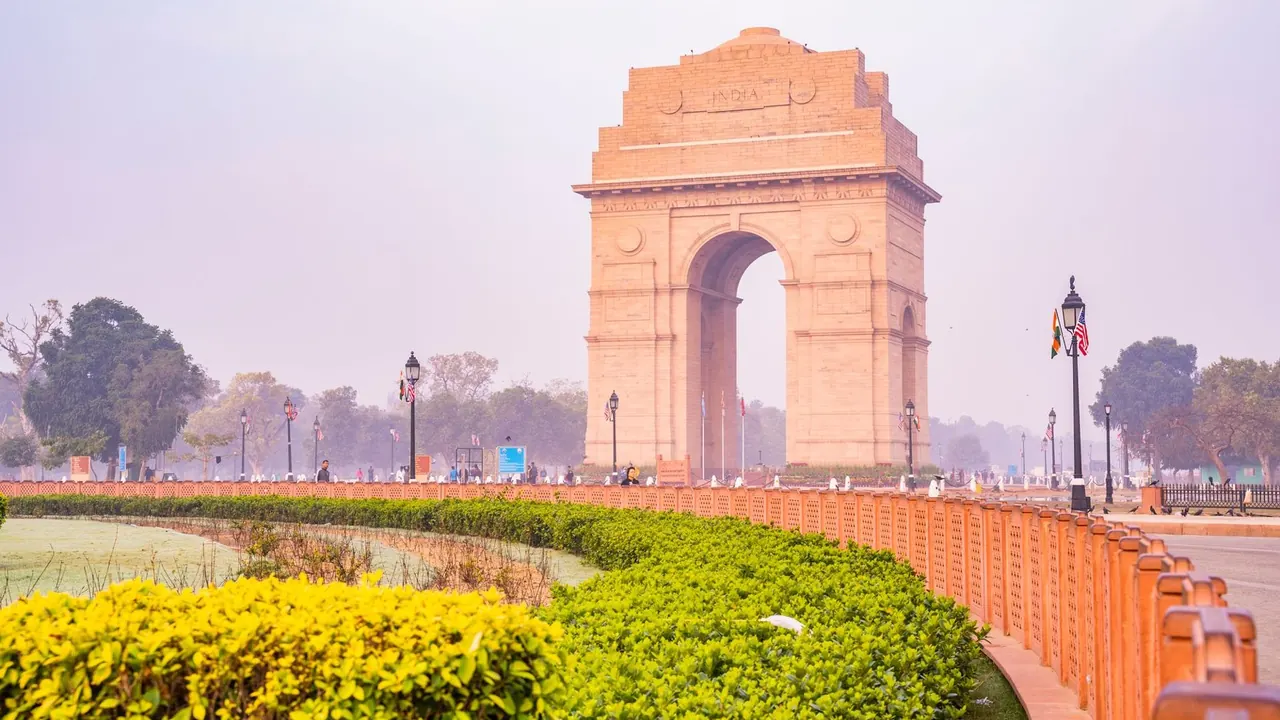
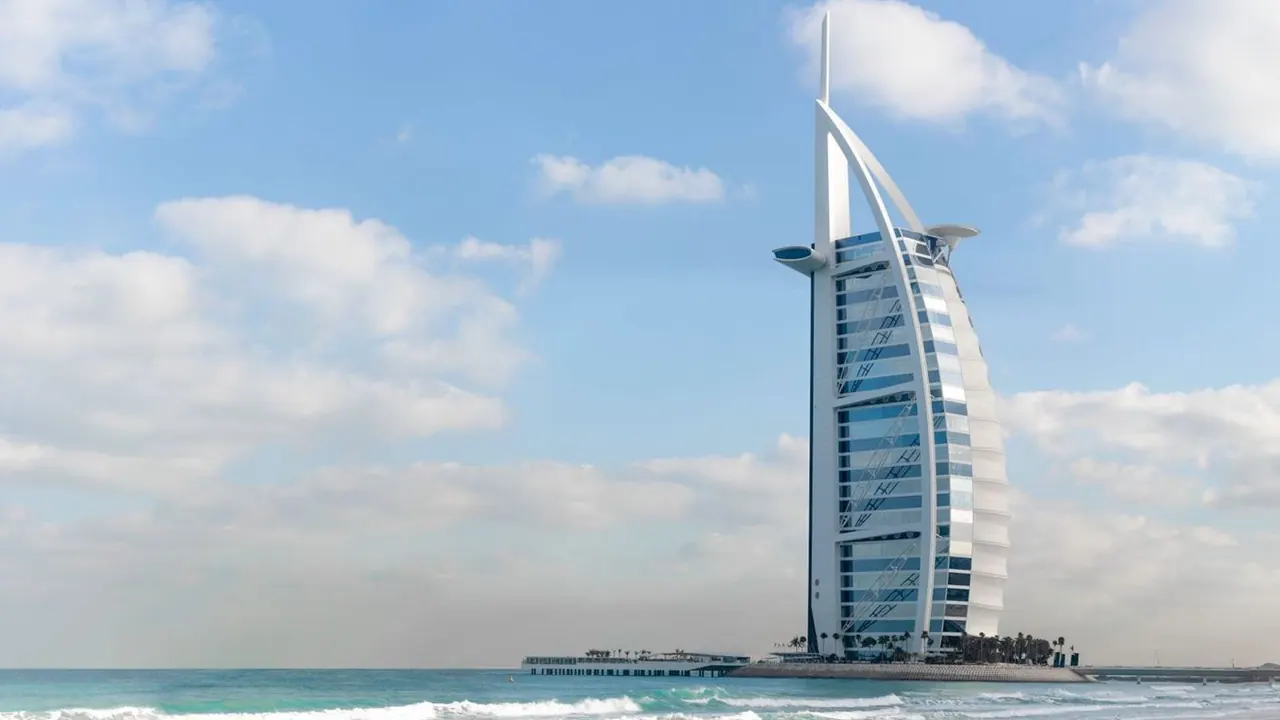
Photos: Delhi by shalender kumar, Pexels License; Dubai by Aleksandar Pasaric, Pexels License.
Delhi or Dubai?
Our verdict in twelve categories, each scored against the same fixed benchmark cities, and the climate month by month, so you can choose for your trip.
Choose Delhi for
- prices
- culture and sights
- day trips
Delhi is for travellers who want history and food. The city has Mughal tombs, the Red Fort and the lanes of Old Delhi, and the Taj Mahal is an easy day away by train. It suits an adult trip on a sensible budget, for people who can live with heat, noise and long distances in return for one of the richest cities in Asia.
Choose Dubai for
- beaches
- families
- wellness
Families, sun-seekers and resort lovers will be happier in Dubai. There is pale sand at Jumeirah, plenty of water parks and malls, and a safe, orderly city that makes easy days with children. It costs a great deal more and its sights take only a couple of days, so choose it when the beach and the resort are the point of the trip.
Scoreboard
Twelve categories on one fixed scale from 0 to 100. The shaded stretch is the gap between the two.
Your match
Pick a travel style or drag the sliders, and both match scores follow your weighting.
Too close to call, 1 point apart
Wins on prices and culture and sights with your weighting.
Wins on beaches and families with your weighting.
What matters to you?
Category by category
What the scores mean for a trip.
Beaches & swimming
There is no contest here. Delhi lies far inland on the northern plains, the Yamuna is no place to swim, and a hotel pool is the only water you will find.
Dubai has a long run of pale sand on calm, shallow Gulf water. You can use the public beaches at Jumeirah, Kite Beach and JBR, or the private resort beaches on Palm Jumeirah. The shore is engineered rather than wild, and in midsummer people go to the beach only in the early morning and evening.
Food & drink
Both are excellent places to eat, but in Delhi the food is a reason to make the trip. Old Delhi around Chandni Chowk and Jama Masjid is worth visiting for its nihari, stuffed parathas, kebabs and jalebi. Butter chicken and dal makhani were invented in the city, and South Delhi adds regional kitchens and modern Indian tasting menus.
Dubai eats the cooking of the people who live there: Keralan, Pakistani, Iranian and Filipino canteens in Deira and Karama, celebrity-chef dining rooms in the towers, and the long Friday brunch. Emirati cooking is harder to find, and wine and beer are served only in licensed venues.
Culture & sights
Delhi has centuries of history built one on top of another. There are three UNESCO sites in the Red Fort, Humayun's Tomb and the Qutb Minar, along with Jama Masjid, the Lodi tombs and the imperial avenue of Kartavya Path running from India Gate. Smaller places such as Agrasen ki Baoli reward extra days, though the sights are spread far apart.
Dubai's attractions are mostly modern spectacle, such as the Burj Khalifa and the Museum of the Future. Its small older quarter has the wind-tower houses of Al Fahidi and the souks across the Creek. Two or three days covers it all.
Nightlife
Delhi's nights are smaller and finish earlier. They are split between the rooftop bars of Hauz Khas Village, the pubs under the colonnades of Connaught Place and the clubs out in Gurugram, and you get between them by taxi.
Dubai offers a bigger night out that goes on later, though all of it is inside hotels and licensed venues. There are clubs with famous DJs, rooftop bars above Sheikh Zayed Road, beach clubs on Palm Jumeirah and a weekend brunch that runs on into the evening. It is dressy and very expensive, with no casual bar streets.
Nature & outdoors
Neither city is a destination for the outdoors, and the weather limits both for much of the year. Delhi's green spaces are gardens and patches of forest, such as Lodhi Gardens, Sunder Nursery and the Ridge, and birdwatching at Okhla and Sultanpur is good in winter.
Dubai offers desert and sea instead. You can take dune drives and spend nights in the red sand an hour inland, go kitesurfing at Kite Beach, or kayak and mountain-bike in the Hajar mountains around Hatta.
Day trips
Delhi has one of the great day trips anywhere. The Taj Mahal and Agra Fort are a little under two hours away by express train, and with a driver and a long day you can add Fatehpur Sikri. The holy towns of Mathura and Vrindavan and the fort at Neemrana are closer.
Dubai has three good outings: the Grand Mosque and the Louvre in Abu Dhabi, the museums and heritage quarter of Sharjah, and the oases of Al Ain. Beyond those it is mostly desert and road.
Good for families
Children are made a fuss of in Delhi, and the steam engines at the National Rail Museum and the zoo go down well. Even so, heat, smog, traffic, missing pavements and stomach bugs make the city hard going with small children.
Dubai is far easier with children. It has Legoland and the water parks, the aquarium in the Dubai Mall, snow in the Mall of the Emirates, a calm and shallow sea, and kids' clubs at the resorts. It is also very safe, and children are welcome at restaurants late into the evening.
Getting around
For a visitor, Delhi's metro does more. It is a large air-conditioned network with signs in English, an express line to the airport and stations near most of the big monuments. Autos, app taxis and cycle-rickshaws in the lanes of Old Delhi fill the gaps, though the size of the city and its clogged roads still mean planning each day.
Dubai's driverless metro is clean and simple. However, it mostly follows one long line along Sheikh Zayed Road, and the city was built for cars. The Palm, the beaches and the theme parks usually mean a taxi, and only a few places, such as the Marina promenade, are pleasant on foot.
Shopping & style
Both are serious shopping cities, but for different things. Delhi sells crafts from all over India: textiles and woodwork at Dilli Haat, fixed-price goods at the state emporiums, spices at Khari Baoli and fabric in Chandni Chowk. Indian designers sell in Khan Market and Shahpur Jat, and haggling is normal in the markets.
Dubai is about international brands in vast malls, above all the Dubai Mall and the Mall of the Emirates, and its jewellery and watch trade is especially strong. The Gold Souk and spice souks of Deira carry on the older trade, but there is almost none of the independent street shopping you find in Delhi.
Affordability
Delhi is far cheaper. Street food, the metro, autos and comfortable mid-range rooms cost little, and only the grand hotels and imported alcohol come close to Western prices.
In the winter high season Dubai is expensive, from beach resorts to observation decks and theme parks, and its alcohol is among the dearest anywhere. Eating in Deira and Karama and using the metro help, and hotel rates fall sharply in the hot summer.
Live music & performing arts
Delhi has a living tradition of its own. In the cooler months, halls around Mandi House stage Hindustani music recitals and Kathak and Bharatanatyam dance. The National School of Drama makes the city India's theatre capital, though most plays are in Hindi. There is also free qawwali at the Nizamuddin shrine, traditionally on Thursday evenings.
Most of Dubai's stage life comes from abroad. Dubai Opera hosts touring ballet, musicals and orchestras, and the arenas bring international tours. There is no resident company, though, and little to come across by chance on an ordinary evening.
Wellness & relaxation
Delhi is noisy, crowded and smoggy in winter. Hotel spas and the Ayurveda and yoga centres of South Delhi help, as do early mornings in Lodhi Gardens. For a proper retreat, people go on to Rishikesh or Kerala.
Dubai makes rest much easier. The resort spas on Palm Jumeirah and the Jumeirah coast offer hammam rituals, hydrotherapy pools and long massage menus, and being indoors they are comfortable all year. The desert retreats an hour inland add silence and starry nights.
When should you go?
Pick your month. The climate figures are measured averages, not a forecast.
Delhi in July
Dubai in July
Daytime high, °C
Rainfall in the month, mm
Temperature and rainfall are climate normals, averaged over the years shown. Delhi: 1991-2020 normals, New Delhi / Safdarjung (9.4 km from centre). Dubai: 1991-2020 normals, Dubai International Airport (3.3 km from centre).
Delhi is at its best in the months either side of winter. Late October and November, and again February and March, are mostly dry and sunny, and mild enough to spend a full day among the monuments. December and January are cool. December is the least sunny month of the year and January is only a little brighter, and smog often hangs over the city. Sightseeing still works then, but keep outdoor exercise light. From April the heat builds to about 40°C in May, too hot for walking the streets. The monsoon follows from late June and peaks at 236mm in August, and the rain clears again in October.
Dubai's good season runs from November to March. January highs are around 25°C and the sea is about 23°C, which is pleasant for swimming. Dubai gets very little rain, and most of it falls as a few showers in winter. From May to September the heat reaches 42°C and the sea turns as warm as a bath, so beach time shrinks to early mornings and evenings. The two differ most in midwinter: Delhi is cool and hazy while Dubai is warm enough for the beach. In summer both cities are hard going.
Which traveller are you?
On a culture and arts trip, Delhi is the clear pick. The Red Fort, Humayun's Tomb, the Qutb Minar, a day at the Taj Mahal and classical music and dance in the cooler months add up to far more than Dubai's few days of sights.
On a family trip with young children, Dubai wins comfortably. Legoland, the water parks, the aquarium in the mall and a calm, shallow sea fill the days in a very safe city. Delhi's heat, smog and traffic soon wear small children out.
On a tight budget, Delhi makes your money go much further. Street food in Old Delhi, cheap metro rides and plenty of guesthouses keep costs low. In Dubai the hotels, attractions and drinks are expensive except in the summer heat.
Before you go
| Measure | Delhi | Dubai |
|---|---|---|
| Official language | Hindi, English | Arabic |
| Currency | Indian Rupee (INR) | UAE Dirham (AED) |
| Sockets | CM230 V, 50 Hz | CG220 V, 50 Hz |
| Driving side | Left | Right |
| Time zone | UTC+5:30 | UTC+4 |
| Emergency number | 108 or 112 | 112 |
| Elevation | 221 m | 0 m |
| Main airport | Indira Gandhi International Airport (DEL)17 km from centre144 non-stop destinations | Dubai International Airport (DXB)7 km from centre294 non-stop destinations |
By the numbers
| Measure | Delhi | Dubai |
|---|---|---|
| City population | 26,495,000 | 3,944,751 |
| People per km² | 18,962 | - |
| Museums within 10 km | 23 | 14 |
| UNESCO World Heritage sites within 50 km | 4 | 0 |
| Swim season, months above 21 °C | - | 12 months |
Where else could you go?
Every comparison below shares a destination with this one, so you can follow Delhi or Dubai somewhere new.