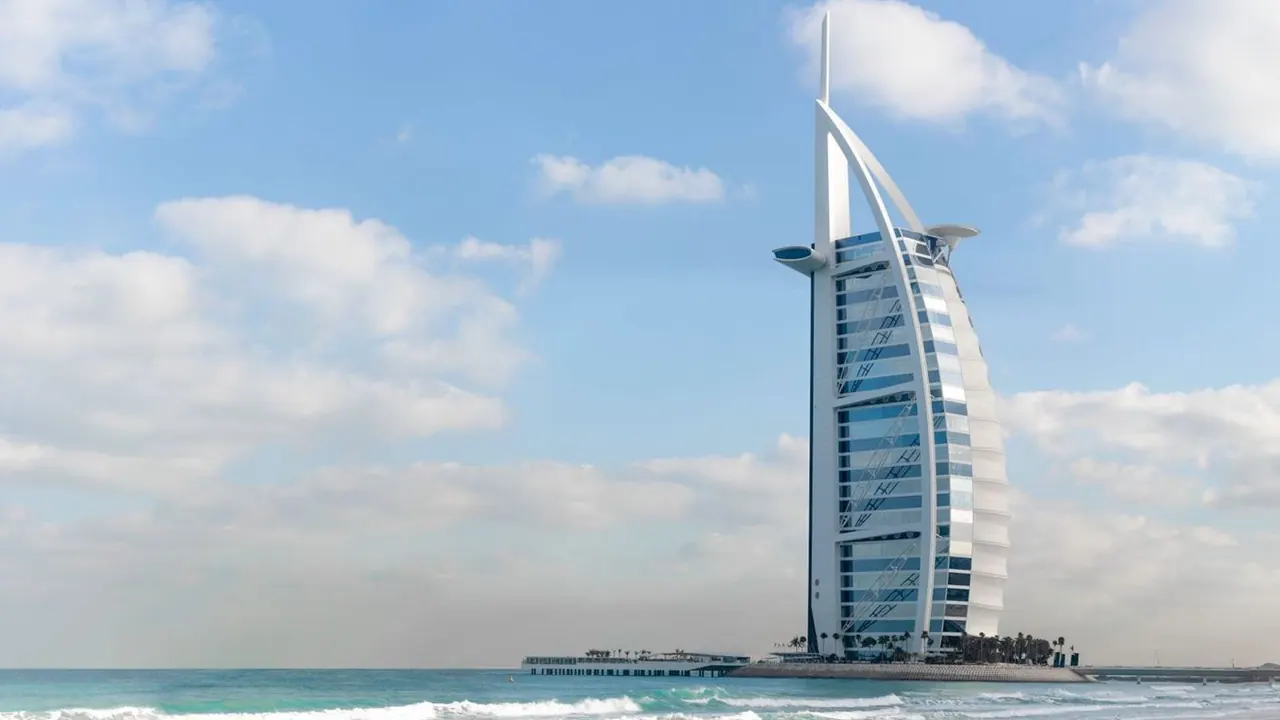
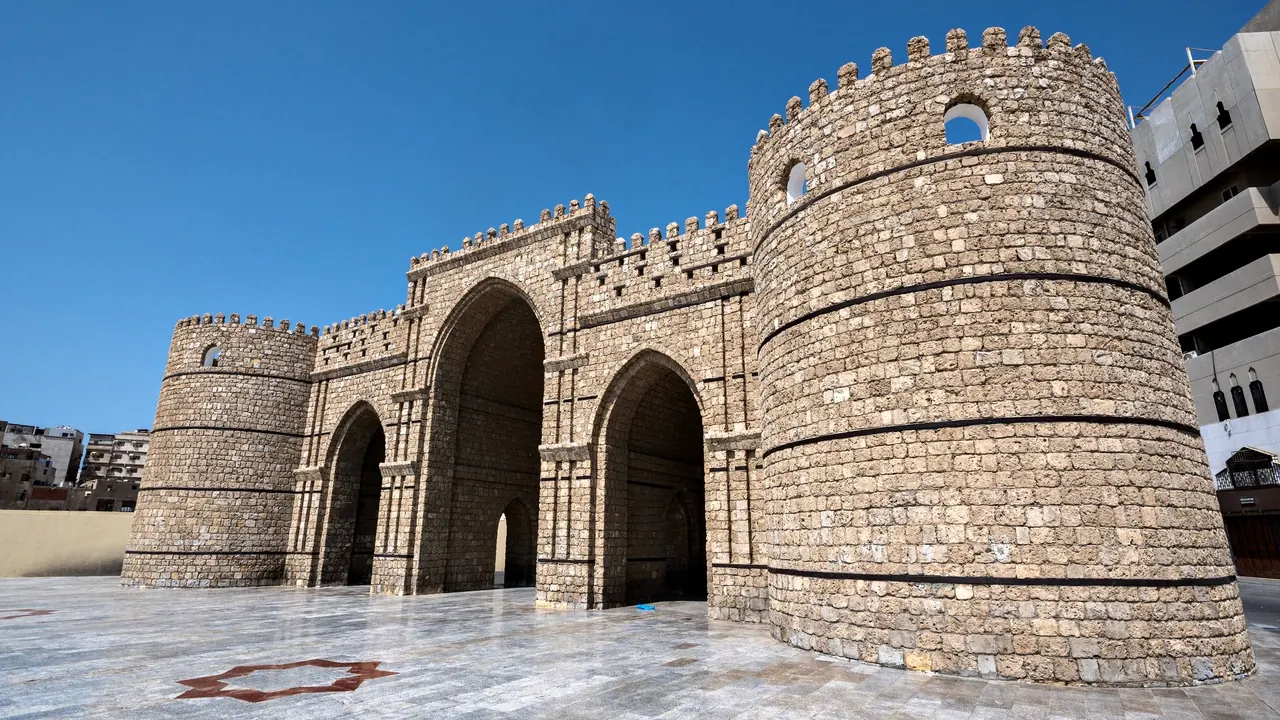
Photos: Dubai by Aleksandar Pasaric, Pexels License; Jeddah by xiquinhosilva, CC BY 4.0, cropped.
Dubai or Jeddah?
Our verdict in twelve categories, each scored against the same fixed benchmark cities, and the climate month by month, so you can choose for your trip.
Choose Dubai for
- nightlife
- families
- beaches
Dubai suits a first Gulf trip where the beach, the shopping and the evenings out all count. Its public sand is easy to reach and the sea is calm and shallow. The food runs from Keralan canteens in Karama to hotel brunches, families have theme parks and water parks, and a metro links the main districts. It costs more and its heritage is thin, but every day of the stay has more to fill it.
Choose Jeddah for
- prices
- nature and the outdoors
- culture and sights
Travellers who want a Gulf city that is less built around visitors may prefer Jeddah. The coral-stone lanes of Al-Balad feel lived in, the Red Sea reefs start a few metres offshore, and everyday meals and taxis cost less. For Muslim travellers it is also the gateway to Mecca for umrah. There is no alcohol and no bar scene, though, and you will need a car or ride-hail to get almost anywhere.
Scoreboard
Twelve categories on one fixed scale from 0 to 100. The shaded stretch is the gap between the two.
Your match
Pick a travel style or drag the sliders, and both match scores follow your weighting.
Wins on nightlife and families with your weighting.
Wins on prices and nature and the outdoors with your weighting.
What matters to you?
Category by category
What the scores mean for a trip.
Beaches & swimming
Dubai is far easier for an ordinary beach day. Long public stretches at Jumeirah, Kite Beach and JBR sit on calm, shallow water, and the resorts on Palm Jumeirah are built around their own sand. In Jeddah, the corniche is for strolling and picnics rather than swimming, so most visitors pay to get in at the beach clubs in Obhur.
What Jeddah offers in return is the reef. Coral starts just off the jetties, and in winter the Red Sea is several degrees warmer than the Gulf. A swim there is also a snorkel, while Dubai's water is clear but has little to look at below the surface.
Food & drink
Dubai has the wider table. Its migrant neighbourhoods of Deira, Karama and Al Satwa serve Keralan, Afghan, Iranian and Filipino cooking for very little, while the hotels of DIFC and the Marina offer celebrity-chef dining. Wine and beer are available in licensed venues, and the Friday brunch is a fixture.
Jeddah has something Dubai mostly hides, which is a regional cuisine of its own. Hejazi dishes such as mandi, mutabbaq and saleeg are everyday food, and at the fish market you choose your catch and have it grilled. Al-Balad's sweets in Ramadan are a highlight, but the city is entirely dry.
Culture & sights
Neither city takes long to see, and both reward two or three days, but they offer different things. Dubai's sights are about the modern skyline, with the Burj Khalifa's observation decks and the Museum of the Future. Its older layer is a short stretch of the Creek, made up of the wind-tower houses of Al Fahidi, Al Shindagha and the abra across to Deira.
Jeddah has fewer landmarks, but its historic quarter is larger and feels more lived in. Al-Balad is a UNESCO-listed grid of tall coral-stone houses with carved wooden balconies, and you can go inside Nassif House. The rest of the city is modern seafront, including the Al-Rahma mosque standing over the water.
Nightlife
This is where the two cities differ most. Dubai has a large, polished scene inside its hotels and licensed venues. There are big-name DJ clubs, rooftop bars, Palm Jumeirah beach clubs that run into the evening, and the boozy weekend brunch. It is expensive and dressy rather than casual.
Jeddah sells no alcohol and has no bars or clubs. Evenings still run late, but they are spent with families on the corniche, in dessert shops and shisha lounges in the northern districts, or on a drive along the sea.
Nature & outdoors
Jeddah has the better outdoors, and most of it is underwater. Coral walls and wrecks lie close to shore north and south of the city, and the northern creek is the base for kitesurfing and sailing. Inland, the escarpment road to Taif climbs to cooler air, terraced slopes and baboons.
Dubai's natural setting is desert. Its outings are dune drives and camping in the red sand of Al Marmoom and Lahbab, flamingos at Ras Al Khor in winter, and kayaking and short hikes around Hatta in the Hajar mountains. In both cities, summer leaves only the dawn for being outside.
Day trips
Dubai has the better choice of day trips. Abu Dhabi's Grand Mosque and the Louvre on Saadiyat Island are about ninety minutes away, Sharjah's museums and heritage quarter are right next door, and Al Ain's UNESCO oases make a third good outing.
Jeddah's options depend on your faith. Mecca is about an hour away for Muslim visitors but closed to everyone else, and Medina is a long day by train. That leaves Taif, two hours up into the mountains, with its rose farms and old souks, as the main shared outing.
Good for families
Dubai is much better set up for children. Legoland and the theme parks near Jebel Ali, water parks on the Palm, the aquarium in the Dubai Mall and indoor snow at the Mall of the Emirates fill days in any season. Resort kids' clubs and a shallow sea make beach time easy.
Jeddah is just as welcoming, with children out late along the corniche, but there is less to do. Its playgrounds, aquarium and seafront amusement park are simpler, the reef-edge water suits confident swimmers more than toddlers, and you need a car with child seats.
Getting around
Both cities are long, car-shaped strips along the coast, but Dubai gives visitors a real alternative. Its driverless metro runs from the airport through Downtown to the Marina and around the Creek, with a tram and the old abras filling in. Taxis cover the Palm and the theme parks.
Jeddah has no metro and no bus network that is useful to a visitor, so ride-hailing or a hire car is how you get around. Its high-speed trains go only to Mecca and Medina, and Al-Balad and the evening corniche are the only places that are pleasant on foot.
Shopping & style
Dubai is a shopping destination in its own right. The Dubai Mall and the Mall of the Emirates hold whole wings of designer flagships, the watch and jewellery offer goes deep, and the Shopping Festival brings winter sales. In Deira, the Gold, spice and perfume souks keep the older trade going.
Jeddah has big malls of its own and abayas cut in current styles, but its best buys are in Al-Balad. Perfumes are blended to order there, and oud, prayer beads and dates are sold with bargaining expected. Neither city has much in the way of independent boutiques.
Affordability
Dubai costs more on most things a visitor pays for. Winter rooms in Downtown, the Marina or a beach resort are dear, the observation decks and theme parks add up quickly, and drinks make a large bill. It can be done cheaply, though. Summer brings hotel rates down sharply, the canteens of Deira and Karama cost very little, and the metro and the abras get you across the city for less than any taxi ride.
Jeddah saves on the same things. Its hotels are mid-range in most months, and a plate of grilled fish or ful costs no more than a curry in Karama. Fuel is cheap, so the ride-hailing you need for every outing costs less than Dubai's taxis, and with no alcohol there is no bar bill at all. Jeddah loses some of that saving on swimming, because the Obhur beach clubs charge for entry while Dubai's public beaches are free. Its hotels also climb around Ramadan and the pilgrimage seasons.
Live music & performing arts
Neither city has resident companies, but Dubai has a stage to plan around. The Dubai Opera brings touring ballet, opera, musicals and orchestras through the cooler months, an arena hosts big international tours, and hotel lounges have jazz most nights.
In Jeddah, live performance comes as seasonal programmes of Arab pop, touring acts and comedy. On an ordinary evening there is little to see, though heritage events in Al-Balad may bring oud music and the mizmar stick dance.
Wellness & relaxation
In both cities, wellness happens in the hotel spa, and neither has a bathing tradition of its own. Dubai does it on a bigger scale. The Palm and Jumeirah resorts give whole floors to hammam rituals and hydrotherapy, and desert retreats an hour inland offer real silence.
Jeddah's spas are smaller hotel hammam rooms and day spas, usually separated by gender. The most restful option is a few slow days at an Obhur seafront resort, by the pool and the sea after sunset.
When should you go?
Pick your month. The climate figures are measured averages, not a forecast.
Dubai in July
Jeddah in July
Daytime high, °C
Rainfall in the month, mm
Temperature and rainfall are climate normals, averaged over the years shown. Dubai: 1991-2020 normals, Dubai International Airport (3.3 km from centre). Jeddah: 1991-2020 normals, Jeddah King Abdul Aziz International Airport (19.1 km from centre).
Both cities are best between November and March, and both are punishing from May to September, when daytime highs reach about 40°C or more and the streets are only bearable after dark. Dubai has the cooler winter. January highs are around 25°C, which makes it good for walking the Creek and Downtown, but the Gulf falls to about 22°C in February, which is refreshing rather than warm. Dubai heats up quickly from April, and by midsummer its sea is as warm as a bath.
Jeddah never really cools down. Even in midwinter the days are around 30°C, but the Red Sea holds about 26°C right through the cooler months, so a winter swim or snorkel is easier there than in Dubai. Neither city gets much rain. Jeddah's wettest spell is November, with about 30mm, which tends to fall in short bursts, while Dubai's little rain comes in December and January. Jeddah is sunny all year, with the longest, brightest days in late spring and summer.
Which traveller are you?
For a food and nightlife trip, Dubai is the clear choice. You can eat Pakistani karahi in Deira, go on to a rooftop bar above Sheikh Zayed Road and end up at a DJ club. Jeddah has no alcohol, and its nights are spent in cafés and on the corniche.
On a tight budget, Jeddah is gentler on the wallet. Cheap fuel keeps ride-hailing low in a city where you take it everywhere, and grilled fish or ful at simple local places costs little. In Dubai, the hotels, attractions and drinks mount up quickly.
For divers and snorkellers, Jeddah has what Dubai lacks. Fringing coral reefs with walls and wrecks begin just off the shore, and dive boats leave from Obhur for nearby sites. Dubai's Gulf water is clear, but its engineered coastline has little to see underwater.
Before you go
| Measure | Dubai | Jeddah |
|---|---|---|
| Official language | Arabic | Arabic |
| Currency | UAE Dirham (AED) | Saudi Riyal (SAR) |
| Sockets | CG220 V, 50 Hz | G60 Hz |
| Driving side | Right | Right |
| Time zone | UTC+4 | UTC+3 |
| Emergency number | 112 | 112 or 911 |
| Elevation | 0 m | 7 m |
| Main airport | Dubai International Airport (DXB)7 km from centre293 non-stop destinations | King Abdulaziz International Airport (JED)17 km from centre147 non-stop destinations |
By the numbers
| Measure | Dubai | Jeddah |
|---|---|---|
| City population | 3,944,751 | 4,697,000 |
| People per km² | - | 860 |
| Museums within 10 km | 14 | 2 |
| UNESCO World Heritage sites within 50 km | 0 | 1 |
| Swim season, months above 21 °C | 12 months | 12 months |
Where else could you go?
Every comparison below shares a destination with this one, so you can follow Dubai or Jeddah somewhere new.