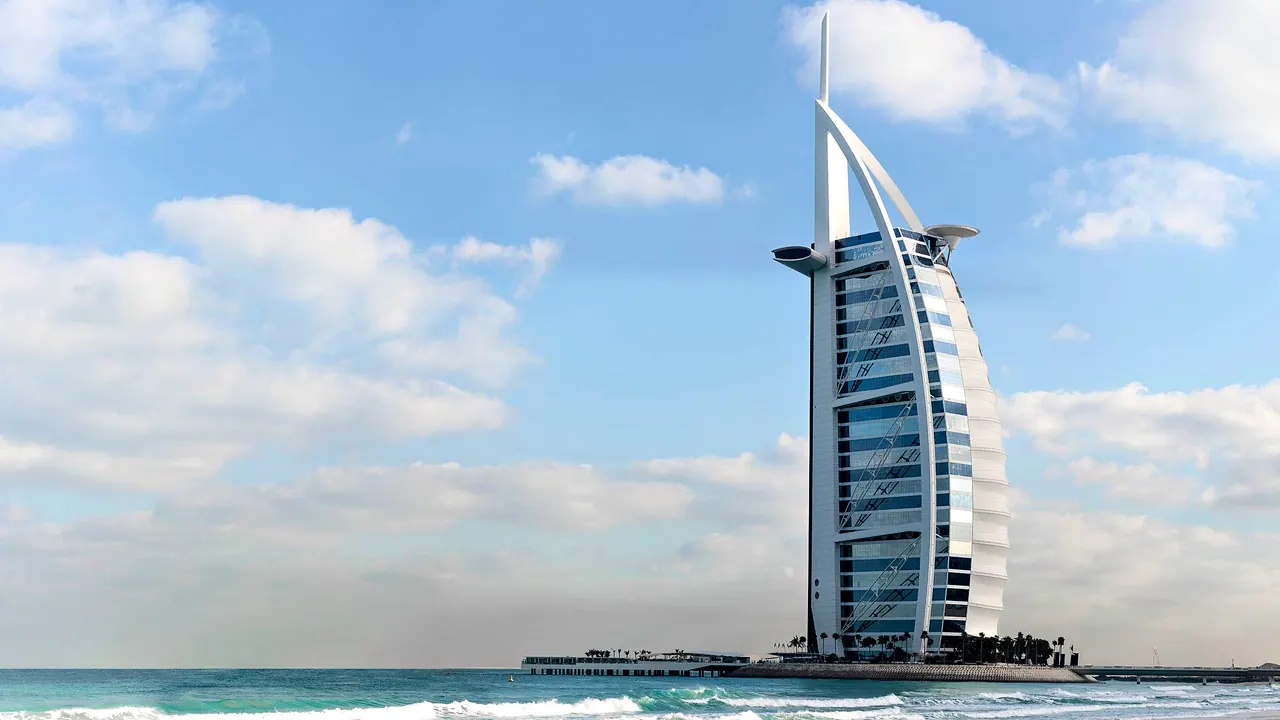
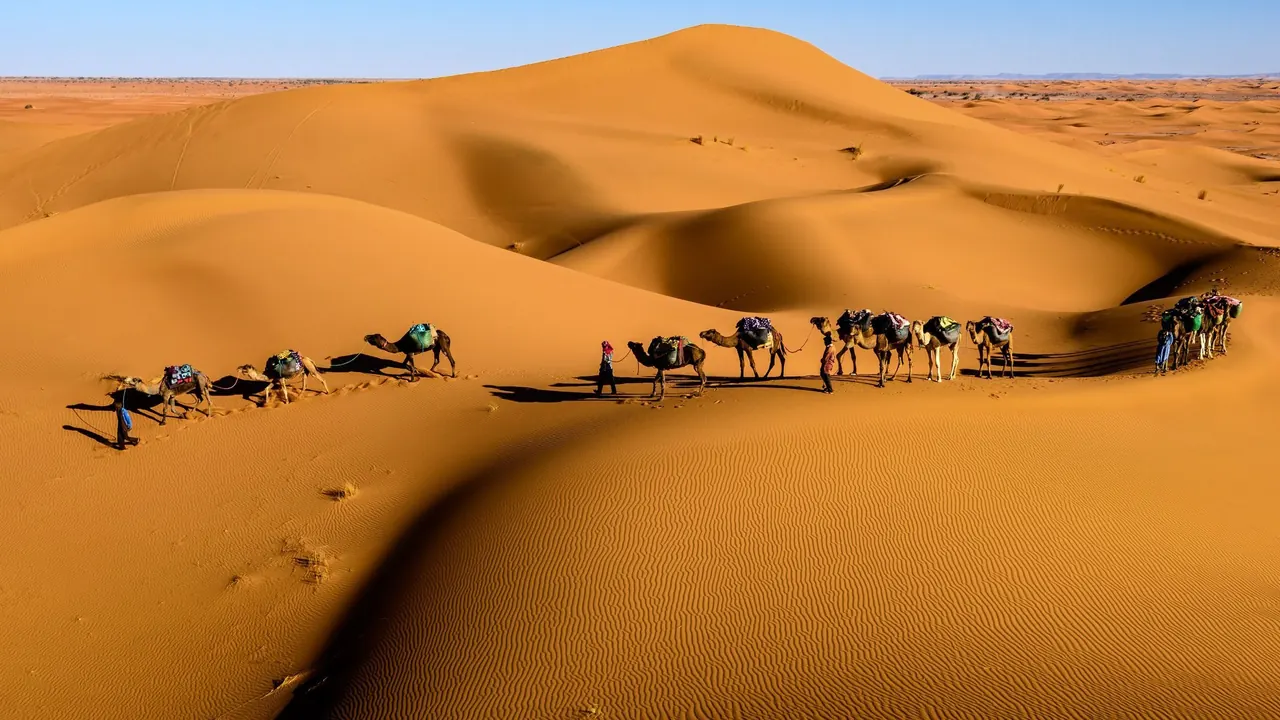
Photos: Dubai by Aleksandar Pasaric, Pexels License; Sahara by Sergey Pesterev, Pexels License.
Dubai or Sahara?
Our verdict in twelve categories, each scored against the same fixed benchmark cities, and the climate month by month, so you can choose for your trip.
Choose Dubai for
- beaches
- nightlife
- food and drink
Dubai suits a vacation built around comfort and ease. You get a resort beach on warm, calm water, food that runs from Keralan curry houses in Karama to hotel dining rooms in DIFC, huge malls and the gold souk, and nights out in rooftop bars and clubs. It works especially well for families and for anyone who wants plenty to do without long drives, provided they come in the cooler months.
Choose Sahara for
- nature and the outdoors
- prices
- culture and sights
Choose the Moroccan Sahara for landscape and silence. The point of the trip is a night in the dunes of Erg Chebbi or Erg Chigaga, the walls of the Todra Gorge and the mud-brick kasbahs of the Draa Valley, all reached on a long road loop from Marrakech. Meals are simple, evenings end by the fire, the sea is a full day's drive away and there is little shopping beyond crafts. In return the trip costs less and feels much further from everyday life.
Scoreboard
Twelve categories on one fixed scale from 0 to 100. The shaded stretch is the gap between the two.
Your match
Pick a travel style or drag the sliders, and both match scores follow your weighting.
Wins on beaches and nightlife with your weighting.
Wins on nature and the outdoors and prices with your weighting.
What matters to you?
Category by category
What the scores mean for a trip.
Beaches & swimming
This is the biggest gap between the two. Dubai has kilometres of pale sand on shallow, calm water, from Kite Beach and JBR to Umm Suqeim below the Burj Al Arab, and most resorts add a private beach of their own.
The Moroccan Sahara is landlocked. Swimming means a kasbah or camp pool, often a small one, and the seasonal lake near Erg Chebbi is for flamingos, not swimmers. If water matters to you, choose Dubai, or add the Atlantic coast as an extra stop on a Moroccan trip.
Food & drink
Dubai eats far better and more widely. The migrant canteens of Deira, Karama and Al Satwa, the late-night shawarma counters and the hotel dining rooms of DIFC and the Marina give you a week of different meals, even if Emirati cooking itself takes some finding.
In the Sahara most dinners come from the camp or guesthouse: soup, tagine, bread and mint tea, night after night. The highlights are madfouna baked in sand ovens around Rissani and Merzouga and the dates of the Tafilalet and Draa oases. Both are worth tasting, but they do not make a food trip.
Culture & sights
The two are close here, but their heritage could hardly be more different. Dubai's sights are mostly modern spectacle, such as the Burj Khalifa and the Museum of the Future. A compact older layer survives along the Creek in Al Fahidi, Al Shindagha and the Deira souks, and two or three days covers it all.
The Sahara's culture is earthen architecture spread over hundreds of kilometres: Ait Benhaddou, the kasbahs of Skoura and the Draa, the ksour around Rissani and the Quranic library at Tamegroute. There are almost no museums, so you see it in stops along the road rather than in an afternoon in town.
Nightlife
Dubai has a real night out, though it all happens inside hotels and licensed venues. There are rooftop bars above Sheikh Zayed Road, DJ clubs, beach clubs on Palm Jumeirah and the long weekend brunch. The scene is polished and costly rather than casual.
The desert offers the opposite: a fire under a dark sky and an early night before a sunrise wake-up. Ouarzazate, Zagora and Erfoud have a few hotel bars and nothing more.
Nature & outdoors
Here the Sahara is far ahead. Erg Chebbi's dunes rise about 150m above the plain and Erg Chigaga feels truly remote. Beyond the sand there are the limestone walls of the Todra Gorge, the eroded rock of the Dades Valley and winter trekking on Jebel Saghro.
Dubai's outdoor life offers a taste of the same desert: a dune drive in Al Marmoom or Lahbab an hour inland, kitesurfing and paddleboarding on the coast, and the Hajar hills at Hatta. That makes a pleasant day out, but within the city, green space means irrigated parks.
Day trips
Dubai has the stronger short list. Abu Dhabi's Grand Mosque and Louvre are about ninety minutes away, Sharjah's museums and heritage quarter are next door, and the oases and forts of Al Ain make a third good outing. After those, the choice runs out and it is mostly desert and road.
In the Sahara, outings stay local and modest. From Merzouga you can visit the Rissani souk, Khamlia and the Erfoud fossil workshops, and from Ouarzazate you can visit Skoura and Telouet. Because the bases are a long day apart, most people travel the region as one loop rather than returning to the same bed each night.
Good for families
Dubai is built for children. It has Legoland and the other parks near Jebel Ali, water parks, the aquarium in the Dubai Mall, indoor snow, kids' clubs and a calm sea for small swimmers. It is also a very safe city where children are welcome in restaurants late into the evening.
The Sahara is an adventure for school-age children rather than a family resort. A camel ride to a night in the dunes can be the highlight of their year, but the drive from Marrakech is long and winding and medical care is far away. Toddlers are better off elsewhere.
Getting around
Neither is easy on foot, but Dubai is simpler. Its driverless metro runs from the airport through Downtown to the Marina and the Creek, with a tram around the Marina and abras across the water. Taxis fill the gaps left by the heat and the wide roads.
The Sahara means whole days on the road: over the Tizi n'Tichka pass to Ouarzazate, then most of another day to Merzouga. Buses are infrequent and never reach the camps. Most visitors take a driver-led tour or hire a car, and the last stretch into the dunes is by camel or 4x4.
Shopping & style
Dubai is worth visiting for its shopping alone. The Dubai Mall and the Mall of the Emirates hold nearly every brand, the watch and jewellery trade is especially deep, and the gold, spice and perfume souks of Deira offer older-style buying.
In the Sahara you buy crafts along the route: fossils in Erfoud, dates at Rissani's souk, green pottery from Tamegroute, and rugs and silver from cooperatives. Expect guides to steer you into shops that pay them commission, expect long haggling, and do not expect any boutiques.
Affordability
The Sahara is much kinder to the wallet. Simple auberges, guesthouse meals, local buses and shared tours from Marrakech keep costs low, though private drivers and luxury camps can push them up quickly.
Dubai is expensive in the winter season, from resort rooms to observation decks and theme parks, and drinks there are among the dearest anywhere. Cheap meals in Deira and Karama and the inexpensive metro help. Hotel rates fall sharply in summer, but only during the hottest months.
Live music & performing arts
Dubai has the bigger stage, though almost everything on it is touring rather than home-grown. The dhow-shaped Dubai Opera brings in ballet, opera and musicals, there are large international concerts, and hotel lounges have resident jazz bands. It works best if you book a particular show in advance.
The Sahara has no venues, only music in its setting. The Gnawa families of Khamlia play the guembri for visitors, camps drum around the fire, and there are a few desert and nomad festivals at M'Hamid and near Merzouga. It is more rooted in place, but there is much less of it.
Wellness & relaxation
Both are restful, but in different ways. In Dubai, relaxing means the resort spa on Palm Jumeirah or the Jumeirah coast, with hammam rituals, hydrotherapy and long treatment menus. These spas are air-conditioned and work as well in July as in January.
In the Sahara the rest comes from silence and dark nights in a dune camp. There are simple neighbourhood hammams in Ouarzazate and Zagora and modest spas in the kasbah hotels of Skoura and the Dades. Dubai's own desert retreats offer the same stillness, only with more polish.
When should you go?
Pick your month. The climate figures are measured averages, not a forecast.
Dubai in July
Sahara in July
Daytime high, °C
Rainfall in the month, mm
Where the figures come from
Sahara has no weather station within reach, so its figures come from a gridded climate model rather than a measured record, and read a broad area rather than one spot.
Temperature and rainfall are climate normals, averaged over the years shown. Dubai: 1991-2020 normals, Dubai International Airport (3.3 km from centre). Sahara: 2001-2020 normals, NASA POWER reanalysis grid, no weather station within 90 km.
Both are winter destinations, and rain is scarce in both all year round. Dubai is at its best from November to March, when days are warm rather than hot, around 25°C in January, and the Gulf, near 23°C, is ideal for long beach days. May and September are already very hot, and from June to August afternoons reach 41°C or more with the sea well above body-cooling temperatures, so beach time moves to early mornings and evenings and the rest of the day is spent indoors.
The Sahara figures come from one reference point in a large and varied region, and they show a cooler winter than Dubai's. January days reach only about 16°C and nights in the dunes fall close to freezing, so warm layers are essential in camp. March, April, October and early November are the best months, mild enough for long drives and walks in the gorges. Summer is as fierce as Dubai's, around 42°C in July, and there is no air-conditioned mall to escape to.
Which traveller are you?
On a beach and sun trip, Dubai is the only real choice. Its long sandy shore and calm, clear Gulf water are good for swimming from autumn to spring. The Sahara has no sea at all, only hotel plunge pools a day's drive from the Atlantic.
For an outdoors trip, the Sahara wins clearly. You can ride a camel into Erg Chebbi, take a 4x4 to wild Erg Chigaga, climb in the Todra Gorge or trek with mules on Jebel Saghro. Dubai offers dune drives and irrigated parks.
On a trip on a tight budget, the Sahara makes money go further. Auberges, guesthouse dinners and shared tours from Marrakech all cost little. Dubai's hotels, attractions and drinks are steep, and cheap eating in Deira and Karama is the main way to save.
Before you go
| Measure | Dubai | Sahara |
|---|---|---|
| Official language | Arabic | Arabic, Standard Moroccan Tamazight |
| Currency | UAE Dirham (AED) | Moroccan Dirham (MAD) |
| Sockets | CG220 V, 50 Hz | CE50 Hz |
| Driving side | Right | Right |
| Time zone | UTC+4 | UTC+1 |
| Emergency number | 112 | Police 19/112, ambulance 15, fire 15 |
| Elevation | 0 m | - |
| Main airport | Dubai International Airport (DXB)7 km from centre293 non-stop destinations | Moulay Ali Cherif Airport (ERH)4 non-stop destinations |
| Public holidays this year | - | 11 days |
By the numbers
| Measure | Dubai | Sahara |
|---|---|---|
| Population | 3,944,751 | - |
| Museums within 10 km | 14 | - |
| UNESCO World Heritage sites within 50 km | 0 | - |
| Swim season, months above 21 °C | 12 months | - |
Where else could you go?
Every comparison below shares a destination with this one, so you can follow Dubai or Sahara somewhere new.