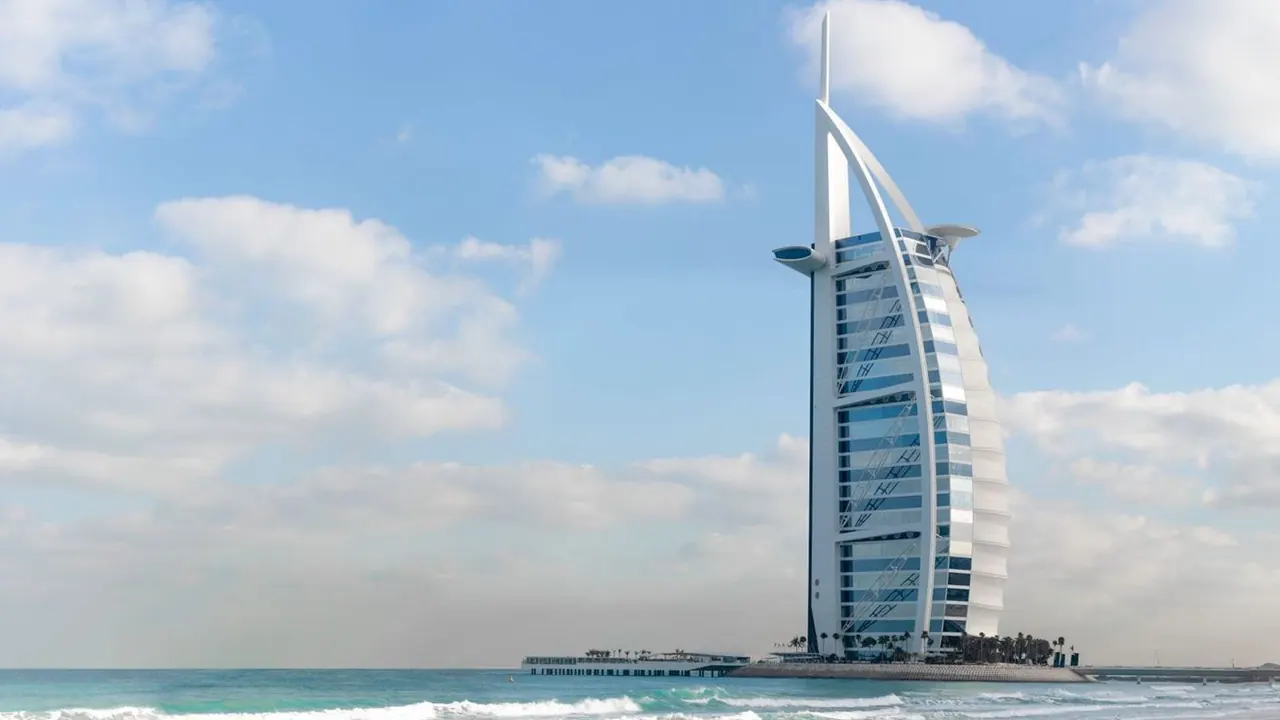

Photos: Dubai by Aleksandar Pasaric, Pexels License; Nairobi by Lmwangi, CC BY-SA 3.0, cropped.
Dubai or Nairobi?
Our verdict in twelve categories, each scored against the same fixed benchmark cities, and the climate month by month, so you can choose for your trip.
Choose Dubai for
- beaches
- shopping
- food and drink
Dubai suits a warm-weather trip built around sand, resort pools, malls and easy family days out, with a calm, shallow winter sea that small children can use safely. It is also the better choice if you want a wide spread of cuisines, polished hotel spas and big-brand shopping, and you don't mind taking taxis between the sights.
Choose Nairobi for
- nature and the outdoors
- prices
Choose Nairobi if the trip is really about animals and open country. Lions and rhinos live in the national park on the city's edge, you can feed giraffes in Langata, and the Rift Valley's lakes and volcanoes are within a couple of hours. There is no beach and the city is harder work to get around, but the mild highland climate and lower everyday costs suit a traveller who will give up some convenience for wildlife.
Scoreboard
Twelve categories on one fixed scale from 0 to 100. The shaded stretch is the gap between the two.
Your match
Pick a travel style or drag the sliders, and both match scores follow your weighting.
Wins on beaches and shopping with your weighting.
Wins on nature and the outdoors and prices with your weighting.
What matters to you?
Category by category
What the scores mean for a trip.
Beaches & swimming
Dubai has a real beach city's shoreline. There is public sand at Jumeirah, Kite Beach and the JBR strip, and the resorts on Palm Jumeirah have private beaches, all on shallow, calm water. The catch is midsummer, when the sand is too hot by mid-morning and swimming moves to dawn and dusk.
Nairobi has nothing comparable. It sits on a plateau hundreds of kilometres from the Indian Ocean, so a swim means a hotel or club pool. Anyone who wants time by the sea adds separate days on the coast.
Food & drink
Dubai offers more range at both ends. The canteens of Deira, Karama and Al Satwa serve cheap Keralan, Pakistani, Afghan and Filipino cooking. The hotels of DIFC and Downtown add chef-led dining rooms and the long Friday brunch.
Nairobi's eating is narrower, but it has a strong local ritual in nyama choma: charcoal-roasted goat with ugali and cold beer, shared over long weekend afternoons. Its Indian and Ethiopian restaurants are good. Freshly brewed Kenyan coffee in the cafés of Westlands and Karen is a pleasure of its own, and beer flows freely there, while Dubai keeps alcohol to licensed venues.
Culture & sights
Neither city is a major cultural destination, and you can see either in a couple of days. Dubai's draw is modern spectacle, above all the Burj Khalifa and the Museum of the Future. For a glimpse of the old trading port, go to Al Fahidi and Al Shindagha, or take the abra across to the Deira souks.
Nairobi was founded as a railway depot in 1899 and has no old quarter at all. Its cultural highlights are the early human fossils in the National Museum and the Karen Blixen farmhouse, made famous by Out of Africa, on the city's edge.
Nightlife
Both cities stay out late, but in very different settings. Dubai's nights are glossy and contained: hotel clubs with big-name DJs, rooftop bars above Sheikh Zayed Road and beach clubs on Palm Jumeirah, with dress codes and steep drink prices.
Nairobi's nights are louder and more local. Westlands clubs play Afrobeats, amapiano and gengetone until dawn, and neighbourhood pubs fill with football crowds. In Nairobi, taking a car from door to door after dark is a matter of safety, not just distance.
Nature & outdoors
Here Nairobi is far ahead. Lions, rhinos and giraffes roam Nairobi National Park at the city's southern edge, and Karura Forest has waterfalls and shaded trails. Within two hours the Rift Valley offers Hell's Gate gorge, the hippos of Lake Naivasha and the crater rim of Mount Longonot, and the mild highland air keeps it all comfortable for most of the year.
Dubai's outdoors comes down to desert and water sports: dune drives and camel rides at Al Marmoom, kitesurfing at Kite Beach, and kayaking and short hikes around Hatta. From May to September the heat rules out most of it except at dawn.
Day trips
Dubai has the stronger set of outings. Abu Dhabi, down the coast, has the Sheikh Zayed Grand Mosque and the Louvre. Sharjah, right next door, has its heritage quarter and Museum of Islamic Civilization, and inland lie the UNESCO-listed palm oases of Al Ain. Beyond those three, it is mostly desert and road.
Nairobi's excursions are smaller: a half-day among the Limuru tea estates, or the stone hand axes lying in the ground at Olorgesailie. Kenya's great heritage towns, such as Lamu and old Mombasa, are too far away for a day trip.
Good for families
Dubai is the easier city for families. It has Legoland and the theme parks near Jebel Ali, big water parks, the aquarium in the Dubai Mall and indoor snow, plus a shallow sea and resort kids' clubs. The summer heat pushes much of this indoors.
Nairobi offers less, but what it has is memorable. Children can feed giraffes at the Giraffe Centre, watch orphaned baby elephants at the Sheldrick Trust and go on a short safari drive. Traffic, few pavements and the need to stay watchful make it tiring with small children, so staying in Karen or Langata helps.
Getting around
Dubai is spread out and built for the car, yet it is far easier to manage. The driverless metro runs from the airport through Downtown to the Marina, abras cross the Creek and taxis are plentiful. Only a few areas, such as the Marina promenade, are pleasant on foot.
Nairobi takes more effort. Its sights are scattered across Karen, Langata and Westlands, and the traffic can turn a short hop into an hour. Matatu routes are hard for visitors to work out and walking after dark is unwise, so most people rely on a ride-hail car or a hired driver.
Shopping & style
Dubai is a shopping destination in its own right. The Dubai Mall and the Mall of the Emirates hold nearly every luxury brand and a deep trade in watches and jewellery. For older-style buying, there are the gold, spice and perfume souks of Deira.
Nairobi is about crafts rather than brands. The Maasai Market moves around the city and sells beadwork, soapstone carvings and kiondo baskets, and in Karen's workshops you can watch glass and ceramic beads being made. Its malls offer little you couldn't buy at home.
Affordability
Nairobi is the cheaper of the two, though it is not a bargain. Street food, beer, coffee and ride-hail cars cost little. Secure hotels in Westlands or Karen and the higher park fees for non-residents push the total up.
Dubai costs more at almost every turn: winter rates at Downtown and Marina hotels, the observation decks and theme parks, and some of the dearest alcohol anywhere. The Karama canteens and the metro soften the bill, and hotel rates fall sharply in summer.
Live music & performing arts
Dubai's stage programme is mostly imported, while Nairobi produces its own. In Dubai, touring ballet, opera, musicals and comedy play at the dhow-shaped Dubai Opera, mostly in the cooler months, and big pop and rock tours fill the arena. Nothing is resident, but the schedule is reliable if you book around a particular show.
Nairobi's evenings are home-grown and less predictable. Benga, rumba and Afro-fusion bands play in clubs and garden venues, troupes perform the dances of Kenya's many communities at Bomas of Kenya, and the Kenya National Theatre stages plays in English and Swahili. You need to check local listings, but what you find is the city's own.
Wellness & relaxation
Dubai's resort spas on Palm Jumeirah and the Jumeirah coast are extensive, with hammam rituals, hydrotherapy pools and long treatment menus, and they work just as well in summer. For real silence, the desert retreats an hour inland add starry nights.
Nairobi has less to offer: hotel spas and a few day spas, in a noisy city. Its restful side is quieter and more old-fashioned, in the garden hotels of Karen and Langata with their lawns, birdsong and cool highland mornings.
When should you go?
Pick your month. The climate figures are measured averages, not a forecast.
Dubai in July
Nairobi in July
Daytime high, °C
Rainfall in the month, mm
Temperature and rainfall are climate normals, averaged over the years shown. Dubai: 1991-2020 normals, Dubai International Airport (3.3 km from centre). Nairobi: 1991-2020 normals, Nairobi ACC/FIC/RCC/MET/COM/ (13.3 km from centre).
Dubai is at its best from November to March. Daytime highs run from about 25°C to just over 30°C, the sea is warm enough for long swims, and the beaches and streets are comfortable all day. The little rain Dubai gets falls in these months. April and October are already hot. From May to September highs reach 42°C and the sea turns bath-warm, so walking about is out of the question and beach time shrinks to early morning and evening.
Nairobi has no hot season to avoid, because its highland days stay in the mid-20s all year. Rain is what matters there. The long rains run from March to May and peak in April at 126mm, and the short rains bring a similar soaking in November. June to September is the driest stretch, with only 11mm in July, but it is also the coolest and greyest time of year, with the fewest hours of sun. January and February are the sunniest months, warm and fairly dry, and make the brightest choice for game drives and walks.
Which traveller are you?
For a beach and sun trip, choose Dubai. Its winters are dry, the sea stays near 23°C, and at Umm Suqeim you swim with the Burj Al Arab behind you. Nairobi's mild highland sun suits walking, not lying on sand.
On an outdoors trip, Nairobi gives you far more ground to cover, from ridge walks in the Ngong Hills looking out over the Rift Valley to mornings cool enough to stay out all day. Dubai has paddleboarding off the Marina and winter flamingos, but little open country.
On a tight budget, Nairobi stretches further, as long as you limit the wildlife outings that take most of the money. In Dubai, saving means public beaches, browsing the souks and walking Al Fahidi's lanes, and skipping the costly headline attractions.
Before you go
| Measure | Dubai | Nairobi |
|---|---|---|
| Official language | Arabic | English, Swahili |
| Currency | UAE Dirham (AED) | Kenyan Shilling (KES) |
| Sockets | CG220 V, 50 Hz | G240 V, 50 Hz |
| Driving side | Right | Left |
| Time zone | UTC+4 | UTC+3 |
| Emergency number | 112 | Police 112/999, ambulance 112/999, fire 112/999 |
| Elevation | 0 m | 1,661 m |
| Main airport | Dubai International Airport (DXB)7 km from centre294 non-stop destinations | Jomo Kenyatta International Airport (NBO)13 km from centre60 non-stop destinations |
| Public holidays this year | - | 10 days |
By the numbers
| Measure | Dubai | Nairobi |
|---|---|---|
| City population | 3,944,751 | 5,545,000 |
| People per km² | - | 7,967 |
| Museums within 10 km | 14 | 4 |
| UNESCO World Heritage sites within 50 km | 0 | 0 |
| Swim season, months above 21 °C | 12 months | - |
Where else could you go?
Every comparison below shares a destination with this one, so you can follow Dubai or Nairobi somewhere new.