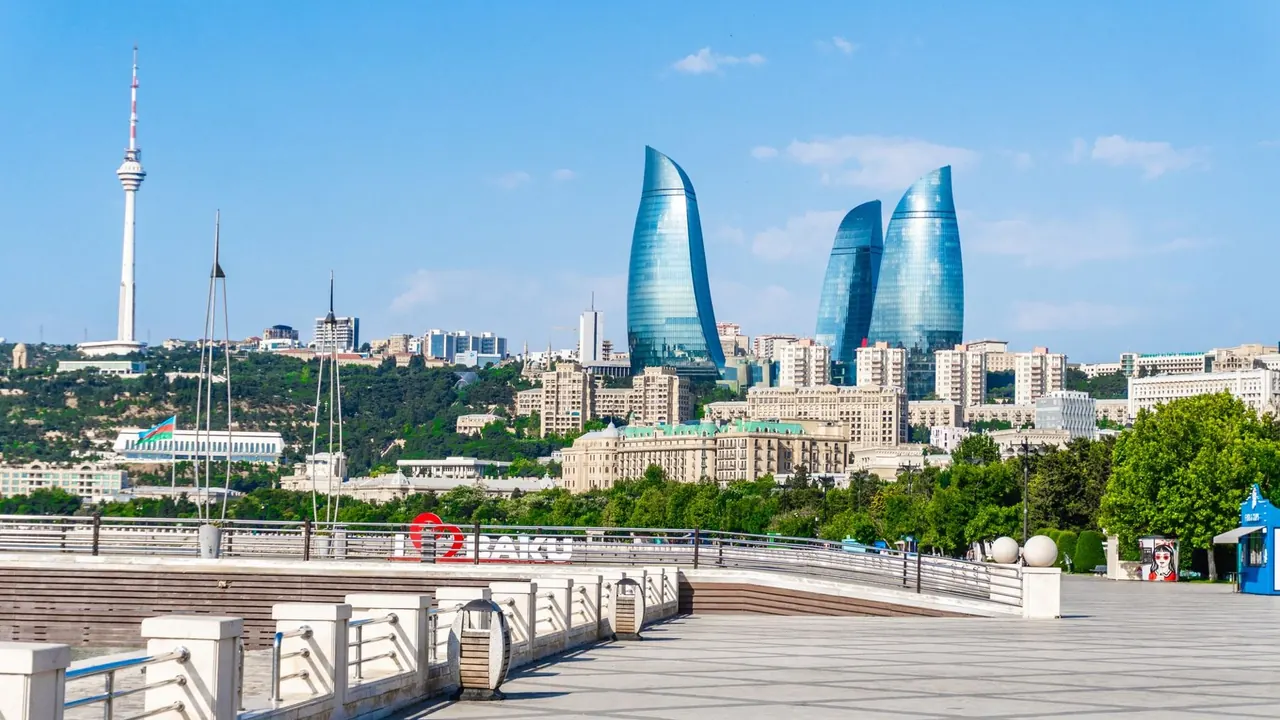
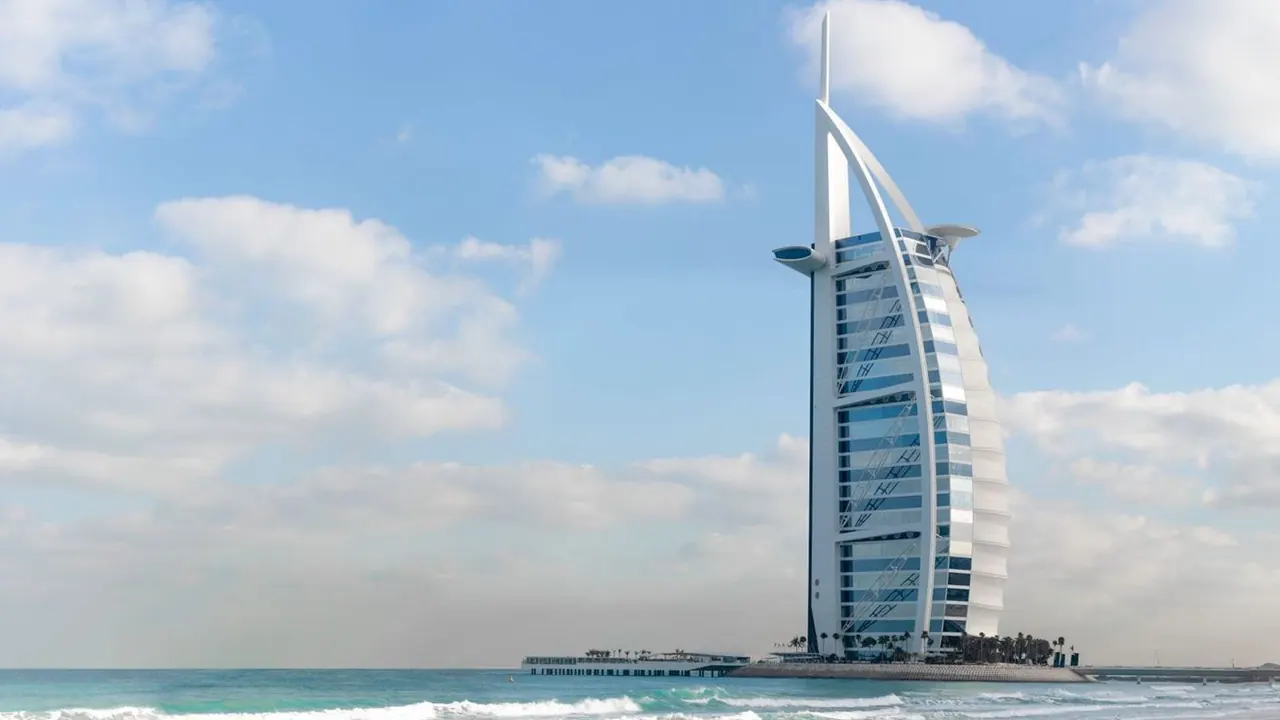
Photos: Baku by Zulfugar Karimov, Pexels License; Dubai by Aleksandar Pasaric, Pexels License.
Baku or Dubai?
Our verdict in twelve categories, each scored against the same fixed benchmark cities, and the climate month by month, so you can choose for your trip.
Choose Baku for
- prices
- culture and sights
- getting around
Baku suits the curious sightseer who wants a compact city with a real old town. The walled Icherisheher, the carved sandstone streets of the oil boom and evenings of mugham make up a short, rich trip, and outside the smart hotels the costs stay low. It works best for a few days of walking, eating plov and kebab and looking at things, in late spring or early autumn.
Choose Dubai for
- beaches
- families
- shopping
Dubai is the choice for a resort vacation in the sun, above all with children. It has pale sand and calm water, theme and water parks, vast malls and a polished hotel nightlife, all at a much higher cost. Its historic quarter along the Creek is small. In return, from November to March it offers easy warmth that Baku cannot match.
Scoreboard
Twelve categories on one fixed scale from 0 to 100. The shaded stretch is the gap between the two.
Your match
Pick a travel style or drag the sliders, and both match scores follow your weighting.
Wins on prices and culture and sights with your weighting.
Wins on beaches and families with your weighting.
What matters to you?
Category by category
What the scores mean for a trip.
Beaches & swimming
Baku has no beach in town, only a seafront promenade. Its swimming is 30 to 50 minutes away on the north Absheron shore at Bilgah or Mardakan. The sand there is flat and plain, the water is shallow and often cloudy, and old oil works spoil some stretches, so a swim makes a summer half-day out rather than a reason to come.
In Dubai the beach is the point of the trip. Pale sand runs the length of the city, from Jumeirah and Kite Beach to the JBR strip, and the Palm Jumeirah resorts have private shores on calm, clear water. The only limit is summer heat, which pushes swimming to early morning and evening.
Food & drink
Baku's food is narrower but very much its own: saffron plov, lamb and sturgeon grilled over coals, herb-filled qutab and black tea from pear-shaped glasses. The Taza Bazaar is piled with pomegranates and caviar, and Madrasa reds come from the Shamakhi hills. Once you step outside Azerbaijani and Caucasian cooking, the choice thins quickly.
Dubai offers the wider range. The canteens of Deira, Karama and Al Satwa serve Keralan, Pakistani, Iranian and Filipino food cheaply, and the towers of Downtown and DIFC add chef-led dining rooms and the Friday brunch. Emirati cooking is the hard thing to find, and wine and beer are served only in licensed venues.
Culture & sights
Baku has the deeper historic city. The walled lanes of Icherisheher, the Maiden Tower and the Palace of the Shirvanshahs form a medieval core, and the oil barons' carved sandstone mansions make the streets just outside worth walking for their own sake. The Heydar Aliyev Center and the Carpet Museum add modern buildings with real substance.
Dubai's sights are mostly modern spectacle, led by the Burj Khalifa and the Museum of the Future, with a small older quarter along the Creek at Al Fahidi and Al Shindagha. Each city takes two or three days, but Baku's days hold far more history.
Nightlife
Baku's evenings are gentle: a long walk on the Boulevard and around Fountain Square, then a pub, wine bar or hotel rooftop, with a few clubs for a smartly dressed crowd at weekends. Dubai offers a much bigger night out, with DJ clubs, rooftop bars above Sheikh Zayed Road, beach clubs on Palm Jumeirah and the long weekend brunch, though all of it is inside hotels and licensed venues and all of it is expensive. Neither has an alternative scene, but only Dubai is worth planning a night around.
Nature & outdoors
Neither city is for green landscapes, and the difference is in the kind of strangeness on offer. Around Baku, the bare Absheron peninsula has bubbling mud volcanoes, the burning hillside of Yanar Dag and the windswept rock of Gobustan, while the forested Greater Caucasus near Quba is about three hours away.
Dubai's outdoors is the red-dune desert an hour inland, for dune drives and a night under the stars, plus kitesurfing and paddleboarding on the Gulf and the Hajar hills at Hatta. From May to September the heat rules out most of it except at dawn.
Day trips
Both have a short list of good outings that runs out quickly, and they differ in kind. Baku's lean towards archaeology and the odd landscape: the Stone Age carvings of Gobustan with the mud volcanoes nearby, the Ateshgah fire temple and the cliff mausoleum and vineyards of Shamakhi.
Dubai's day trips are to other cities. Abu Dhabi has the Grand Mosque and the Louvre, Sharjah next door has its Islamic museum and heritage quarter, and Al Ain has palm oases and mud-brick forts.
Good for families
Baku welcomes children warmly, and the Boulevard's playgrounds and boat rides and the funicular to Highland Park easily fill an evening. Beyond that the attractions are small in scale: a modest city zoo and a few indoor play centres in the malls, but nothing like a major aquarium or theme park. Busy roads and stepped underpasses also make pushchairs hard work.
Dubai is built for this kind of trip. It has Legoland and the parks near Jebel Ali, water parks on the Palm, the aquarium in the Dubai Mall, indoor snow at the Mall of the Emirates and a calm, shallow sea with resort kids' clubs. The catches are the summer heat and the taxi rides between attractions.
Getting around
Baku is the easier city to get around. The Old City, Fountain Square, Nizami Street and the Boulevard are close enough to walk between, and cheap app taxis cover the Heydar Aliyev Center and the airport. The ornate Soviet metro is handsome but serves the residential districts more than the sights.
Dubai sprawls some 50km along the coast. The driverless metro along Sheikh Zayed Road and the Marina tram work well, but long walkways, wide roads and heat mean taxis for the Palm, the beaches and the parks.
Shopping & style
Baku has one great purchase: handwoven carpets from the Old City dealers, alongside Lahij copper, silk kelaghayi scarves and saffron from the Taza Bazaar. Beyond that, the chains on Nizami Street and in the malls offer little you could not find at home.
In Dubai, shopping is a reason to go. The Dubai Mall and the Mall of the Emirates hold almost every luxury and high-street name and a deep watch and jewellery trade, and the Gold, spice and perfume souks of Deira keep the older trade alive.
Affordability
Baku is the cheaper trip by a clear margin. The metro, app taxis, tea-house meals of plov and kebab and Old City guesthouses all keep costs low, and only the international hotels and smart seafront restaurants approach Western European levels.
In Dubai the expensive end is the normal one: winter resort rates, observation decks, theme parks and alcohol all cost a lot. Eating in Deira and Karama and riding the metro help, and hotel rates drop in summer, though that is also the season of extreme heat.
Live music & performing arts
Baku has a stage tradition of its own. Mugham, the improvised classical music of the tar and kamancha, plays at the International Mugham Centre and in Old City restaurants. The State Opera and Ballet Theatre, the oil-boom Philharmonic hall and a jazz scene that blends with mugham add to it, though summer seasons can be thin.
Dubai imports its stage. Touring opera, ballet and musicals play at the dhow-shaped Dubai Opera, and big pop tours fill the arenas. The programme is reliable if you book ahead, but there is no resident company and little to come across by chance.
Wellness & relaxation
Rest in Baku is mostly informal: a slow evening on the Boulevard or tea and jam in an Old City tea house. The medieval baths are mostly visited as monuments, though a few traditional bathhouses still work, and proper spas and pools are found in the big hotels. The famous oil baths of Naftalan are many hours away.
Dubai does pampering better, on its own terms. Resort spas on Palm Jumeirah and the Jumeirah coast offer hammam rituals, hydrotherapy pools and long massage menus, and their air conditioning keeps them comfortable right through summer. There is no local bathing custom behind any of it, so you rest by staying in your resort, or in one of the quiet desert retreats inland.
When should you go?
Pick your month. The climate figures are measured averages, not a forecast.
Baku in July
Dubai in July
Daytime high, °C
Rainfall in the month, mm
Temperature and rainfall are climate normals, averaged over the years shown. Baku: 1991-2020 normals, Mashtaga (23.2 km from centre). Dubai: 1991-2020 normals, Dubai International Airport (3.3 km from centre).
Baku has four real seasons. Winter is cold and grey for sightseeing, with highs around 7°C, and November is the wettest month, though the rain is never heavy. May, June, September and October are the best months for walking the Old City and the Boulevard. July and August reach about 30°C and the Caspian warms to around 26°C, so these are the only weeks worth planning a swim around.
Dubai's year runs the other way. From November to March the days are warm and almost dry and the sea is near 23°C, which is ideal for the beach and still pleasant for walking. From May to September highs climb to 42°C, rain is practically absent and life moves indoors, while the sea becomes bath-warm. The two suit opposite halves of the year: Dubai for winter sun, Baku for late spring to early autumn.
Which traveller are you?
On a family trip with young children, Baku gives a pleasant few days of seaside evenings among local families, but the daytimes soon run thin. Dubai can fill a whole week with a different big outing each day and a resort pool to return to, outside the summer heat.
For a culture and arts trip, Baku rewards days on foot, drifting from medieval lanes into oil-boom streets and ending with music you will hear nowhere else. In Dubai the history fits into a morning by the Creek, and the rest is skyline.
On a tight budget, Baku lets you eat, travel and sightsee without counting, and only gets expensive if you choose the smart hotels. A cheap trip to Dubai is possible but takes discipline: eating where residents eat, skipping the paid attractions and drinking little.
Before you go
| Measure | Baku | Dubai |
|---|---|---|
| Official language | Azerbaijani, Azerbaijani Sign Language | Arabic |
| Currency | Azerbaijan Manat (AZN) | UAE Dirham (AED) |
| Sockets | CF220 V, 50 Hz | CG220 V, 50 Hz |
| Driving side | Right | Right |
| Time zone | UTC+4 | UTC+4 |
| Emergency number | 102 or 112 | 112 |
| Elevation | -28 m | 0 m |
| Main airport | Heydar Aliyev International Airport (GYD)22 km from centre79 non-stop destinations | Dubai International Airport (DXB)7 km from centre294 non-stop destinations |
By the numbers
| Measure | Baku | Dubai |
|---|---|---|
| City population | 2,300,500 | 3,944,751 |
| People per km² | 1,075 | - |
| Museums within 10 km | 50 | 14 |
| UNESCO World Heritage sites within 50 km | 2 | 0 |
| Swim season, months above 21 °C | 4 months | 12 months |
Where else could you go?
Every comparison below shares a destination with this one, so you can follow Baku or Dubai somewhere new.