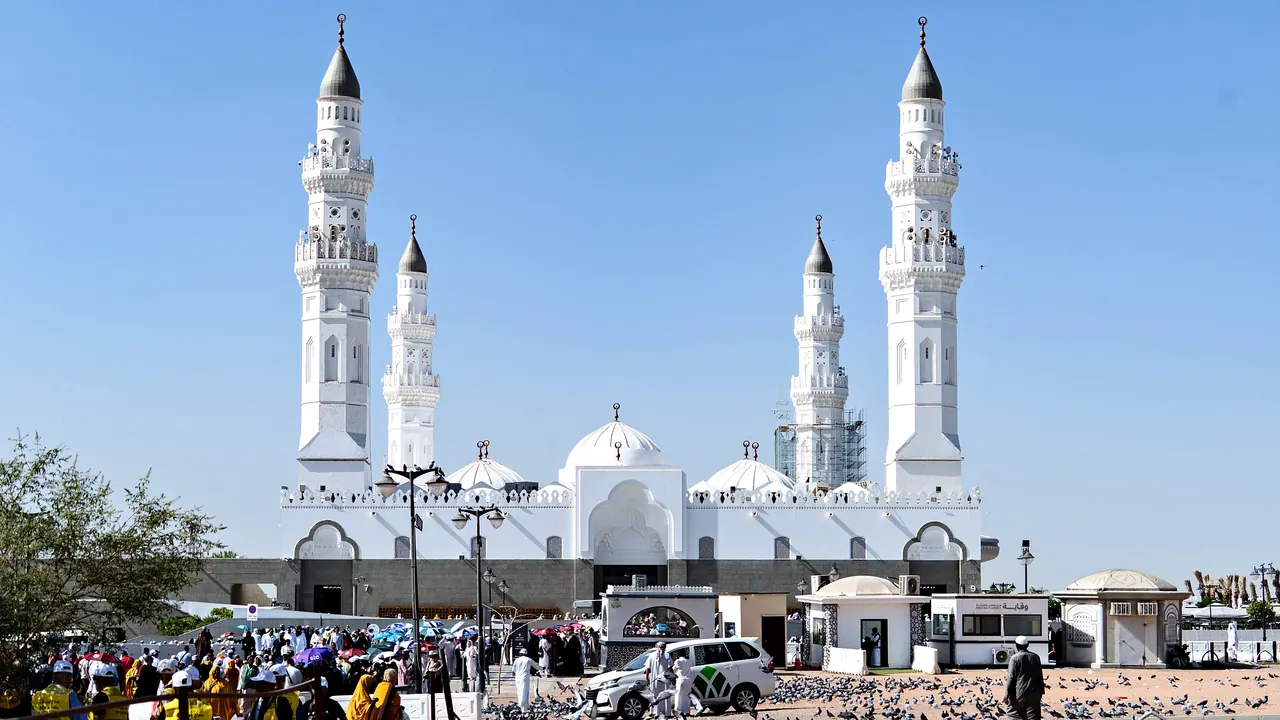
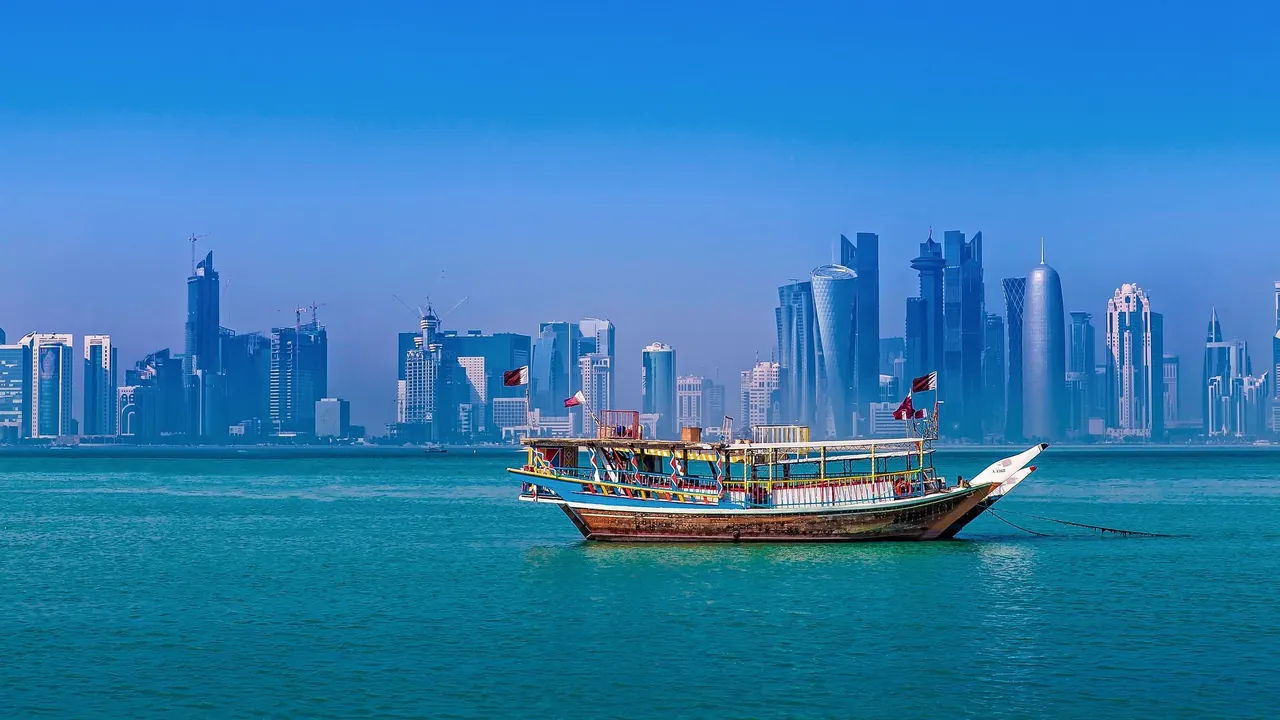
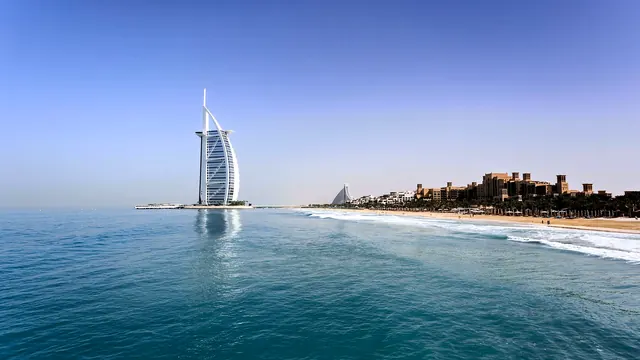
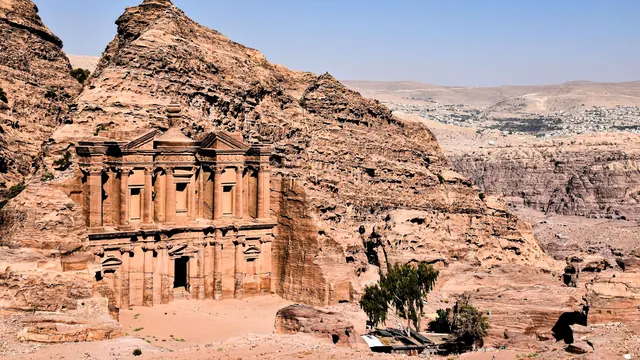
Photos: Saudi Arabia by Musaddek Sayek, Pexels License; Qatar by Goran Dojcinovic, Pexels License.
Saudi Arabia or Qatar?
Our verdict in twelve categories, each scored against the same fixed benchmark cities, and the climate month by month, so you can choose for your trip.
Choose Saudi Arabia for
- nature and the outdoors
- day trips
- culture and sights
Saudi Arabia suits travellers with time and a sense of adventure who want landscape and deep history. The sandstone tombs of Hegra at AlUla, the mud-brick lanes of Diriyah, coral reefs a few metres off the Red Sea shore and the cool Asir mountains add up to a big trip. You pay for it in domestic flights, long drives and very little that can be done on foot.
Choose Qatar for
- families
- getting around
- nightlife
Qatar is the easier, smaller choice. Nearly everything sits in or around Doha, so one hotel covers the whole stay, the metro links the main sights, and families, museum-goers and anyone who wants a polished few days with a spa and a hotel bar will find it simple. What it can't offer is wild scenery or much reason to leave the capital.
Scoreboard
Twelve categories on one fixed scale from 0 to 100. The shaded stretch is the gap between the two.
Your match
Pick a travel style or drag the sliders, and both match scores follow your weighting.
Wins on nature and the outdoors and day trips with your weighting.
Wins on families and getting around with your weighting.
What matters to you?
Category by category
What the scores mean for a trip.
Beaches & swimming
Saudi Arabia has the better water. On the Red Sea coast around Umluj and its islands, pale sand and turquoise shallows lead straight onto coral, and the Farasan Islands are quieter still. Most of it is reached through resorts or by boat, and in Jeddah the good swimming is at beach clubs north of the city.
Qatar's Gulf is shallow and very still, with no reef to speak of. Swimming means a resort beach in West Bay or Lusail, the dunes at Sealine, or the open public stretches near Fuwairit. It makes a pleasant afternoon, but it isn't a reason to come.
Where in Saudi Arabia: Umluj and the Red Sea islands, Jeddah, Farasan Islands
Where in Qatar: Doha, Sealine, Fuwairit, Simaisma
Food & drink
The two are close, and the difference lies in where the cooking comes from. Saudi Arabia has more home-grown food: Hijazi dishes, Red Sea fish and street snacks such as mutabbaq in Jeddah's Al Balad, plus the date markets and red Hasawi rice of Al-Ahsa. Riyadh adds a wide spread of international restaurants and specialty coffee.
Qatar's table reflects Doha's large expatriate population: Lebanese grills, Iranian kebab houses and South Asian canteens, with Souq Waqif the best place to graze. In Qatar you can have wine with dinner in licensed hotel restaurants, while Saudi Arabia has no wine or beer culture to go with meals.
Where in Saudi Arabia: Jeddah, Riyadh, Al-Ahsa
Where in Qatar: Doha
Culture & sights
Saudi Arabia has the deeper heritage and the bigger set pieces. Hegra's Nabataean tombs at AlUla, the restored mud-brick At-Turaif in Diriyah and the coral-stone merchant houses of Jeddah's Al Balad are real old places, though you need flights between them, and Mecca and Medina are closed to non-Muslims.
Qatar's strength is its museums. The Museum of Islamic Art and the National Museum are both of international standing. Souq Waqif and Msheireb, however, are rebuilds, and the genuinely old sites come down to Al Zubarah and the Barzan towers, all seen in three or four days.
Where in Saudi Arabia: AlUla, Riyadh and Diriyah, Jeddah, Al-Ahsa
Where in Qatar: Doha, Al Zubarah, Umm Salal
Nightlife
Neither country is a place for a night out, but Qatar at least has a drink. In Doha, licensed hotel bars, rooftops and the odd hotel club are spread across the towers of West Bay, The Pearl's marina and Lusail. The tone is calm and the dress codes are firm.
Saudi Arabia has no bars or clubs at all. Evenings in Riyadh and Jeddah mean coffee shops, shisha, late dinners and, in winter, entertainment zones with concerts and fairground rides. They are sociable and stay up late, but there's no drinking or dancing.
Where in Saudi Arabia: Riyadh, Jeddah
Where in Qatar: Doha, West Bay, The Pearl, Lusail
Nature & outdoors
There is a big gap here. Saudi Arabia has real variety: sandstone towers and canyons around AlUla, the sheer Tuwaiq cliffs at the Edge of the World, the Empty Quarter's dunes, reef walls along the Red Sea and juniper-covered peaks around Abha above 2,500m.
Qatar is a flat gravel peninsula. Its outdoor moments are a four-wheel-drive run to the dunes of Khor Al Adaid, kayaking in the mangroves at Al Thakhira, and flamingos or nesting turtles in season. These make short outings, not a reason to travel.
Where in Saudi Arabia: AlUla, Red Sea coast, Asir mountains, Tuwaiq escarpment
Where in Qatar: Khor Al Adaid, Al Thakhira, Al Khor
Day trips
Neither is great for excursions, but Saudi Arabia offers more. From Riyadh, the mud-brick villages of Ushaiqer and Shaqra make a good morning out. From Jeddah, there are Taif's rose farms. Al Khobar is a couple of hours from Al-Ahsa's oasis and across the causeway from Bahrain, and AlUla has the oasis towns of Khaybar and Tayma nearby.
In Qatar, Al Zubarah's pearling ruins are really the only drive worth making, with Al Wakrah's small souq as a short extra. Both countries need a car or a tour.
Where in Saudi Arabia: Al Khobar and Dammam, Riyadh, Jeddah, AlUla
Where in Qatar: Al Zubarah, Al Wakrah
Good for families
Qatar is the more relaxed choice with children. Distances are short and the country is very safe and orderly. Aspire Park and the Corniche fill with families in the evening, there's a waterpark at Lusail, and the sports museum and National Museum keep children interested.
Saudi Arabia welcomes children just as warmly, and its Red Sea resorts, with shallow lagoons and kids' clubs, are excellent for a calm stay. Beyond those resorts, though, a family trip means malls, heat and long drives between cities with few pavements.
Where in Saudi Arabia: Red Sea coast, Jeddah, Riyadh
Where in Qatar: Doha, Lusail
Getting around
Qatar is far easier to get around because it is small. The Doha Metro runs from the airport to West Bay, Souq Waqif, Katara and Lusail, and taxis cover the rest. Outside the capital you'll need a car.
Saudi Arabia is a country of domestic flights and long motorways. There is a metro in Riyadh and a fast train from Jeddah to Medina, but desert lookouts, heritage villages and AlUla's spread-out valley need a hire car or a driver, and many visitors prefer a driver over the fast local driving.
Where in Saudi Arabia: Riyadh, Jeddah
Where in Qatar: Doha
Shopping & style
The shopping is very similar: big air-conditioned malls and a souq for character. Saudi Arabia has more traditional markets in more places. There is oud and perfume at Souq Al Zal in Riyadh and in the lanes of Al Balad, plus dates and crafts in Al-Ahsa's Qaisariya souk.
Qatar puts everything in one city and has the more polished luxury end, with designer ranges in Doha's malls and the waterfront boutiques of The Pearl. Souq Waqif's falconry gear and the Gold Souq next door make for a good browse. Independent design shops are scarce in both.
Where in Saudi Arabia: Riyadh, Jeddah, Al-Ahsa
Where in Qatar: Doha, The Pearl, Lusail
Affordability
Both are expensive to stay in and cheaper to eat in, and the costs fall differently. Saudi Arabia has a genuinely affordable base in Al-Ahsa, but its headline places, AlUla and the Red Sea resorts, are mostly upmarket stays and guided tours, and the domestic flights between them add up.
In Qatar the expense is Doha's upscale hotels and hotel-priced alcohol. The cheap metro, low-cost museums and South Asian canteens let a careful visitor keep a short stay moderate.
Where in Saudi Arabia: Al-Ahsa, Riyadh, Jeddah
Where in Qatar: Doha
Live music & performing arts
Neither country is a place to plan a trip around performances, and in both the ardah sword dance appears mainly at national celebrations. Qatar has the steadier formal programme, with the Qatar Philharmonic's season and the opera house and seaside amphitheatre at Katara.
Saudi Arabia's offer comes as events: winter stadium concerts in Riyadh and Jeddah, occasional shows at AlUla's mirrored Maraya hall, and theatre at Ithra in Dhahran.
Where in Saudi Arabia: Riyadh, Jeddah, AlUla, Dhahran
Where in Qatar: Doha
Wellness & relaxation
Qatar makes a slow stay easier. The big resorts in West Bay, The Pearl and Lusail have serious spa floors with hammam-style rituals, and a wellness retreat in the far north is built around rest, all within a short drive.
Saudi Arabia's calmest places are more striking: desert retreats among AlUla's cliffs, with silent, clear winter nights, and overwater villas on the Red Sea coast. You have to fly to them, though, since Riyadh and Jeddah offer little beyond hotel spas.
Where in Saudi Arabia: AlUla, Red Sea coast
Where in Qatar: Doha
When should you go?
Pick your month, and for a country the place in it. The climate figures are measured averages, not a forecast.
Where in Saudi Arabia
Riyadh (Saudi Arabia) in July
Doha (Qatar) in July
Daytime high, °C
Rainfall in the month, mm
Temperature and rainfall are climate normals, averaged over the years shown. Riyadh (Saudi Arabia): 1991-2020 normals, Riyadh (8.9 km from centre). Doha (Qatar): 1991-2020 (sunshine 1981-2010) normals, Doha International Airport (5.5 km from centre).
Saudi Arabia is a winter destination. From November to March, Riyadh and AlUla have mild, sunny days, with Riyadh around 21°C in January. This is the season for desert walks, heritage sites and city streets. The heat builds through April and May, and from June to September Riyadh and AlUla reach 43°C, far too hot for sightseeing. Jeddah is only slightly less fierce. The sea off Jeddah is what makes winter a beach season too: it never drops below about 26°C, so a beach stay there works in the same months the rest of the country is most comfortable. Rain is scarce and comes as a few showers in winter and spring, with Riyadh wettest in March and April and Jeddah in November.
Doha follows a similar pattern. Days are pleasant from November to March, summer brings the same 43°C highs, and what little rain there is falls between December and March. The sea is where they differ. The Gulf cools far more than the water off Jeddah, falling to about 19°C in February, so Qatar's best swimming is from late October to November and again in April, when the air and the water are both comfortable. Riyadh, Jeddah and Doha all get plenty of sunshine all year.
Which traveller are you?
On an outdoors trip, Saudi Arabia is the only real choice. AlUla's canyons and arches are good for hiking and stargazing, the Red Sea reefs offer serious diving and snorkelling, and the Asir mountains stay cool. Qatar has little more than the Inland Sea dunes and some mangroves.
On a family trip with children, Qatar is easier. Doha is safe and compact, with Aspire Park, a waterpark at Lusail, museums that hold children's attention and calm hotel beaches, all close together. Saudi Arabia involves long drives and flights between places.
For a short city break, choose Qatar. The Museum of Islamic Art, the National Museum and Souq Waqif can all be covered in a few days by metro and taxi. Saudi Arabia's best sights are spread across the country and need flights between them.
More comparisons
Each shares a side with Saudi Arabia or Qatar.
Where else could you go?
Set Saudi Arabia or Qatar against any other country.