Qatar
Doha
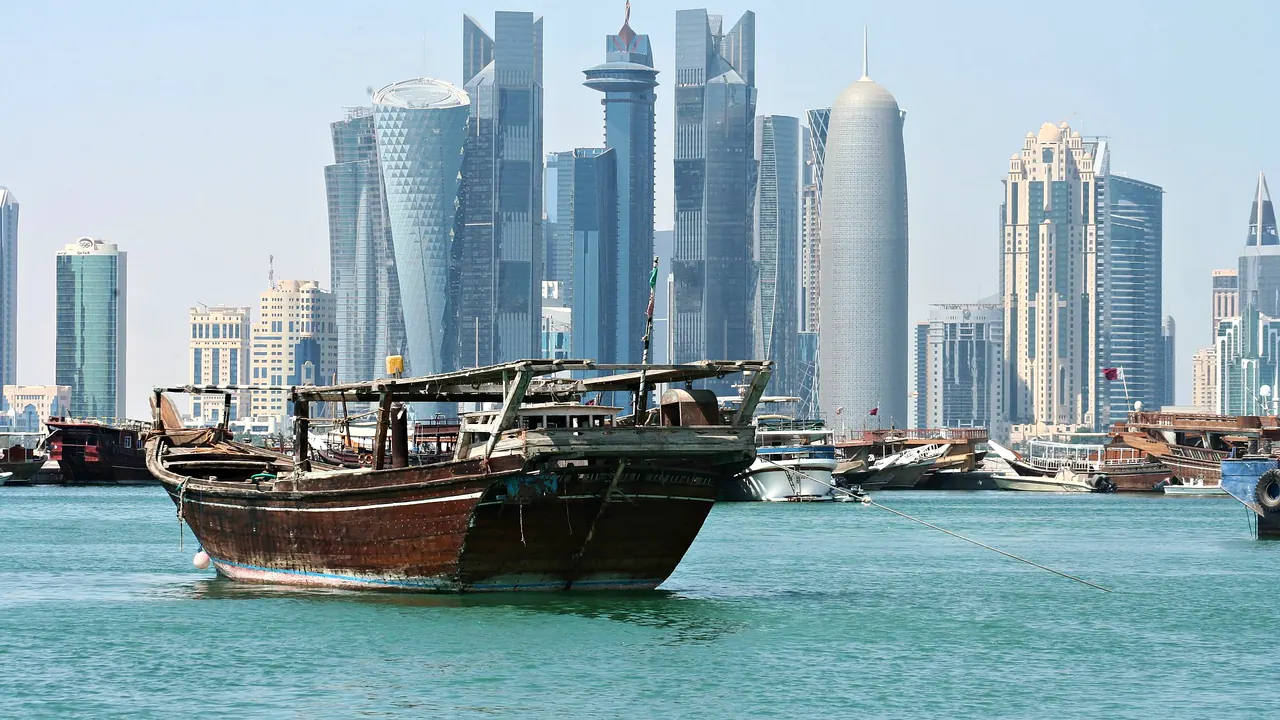
A dhow below the towers of West Bay
- Families60
- Shopping60
- Food & drink55
Photo: Gregory Hawken Kramer, CC BY-SA 4.0, cropped
Match
38
Every category weighted equally
- Beach & sun38
- Culture & arts39
- Food & nightlife39
- Family trip41
- Outdoors32
- Relax & unwind38
- Shopping & style43
- On a budget38
Doha in twelve categories
Our verdict on each, scored 0 to 100 against the same fixed benchmark cities, so a score means the same thing on every page.
Beaches & swimming. Scores 45 out of 100.
Food & drink. Scores 55 out of 100.
Culture & sights. Scores 55 out of 100.
Nightlife. Scores 20 out of 100.
Nature & outdoors. Scores 7 out of 100.
Day trips. Scores 5 out of 100.
Good for families. Scores 60 out of 100.
Getting around. Scores 45 out of 100.
Shopping & style. Scores 60 out of 100.
Affordability. Scores 38 out of 100.
Live music & performing arts. Scores 30 out of 100.
Wellness & relaxation. Scores 38 out of 100.
Doha category by category
Beaches & swimming
45The Gulf around Doha is shallow, calm and warm, close to 20°C in midwinter and well above 30°C by late summer, when the water barely cools you. The swimming that works best for visitors is at hotel and resort beaches in West Bay, on The Pearl and further up the coast, where the sand is groomed and there is shade. Public options include the beaches at Katara and the long, quiet shores at Al Wakrah and Simaisma south of the city.
The best months are roughly November to April, when the air is mild and the sea pleasant. From June to September the heat makes a day on the sand hard going. Beach time here is a pleasant break between other plans, not the reason for the trip. Visitors who want wilder sand drive about an hour south to the dunes at Sealine, where the desert meets the sea.
Food & drink
55Eating in Doha mostly means eating the food of the people who live there, and most of them come from elsewhere. Grills and bakeries from South India, Pakistan and Kerala serve biryani, parotta and karak, the sweet, spiced milk tea drunk all over the city. Lebanese, Syrian and Iranian cooking are well represented, and seafood comes straight from the Gulf. Qatari dishes such as machboos, spiced rice with lamb or fish, and harees are easiest to find in the restaurants around Souq Waqif, where people eat late on terraces among the shisha cafés.
At the top end, big-name international restaurants sit in the luxury hotels of West Bay, Lusail and The Pearl, and these hotel venues are also where wine and beer are served. Outside hotels the city is dry, which shapes evenings around tea, juice and long dinners. The range is wide, but few dishes belong to the place itself.
Culture & sights
55Doha's culture is a few museums of real ambition in a city that is almost entirely modern. The Museum of Islamic Art, I. M. Pei's geometric block on its own island off the Corniche, holds one of the world's finest collections of Islamic art, from Mamluk glass to Mughal jewellery. The National Museum of Qatar, Jean Nouvel's cluster of tilted discs shaped like a desert rose, tells the story of the peninsula around the restored palace of an earlier emir. Mathaf, the modern Arab art museum, and the Olympic and sports museum add more.
The historic layer is thin. Souq Waqif is a careful reconstruction of the old market, and Msheireb's restored heritage houses and Al Koot Fort are small. The skyline of West Bay, seen from the Corniche at dusk, is the city's other sight. Two or three days cover it well.
Nightlife
20Doha is awake late, but not in the way a night out usually means. Alcohol is served only in licensed venues, almost all inside the big hotels, so going out means hotel bars, rooftop lounges looking over West Bay and a few hotel clubs with visiting DJs, all smart, controlled and relatively costly. There is no bar district to wander and no drinking in the street.
The city's real evening life is sober. Families and friends fill Souq Waqif, the Corniche and Katara until well after midnight, especially in the cooler months, with shisha, tea and dinner as the main event. That suits travellers who enjoy a long, sociable evening. Anyone looking for clubs and bars will find a small scene.
Nature & outdoors
7Doha sits on a flat, low peninsula of gravel desert and the shoreline around it is largely built over, so there is very little landscape to use the city for. The one real outing is a four-wheel-drive trip south through the dunes to Khor Al Adaid, the Inland Sea, where the sand runs down to a tidal inlet on the Saudi border. Kayaking among the mangroves at Al Thakira in the north is a quieter option. In the city itself, the Corniche promenade, Aspire Park and the park around the Museum of Islamic Art are the places to walk or cycle. For most of the year the heat keeps outdoor activity to early morning and evening.
Day trips
5Qatar is small and nearly all of its life is in and around Doha, so there are few other places to go for the day. The one heritage site of note is Al Zubarah, a ruined pearling town on the northwest coast about an hour and a half away, with its restored fort beside it. Al Wakrah to the south has a rebuilt souq on the waterfront, and the north coast has a few abandoned fishing villages such as Al Jumail. None of them fills a day the way a real town does, and most visitors see the country's outer edges on a single desert tour.
Good for families
60Doha is built around family life, and children are welcome everywhere, late into the evening. Much of what is made for them sits indoors and air-conditioned: theme parks with rides and roller coasters inside the big malls and in Doha Oasis, large water parks, and the hands-on galleries of the Olympic and sports museum. Outdoors, Aspire Park, MIA Park and the Corniche have play areas and space to run, and the calm, shallow hotel beaches are good for small children. Camel rides and dune drives make an easy desert outing.
The city is very safe and clean. The difficulty is heat: from June to September it is too hot to be outside in the day, and distances mean taxis between most places. Winter is the time to bring children.
Getting around
45Doha is a car city with a good metro laid over it. The three driverless lines are clean, simple and cooled, and they reach most of what a visitor wants: Souq Waqif, Msheireb, the National Museum, West Bay, Katara and Lusail. Beyond that the city spreads along wide roads, the Museum of Islamic Art and the Corniche need a short walk from the nearest station, and much of the rest needs a taxi or ride-hailing car, both easy to find.
Walking works in a few places, around Souq Waqif and Msheireb, along the Corniche and on The Pearl, and only in the cooler months or after dark. In summer even short walks between stations and doors are uncomfortable, and many visitors simply take cars door to door.
Shopping & style
60Shopping in Doha comes in two forms. Souq Waqif, rebuilt in the style of the old market, is a maze of lanes selling spices, incense, dates, perfume oils, textiles, falconry gear and a good deal of souvenir stock, with the Gold Souq next door for jewellery bought by weight. It is the place for oud, frankincense and Arabic coffee pots.
The other form is the giant mall, air-conditioned and full of international luxury and high-street brands, some styled as Venetian canals or Parisian squares, with department stores and a dense run of designer flagships in the newer districts of Lusail and The Pearl. The range is wide but familiar, and independent boutiques and local design are scarce.
Affordability
38Hotel rooms take the biggest share of a stay here. Most visitors sleep in large international hotels in West Bay, Lusail or The Pearl, priced like those of other wealthy Gulf cities and rising sharply during big sporting events and the cooler peak season. Alcohol, served only in licensed hotel venues, costs far above European norms, and dinner in the hotel restaurants is expensive.
Outside the hotels, the picture changes. The canteens and grills that feed the city's South Asian and Arab workforce are very cheap, a cup of karak costs almost nothing, the metro is inexpensive and taxis are reasonable. A visitor who eats in the souq and the backstreets rather than in hotels spends much less than the city's glossy image suggests.
Live music & performing arts
30Doha has the buildings for a performing arts scene more than the scene itself. The Qatar Philharmonic Orchestra plays in the opera house at Katara Cultural Village, whose Greek-style amphitheatre also hosts concerts and festivals in the cooler months, and the Qatar National Convention Centre stages touring musicals, comedy and big-name concerts. Traditional Gulf music and the ardah sword dance appear at national celebrations and festivals rather than on a nightly stage.
The programme is driven by events and visiting productions, thin in summer and uneven through the year. A visitor who checks what is on may find a good concert. There is no theatre district, jazz circuit or regular live music to drop in on.
Wellness & relaxation
38Doha has no public bathing culture of its own. Wellness here means the large spas of the luxury hotels in West Bay, Lusail and The Pearl, many with Arabic-style hammam rooms, scrubs and massages alongside pools and steam rooms, done to a high standard and priced like it. A traditional wellness resort on the north coast, built around Arabic and Islamic healing practices, offers a longer retreat about an hour and a half away.
The pace helps. Doha is calm, orderly and quiet in the daytime, and a resort stay with a beach, a pool and a spa is easy to arrange in winter. What it lacks is a historic bathhouse or the kind of everyday bathing ritual that draws people to a city just for that.
When should you go?
Pick a month to see what it is like. The climate figures are measured averages, not a forecast.
Doha in July
Daytime high, °C
Rainfall in the month, mm
The whole year
Shaded against this destination’s own year: the deepest cell is its best month for that figure and the palest its weakest.
Temperature and rainfall are climate normals, averaged over the years shown. Doha: 1991-2020 (sunshine 1981-2010) normals, Doha International Airport (5.5 km from centre).
Before you go
| Measure | Doha |
|---|---|
| Official language | Arabic |
| Currency | Qatari Rial (QAR) |
| Sockets | G240 V, 50 Hz |
| Driving side | Right |
| Time zone | UTC+3 |
| Emergency number | 999 |
| Elevation | 0 m |
| Main airport | Hamad International Airport (DOH)8 km from centre196 non-stop destinations |
By the numbers
| Measure | Doha |
|---|---|
| Population | 1,186,023 |
| People per km² | 8,985 |
| Museums within 10 km | 6 |
| UNESCO World Heritage sites within 50 km | 0 |
| Swim season, months above 21 °C | 9 months |
Compare Doha with
Every comparison with a written verdict behind it.