Oman
Muscat
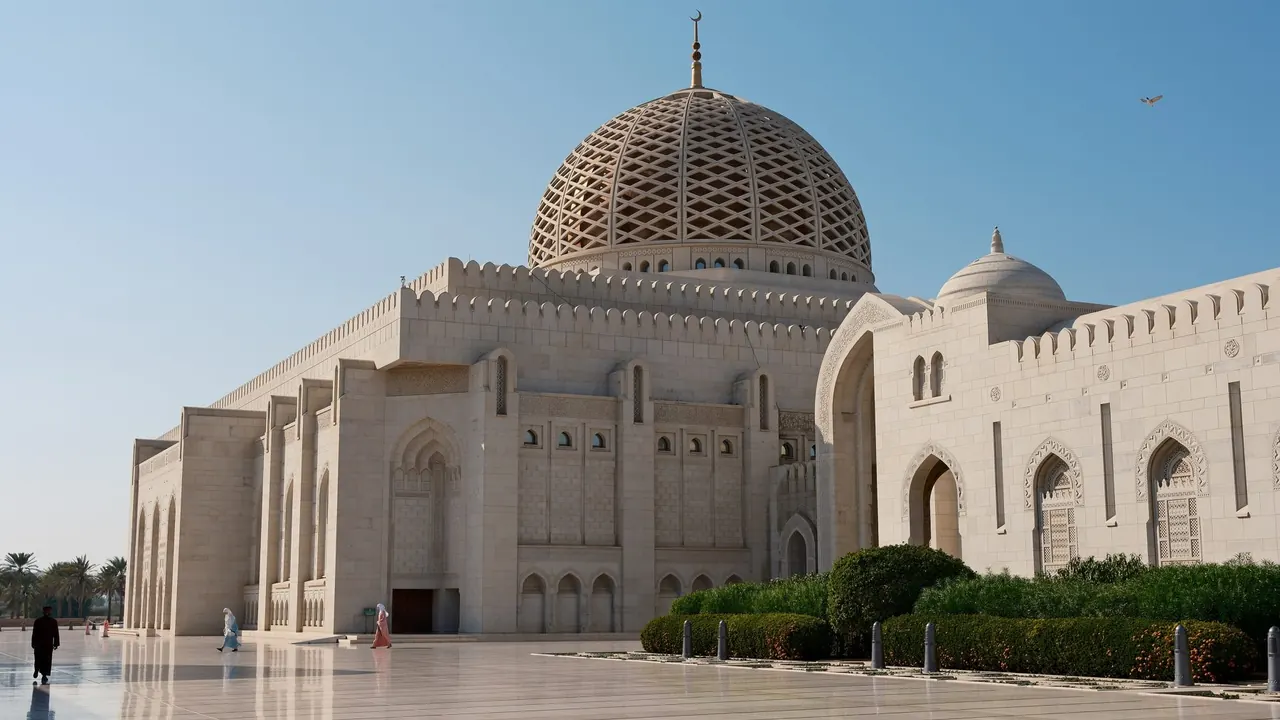
The Sultan Qaboos Grand Mosque
- Beaches72
- Nature & outdoors70
- Day trips62
Photo: Alli Khalil, CC BY 4.0, cropped
Match
48
Every category weighted equally
- Beach & sun51
- Culture & arts44
- Food & nightlife40
- Family trip52
- Outdoors55
- Relax & unwind53
- Shopping & style43
- On a budget47
Muscat in twelve categories
Our verdict on each, scored 0 to 100 against the same fixed benchmark cities, so a score means the same thing on every page.
Beaches & swimming. Scores 72 out of 100.
Food & drink. Scores 44 out of 100.
Culture & sights. Scores 55 out of 100.
Nightlife. Scores 14 out of 100.
Nature & outdoors. Scores 70 out of 100.
Day trips. Scores 62 out of 100.
Good for families. Scores 52 out of 100.
Getting around. Scores 20 out of 100.
Shopping & style. Scores 42 out of 100.
Affordability. Scores 45 out of 100.
Live music & performing arts. Scores 40 out of 100.
Wellness & relaxation. Scores 55 out of 100.
Muscat category by category
Beaches & swimming
72Muscat runs along the Gulf of Oman, and the sea is warm all year, around 24°C in winter and above 30°C in summer. Qurum and Shatti al Qurum give a long stretch of sand in the city itself, where families walk and play football at dusk. Southeast of the centre, rocky headlands hide smaller coves around Qantab, Al Bustan and Yiti, with clear water and bays the resort hotels have made their own.
Boats from Mutrah and the marinas go out to secluded beaches along the cliffs and, about an hour west, to the Daymaniyat Islands, where the snorkelling over coral is the best near the city. The best time is October to April. From May to September the air reaches the mid 40s°C, so the beach is for early mornings and evenings only, and beach life is never the whole point of a stay.
Food & drink
44Omani cooking is mild and generous, built on rice, slow-cooked lamb and fish. The dishes to look for are shuwa, meat marinated and cooked for a day in an underground pit, which is festival food, plus majboos rice, grilled kingfish, and the sticky, rosewater-scented halwa served with cardamom coffee and dates. Few restaurants specialise in it, so most visitors eat Omani food at a handful of traditional places where you sit on the floor.
Most everyday eating comes from the large South Asian community, so cheap Keralan, Pakistani and Lebanese canteens are everywhere, especially around Ruwi and Mutrah. The Mutrah fish market is worth an early visit. Fine dining and wine mostly mean the big hotels, and outside them alcohol is hard to find.
Culture & sights
55The Sultan Qaboos Grand Mosque is the city's great sight: marble courtyards, a vast hand-knotted carpet and a huge chandelier, open to non-Muslim visitors in the mornings with modest dress. The Royal Opera House is worth seeing as a building too, in white stone in an Omani style.
Old Muscat is a small walled cove where the ceremonial Al Alam Palace stands between the Portuguese-era Jalali and Mirani forts. The forts are seen from outside, but the National Museum and Bait al Zubair nearby tell Oman's story well. Along the curving corniche at Mutrah, merchants' houses, a hilltop fort and watchtowers face the dhows in the harbour. The city spreads thinly along the coast, and two or three days cover what it has.
Nightlife
14Muscat is a quiet city after dark. Alcohol is served almost only in licensed hotels, so going out means a hotel lounge, a poolside terrace or one of a few hotel nightclubs. These fill mostly with expatriates on Thursday and Friday nights. The evening life locals actually enjoy is sober and outdoors: families strolling the Mutrah corniche, shisha cafés and late dinners in the cooler months. Anyone who wants a real night out should look elsewhere.
Nature & outdoors
70Bare, dark Hajar mountains rise straight behind the city and drop into the sea in cliffs and fjord-like inlets, so the setting alone is striking. Within about an hour and a half along the coast road are Wadi Shab, a gorge of emerald pools you walk and wade through, and the Bimmah sinkhole. The plateau of Jebel Akhdar, with terraced rose and pomegranate gardens and rim walks, is about two hours inland.
Out at sea, boats from the marinas find spinner dolphins most mornings, and the Daymaniyat Islands are a protected reserve for diving with turtles and reef fish. Kayaking along the coves is popular as well. The Wahiba Sands and Jebel Shams need longer than a day. The season runs from October to April, because summer heat makes hiking dangerous.
Day trips
62Oman's interior is where its history is, and it can be reached from Muscat by car. Nizwa is about an hour and a half away, with a great round fort and a souq best seen on Friday morning at the livestock auction. Close by are the UNESCO-listed mud-brick fort at Bahla, the beautifully painted Jabrin Castle, and the hanging village of Misfat al Abriyeen. Ruined Birkat al Mouz has its falaj channels, the old irrigation system that is also UNESCO listed.
West of the city, Nakhal and Rustaq have big forts beneath the mountains. Down the coast, Sur, about two hours away, still builds wooden dhows, and the ruined port of Qalhat is on the way. There is no train, so a hired car or a driver is essential.
Good for families
52Omani culture is warm towards children, and the city is safe, clean and unhurried, so it is an easy place to be with them. Most days revolve around the sea: calm hotel beaches, morning boat trips to watch dolphins and snorkelling in shallow coves. Qurum's large park has lakes and play areas where local families spend their evenings, and there is a hands-on children's science museum.
The big mall in Seeb, out near the airport, holds a large aquarium with a walk-through tunnel and an indoor snow park, which make a useful escape from the heat. Beyond that there is no theme park, and the main sights are mosques and forts. The city is spread out, so expect long stretches in the car, and from May to September the heat keeps children indoors for most of the day. Winter, with a beach resort as a base, works best.
Getting around
20Muscat stretches for about 50km along the coast as a chain of separate districts joined by fast highways, with no real centre. The public buses cover the main roads but are of little use for sightseeing, so most visitors hire a car, which is easy because the roads are good and well signed. The other options are ride-hailing apps and taxis. Walking works only in short stretches: the corniche at Mutrah and the cove of Old Muscat, ideally in the cool of the evening. For anything outside the city, a car or a driver is essential.
Shopping & style
42Mutrah Souq is the reason to shop here. It is a maze of covered lanes behind the corniche, scented with frankincense, with sellers of silver jewellery, curved khanjar daggers, embroidered caps, pashminas, dates and halwa. It is calm, with little hard selling, and goes quiet in the afternoon heat. Frankincense, Omani perfume oils and silverwork are the best things to take home.
Beyond the souq, shopping means large air-conditioned malls in the suburbs, full of international chains, plus the Friday market at Nizwa if you are going inland. There is no luxury street or boutique district worth seeking out.
Affordability
45Muscat is mid-priced, with sharp contrasts. Eating in local Indian, Pakistani and Lebanese canteens costs very little, fuel is cheap, and the mosque and most forts charge small fees. Against that, rooms are the big expense: the beach resorts are priced like those of a pricey Mediterranean coast, and even mid-range hotels are not cheap. Alcohol is expensive and served only in hotels. Since public transport is of little use, a hire car or taxis are part of the budget. Rates fall noticeably in the hot summer months.
Live music & performing arts
40The Royal Opera House Muscat is the city's one major stage, and it is a good one. From autumn to spring it brings touring opera companies, ballet, symphony orchestras, jazz and Arab music stars to a grand hall with a strict dress code. Programmes are spread through the season rather than nightly, so check what falls during your stay. Beyond it there is little: traditional Omani music and dance at national celebrations and weddings, some live bands in hotel lounges, and no theatre district or club circuit.
Wellness & relaxation
55Muscat is a calm city, low-rise, quiet, uncrowded and slow, and that is a real part of its appeal for unwinding. Wellness here means the large resort spas along the coves south of the city, which offer hammam rituals, frankincense-based treatments and long, quiet pool days in the cooler months.
There is no public bathing tradition in the city itself. The nearest are the warm springs at Nakhal and Rustaq, about an hour and a half inland, where locals bathe in simple channels and pools under the forts. For a restorative stay, a resort on the coast with a good spa is the way to do it.
When should you go?
Pick a month to see what it is like. The climate figures are measured averages, not a forecast.
Muscat in July
Daytime high, °C
Rainfall in the month, mm
The whole year
Shaded against this city’s own year: the deepest cell is its best month for that figure and the palest its weakest.
Where the figures come from
Muscat's sunshine is measured 32 km from the centre, at Seeb, International Airport.
Temperature and rainfall are climate normals, averaged over the years shown. Muscat: 1991-2020 normals, Qaboos Port (3.4 km from centre).
Before you go
| Measure | Muscat |
|---|---|
| Official language | Arabic |
| Currency | Rial Omani (OMR) |
| Sockets | CG240 V, 50 Hz |
| Driving side | Right |
| Time zone | UTC+4 |
| Emergency number | 968 |
| Elevation | 69 m |
| Main airport | Muscat International Airport (MCT)31 km from centre83 non-stop destinations |
By the numbers
| Measure | Muscat |
|---|---|
| City population | 1,421,409 |
| People per km² | 406 |
| Museums within 10 km | 10 |
| UNESCO World Heritage sites within 50 km | 0 |
| Swim season, months above 21 °C | 12 months |
Compare Muscat with
Every comparison with a written verdict behind it.