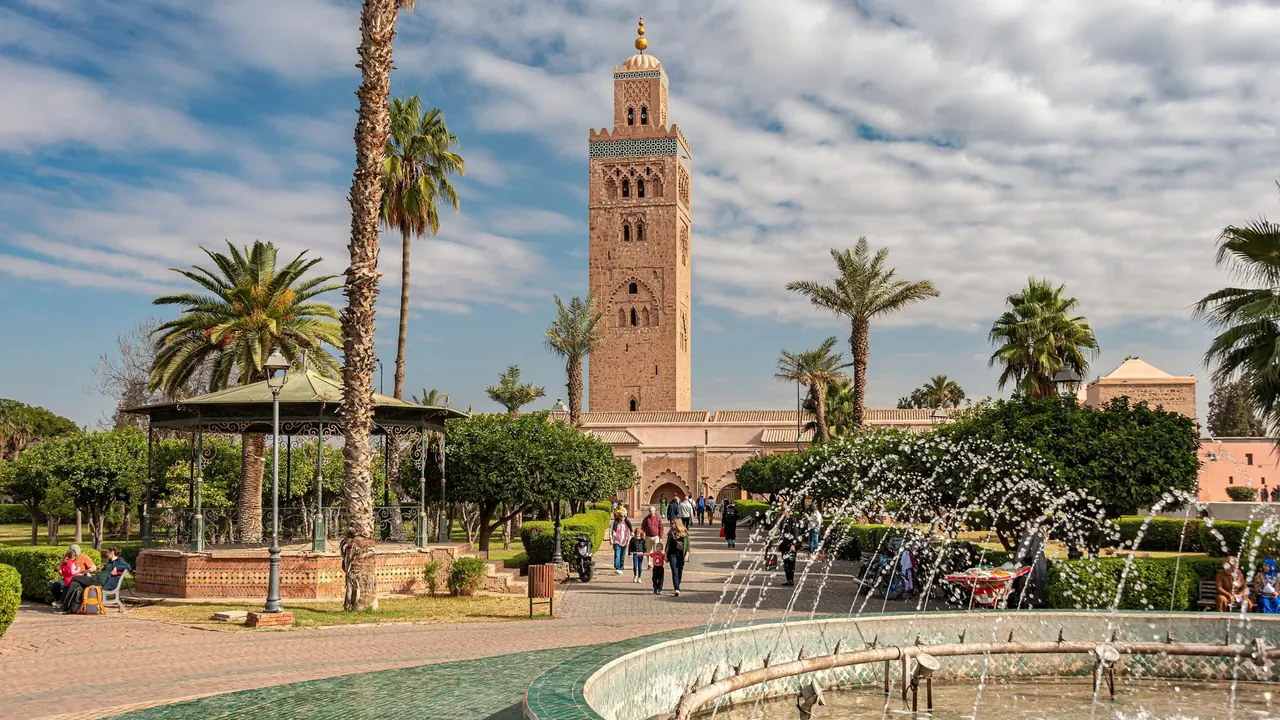
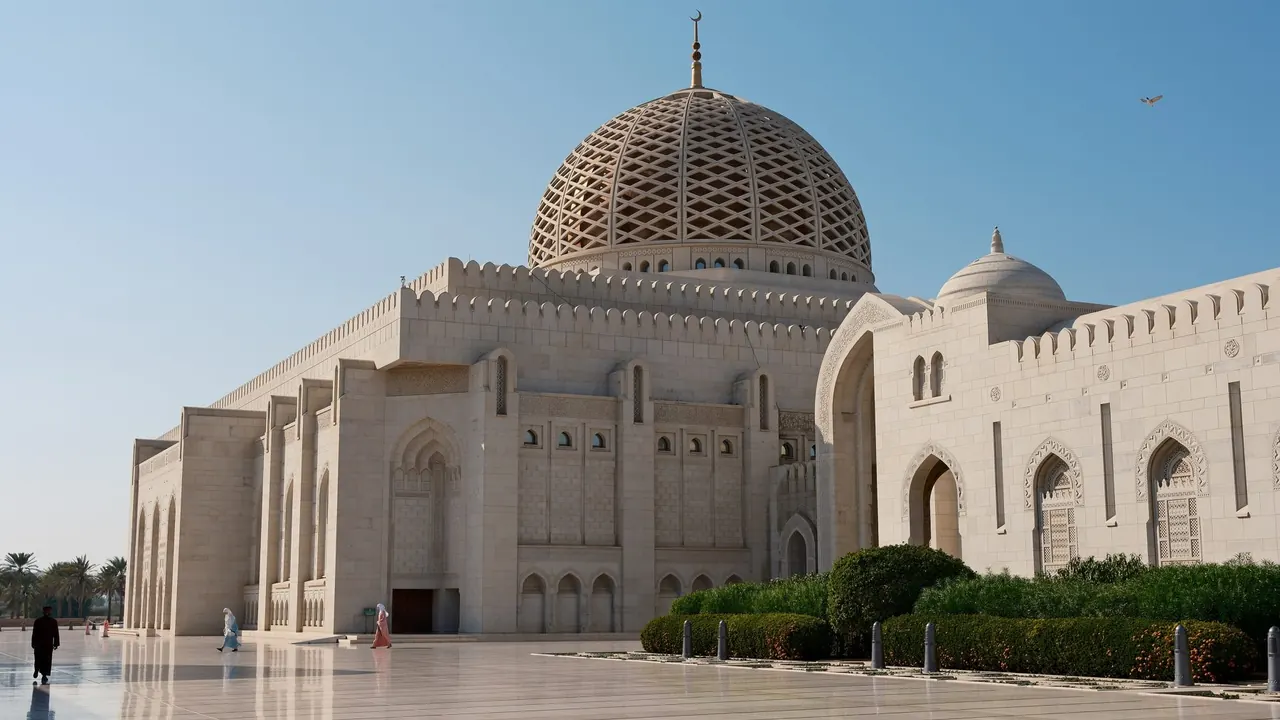
Photos: Marrakech by Jorge Franganillo, CC BY 2.0, cropped; Muscat by Alli Khalil, CC BY 4.0, cropped.
Marrakech or Muscat?
Our verdict in twelve categories, each scored against the same fixed benchmark cities, and the climate month by month, so you can choose for your trip.
Choose Marrakech for
- shopping
- prices
- culture and sights
Marrakech suits travellers who want a city to explore on foot. The walled medina, the palaces and madrasas, the souks laid out trade by trade and evenings on Jemaa el-Fna fill the days, and a riad hammam is waiting at the end of each one. It is the better choice for shoppers, keen eaters of Moroccan food and anyone on a tighter budget, and the High Atlas is close enough for a day in the mountains.
Choose Muscat for
- beaches
- day trips
- families
For a calmer trip built around the sea, Muscat is the stronger pick. Warm water, the sandy shore at Qurum, coves for snorkelling and the forts of the interior make it easier with children and rewarding for anyone happy to drive. The city has fewer sights and very quiet evenings, and rooms cost more, so it fits travellers who care more about space and ease than about street life.
Scoreboard
Twelve categories on one fixed scale from 0 to 100. The shaded stretch is the gap between the two.
Your match
Pick a travel style or drag the sliders, and both match scores follow your weighting.
Too close to call, 1 point apart
Wins on shopping and prices with your weighting.
Wins on beaches and day trips with your weighting.
What matters to you?
Category by category
What the scores mean for a trip.
Beaches & swimming
This is Muscat's clearest advantage. The Gulf of Oman is warm enough to swim in every month, Qurum has a long beach within the city, and the coves around Qantab and Yiti have clear water. Boats also run out to the Daymaniyat Islands for snorkelling over coral.
Marrakech sits inland on a dry plain, so swimming means a riad plunge pool or a hotel pool. The Atlantic at Essaouira is hours away, and the water there is cool and the wind strong. The reservoir at Lalla Takerkoust is a lakeside afternoon rather than a beach.
Food & drink
Marrakech is the better place to eat. Tagines, pastilla, harira and the clay-urn tanjia are easy to find, and the evening grill stalls on Jemaa el-Fna make dinner an event, even if riad menus start to repeat after a few days.
In Muscat, Omani dishes such as shuwa and majboos take some seeking out because few restaurants serve them. Everyday eating comes from the cheap and good Keralan, Pakistani and Lebanese canteens of Ruwi and Mutrah. In both cities a drink with dinner usually means a hotel or a licensed restaurant.
Culture & sights
Marrakech has much more to see, and most of it is close together. The UNESCO-listed medina is a sight in itself. The Koutoubia, the Ben Youssef Madrasa, the Saadian Tombs and the Bahia and El Badi palaces are all within walking distance, and the Jardin Majorelle is just beyond the walls.
Muscat's great monument is the Sultan Qaboos Grand Mosque. It also has the cove of Old Muscat with its forts and the National Museum, and the merchants' houses along the Mutrah corniche. These lie far apart along the coast, so the city feels thinner on sights, though each needs only two or three days.
Nightlife
Neither city is made for a big night out, but Marrakech gives you more to do after dark. Jemaa el-Fna is busy with food stalls and music every evening, rooftop terraces serve a sunset cocktail, and Hivernage and Gueliz have lounge bars and a few clubs that stay open late.
Muscat is quieter still. Going out means a hotel bar, a poolside terrace or one of a few hotel nightclubs at the weekend. Most local evenings are spent walking the Mutrah corniche or in shisha cafés.
Nature & outdoors
Both cities have mountains on the doorstep and plenty to do outside, but the landscapes are very different. From Marrakech you go up into the High Atlas for walks between villages from Imlil, the climb of Toubkal, the waterfalls of the Ourika valley and winter skiing at Oukaimeden. The stony Agafay desert, closer to the city, offers camel rides and dawn balloon flights.
In Muscat the mountains run straight into the sea. You can wade through the pools of Wadi Shab, walk the terraced rim of Jebel Akhdar, or take a boat out to see dolphins and dive with turtles around the Daymaniyat Islands. All of this belongs to the cooler months, because summer heat makes hiking there dangerous.
Day trips
Muscat is the better base for days out. The interior's forts and oases are about an hour and a half away by road: Nizwa with its round fort and Friday livestock market, the mud-brick fort at Bahla, Jabrin Castle and the hanging village of Misfat al Abriyeen. Down the coast, Sur still builds dhows. All of it needs a car or a driver.
From Marrakech, the places most worth visiting, Essaouira and Ait Benhaddou, really need a night away. Closer in, the choice comes down to the village souks at Asni and Amizmiz and the Almohad mosque at Tinmel.
Good for families
Muscat is much easier with children. It is clean, safe and unhurried, and days centre on hotel beaches, dolphin-watching boats and snorkelling in shallow water. Qurum's park, the children's science museum, and the aquarium and snow park at the mall in Seeb fill the hot hours, although the distances mean a lot of time in the car.
Marrakech asks more of families. The lanes are crowded and shared with motorbikes, sellers are persistent and little is built for children. A riad with a pool makes it manageable, and older children who enjoy markets and a bit of adventure get the most out of it.
Getting around
Neither city is simple to get around, but Marrakech copes better without a car. The medina is walkable, if confusing, and petit taxis link it to Gueliz and the Majorelle garden, as long as you agree the fare before you set off.
Muscat is a 50km strip of separate districts joined by highways, and its buses are of little use for sightseeing. Most visitors hire a car or use taxis and ride-hailing apps. Walking is limited to the Mutrah corniche and Old Muscat.
Shopping & style
Marrakech is the shopping city of the two. Its souks are organised trade by trade, from leather and babouches to carpets, lanterns and metalwork, Gueliz has design boutiques reworking Moroccan crafts, and Sidi Ghanem has makers' showrooms. Bargaining takes time, and the pressure from sellers can wear you down.
Muscat's Mutrah Souq is smaller and much gentler, and it is the place for frankincense, perfume oils and silver. Beyond the souq, shopping means suburban malls full of international chains.
Affordability
Marrakech is the cheaper trip. Medina riads with real character, street food, taxis and entry to the sights all cost little. Luxury riads and alcohol are expensive, though, and in the souks what you pay depends on how patiently you bargain.
In Muscat, canteen meals and fuel are cheap, but rooms are the big cost. The beach resorts charge like an expensive Mediterranean coast, and a hire car or taxis add to the budget. Rates do fall in the hot summer months.
Live music & performing arts
Muscat has the only real stage of the two. The Royal Opera House brings touring opera, ballet, orchestras, jazz and Arab music stars from autumn to spring, with performances spread through the season, so it is worth checking what falls during your stay.
Marrakech's performances are free and in the open air. Gnawa musicians, drummers and storytellers fill Jemaa el-Fna each evening, and the Popular Arts Festival brings folk troupes from across Morocco. There is no concert or theatre season, though, and most staged shows are dinner entertainment for tourists.
Wellness & relaxation
Marrakech has a bathing tradition that Muscat lacks. Every medina quarter has a public hammam for a black-soap scrub, the spa hammams go all the way up to marble luxury, and a riad courtyard with its fountain shuts out the noise of the lanes.
Muscat is the calmer city, uncrowded and slow. Wellness there means a resort spa on the southern coves, with frankincense treatments and long days by the pool. The warm springs at Nakhal and Rustaq are about an hour and a half inland.
When should you go?
Pick your month. The climate figures are measured averages, not a forecast.
Marrakech in July
Muscat in July
Daytime high, °C
Rainfall in the month, mm
Where the figures come from
Muscat's sunshine is measured 32 km from the centre, at Seeb, International Airport.
Temperature and rainfall are climate normals, averaged over the years shown. Marrakech: 1991-2020 normals, Marrakech (5.1 km from centre). Muscat: 1991-2020 normals, Qaboos Port (3.4 km from centre).
Marrakech is at its best in spring and autumn, when it is warm enough to sit out on a roof terrace and still pleasant to walk the medina through the day. Summer is fierce, peaking at 38°C in July, so sightseeing shrinks to the early morning. Winter days are mild and sunny, with light rain spread from November to April and almost none in summer.
Muscat has the opposite calendar. Its good season runs from October to April and is most comfortable from November to March, when the air sits in the mid to high twenties and the sea, at about 24°C at its coolest, is pleasant for swimming. By May and June the heat reaches 37°C and the water is above 30°C, so the beach is only for early mornings and evenings. Rain barely registers in any month, and both cities have long hours of sunshine all year.
Which traveller are you?
For a beach and sun trip, Muscat is the clear choice. The sea is warm all year, Qurum has a long sandy beach in the city and boats go out to the Daymaniyat Islands for snorkelling. In Marrakech, swimming ends at the riad plunge pool.
On a shopping trip, Marrakech is far stronger. Its souks run lane by lane through leather, carpets, lanterns and metalwork, Gueliz adds design boutiques and Sidi Ghanem has makers' showrooms. Muscat has one gentle souq at Mutrah, and after that mostly malls full of chains.
On a trip on a tight budget, Marrakech makes the money go further. Simple medina riads, the Jemaa el-Fna food stalls, petit taxis and palace entries all cost little. In Muscat the hotel rooms are expensive, and a hire car is close to essential.
Before you go
| Measure | Marrakech | Muscat |
|---|---|---|
| Official language | Arabic, Standard Moroccan Tamazight | Arabic |
| Currency | Moroccan Dirham (MAD) | Rial Omani (OMR) |
| Sockets | CE50 Hz | CG240 V, 50 Hz |
| Driving side | Right | Right |
| Time zone | UTC+1 | UTC+4 |
| Emergency number | Police 19/112, ambulance 15, fire 15 | 968 |
| Elevation | 465 m | 69 m |
| Main airport | Marrakesh Menara Airport (RAK)6 km from centre113 non-stop destinations | Muscat International Airport (MCT)31 km from centre83 non-stop destinations |
| Public holidays this year | 11 days | - |
By the numbers
| Measure | Marrakech | Muscat |
|---|---|---|
| City population | 1,002,697 | 1,421,409 |
| People per km² | 4,360 | 406 |
| Museums within 10 km | 14 | 10 |
| UNESCO World Heritage sites within 50 km | 1 | 0 |
| Swim season, months above 21 °C | - | 12 months |
Where else could you go?
Every comparison below shares a destination with this one, so you can follow Marrakech or Muscat somewhere new.