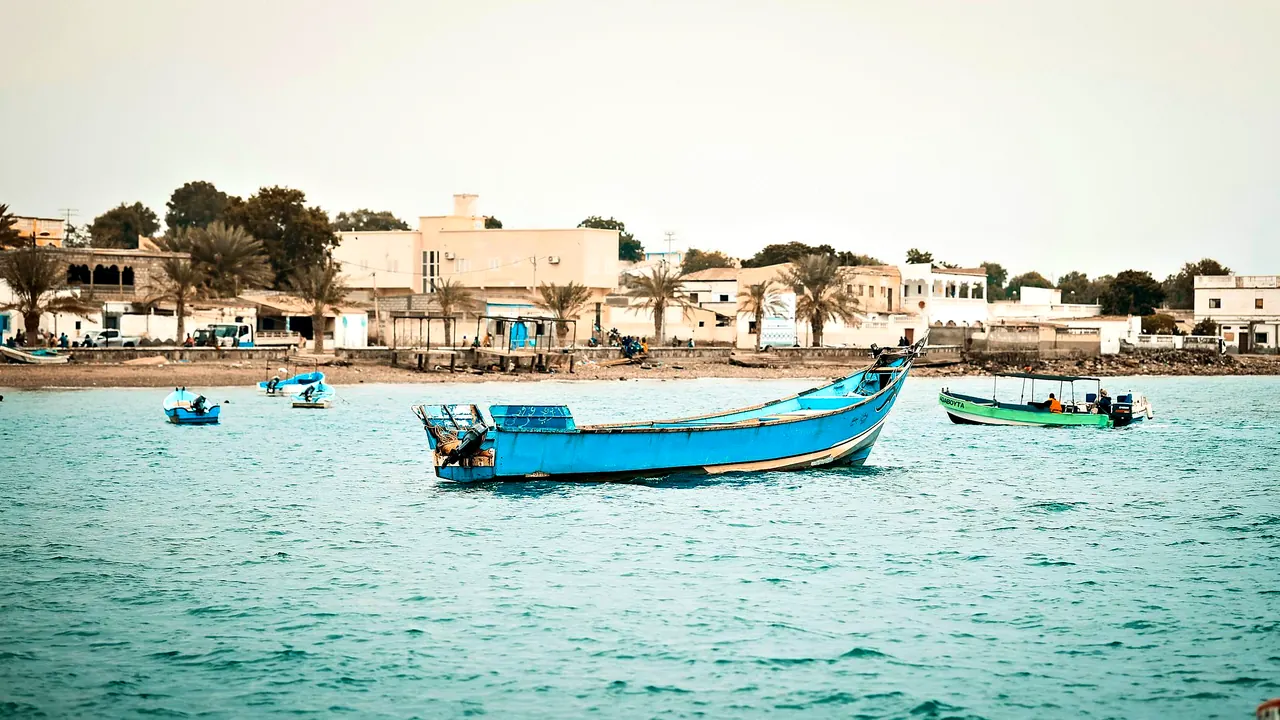
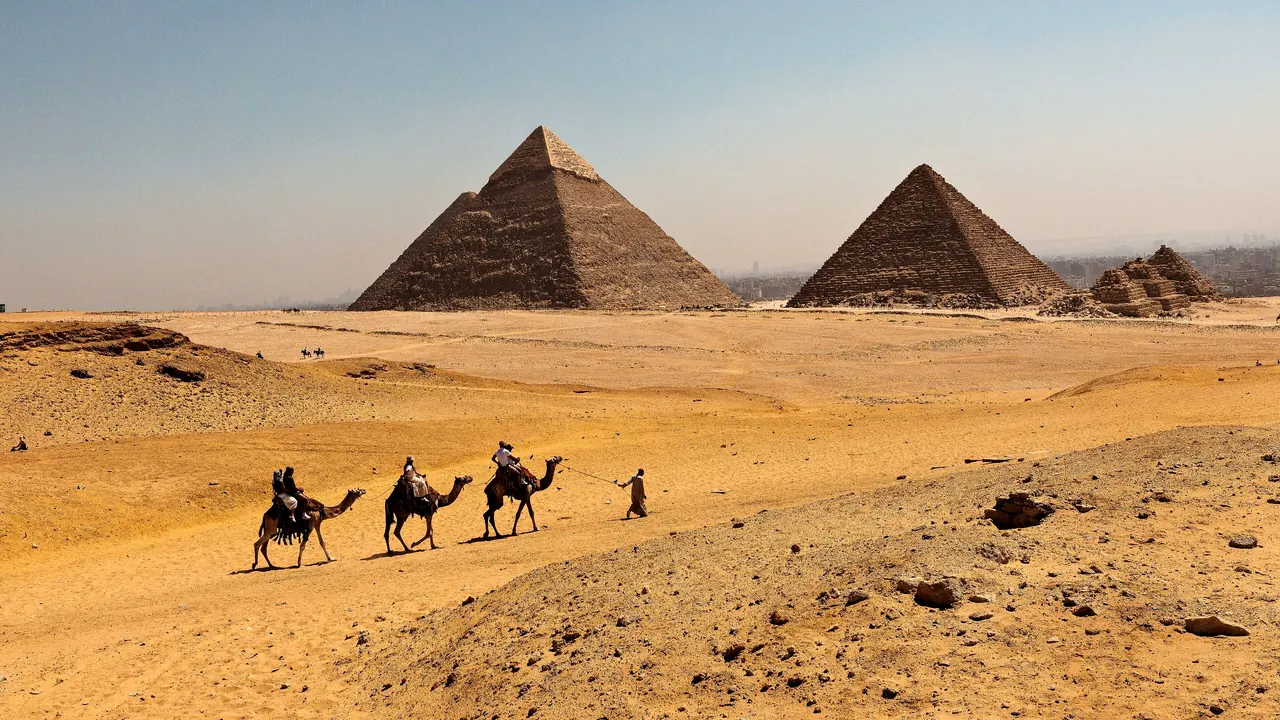
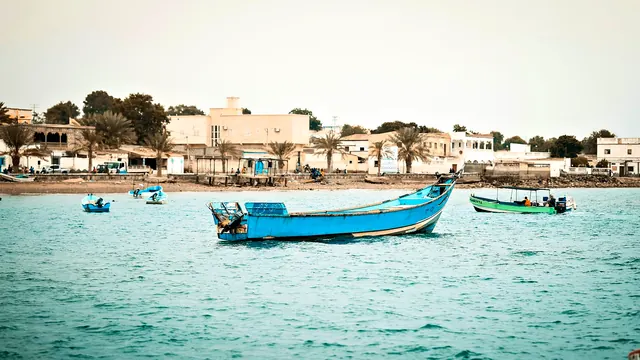
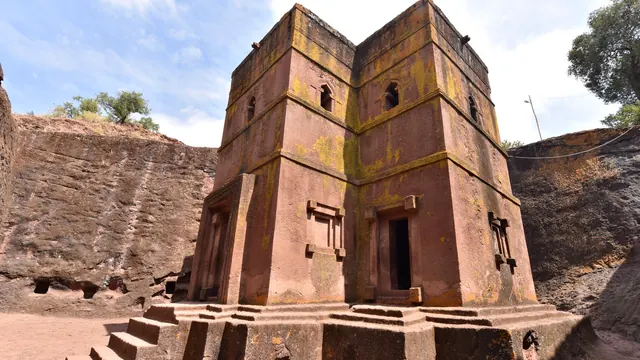
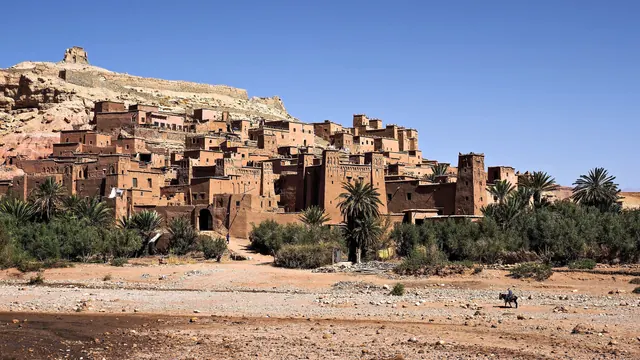
Photos: Djibouti by Mohamed Badri, Pexels License; Egypt by Ludovic Delot, CC BY 4.0, cropped.
Djibouti or Egypt?
Our verdict in twelve categories, each scored against the same fixed benchmark cities, and the climate month by month, so you can choose for your trip.
Choose Djibouti for
Djibouti does not lead in any category we score.
Djibouti suits a traveller who comes for the ground itself: the salt flats and black lava around Lac Assal, the steaming limestone chimneys of Lac Abbé, and snorkelling beside whale sharks in the Gulf of Tadjoura in winter. It is a short, expensive expedition with drivers and camps, best for small groups who already have the great sights of the region behind them and want raw rift landscape with few other visitors.
Choose Egypt for
- culture and sights
- prices
- day trips
Egypt is the stronger choice for almost every other kind of trip. The Nile valley from Giza to Abu Simbel holds heritage few countries can match, the Red Sea resorts give easy reef swimming, and the whole country costs far less to travel. A first-time visitor, a family or anyone on a budget will get more from it, and can pair temples with a week by the sea.
Scoreboard
Twelve categories on one fixed scale from 0 to 100. The shaded stretch is the gap between the two.
Your match
Pick a travel style or drag the sliders, and both match scores follow your weighting.
Has no clear advantage with the weighting you have chosen.
Wins on culture and sights and prices with your weighting.
What matters to you?
Category by category
What the scores mean for a trip.
Beaches & swimming
Egypt is the beach country of the two. The Red Sea coast offers a choice of characters, from the big all-inclusive fronts of Hurghada and Sharm el-Sheikh to quieter sandy bays at Marsa Alam and low-rise Dahab, with reef a few strokes from a jetty.
Djibouti's sea is just as warm and clear, but usable beaches are few. The white sand of the Moucha and Maskali islands makes a good boat day from the capital, and the Sables Blancs near Tadjoura have simple camps, yet swimming fills a day or two rather than a vacation.
Where in Djibouti: Moucha and Maskali islands, Sables Blancs, Tadjoura, Ghoubbet
Where in Egypt: Marsa Alam, Sharm el-Sheikh, Hurghada and El Gouna, Dahab
Food & drink
Egypt eats better and more widely: ful and ta'ameya from Cairo carts, koshari canteens, grilled fish in Alexandria and Nubian cooking in Aswan. It is hearty rather than refined, and resort buffets are dull.
Djibouti's food is essentially Djibouti City, where clay-oven Yemeni fish in the African quarter is the dish to seek out, alongside Somali, Afar and Ethiopian plates and French bakeries near Place Menelik. Beyond the capital you eat what the camp serves.
Where in Djibouti: Djibouti City
Where in Egypt: Cairo, Alexandria, Aswan
Culture & sights
This is the widest gap between the two. Egypt's Nile valley runs from Giza, Saqqara and the Grand Egyptian Museum through Karnak and the Valley of the Kings to Philae and Abu Simbel, with medieval Cairo and Coptic churches on top.
Djibouti has a handful of mornings: the arcaded colonial streets around Place Menelik, the Hamoudi Mosque, old Tadjoura across the gulf and the Abourma engravings at the end of a long drive. There is no museum of note.
Where in Djibouti: Djibouti City, Tadjoura, Abourma
Where in Egypt: Cairo and Giza, Luxor, Aswan and Abu Simbel, Alexandria
Nightlife
Egypt has more evenings to offer. Cairo stays up late in sheesha cafés and along the corniche, with some rooftop bars in Zamalek and Downtown, and Naama Bay and Hurghada have proper clubs and beach parties.
In Djibouti going out means a few expatriate bars and hotel lounges in the European quarter of the capital, with costly drinks. Local social life revolves around afternoon khat, and in the interior the night ends at the campfire.
Where in Djibouti: Djibouti City
Where in Egypt: Cairo, Sharm el-Sheikh, Hurghada, El Gouna
Nature & outdoors
Egypt edges ahead on range: Ras Mohammed, the Blue Hole at Dahab and the Thistlegorm wreck underwater, sunrise on Mount Sinai, and the White Desert and Siwa further west. Each is reachable as part of a wider trip.
Djibouti's strength is concentrated and stranger. Lac Assal below sea level, the chimneys of Lac Abbé, the lava fields of the rift, whale sharks in winter and wild diving at the Seven Brothers make it the main reason to go, though nearly everything needs a 4x4 and a camp.
Where in Djibouti: Lac Abbé, Lac Assal and the Ghoubbet, Gulf of Tadjoura, Goda Mountains
Where in Egypt: Red Sea coast and Ras Mohammed, Sinai mountains, White Desert and Western oases, Aswan and the Nile
Day trips
Egypt's Nile cities are built for outings: Dendera and Abydos or Edfu from Luxor, Kom Ombo and Abu Simbel from Aswan, Dahshur, Memphis, Fayoum or Alexandria by train from Cairo. Red Sea resorts can reach Luxor or St Catherine's Monastery.
From Djibouti City the destinations are mostly landscapes. As towns, Tadjoura, Obock, hilltop Arta and Ali Sabieh each repay an hour or two rather than a full day.
Where in Djibouti: Tadjoura, Obock, Arta, Ali Sabieh
Good for families
Djibouti gives children little to fill a day. There are no parks, zoos or anything else made with them in mind, and the family season shrinks to the winter months. In that window a boat to the white sand of Maskali and a whale shark outing are the highlights, and both suit older children who can cope with long days out.
Egypt works with children for much more of the year. At Hurghada and Makadi Bay the Red Sea stays calm and warm enough to swim even in winter, and water parks and glass-bottom boats over the reef fill the days between swims. The Nile side asks more of parents, with crowds and persistent touts at the sites and a real chance of an upset stomach. Still, the mummies and the pyramids are what children talk about afterwards, and Egyptians tend to make a fuss of them.
Where in Djibouti: Moucha and Maskali islands, Gulf of Tadjoura
Where in Egypt: Hurghada and Makadi Bay, Sharm el-Sheikh, El Gouna, Luxor and Aswan by Nile cruise
Getting around
Egypt's sights line up along the Nile, so trains, an overnight sleeper, domestic flights and cruises link them well, and Cairo has a cheap metro. Local sites still need drivers, and Cairo traffic is heavy.
Djibouti is small but harder: the capital's European quarter is walkable in the cool hours and minibuses cover the city, but beyond it there is no usable public transport. The road to Lac Assal is truck-heavy and the tracks north need a 4x4 and a driver who knows them.
Where in Djibouti: Djibouti City
Where in Egypt: Nile valley by train and cruise, Cairo, Luxor
Shopping & style
Egypt has a real bazaar to explore in Khan el-Khalili, with brass, spices, perfume oils, silver and the tentmakers' street, plus cotton, alabaster and Zamalek design boutiques. The Aswan souk is gentler.
Djibouti's shopping is the market stalls of the capital's African quarter, mostly imported goods through the port, with Afar daggers, woven baskets and incense burners the only crafts worth packing.
Where in Djibouti: Djibouti City
Affordability
Egypt is much the cheaper trip. Local food, taxis and the Cairo metro cost little, Luxor and Aswan guesthouses are modest, and Dahab offers low-cost diving; the main extras are foreigners' entry fees, guides and tips.
Djibouti is costly throughout. Hotels in the capital give little for their price, and the trips that justify the journey, 4x4s to the lakes, camps and island boats, add up fast unless you share them in a small group.
Where in Djibouti: Djibouti City
Live music & performing arts
Egypt has evenings to plan around in Cairo: the Opera House in Zamalek with its orchestra and ballet, tanoura and Sufi music in a historic caravanserai, and Alexandria's Sayed Darwish theatre. Sound-and-light shows at Giza and Karnak add spectacle.
Djibouti has no theatres or regular venues. Somali and Afar music and dance live at weddings and national celebrations, which a visitor would only meet by chance.
Where in Egypt: Cairo, Alexandria
Wellness & relaxation
Egypt has more ways to rest: resort spas and thalasso centres at El Gouna and Soma Bay, floating salt pools and sand baths in Siwa, yoga in Dahab and slow felucca days in Aswan.
Djibouti offers a few hotel spas in the capital. Floating in the dense water of Lac Assal or soaking in the springs near Lac Abbé is memorable, but these are brief stops on hot, dusty drives, and the calmest days are on the gulf islands in winter.
Where in Djibouti: Lac Assal, Lac Abbé
When should you go?
Pick your month, and for a country the place in it. The climate figures are measured averages, not a forecast.
Where in Egypt
Djibouti City (Djibouti) in July
Cairo (Egypt) in July
Daytime high, °C
Rainfall in the month, mm
Where the figures come from
Djibouti City (Djibouti) has no weather station within reach, so its figures come from a gridded climate model rather than a measured record, and read a broad area rather than one spot.
Temperature and rainfall are climate normals, averaged over the years shown. Djibouti City (Djibouti): 2001-2020 normals, NASA POWER reanalysis grid, no weather station within 90 km. Cairo (Egypt): 1991-2020 normals, Helwan (21.9 km from centre).
Djibouti has one good season. From November to March the days in Djibouti City stay near 28°C and the sea is warm, and those same months bring the whale sharks to the Gulf of Tadjoura and make the drives to the desert lakes bearable. From June to September highs climb to around 39°C, which makes walking the streets or lying on a beach hard going. Rain is scarce all year.
Egypt changes more by region. Cairo is mild and sunny in winter and pleasant for walking. Luxor and Aswan are best from October to April, because Luxor reaches 41°C in high summer. At Hurghada you can swim all year: the sea is coolest at about 22°C in February and warms to 29°C in August, so the Red Sea coast still works in summer when the Nile valley is too hot. Along the Nile and on the Red Sea coast it barely rains in any month.
Which traveller are you?
On a family trip with children, Egypt again wins. Hurghada, El Gouna and Sharm el-Sheikh have kids' clubs, lagoons and jetty snorkelling, and a Nile cruise eases the temples. Djibouti's heat, rough 4x4 tracks and thin medical care suit only older, adventurous children.
For snorkellers who want to swim with whale sharks, Djibouti has the draw. They gather in the Gulf of Tadjoura from about November to February, close enough to the capital for a boat outing, and can be combined with the reefs of Moucha island.
More comparisons
Each shares a side with Djibouti or Egypt.
Where else could you go?
Set Djibouti or Egypt against any other country.