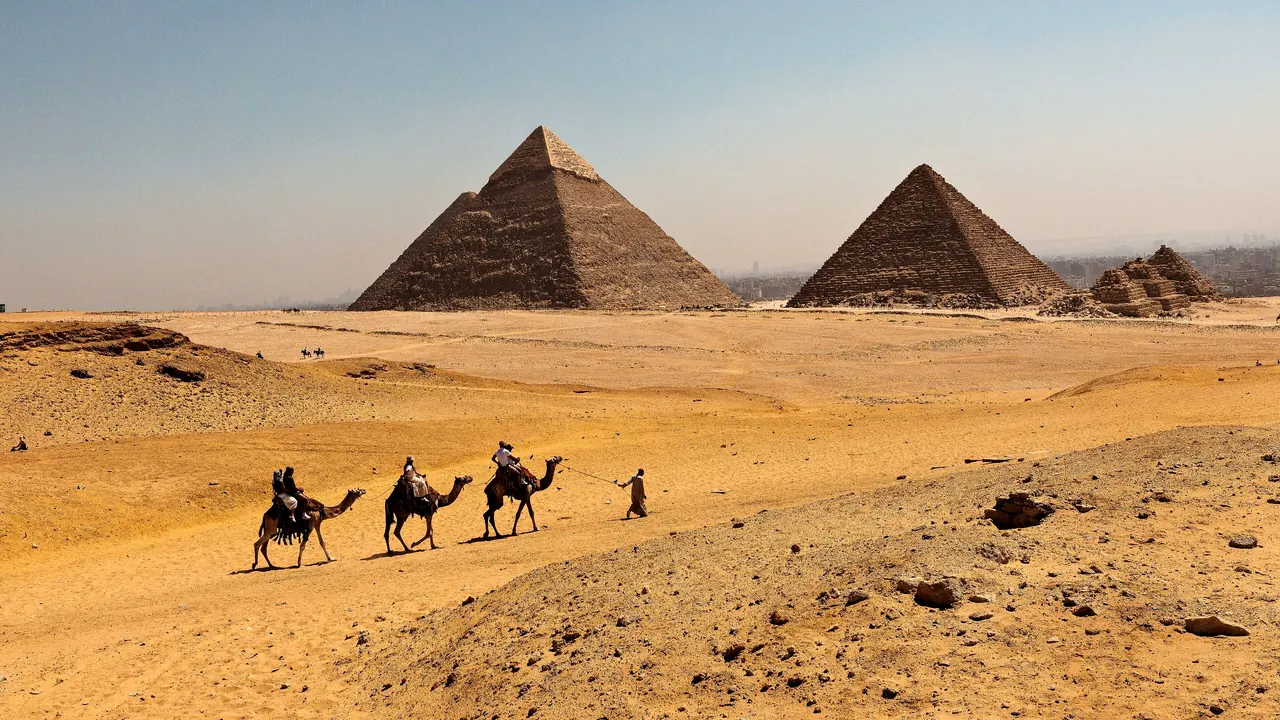
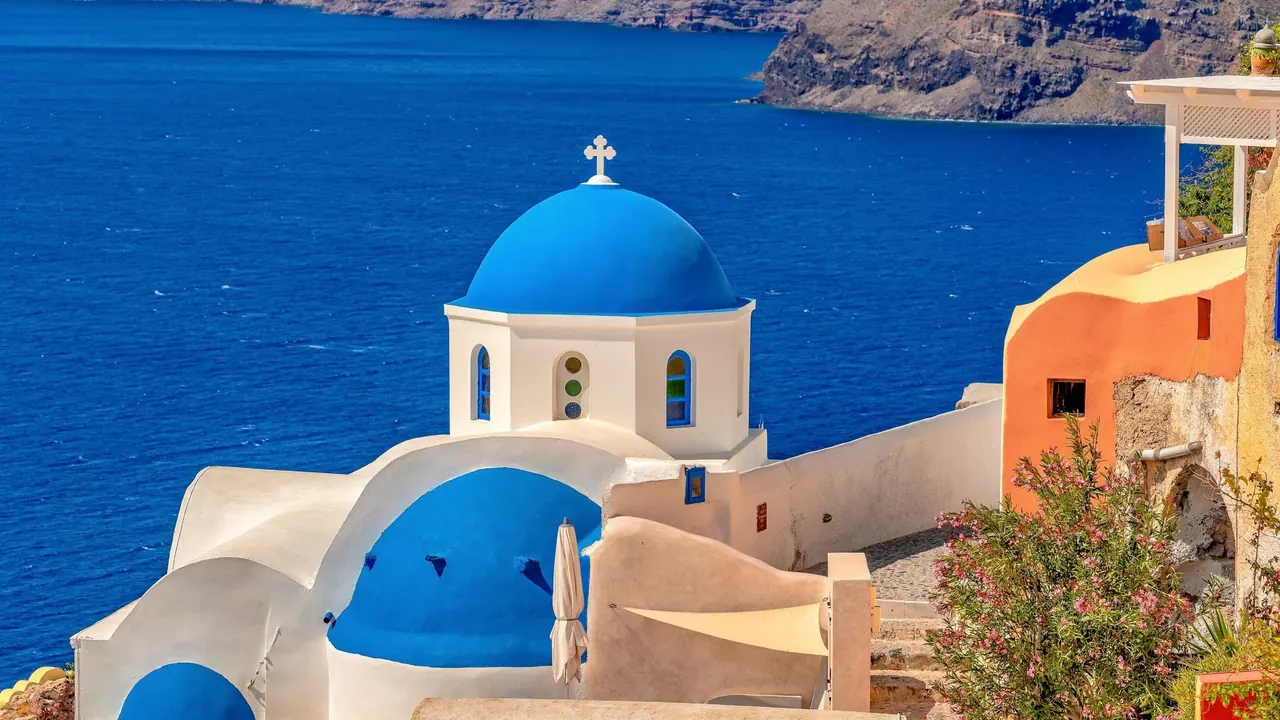
Photos: Egypt by Ludovic Delot, CC BY 4.0, cropped; Greece by Wojciech Wyszkowski, Pexels License.
Egypt or Greece?
Our verdict in twelve categories, each scored against the same fixed benchmark cities, and the climate month by month, so you can choose for your trip.
Choose Egypt for
- prices
- culture and sights
Egypt suits a trip built around antiquity and the Red Sea, and a traveller who wants a modest budget to go a long way. The Nile valley from Giza to Abu Simbel, followed by a week on the reef at Dahab or Marsa Alam, makes a vacation Greece cannot copy. It also works in winter, when the Aegean is cool and quiet. Expect to rely on drivers and tours, and to put up with some hassle, rather than wander on your own.
Choose Greece for
- nightlife
- food and drink
- live music and the arts
Pick Greece if the evenings matter as much as the days. Tavernas, local wine, late bars in Athens and Thessaloniki and summer drama in ancient theatres give it a life after dark that Egypt lacks. Its beaches are more varied too, from the coves of Milos to the sand of Halkidiki. It is easier to travel around independently and easier with children, but it costs more, especially in high summer.
Scoreboard
Twelve categories on one fixed scale from 0 to 100. The shaded stretch is the gap between the two.
Your match
Pick a travel style or drag the sliders, and both match scores follow your weighting.
Wins on prices and culture and sights with your weighting.
Wins on nightlife and food and drink with your weighting.
What matters to you?
Category by category
What the scores mean for a trip.
Beaches & swimming
Both countries have very clear water, but Greece has more range. Egypt's beaches are on the Red Sea and are mostly in front of resorts at Hurghada, Sharm el-Sheikh and El Gouna, where a coral shelf often means you get in from a jetty rather than wading. Marsa Alam's sandy bays and Dahab's low-rise bay are the quieter options. Egypt's real advantage is the season, because the sea stays warm right through winter.
Greece has more kinds of beach to choose from: the volcanic coves of Milos, the turquoise water below the Ionian cliffs, the lagoons at Elafonisi and Balos on Crete, and the calm sandy bays of Halkidiki. Swimming runs from June to October, and many island beaches are pebble rather than sand.
Where in Egypt: Marsa Alam, Sharm el-Sheikh, Hurghada and El Gouna, Dahab
Food & drink
Greece eats far better. Egyptian cooking is hearty street food, at its best in Cairo: ful and ta'ameya from carts and koshari from canteens that serve nothing else. Alexandria adds grilled fish and Aswan has Nubian dishes. Away from the cities, resorts and cruise boats fall back on buffets, and alcohol is hard to find.
In Greece, good food is spread across the country: bougatsa and meze in Thessaloniki, the Varvakios market in Athens, Crete's wild greens and raki, and wines such as Assyrtiko from Santorini. Even an ordinary meal in a village taverna tends to be one worth remembering.
Where in Egypt: Cairo, Alexandria, Aswan
Where in Greece: Thessaloniki, Athens, Crete, Santorini
Culture & sights
These are two of the great heritage countries, and the difference lies in what you see. Egypt's heritage is older and concentrated along the Nile: Giza and Saqqara, the Grand Egyptian Museum, Karnak and the painted tombs of the Valley of the Kings, and Abu Simbel, with medieval Islamic Cairo around Al-Muizz Street on top.
Greece spreads its heritage across the country and over more periods. The Acropolis, Olympia, Delphi, Mycenae and Knossos are followed by Byzantine Thessaloniki, the monasteries of Meteora and the Knights' town on Rhodes, so a heritage tour of Greece combines easily with time on the beach.
Where in Egypt: Cairo and Giza, Luxor, Aswan and Abu Simbel, Alexandria
Where in Greece: Athens, Peloponnese, Crete, Thessaloniki
Nightlife
Greece is far stronger after dark. Bars in Psyrri and Exarchia fill around midnight, Thessaloniki's Ladadika quarter is a student city's night out, Mykonos and Ios party all summer, and bouzoukia clubs are a Greek institution of their own.
Egypt's nights are long but mostly without alcohol: sheesha cafés, the Nile corniche and dinner boats in Cairo, plus a handful of rooftop bars in Zamalek. For dancing, go to Naama Bay or Hurghada. In Luxor and Aswan the evening ends on a hotel terrace.
Where in Egypt: Cairo, Sharm el-Sheikh, Hurghada, El Gouna
Where in Greece: Athens, Thessaloniki, Mykonos, Ios
Nature & outdoors
The two are broadly level, but their best outdoors is in different places. Egypt's is underwater, on the Red Sea reefs of Ras Mohammed, Dahab and Marsa Alam. On land, the granite peaks of Sinai and the White Desert make dramatic trips of their own.
Greece is walking country, with the Vikos Gorge and the Zagori villages, Samaria on Crete and Mount Olympus. On the water, it is for sailing between islands and kayaking off Kefalonia and Milos. In both countries, summer heat rules out most activity inland.
Where in Egypt: Red Sea coast and Ras Mohammed, Sinai mountains, White Desert and Western oases, Aswan and the Nile
Where in Greece: Zagori and the Vikos Gorge, Crete, Mount Olympus, Ionian Islands
Day trips
The two offer a similar amount, in different styles. Egypt's day trips are temple days from the Nile cities: Dendera and Abydos from Luxor, Kom Ombo and Abu Simbel from Aswan, Dahshur or Alexandria from Cairo. Most need a driver or a tour, and some days are long, such as Luxor from Hurghada.
Greece mixes islands, ruins and old towns. From Athens, ferries run to Hydra and Aegina, and Sounion, Delphi and the Argolid around Nafplio are within a day's reach. Vergina is in reach of Thessaloniki and Delos of Mykonos. Ferries make some of these easy, but trips inland still need a car or a tour.
Where in Egypt: Luxor, Aswan, Cairo, Hurghada
Where in Greece: Athens, Nafplio, Thessaloniki, Crete
Good for families
Greece is the easier choice for families. Beaches that shelve gently on Crete's north coast, in Halkidiki, on Rhodes and on Corfu, tavernas that welcome children and short ferry hops make for a simple beach vacation, with water parks and the aquarium near Heraklion for variety.
Egypt's resorts at Hurghada, Makadi Bay and Sharm el-Sheikh also do the beach well, with kids' clubs and snorkelling from jetties. The Nile is the hard part. Heat, touts, Cairo traffic and stomach upsets make it better for older children, ideally on a cruise between Luxor and Aswan.
Where in Egypt: Hurghada and Makadi Bay, Sharm el-Sheikh, El Gouna, Luxor and Aswan by Nile cruise
Getting around
Neither country is effortless, but Greece lets you travel independently. Athens has a clean metro to the airport and Piraeus and a centre you can walk, and ferries link the Cyclades easily. Moving between island groups is slower, and on Crete and in the mountains a hire car helps.
In Egypt most visitors depend on drivers and tours. The sleeper train and domestic flights along the Nile work well, but the sites around Luxor are spread out, Cairo's traffic is very heavy, and adding the Red Sea usually means a flight.
Where in Egypt: Nile valley by train and cruise, Cairo, Luxor
Shopping & style
Neither country is a reason to go shopping, and the difference is in what you take home. Egypt means the bazaar: brass lamps, spices and perfume oils in Khan el-Khalili, Egyptian cotton and alabaster, with bargaining and some pressure from sellers. Aswan's souk is calmer.
Greece is about crafts and food: handmade leather sandals in Plaka, jewellery in Kolonaki, Cretan knives, Sifnos pottery, olive oil, honey and mastic from Chios, with upmarket boutiques on Mykonos and Santorini.
Where in Egypt: Cairo, Aswan, Luxor
Where in Greece: Athens, Thessaloniki, Mykonos, Crete
Affordability
Egypt is far cheaper. Local food, the Cairo metro and taxis, guesthouses on Luxor's west bank and simple camps in Dahab cost very little, and the all-inclusive Red Sea hotels give a lot for the money. What adds up is the higher entry fees foreigners pay, along with drivers, guides, tips and imported alcohol.
Greece is moderately priced at best. Thessaloniki, the Peloponnese and Naxos give fair value, but Mykonos and Santorini charge luxury prices, and July and August push up room rates all along the coast. May, June and September cost noticeably less.
Where in Egypt: Luxor, Aswan, Dahab, Cairo
Where in Greece: Thessaloniki, Peloponnese, Crete, Naxos
Live music & performing arts
Greece has more to see. Each summer the Athens and Epidaurus Festival stages drama and opera in ancient theatres. For the rest of the year Athens has the national opera and the Megaron concert hall, and rebetiko is played in small tavernas in Athens and Thessaloniki.
In Egypt, live performance centres on the Cairo Opera House in the cooler months and tanoura dervish shows in a historic caravanserai. Outside Cairo, it means sound-and-light shows at the monuments and folklore shows on dinner boats.
Where in Egypt: Cairo, Alexandria
Where in Greece: Athens, Epidaurus, Thessaloniki
Wellness & relaxation
Neither country has a living bathing culture, so rest comes from the place rather than from treatments. Egypt's most distinctive options are Siwa's springs and salt pools so dense you float, black sand treatments at Safaga and the yoga and slow pace of Dahab, with resort spas in El Gouna and Soma Bay.
Greece offers thermal water: Edipsos, where hot springs run down into the sea, the spring-fed lake at Vouliagmeni and the pools by the sea at Therma on Ikaria. Each has places to avoid for rest: Cairo in Egypt, and the big Greek islands in August.
Where in Egypt: Siwa, Dahab, Aswan, El Gouna and Soma Bay
Where in Greece: Edipsos (Evia), Lake Vouliagmeni, Pozar baths (Loutra Aridaias), Ikaria
When should you go?
Pick your month, and for a country the place in it. The climate figures are measured averages, not a forecast.
Where in Egypt
Where in Greece
Cairo (Egypt) in July
Athens (Greece) in July
Daytime high, °C
Rainfall in the month, mm
Temperature and rainfall are climate normals, averaged over the years shown. Cairo (Egypt): 1991-2020 normals, Helwan (21.9 km from centre). Athens (Greece): 1991-2020 normals, Athens / Athenai / Pláka (2.2 km from centre).
Egypt is at its best in winter. From November to March the Nile valley is comfortable for temples and walking, with Cairo at around 19°C in January, and the Red Sea at Hurghada never drops below 22°C. That lets you combine sightseeing and the beach while the Aegean is cool. From May to September Upper Egypt is punishing, with Luxor reaching 41°C, and only the coast is bearable. Rain hardly falls anywhere, at any time of year.
Greece works the other way round. The sea is warm enough to swim from June to October and reaches 25°C off Crete in late summer. July and August are hot and almost dry, which suits the islands better than the cities. Late spring and early autumn are the best seasons for Athens, the ancient sites and mountain walks. In the west the wet season starts early. Corfu is already wet in September, and October brings 122mm, so don't plan on a dry autumn in the Ionian. Athens and Crete stay dry for longer, and the rain there comes mainly from November to February.
Which traveller are you?
For a food and nightlife trip, Greece is the clear choice. Thessaloniki's meze bars, late bars in Athens, island wines and the beach clubs of Mykonos make the evenings part of the plan. In Egypt, most nights are spent in sheesha cafés and hotel bars.
For divers and snorkellers, Egypt is the place to go. Ras Mohammed, the Blue Hole at Dahab, the Thistlegorm wreck and the reefs south of Marsa Alam, where turtles and dolphins are seen, are among the best anywhere. Greece's clear water is better for sailing and kayaking.
More comparisons
Each shares a side with Egypt or Greece.
 Albania vs Greece
 Bulgaria vs Greece
 Croatia vs Greece
 Cyprus vs Egypt
- Cyprus vs Greece
 Djibouti vs Egypt
 Egypt vs Jordan
 Egypt vs Tunisia
 Egypt vs Türkiye
 France vs Greece
 Greece vs Italy
 Greece vs Montenegro
 Greece vs North Macedonia
 Greece vs Portugal
- Greece vs Türkiye
 Israel vs Egypt
 Malta vs Greece
 Morocco vs Egypt
 Spain vs Greece
Where else could you go?
Set Egypt or Greece against any other country.