Egypt
Aswan
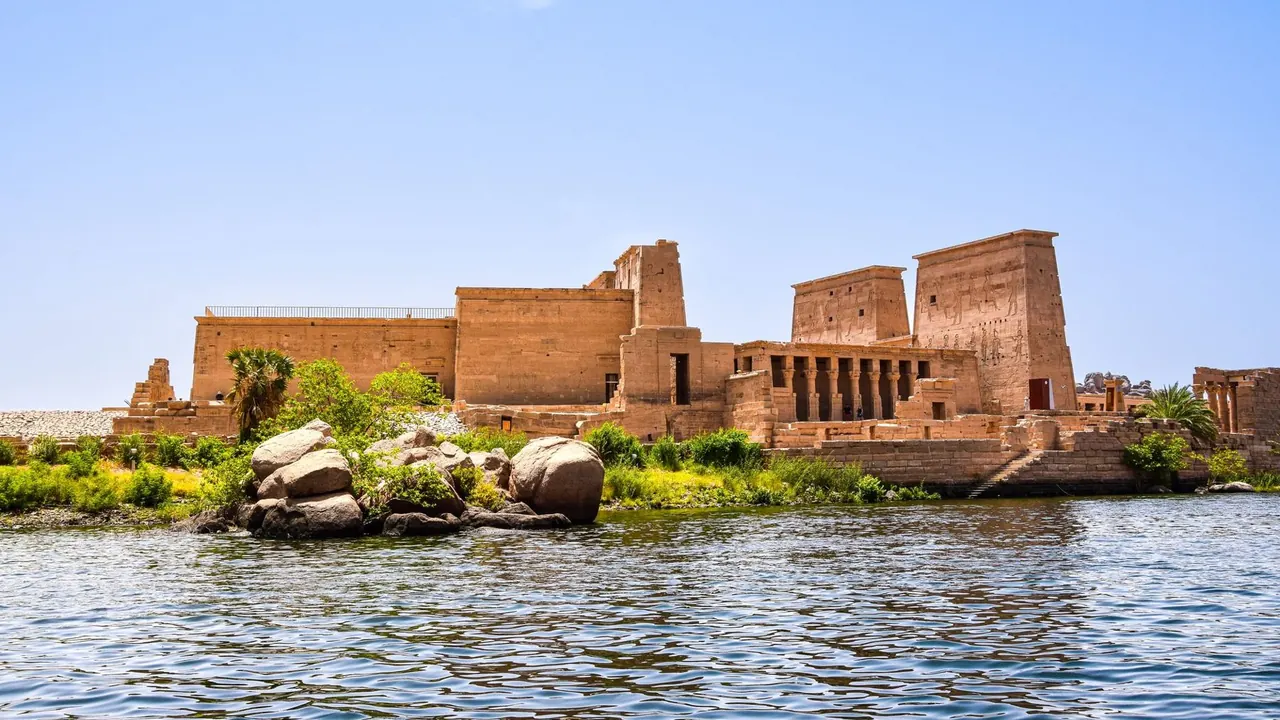
Philae temple on the Nile
- Affordable cities92
- Culture & sights64
- Day trips52
Photo: AXP Photography, Pexels License
Match
38
Every category weighted equally
- Beach & sun37
- Culture & arts41
- Food & nightlife33
- Family trip42
- Outdoors43
- Relax & unwind39
- Shopping & style36
- On a budget44
Aswan in twelve categories
Our verdict on each, scored 0 to 100 against the same fixed benchmark cities, so a score means the same thing on every page.
Beaches & swimming. Scores 10 out of 100.
Food & drink. Scores 30 out of 100.
Culture & sights. Scores 64 out of 100.
Nightlife. Scores 8 out of 100.
Nature & outdoors. Scores 45 out of 100.
Day trips. Scores 52 out of 100.
Good for families. Scores 32 out of 100.
Getting around. Scores 40 out of 100.
Shopping & style. Scores 30 out of 100.
Affordability. Scores 92 out of 100.
Live music & performing arts. Scores 14 out of 100.
Wellness & relaxation. Scores 40 out of 100.
Aswan category by category
Beaches & swimming
10Aswan is a desert river town several hours from the Red Sea, so there are no sea beaches. What it has is the Nile. Boatmen stop at sandbanks below the dunes on the west bank and near the Nubian villages, where some visitors swim in the clear, cool river. It is a pleasant hour, not a beach vacation, and the current and boat traffic call for care. Most visitors cool off in a hotel pool, and many larger hotels on the islands and the Corniche have a good one.
Food & drink
30Eating in Aswan is simple and modest. The best meals are Nubian: slow-cooked stews in clay pots, fresh Nile fish, flatbreads, and hibiscus or tamarind drinks, often served on a terrace over the river or at a family table in a west-bank village. In town, the souk street has ful and taameya stalls, fruit sellers and stacks of dates and spices, and there are plain grill houses serving kofta and pigeon. Beyond that the choice is thin. There is almost no fine dining outside the grand hotels, alcohol is available only in some hotels and a few licensed places, and the same menus come up again and again.
Culture & sights
64The great sight is Philae. The Temple of Isis was moved stone by stone onto Agilkia Island when the dams were built, and you reach it by a short boat ride through granite rocks. In the town itself, Elephantine Island holds the ruins of ancient Yebu, with the Temple of Khnum and a Nilometer, and the Nubian Museum gives a careful account of the culture flooded by Lake Nasser. Across the river, the Tombs of the Nobles are cut into the cliff below the Qubbet el-Hawa.
The Unfinished Obelisk still lies in its granite quarry, and the ruined Coptic Monastery of St Simeon stands alone in the desert. The domed Aga Khan Mausoleum crowns the west bank. The High Dam is a monument of a different kind. It is a solid two or three days of sights, though they are spread out and most need a boat.
Nightlife
8Evenings in Aswan are quiet. People walk the Corniche, sit in riverside cafés with tea and shisha, or wander the souk while it is lit and busy after dark. Alcohol is mostly limited to hotel bars and the odd floating restaurant, and there are no real clubs. A drink on a hotel terrace looking over the Nile at dusk is about as far as most nights go.
Nature & outdoors
45Aswan's landscape is the finest stretch of the Nile. Smooth black granite boulders and islands break the river at the First Cataract, palms line the banks and golden Sahara dunes come right down to the water on the west side. The classic outing is a felucca sail among the islands, and the river is good for birdwatching, with herons, kingfishers and waders in the reeds. Kitchener's Island holds a shady botanical garden, and a short climb or camel ride takes you up into the desert above the west bank.
There is little true hiking, and from late spring to early autumn days are routinely above 40°C, which pushes everything into the early morning. The time to come is winter, when days sit around 23°C.
Day trips
52Aswan has essentially one great day out, and it runs north along the Nile. Kom Ombo, a double temple to Sobek and Horus on a bend in the river, is under an hour away, with a small museum of mummified crocodiles. Edfu, the most complete temple in Egypt, is about an hour and a half further on, and the two are usually combined in one long day. On the way you can stop at the camel market in Daraw, or at the ancient sandstone quarries and rock shrines of Gebel el-Silsila. Closer to town, the rebuilt Temple of Kalabsha stands on a promontory in Lake Nasser, reached by a short boat ride from near the High Dam.
After that the list ends. Abu Simbel is the outing everyone wants, but it means more than three hours each way across the desert, starting before dawn, or a short flight, so it is a big expedition rather than an easy day. Luxor is too far to do comfortably in a day, and it is better treated as a stay of its own.
Good for families
32Nothing in Aswan is made for children, but some of it works for them anyway. Felucca rides, the motorboat to Philae, a camel up the dunes and a painted Nubian village where families keep baby crocodiles can make a good few days for school-age children. The town is calmer and less crowded than Cairo. The hard parts are the heat, which makes summer unsuitable for young children, the persistent sellers and boatmen, broken pavements, and sights that are mostly ruins. A hotel with a pool and a winter visit make a real difference.
Getting around
40The town itself is small. Its centre runs along the Corniche with the souk street parallel to it, so it is easy to walk in the cooler hours. Cheap public ferries cross to Elephantine Island and the west bank. Almost everything else means hiring something: a motorboat or felucca for the islands and tombs, or a taxi for Philae, the quarries and the High Dam. Fares have to be agreed in advance, which can be tiring. Ride-hailing and hotel drivers make this easier, and nobody needs to hire their own car.
Shopping & style
30Aswan's shopping is its long souk street just behind the Corniche. Locals buy there too, so alongside the papyrus and plaster pharaohs there are sacks of hibiscus, dried dates, henna, peanuts and spices. Nubian crafts are the best buys: woven baskets and plates, beaded jewellery, and the colourful pottery and textiles sold in the west-bank villages. Expect to bargain everywhere. There is no fashion or modern retail worth the time.
Affordability
92Aswan is very cheap for a visitor. Local meals, juice stalls, the public ferry and simple Nubian guesthouses cost little, and even comfortable Nile-view hotels are modest by international standards. The costs that add up are entry fees to the major sites, chartered boats and drivers for the islands and Philae, and the long trip to Abu Simbel. The grand historic hotels on the river are a splurge you can choose to make, not the norm.
Live music & performing arts
14Aswan's live culture is Nubian music: drums, the tambour lyre and call-and-response singing. A visitor mostly hears it at village evenings, wedding processions, or folklore troupes performing in hotels. The Philae temple has an evening sound-and-light show. There is no theatre, opera or regular concert programme to speak of.
Wellness & relaxation
40Aswan has been a winter retreat since the nineteenth century, when Europeans came for the dry, warm air, and the pace still suits slowing down. Long afternoons on a felucca, tea on a terrace while the light turns the dunes gold, and nights in a quiet Nubian guesthouse on the west bank are the real restorative side. The villages also offer a traditional cure of being buried in hot desert sand, meant for aches and rheumatism. Beyond that there are only the spas in the larger hotels, with no public baths or hammam culture. Persistent touts on the Corniche can spoil the calm.
When should you go?
Pick a month to see what it is like. The climate figures are measured averages, not a forecast.
Aswan in July
Daytime high, °C
Rainfall in the month, mm
The whole year
Shaded against this city’s own year: the deepest cell is its best month for that figure and the palest its weakest.
Temperature and rainfall are climate normals, averaged over the years shown. Aswan: 1991-2020 normals, Asswan (18 km from centre).
Before you go
| Measure | Aswan |
|---|---|
| Official language | Arabic |
| Currency | Egyptian Pound (EGP) |
| Sockets | CF220 V, 50 Hz |
| Driving side | Right |
| Time zone | UTC+2, UTC+3 in summer |
| Emergency number | Police 122, ambulance 123, fire 180 |
| Elevation | 99 m |
| Main airport | Aswan International Airport (ASW)16 km from centre2 non-stop destinations |
| Public holidays this year | 15 days |
By the numbers
| Measure | Aswan |
|---|---|
| City population | 401,890 |
| People per km² | 1,072 |
| Museums within 10 km | 3 |
| UNESCO World Heritage sites within 50 km | 1 |
Compare Aswan with
Every comparison with a written verdict behind it.