Egypt
Luxor
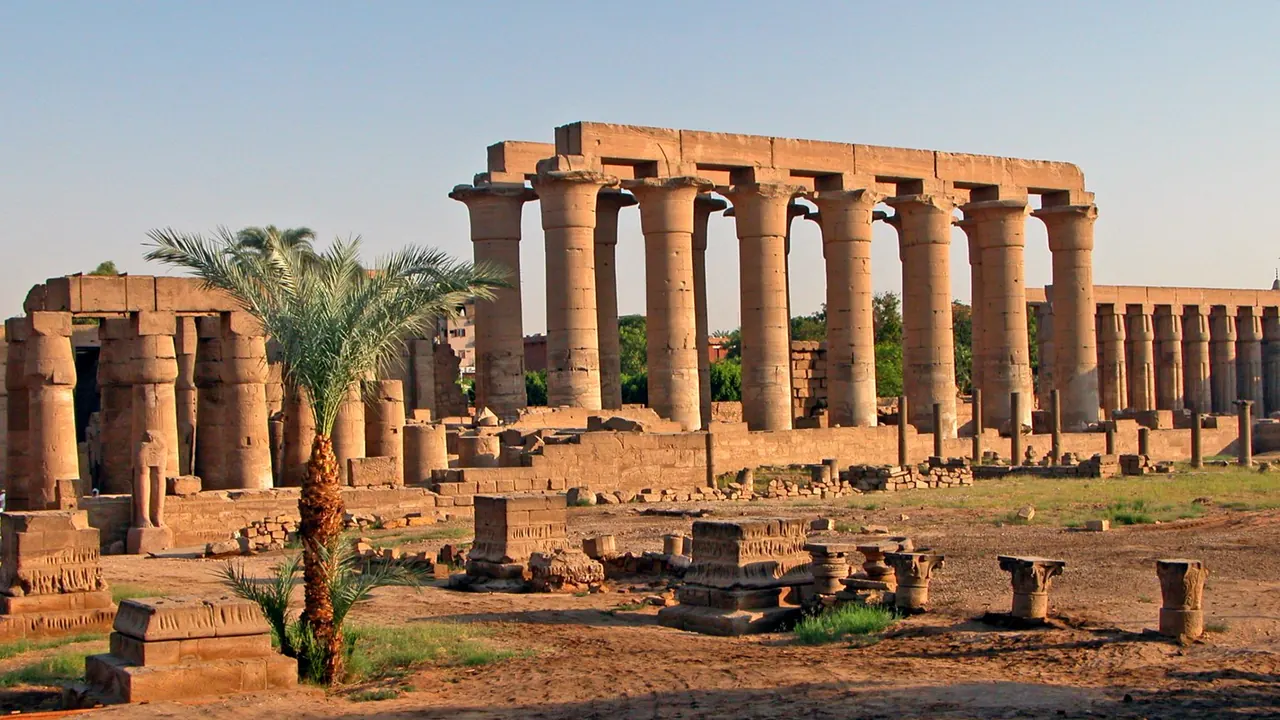
The colonnaded court of Luxor Temple
- Culture & sights95
- Affordable cities90
- Day trips62
Photo: Dennis G. Jarvis, CC BY-SA 2.0, cropped
Match
38
Every category weighted equally
- Beach & sun35
- Culture & arts44
- Food & nightlife34
- Family trip41
- Outdoors42
- Relax & unwind36
- Shopping & style36
- On a budget44
Luxor in twelve categories
Our verdict on each, scored 0 to 100 against the same fixed benchmark cities, so a score means the same thing on every page.
Beaches & swimming. Scores 6 out of 100.
Food & drink. Scores 30 out of 100.
Culture & sights. Scores 95 out of 100.
Nightlife. Scores 10 out of 100.
Nature & outdoors. Scores 32 out of 100.
Day trips. Scores 62 out of 100.
Good for families. Scores 30 out of 100.
Getting around. Scores 35 out of 100.
Shopping & style. Scores 25 out of 100.
Affordability. Scores 90 out of 100.
Live music & performing arts. Scores 10 out of 100.
Wellness & relaxation. Scores 28 out of 100.
Luxor category by category
Beaches & swimming
6Luxor is a desert river city with no beach to speak of. Swimming is not advised in the Nile, so bathing means the hotel pool, and most riverside hotels have a good one, welcome in the heat. The nearest sea is the Red Sea coast around Hurghada, about four hours by road, which is a separate trip rather than an outing. If you want sand and warm water, add a few days on that coast to a Luxor stay.
Food & drink
30Eating in Luxor is simple and honest rather than a reason to come. The best meals are Egyptian staples: ful and taameya at breakfast, koshari from busy counters, grilled pigeon or kofta, molokhia, and flatbread straight from the oven. Sugar cane juice stalls and sweet tea in street cafés fill the gaps, and the fruit and vegetable stalls around the souk show what the valley grows.
Visitor dining leans on hotel buffets and rooftop restaurants with temple views, where the setting is better than the food. On the West Bank, family-run guesthouses serve home cooking that is often the most satisfying meal of a stay. Alcohol is available in hotels and a few licensed places, but there is no wine or drinking culture to speak of.
Culture & sights
95Luxor stands on ancient Thebes, and few places on earth hold this much monumental heritage in one spot. On the East Bank, Karnak is a vast complex of temples, obelisks and the forest of columns in the Great Hypostyle Hall, linked by the Avenue of Sphinxes to Luxor Temple in the middle of town, at its finest lit up after dark. The Luxor Museum is small but excellent, and the Mummification Museum sits on the corniche.
Across the river, the West Bank holds the Valley of the Kings with its painted royal tombs, the Valley of the Queens, the terraced temple of Hatshepsut at Deir el-Bahari, Medinet Habu, the Ramesseum, the Colossi of Memnon and the Tombs of the Nobles. Seeing it properly takes several days, ideally started early before the heat. What is missing is later history: the town itself is plain and modern.
Nightlife
10Evenings in Luxor are quiet. A drink means a hotel bar, a rooftop terrace or one of a handful of licensed places aimed at visitors, and most people are in bed early ahead of a dawn start at the tombs or a balloon flight. The local evening happens in street cafés with tea and shisha, and along the corniche where families stroll once the heat breaks. There is no club scene and no reason to come for a night out.
Nature & outdoors
32The landscape is a single striking contrast: a green ribbon of sugar cane and palms along the Nile, then bare desert cliffs rising behind the West Bank. The best outdoor time is on the water, sailing a felucca at sunset or drifting out to the banana plantations on the river islands, where egrets, kingfishers and herons feed along the banks.
On land, cycling through West Bank villages and fields is easy and pleasant in the cool months, and a path climbs over the Theban hills from the Valley of the Kings to Deir el-Bahari with wide views of the valley. Hot-air balloons lift off at dawn over the same scene. From May to September the heat is fierce and outdoor plans shrink to early mornings.
Day trips
62Day trips from Luxor are temple runs along the Nile, and some are outstanding. Dendera, about an hour north, has the Temple of Hathor with its painted ceilings and rooftop chapels, among the best preserved in Egypt. Esna, about an hour south, has a temple whose coloured reliefs are remarkably vivid, and Edfu, under two hours away, is the most complete Ptolemaic temple in the country.
Abydos, with the Temple of Seti I and its fine reliefs, is a long day out often paired with Dendera, and Aswan and Kom Ombo are better reached by Nile cruise or as an overnight stop. What the list lacks is variety: there are no historic towns, wine regions or islands to explore, only more ancient monuments.
Good for families
30Luxor can thrill older children who are already fascinated by mummies and pharaohs: crawling into painted tombs, the Mummification Museum, a felucca on the river and a dawn balloon flight make memorable days. Younger children will find it harder. There is nothing made for them, the sites involve long walks across hot, shadeless ground, and touts and calèche drivers are persistent.
A hotel with a good pool and shade is essential, and the cooler months from November to February make it far easier. Plan short morning visits and a rest through the afternoon heat. Egyptians are warm towards children, which helps.
Getting around
35The East Bank is manageable: Luxor Temple, the museum and the corniche are walkable, and Karnak is a short taxi or horse-drawn calèche ride north. Walking is tiring, though, with heat, rough pavements and drivers offering rides every few steps. The public ferry across the Nile is simple and cheap, and motorboats cross whenever you want.
The West Bank is another matter. The tombs and temples are spread over several kilometres of desert edge, and most visitors hire a taxi or a driver for the day; cycling works in the cool season. Microbuses run, but they are hard for a visitor to use. Agreeing fares before getting in is part of every journey.
Shopping & style
25Shopping in Luxor means the tourist souk off the town centre, alabaster workshops on the West Bank, and stalls outside every major site. You can find spices, cotton scarves, galabiyas, papyrus and carved stone vessels, but much of it is mass-produced souvenir stock and the selling is persistent. The alabaster workshops are worth a look to see the carving done by hand. There are no fashion streets, design shops or department stores, and few visitors come to shop.
Affordability
90Luxor is a very cheap place to stay and eat. Simple guesthouses and comfortable mid-range hotels cost little, local food is a fraction of Western prices, and the river ferry and microbuses cost almost nothing. Even the grand riverside hotels are good value by international standards.
The real expense is the sights. Entry fees for foreigners are charged at every temple and tomb, some special tombs carry a large supplement, and over several days these add up to the biggest part of a budget. Drivers, guides and balloon flights are the other costs, and visitors are often quoted inflated prices, so agree everything first.
Live music & performing arts
10There is little to attend in Luxor. The sound-and-light show at Karnak, walking through the floodlit temple, is the one regular evening performance, and hotels and Nile cruise boats stage belly dance and tanoura whirling shows for guests. There is no theatre, concert hall or live-music venue, and the town's cultural life lies in its monuments, not on a stage.
Wellness & relaxation
28Luxor has no bathing tradition of its own, and spa treatment means the larger riverside hotels, some of which have a hammam and massage rooms. The restorative side of a stay comes from the rhythm instead: early starts, a long rest through the afternoon heat by a pool, and sunset on the water. The West Bank, with its mud-brick guesthouses among the fields, is the calmest place to stay. The East Bank, with its traffic and touts, is not relaxing.
When should you go?
Pick a month to see what it is like. The climate figures are measured averages, not a forecast.
Luxor in July
Daytime high, °C
Rainfall in the month, mm
The whole year
Shaded against this city’s own year: the deepest cell is its best month for that figure and the palest its weakest.
Where the figures come from
Luxor has no rain gauge within 25 km of the centre, so its rainfall comes from a gridded climate dataset read at the city rather than from a gauge further away.
Temperature and rainfall are climate normals, averaged over the years shown. Luxor: 1998-2020 (rainfall 1991-2020) normals, Luxor (6.5 km from centre).
Before you go
| Measure | Luxor |
|---|---|
| Official language | Arabic |
| Currency | Egyptian Pound (EGP) |
| Sockets | CF220 V, 50 Hz |
| Driving side | Right |
| Time zone | UTC+2, UTC+3 in summer |
| Emergency number | Police 122, ambulance 123, fire 180 |
| Elevation | 89 m |
| Main airport | Luxor International Airport (LXR)7 km from centre29 non-stop destinations |
| Public holidays this year | 15 days |
By the numbers
| Measure | Luxor |
|---|---|
| City population | 202,232 |
| People per km² | 486 |
| Museums within 10 km | 4 |
| UNESCO World Heritage sites within 50 km | 1 |
Compare Luxor with
Every comparison with a written verdict behind it.