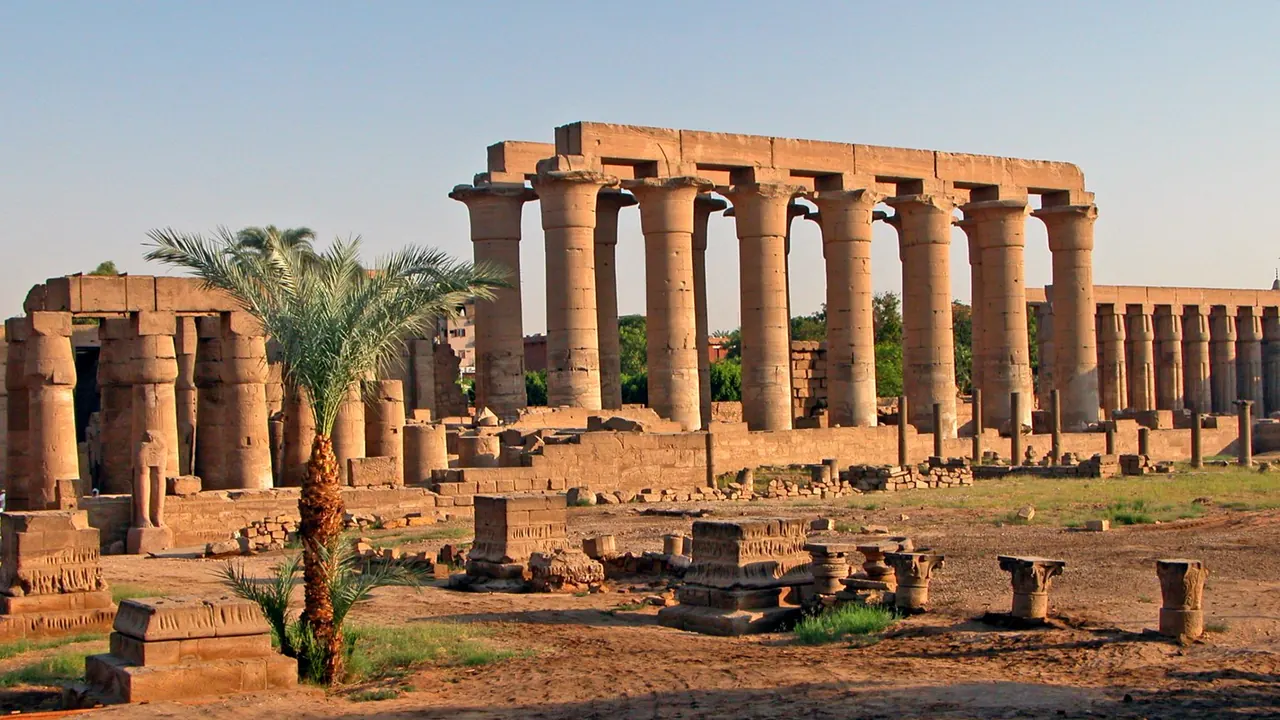
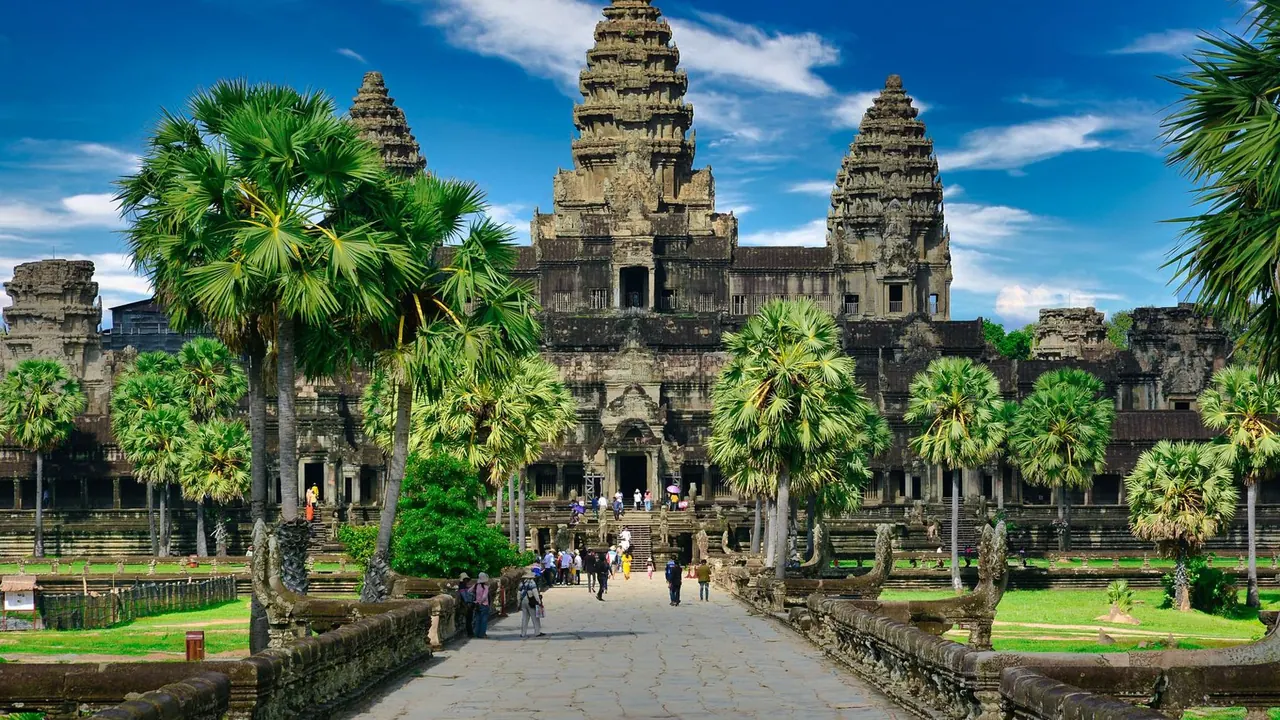
Photos: Luxor by Dennis G. Jarvis, CC BY-SA 2.0, cropped; Siem Reap by allPhoto Bangkok, Pexels License.
Luxor or Siem Reap?
Our verdict in twelve categories, each scored against the same fixed benchmark cities, and the climate month by month, so you can choose for your trip.
Choose Luxor for
- culture and sights
- day trips
- getting around
Luxor is the pick for travellers who want ancient Egypt in depth and are happy for the monuments to fill the whole trip. Karnak, Luxor Temple and the painted tombs of the West Bank sit within a short ride of each other, and the temples of Dendera, Esna and Edfu lie along the river for further days. Evenings are early and quiet, the food is plain, and that suits people who come for the tombs at dawn and a felucca at sunset.
Choose Siem Reap for
- nightlife
- wellness
- live music and the arts
Siem Reap gives a rounder stay. Angkor is every bit as overwhelming as a sight, but the town around it adds Khmer cooking, a lively bar street, apsara dance and circus, and massage and spa treatments on every corner. It suits travellers who want temple mornings balanced by long, easy afternoons and evenings with somewhere to go.
Scoreboard
Twelve categories on one fixed scale from 0 to 100. The shaded stretch is the gap between the two.
Your match
Pick a travel style or drag the sliders, and both match scores follow your weighting.
Wins on culture and sights and day trips with your weighting.
Wins on nightlife and wellness with your weighting.
What matters to you?
Category by category
What the scores mean for a trip.
Beaches & swimming
Neither city has a beach. In both, swimming means the hotel pool as a break from the midday heat. The sea is easier to add from Luxor, since the Red Sea coast is about four hours away and has good warm water. Siem Reap's Tonle Sap is a muddy lake for boating, and the Cambodian coast is most of a day's drive.
Food & drink
Siem Reap is the better place to eat. Khmer cooking has real depth, with fish amok, lemongrass soups, green-curry rice noodles from morning stalls and lake fish in the markets. A small group of restaurants also reworks Khmer ingredients with care. The trick is to leave the backpacker menus around Pub Street behind.
Luxor feeds you well enough on ful, taameya, koshari and grilled pigeon, but the visitor restaurants trade on temple views more than cooking. Its best meals tend to be home cooking in West Bank guesthouses.
Culture & sights
Both are among the great ancient sites of the world, and Luxor comes out slightly ahead because its heritage is so concentrated. Karnak and Luxor Temple stand in town, and across the river lie the Valley of the Kings, the Valley of the Queens, Deir el-Bahari, Medinet Habu and the Tombs of the Nobles, with painted interiors Angkor cannot match.
Angkor's appeal lies in scale and setting. Angkor Wat, the faces of the Bayon and the tree-split galleries of Ta Prohm are spread through forest. Siem Reap also has a little more town life, with its colonial quarter and working pagodas, where modern Luxor is plain.
Nightlife
Siem Reap has a real night out and Luxor barely has one. Pub Street and its lanes fill every evening with cheap beer, music and a sociable backpacker crowd, and quieter cocktail bars sit along the river.
In Luxor, a drink means a hotel bar or a rooftop terrace. Local evenings are tea and shisha in street cafés and a stroll on the corniche. Neither city has clubs, and in both, dawn starts keep many nights short.
Nature & outdoors
Siem Reap offers a little more outdoors. Boats cross the Tonle Sap to the flooded forest and the bird colonies of Prek Toal, Phnom Kulen has a waterfall and forest walks, and flat paddy lanes make for easy cycling.
Luxor has a single dramatic view of green Nile banks against bare desert cliffs, best seen from a felucca, from a dawn balloon or on the path over the Theban hills. Its summer heat cuts outdoor time far more sharply.
Day trips
Luxor has the stronger day trips, though all of them are more temples. Dendera's painted ceilings, Esna's vivid reliefs and Edfu, the most complete Ptolemaic temple in Egypt, are each within about two hours, and Abydos makes a longer day.
Siem Reap's outings are outlying temples too, such as Banteay Srei's carving and the overgrown Beng Mealea, but it adds something Luxor lacks: boat trips to the stilt and floating villages on the Tonle Sap.
Good for families
The two are about equal for families, and both suit older children better than toddlers. Siem Reap has more scope for adventure, with children clambering through root-tangled ruins, riding tuk-tuks and taking boats to stilt villages. Luxor appeals to children already fascinated by mummies, with painted tombs and the Mummification Museum.
Luxor's persistent touts and shadeless sites wear children down. Siem Reap's steep temple steps and chaotic traffic do the same.
Getting around
In both cities you will be driven more than you walk. In Luxor the river shapes every day: the public ferry or a motorboat to the West Bank, then a taxi or driver for the tombs, with every fare agreed in advance.
Siem Reap is simpler in one way, with tuk-tuks on every corner and bookable by app. The flat Angkor circuits also make cycling or an e-bike a real option. Broken pavements in both towns make walking in the heat hard work.
Shopping & style
Neither town is a place to come for shopping, and in both the best buy is something you have watched being made. Luxor has one craft like this: the alabaster carvers on the West Bank, who shape stone vessels by hand. Beyond them, the souk and the stalls at every temple gate sell factory-made papyrus, scarves and galabiyas, and the sellers do not give up easily.
Siem Reap has stone carvers too, but they are only one craft among several. Weavers work silk on the loom, and other craftspeople carve wood and finish lacquer, many of them in workshops set up to teach local people a trade. The work is far finer than the Old Market stock, and a handful of boutiques sell Cambodian-made clothes and things for the home, so you can come away with more than souvenirs. Expect to bargain at the stalls in both towns.
Affordability
Both are very cheap for rooms, local food and transport, and in both the big cost is entry to the sights. They differ in how that cost arrives. In Luxor, separate fees at every temple and tomb, plus supplements for special tombs, add up over several days. In Siem Reap, the single Angkor pass covers the park, and it hits a short stay hardest. Haggling over drivers matters more in Luxor, while in Siem Reap a daily massage is easily affordable.
Live music & performing arts
Siem Reap gives you a few evenings worth booking. Apsara dance brings the figures from the temple walls to life, and the Cambodian circus under a big top, run by a school for young performers, is widely admired.
Luxor's one real offering is the sound-and-light walk through floodlit Karnak, plus belly dance and tanoura shows put on for hotel guests. Neither has a theatre or concert hall.
Wellness & relaxation
Siem Reap is far easier to unwind in. Khmer massage rooms line the central streets, many garden hotels have spas using herbal compresses, and yoga classes and small retreats are easy to find.
In Luxor, spa treatment is mostly limited to a hammam in one of the larger riverside hotels. Rest there comes from a pool through the afternoon heat and a mud-brick guesthouse among West Bank fields, away from the touts of the East Bank.
When should you go?
Pick your month. The climate figures are measured averages, not a forecast.
Luxor in July
Siem Reap in July
Daytime high, °C
Rainfall in the month, mm
Where the figures come from
Luxor has no rain gauge within 25 km of the centre, so its rainfall comes from a gridded climate dataset read at the city rather than from a gauge further away.
Siem Reap has no weather station within reach, so its figures come from a gridded climate model rather than a measured record, and read a broad area rather than the city itself.
Temperature and rainfall are climate normals, averaged over the years shown. Luxor: 1998-2020 (rainfall 1991-2020) normals, Luxor (6.5 km from centre). Siem Reap: 2001-2020 normals, NASA POWER reanalysis grid, no weather station within 90 km.
Luxor gets no rain at all, so its year turns entirely on heat. November to February is the time to go. Highs of about 22°C to 29°C make long walks across the West Bank comfortable. March and October are already hot. From May to September highs reach 41°C, and sightseeing shrinks to the first hours after dawn.
Siem Reap is hot all year, and its seasons follow the rain. November to January is the most comfortable stretch: dry, with highs in the low thirties. By February the heat has already reached its peak of about 36°C, and it stays there through March and April. The rains build from May and are heaviest in September, at about 231mm. This is also when the Tonle Sap is full and the stilt villages are at their best. Winter suits both cities, but in high summer Siem Reap is wet and green while Luxor is dry and scorching.
Which traveller are you?
For a relaxing and wellness trip, Siem Reap is the clear choice. Khmer massage is cheap and everywhere, garden hotels have proper spas and yoga is easy to find. Luxor offers a pool and a quiet West Bank guesthouse, but little more.
On a food and nightlife trip, Siem Reap again wins. Fish amok, morning noodle stalls and inventive Khmer kitchens beat Luxor's simple staples, and Pub Street stays busy late. In Luxor, evenings end over tea or in a hotel bar.
On a culture and arts trip, Luxor edges ahead for monuments: Karnak, the Valley of the Kings and Hatshepsut's temple form a denser ancient landscape than any other. Anyone who also wants live performance will find more in Siem Reap's apsara dance and circus.
Before you go
| Measure | Luxor | Siem Reap |
|---|---|---|
| Official language | Arabic | Khmer |
| Currency | Egyptian Pound (EGP) | Riel (KHR) |
| Sockets | CF220 V, 50 Hz | ACG230 V, 50 Hz |
| Driving side | Right | Right |
| Time zone | UTC+2, UTC+3 in summer | UTC+7 |
| Emergency number | Police 122, ambulance 123, fire 180 | Police 117, ambulance 119, fire 118 |
| Elevation | 89 m | 18 m |
| Main airport | Luxor International Airport (LXR)7 km from centre29 non-stop destinations | Siem Reap-Angkor International Airport (SAI)39 km from centre14 non-stop destinations |
| Public holidays this year | 15 days | 21 days |
By the numbers
| Measure | Luxor | Siem Reap |
|---|---|---|
| City population | 202,232 | 147,866 |
| People per km² | 486 | - |
| Museums within 10 km | 4 | 6 |
| UNESCO World Heritage sites within 50 km | 1 | 1 |
Where else could you go?
Every comparison below shares a destination with this one, so you can follow Luxor or Siem Reap somewhere new.