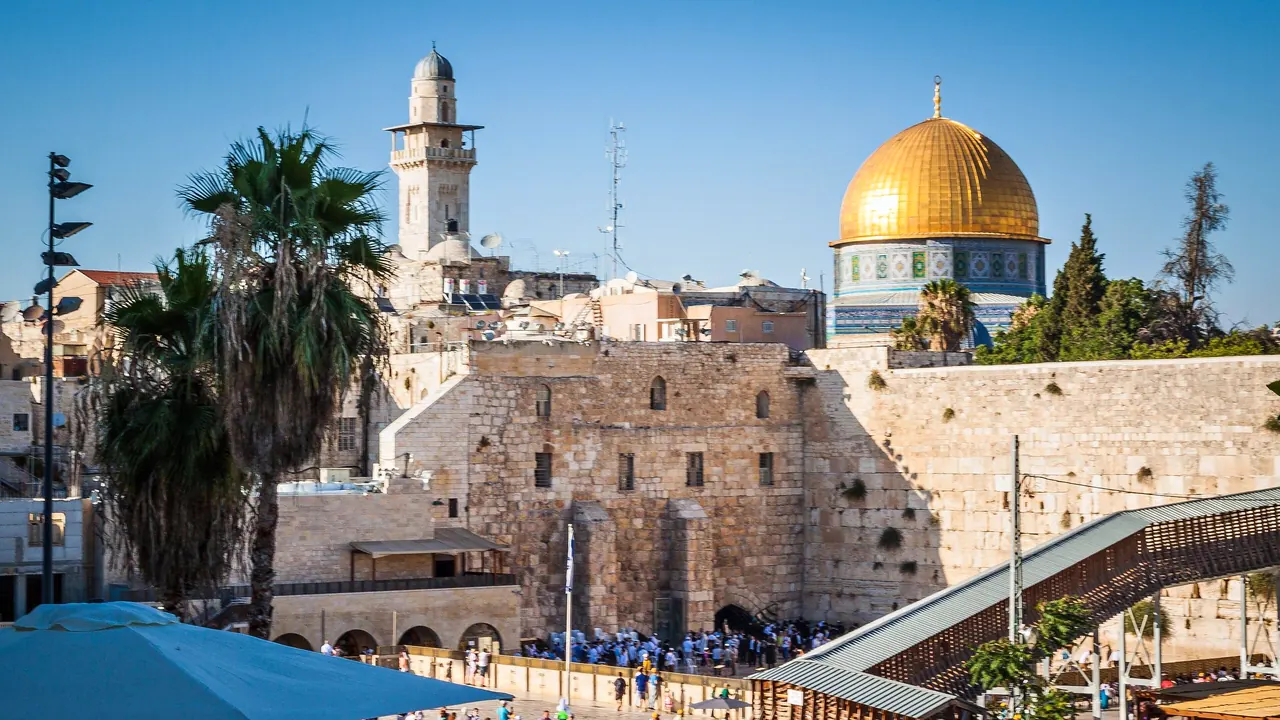
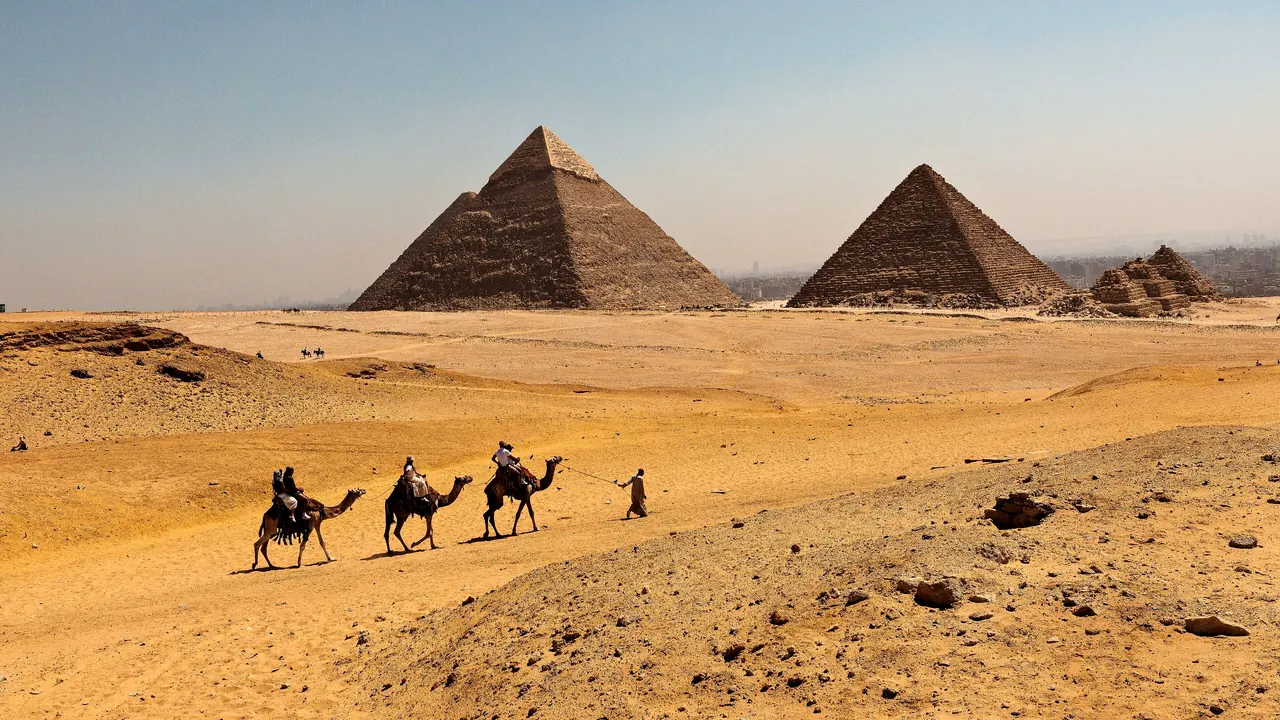
Photos: Israel by Edmund Gall, CC BY-SA 2.0, cropped; Egypt by Ludovic Delot, CC BY 4.0, cropped.
Israel or Egypt?
Our verdict in twelve categories, each scored against the same fixed benchmark cities, and the climate month by month, so you can choose for your trip.
Choose Israel for
- nightlife
- live music and the arts
- wellness
Israel suits travellers who want eating, late nights and history in the same short trip. Tel Aviv gives you small-plate restaurants, beach bars and a proper concert programme, and Jerusalem's Old City is a short train ride away. The Dead Sea hotels at Ein Bokek are there for a few slow days. Distances are small and the trains link the main cities, so a week covers a lot, as long as the budget allows and you plan around the Saturday shutdown.
Choose Egypt for
- prices
- culture and sights
- beaches
Egypt is the better choice if antiquity and the reef are why you travel. Giza, Luxor's temples and tombs and Abu Simbel are on another scale from anything else on this page, and the Red Sea coast from Sharm el-Sheikh to Marsa Alam turns diving and snorkelling into the centre of the trip. It costs a fraction as much. In return you rely on drivers and tours, usually fly between the Nile and the coast, and find most evenings end early and without a drink.
Scoreboard
Twelve categories on one fixed scale from 0 to 100. The shaded stretch is the gap between the two.
Your match
Pick a travel style or drag the sliders, and both match scores follow your weighting.
Wins on nightlife and live music and the arts with your weighting.
Wins on prices and culture and sights with your weighting.
What matters to you?
Category by category
What the scores mean for a trip.
Beaches & swimming
Egypt is the better beach choice, because there the Red Sea is the whole trip. Sharm el-Sheikh, Dahab, Hurghada, El Gouna and Marsa Alam all face clear, calm water, and the reef is often a few strokes from a jetty. Marsa Alam's quiet sandy bays and the big all-inclusive resorts of Hurghada give you a real choice of style.
Israel's beaches are city beaches. Tel Aviv's long strip of lifeguarded sand is for a swim before dinner more than a week by the pool, and Herzliya and Haifa add quieter stretches. Its own Red Sea shore at Eilat is short and mostly pebble.
Where in Israel: Tel Aviv, Eilat, Herzliya, Haifa
Where in Egypt: Marsa Alam, Sharm el-Sheikh, Hurghada and El Gouna, Dahab
Food & drink
Israel eats far better. Jewish cooking from North Africa, Iraq, Yemen and Eastern Europe sits next to Palestinian Arab and Druze kitchens. Tel Aviv's chef-led small plates and Jerusalem's Mahane Yehuda market are destinations in themselves, and the wineries of the Galilee and Judean Hills give you a reason to drive out.
Egypt's strengths are cheap and filling: ful and ta'ameya for breakfast, koshari canteens in Cairo, and grilled fish in Alexandria. Outside the cities, Nile cruises and Red Sea resorts mostly serve international buffets.
Where in Israel: Tel Aviv, Jerusalem, Akko, Galilee
Where in Egypt: Cairo, Alexandria, Aswan
Culture & sights
Both countries are exceptional, but Egypt goes further. The pyramids of Giza and Saqqara, Karnak and the painted tombs of the Valley of the Kings, and Abu Simbel near the Sudan border run the length of the Nile. Seeing them properly takes a long trip, and the Grand Egyptian Museum with Tutankhamun's treasures adds a full day in Cairo.
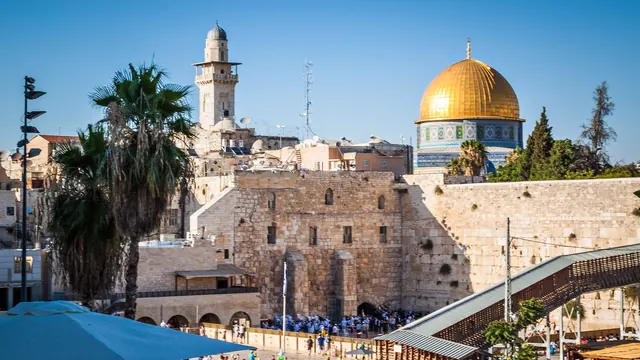
Israel packs its heritage tightly. The Western Wall, the Holy Sepulchre and the Dome of the Rock lie within the walls of Jerusalem's Old City, and the Israel Museum and Yad Vashem are across town. Akko's Crusader halls and Haifa's Baha'i gardens are a short trip away.
Where in Israel: Jerusalem, Tel Aviv, Akko, Haifa
Where in Egypt: Cairo and Giza, Luxor, Aswan and Abu Simbel, Alexandria
Nightlife
Israel is far ahead, and almost entirely because of Tel Aviv. Bars line the streets around Rothschild Boulevard, Florentin has rougher dance bars, and clubs in the port area run until morning, especially from Thursday to Saturday.
In Egypt a late night usually means sheesha cafés and the Nile corniche in Cairo, with alcohol mostly limited to hotels. The dancing happens at the Red Sea resorts, around Naama Bay in Sharm el-Sheikh and on Hurghada's hotel strip. In Luxor and Aswan evenings end on a hotel terrace.
Where in Israel: Tel Aviv, Jerusalem, Eilat
Where in Egypt: Cairo, Sharm el-Sheikh, Hurghada, El Gouna
Nature & outdoors
Egypt has a slight edge, because its reefs reach further. Ras Mohammed, the Blue Hole at Dahab, the wreck of the Thistlegorm and the offshore reefs south of Marsa Alam are serious diving. On land you can climb Mount Sinai at night, or spend several days camping among the chalk shapes of the White Desert.
Israel's appeal is how much changes in a short drive. Makhtesh Ramon's crater in the Negev, the springs of Ein Gedi above the Dead Sea, the green Galilee and the cranes of the Hula Valley can all fit into one trip. Eilat gives easy reef snorkelling straight from the shore.
Where in Israel: Negev, Dead Sea and Ein Gedi, Galilee, Eilat
Where in Egypt: Red Sea coast and Ras Mohammed, Sinai mountains, White Desert and Western oases, Aswan and the Nile
Day trips
Israel is the easier country for day trips, because it is small enough that Tel Aviv or Jerusalem can serve as a base for almost everything. Masada with a float at Ein Bokek, Caesarea's harbour on the sea, and Akko and Haifa together all make comfortable days out.
Egypt's day trips are bigger but longer. Dendera and Abydos from Luxor, Abu Simbel from Aswan with a very early start, and Luxor from Hurghada at about four hours each way all mean a long day with a driver or a tour.
Where in Israel: Jerusalem, Masada, Caesarea, Nazareth
Good for families
Israel is a little easier with children. Families are part of daily life on Tel Aviv's lifeguarded beaches and in its cafés, and the Ramat Gan Safari and Jerusalem's Biblical Zoo give children a day of their own. Much of the rest is holy sites aimed at adults.
Egypt offers two quite different family trips. The resorts of Hurghada, Makadi Bay and Sharm el-Sheikh have kids' clubs, water parks and shallow reef snorkelling. The pyramids and mummies impress older children, but Cairo's traffic, the touts and the heat take real stamina.
Where in Israel: Tel Aviv, Eilat, Jerusalem
Where in Egypt: Hurghada and Makadi Bay, Sharm el-Sheikh, El Gouna, Luxor and Aswan by Nile cruise
Getting around
Israel is much simpler to get around. A fast train joins Jerusalem and Tel Aviv, the coastal line runs up to Haifa and Akko, and Tel Aviv's seafront is flat enough to walk or cycle. The catch is that most trains and buses stop from Friday afternoon to Saturday evening.
In Egypt, the trains and sleeper along the Nile and the domestic flights handle the long distances. Everything else, from the pyramids to the west bank tombs at Luxor, usually means a driver through heavy traffic. Combining the Nile with the Red Sea almost always means a flight.
Where in Israel: Tel Aviv, Jerusalem, Haifa
Where in Egypt: Nile valley by train and cruise, Cairo, Luxor
Shopping & style
There is little to choose between them, as both are about markets rather than labels. Israel leans towards local makers: the crafts fair on Nahalat Binyamin, young designers among Jaffa's flea-market antiques, and Armenian painted pottery in Jerusalem. Dead Sea cosmetics are the usual thing to take home.
Egypt is the more traditional bazaar. Khan el-Khalili has brass lamps, spices and inlaid boxes, and cotton linen, alabaster and carpets are the classic buys. You need patience, though, because bargaining and pushy sellers come with it.
Affordability
Money goes much further in Egypt, and on no other count are the two so far apart. In Israel, a Tel Aviv hotel and a sit-down dinner take a large bite out of any budget, and Eilat and the Dead Sea resorts are little kinder. Falafel and sabich stalls keep lunch cheap, and a base in Haifa, a Galilee guesthouse or one of Jerusalem's Christian hospices softens the bill without ever making it low.
In Egypt the daily costs hardly register: a koshari lunch, a metro ride across Cairo, a Nubian guesthouse in Aswan or a simple camp on Dahab's bay. Even the all-inclusive resorts and Nile cruises give a lot for the money. What adds up is the foreigners' entry fees at Giza, the Grand Egyptian Museum and the Valley of the Kings, along with drivers, guides and tips.
Where in Israel: Galilee, Haifa, Jerusalem
Live music & performing arts
Israel has far more to offer an evening audience. In Tel Aviv you can hear the Israel Philharmonic, see the Israeli Opera's full season, or watch Batsheva Dance Company at the Suzanne Dellal Centre in Neve Tzedek. There is also live music from jazz to Mizrahi pop, though Habima's theatre is in Hebrew.
Egypt's high point is the Cairo Opera House in Zamalek, alongside tanoura whirling dervish shows in a historic caravanserai. Beyond Cairo, performance mostly means sound-and-light shows at Giza and Karnak, and folklore shows on dinner boats.
Where in Israel: Tel Aviv, Jerusalem, Eilat
Where in Egypt: Cairo, Alexandria
Wellness & relaxation
Israel is the stronger choice for rest, thanks to the Dead Sea. The hotels at Ein Bokek and Neve Zohar are built around mud wraps, spa pools and floating in water too salty to sink in. Hamat Gader's hot springs and the baths of Tiberias add a quieter northern option.
In Egypt relaxation usually means a resort spa in El Gouna or Soma Bay, yoga and slow days in Dahab, or the feluccas and Nubian guesthouses of Aswan. Siwa's floating salt pools are the closest match to the Dead Sea, but they are a long trip into the Western Desert.
Where in Israel: Ein Bokek, Neve Zohar, Hamat Gader, Tiberias
When should you go?
Pick your month, and for a country the place in it. The climate figures are measured averages, not a forecast.
Where in Israel
Where in Egypt
Tel Aviv (Israel) in July
Cairo (Egypt) in July
Daytime high, °C
Rainfall in the month, mm
Temperature and rainfall are climate normals, averaged over the years shown. Tel Aviv (Israel): 1991-2020 (sunshine 1961-1990) normals, Bet Dagan (9.5 km from centre). Cairo (Egypt): 1991-2020 normals, Helwan (21.9 km from centre).
Israel's best months are spring and autumn. In Tel Aviv the sea is warm enough for proper swimming from June to October, and almost all the rain falls between November and March, with about 140mm in January. Jerusalem sits higher and is cool in winter, around 12°C by day in January, so its streets are most comfortable in April, May, October and early November. In midsummer it is hot but dry. Eilat is the winter escape: dry all year and warm enough to swim in any month, though its summer days are fierce.
Egypt has almost no rain, so the season depends on heat. The Nile valley is at its best from October to April. Luxor reaches about 41°C from June to August, which makes tombs and temples hard going, and Cairo is not much kinder. Hurghada's sea stays at 22°C or more through the winter and warms further in summer, so the Red Sea coast works all year, with spring and autumn the most comfortable months on land. If you want Nile sightseeing and the beach in one winter trip, Egypt does it better. Israel's Mediterranean coast is better from late spring to autumn.
Which traveller are you?
For a food and nightlife trip, choose Israel. Tel Aviv has small-plate restaurants, the Carmel Market and bars and clubs that run until morning from Thursday to Saturday. In Egypt the eating is mostly street food, and drinking mostly happens in hotels.
More comparisons
Each shares a side with Israel or Egypt.
Where else could you go?
Set Israel or Egypt against any other country.