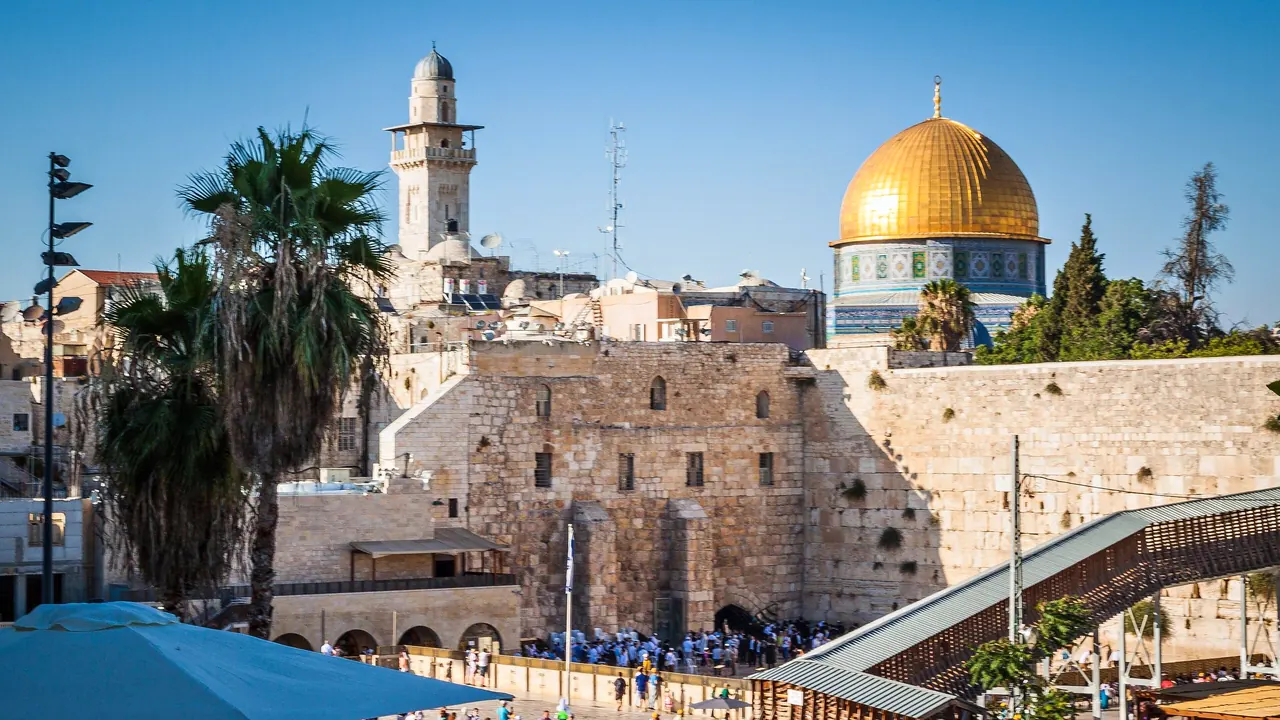
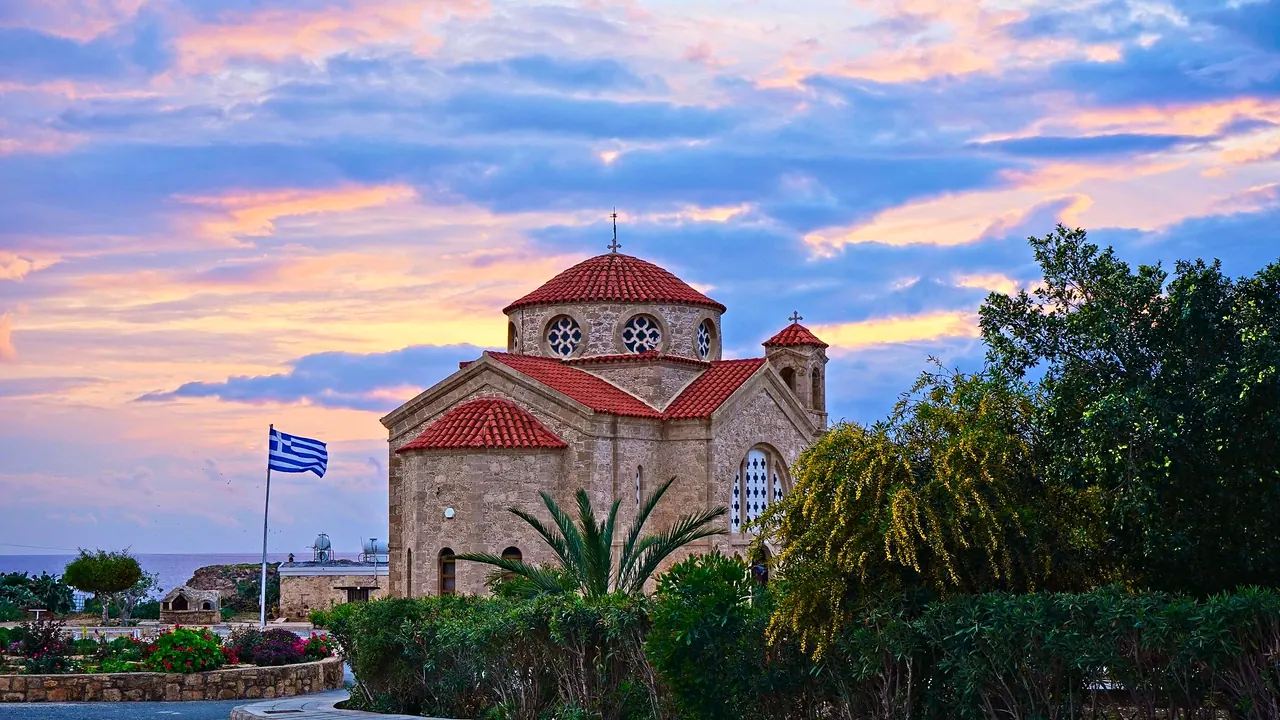
Photos: Israel by Edmund Gall, CC BY-SA 2.0, cropped; Cyprus by chris clark, Pexels License.
Israel or Cyprus?
Our verdict in twelve categories, each scored against the same fixed benchmark cities, and the climate month by month, so you can choose for your trip.
Choose Israel for
- live music and the arts
- wellness
- culture and sights
Israel suits travellers who want a trip full of things to see and do. Jerusalem's Old City and museums, the food of Tel Aviv's markets and small-plate restaurants, serious concerts and dance, and a Dead Sea spa stay are all within a short train or car ride of each other. Expect intense cities, a weekly pause from Friday evening, and a bill well above most of southern Europe.
Choose Cyprus for
- prices
- families
- beaches
Cyprus is for a slower vacation built around the sea. Its sandy bays in the southeast are better for swimming and easier with children, the resorts are made for family weeks, and meals and rooms cost noticeably less. Sightseeing here means Paphos mosaics, painted mountain churches and wine villages rather than one great historic city, and you will want a car.
Scoreboard
Twelve categories on one fixed scale from 0 to 100. The shaded stretch is the gap between the two.
Your match
Pick a travel style or drag the sliders, and both match scores follow your weighting.
Wins on live music and the arts and wellness with your weighting.
Wins on prices and families with your weighting.
What matters to you?
Category by category
What the scores mean for a trip.
Beaches & swimming
Cyprus has the better beaches for a swimming vacation. The pale sand and shallow turquoise water of Nissi Beach and Fig Tree Bay, the rocky inlets of Cape Greco and the wide bay at Coral Bay give it a choice of resort coves. On the Akamas coast there are wilder strands such as Lara.
Israel's beach life is a different thing. It is urban, centred on the unbroken strip of lifeguarded sand along Tel Aviv's seafront, where people swim before work or at sunset, with quieter stretches at Herzliya and below Mount Carmel at Haifa. Eilat's short, pebbly Red Sea shore is the place for winter swimming, and the Dead Sea is for floating rather than for a beach day.
Where in Israel: Tel Aviv, Eilat, Herzliya, Haifa
Where in Cyprus: Ayia Napa and Protaras, Cape Greco, Paphos and Coral Bay, Akamas Peninsula
Food & drink
Israel is the stronger food destination by some way. Jewish cooking from North Africa, Iraq, Yemen and Eastern Europe sits alongside Palestinian Arab and Druze kitchens, so you can graze through the Carmel Market and Mahane Yehuda, eat chef-led small plates in Tel Aviv, and find seafood in Akko and Galilee wineries further north. Kosher rules and the Friday-evening closures in Jerusalem take a little planning.
Cyprus offers a narrower but very likeable table. A long meze in an inland village taverna is the meal to look for, from grilled halloumi to kleftiko, with fish meze at Latchi or Larnaca and sweet Commandaria from the hill villages above Limassol. Resort seafronts lean towards international menus, and fine dining and street food are thin on the ground.
Where in Israel: Tel Aviv, Jerusalem, Akko, Galilee
Where in Cyprus: Limassol and its wine villages, Nicosia, Troodos Mountains, Larnaca
Culture & sights
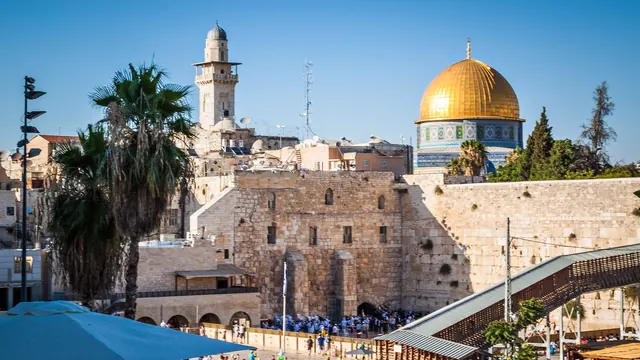
The difference here is concentration. Jerusalem puts the Western Wall, the Church of the Holy Sepulchre and the Dome of the Rock within one walled Old City, then adds the Dead Sea Scrolls and Yad Vashem. Beyond it lie Tel Aviv's Bauhaus White City, Crusader Akko and Haifa's Baha'i gardens, which make Israel one of the heaviest-weight sightseeing trips around.
Cyprus spreads a long history thinly over the island. The floor mosaics at Kato Paphos, Kourion's theatre above the sea and the painted churches of the Troodos are the high points, with divided Nicosia and Bellapais Abbey across the line. It is a rewarding tour, but no single site carries the weight of Jerusalem.
Where in Israel: Jerusalem, Tel Aviv, Akko, Haifa
Where in Cyprus: Paphos, Troodos Mountains, Nicosia, Kourion
Nightlife
The two are close, but the nights look different. Israel's going-out life is one city that stays up very late, Tel Aviv, with bars around Rothschild Boulevard, Florentin's dance bars and port-area clubs running until morning from Thursday to Saturday, all year round.
In Cyprus the split is by season and age. Ayia Napa is a summer party resort for young groups that largely closes in winter, while Limassol's marina and old-town cocktail bars and Nicosia's courtyard bars suit a more grown-up evening.
Nature & outdoors
Israel packs more variety into a short drive. You can go from the Negev and the huge crater of Makhtesh Ramon to the springs of Ein Gedi above the Dead Sea, and on to Eilat's coral reefs, where you snorkel straight from the shore. In the north there are the green Galilee hills and the crane migration in the Hula Valley.
Cyprus has two main landscapes: the pine and cedar of the Troodos around Mount Olympos, cool when the coast is baking, and the rugged Akamas peninsula with the Avakas Gorge. Divers come for the Zenobia wreck off Larnaca. In both countries, summer heat keeps walking to spring and autumn.
Where in Israel: Negev, Dead Sea and Ein Gedi, Galilee, Eilat
Where in Cyprus: Troodos Mountains, Akamas Peninsula, Cape Greco, Larnaca coast for diving
Day trips
Israel has the more impressive day trips, and they are easier to reach. From Jerusalem, Masada and a float at Ein Bokek fill a classic day, and from Tel Aviv you can reach Roman Caesarea, Akko with Haifa, or Nazareth and Beit She'an further north. The two main cities are only a short train ride apart.
Cyprus offers gentler outings: Troodos villages such as Omodos and Kakopetria, lace-making Lefkara, and a day in Nicosia that can carry on across the crossing to Kyrenia's harbour. Most of these need a car or a tour.
Where in Israel: Jerusalem, Masada, Caesarea, Nazareth
Where in Cyprus: Troodos villages, Nicosia, Kyrenia and Bellapais, Lefkara
Good for families
Cyprus is the easier choice with children. The sandy bays around Protaras and Ayia Napa shelve gently into calm water, and resort hotels come with pools and kids' clubs. Water parks, an aquarium and English spoken widely make a beach week run smoothly.
Israel is warmly child-friendly, with lifeguarded Tel Aviv beaches, the drive-through Ramat Gan Safari, Jerusalem's Biblical Zoo and Eilat's underwater observatory. Much of the rest is holy sites and archaeology that hold little for young children, and Dead Sea salt stings small eyes.
Getting around
Israel is the easier country to cover without a car. A fast train links Jerusalem and Tel Aviv, the coastal line runs north through Haifa to Akko, and Jerusalem has a light rail. The catch is that most public transport stops from Friday afternoon to Saturday evening, and the Negev and Dead Sea are simpler by hire car.
Cyprus has no railway at all. Buses link the main towns and resorts, which is enough for a stay in one place, but the Troodos, the Akamas and the quieter beaches need a car, driven on the left on winding mountain roads.
Shopping & style
Israel gives a shopper more to explore. Jerusalem's Old City is one long covered souk of spices, olive wood and Judaica, with Armenian painted pottery nearby. In Tel Aviv, the Carmel Market, the Nahalat Binyamin crafts fair and Jaffa's flea market sit close together, with Dead Sea cosmetics as the classic thing to take home.
Shopping in Cyprus is a side pleasure: chain stores on Nicosia's Ledra Street and in Limassol, Lefkara lace and silverwork, and halloumi and Commandaria to pack in your case.
Affordability
Cyprus is the much gentler country on the wallet. Meze and wine are fairly priced, apartments in Paphos and Larnaca are good value outside July and August, and only Limassol and the beachfront resorts charge steeply. The main extra cost is the hire car most visitors need.
Israel is expensive throughout, with Tel Aviv's rooms and meals among the dearest anywhere in the region. Cheap falafel and sabich help, as do free beaches and religious sites. Haifa, Galilee village stays and Jerusalem's hospices soften the bill, but none of them makes it a budget trip.
Where in Israel: Galilee, Haifa, Jerusalem
Live music & performing arts
Israel has a real year-round arts scene, mostly in Tel Aviv: the Israel Philharmonic, a full Israeli Opera season and Batsheva Dance Company at the Suzanne Dellal Centre in Neve Tzedek, plus plenty of rock, Mizrahi pop and jazz. Eilat's Red Sea Jazz Festival adds a reason to go south, although Hebrew-language theatre is out of reach for most visitors.
Cyprus offers a few memorable summer evenings rather than a scene. These include Greek drama in the ancient theatre at Kourion, the outdoor opera festival in Paphos harbour square and music at village festivals.
Wellness & relaxation
Israel has a bathing tradition that people travel for. The hotels of Ein Bokek and Neve Zohar on the Dead Sea offer black mud wraps, mineral pools and the odd weightless float, with the hot springs of Hamat Gader and the thermal baths of Tiberias in the north.
Cyprus relaxes you in a different way. It has plenty of large resort spas around Limassol and Paphos, a few Ottoman hammams in old Nicosia, and the quiet stone guesthouses of the Troodos villages, but no tradition of its own to plan a trip around.
Where in Israel: Ein Bokek, Neve Zohar, Hamat Gader, Tiberias
Where in Cyprus: Troodos Mountains, Limassol, Paphos, Nicosia
When should you go?
Pick your month, and for a country the place in it. The climate figures are measured averages, not a forecast.
Where in Israel
Tel Aviv (Israel) in July
Paphos (Cyprus) in July
Daytime high, °C
Rainfall in the month, mm
Where the figures come from
Paphos (Cyprus) has no rain gauge within 25 km of the centre, so its rainfall comes from a gridded climate dataset read at the destination rather than from a gauge further away.
Temperature and rainfall are climate normals, averaged over the years shown. Tel Aviv (Israel): 1991-2020 (sunshine 1961-1990) normals, Bet Dagan (9.5 km from centre). Paphos (Cyprus): 1991-2020 normals, Paphos Airport (8.4 km from centre).
Israel's seasons change from one end of the country to the other. On the Tel Aviv coast the sea is warm from June to October and reaches 28°C in late summer, with almost no rain from May to September and long sunny days, though high summer is sticky for walking the streets. Jerusalem sits higher and is cooler, around 12°C by day in January, and both cities get most of their rain from November to March. Eilat barely sees rain at all. Its sea stays near 22°C even in winter, which makes it the winter swimming choice, but summer highs of 40°C are too hot for anything except the water. April, May and October are the best months for touring the whole country.
Cyprus follows a simpler pattern. Around Paphos the sea is warm enough to swim from June into November, summer days are hot and dry, and the rain falls mainly from November to February, close to 97mm in both December and January. Winter there is mild but not beach weather, so for swimming in January Eilat has the advantage. Spring and autumn are the kinder seasons in both countries for walking and sightseeing.
Which traveller are you?
On a relaxing and wellness trip, Israel has the stronger draw: a few slow days at the Dead Sea hotels of Ein Bokek, with mud, mineral pools and floating, or the hot springs at Hamat Gader. Cyprus offers resort spas and quiet Troodos villages instead.
More comparisons
Each shares a side with Israel or Cyprus.
Where else could you go?
Set Israel or Cyprus against any other country.