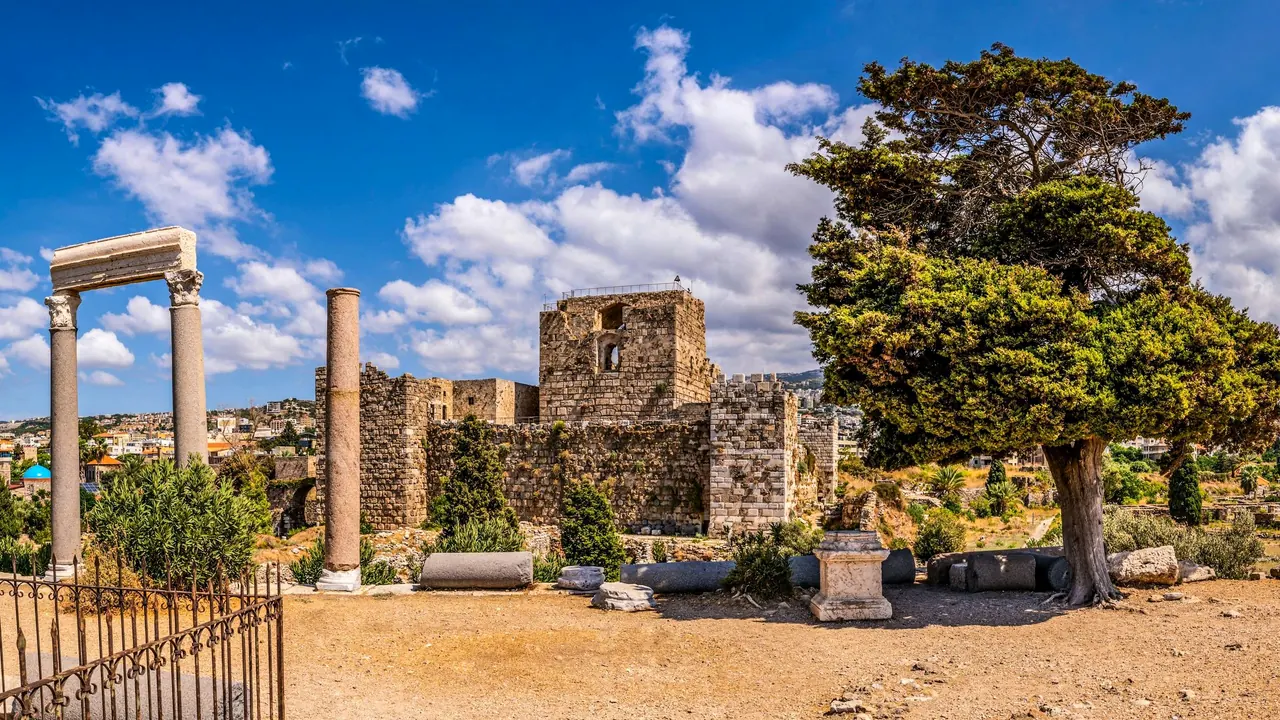
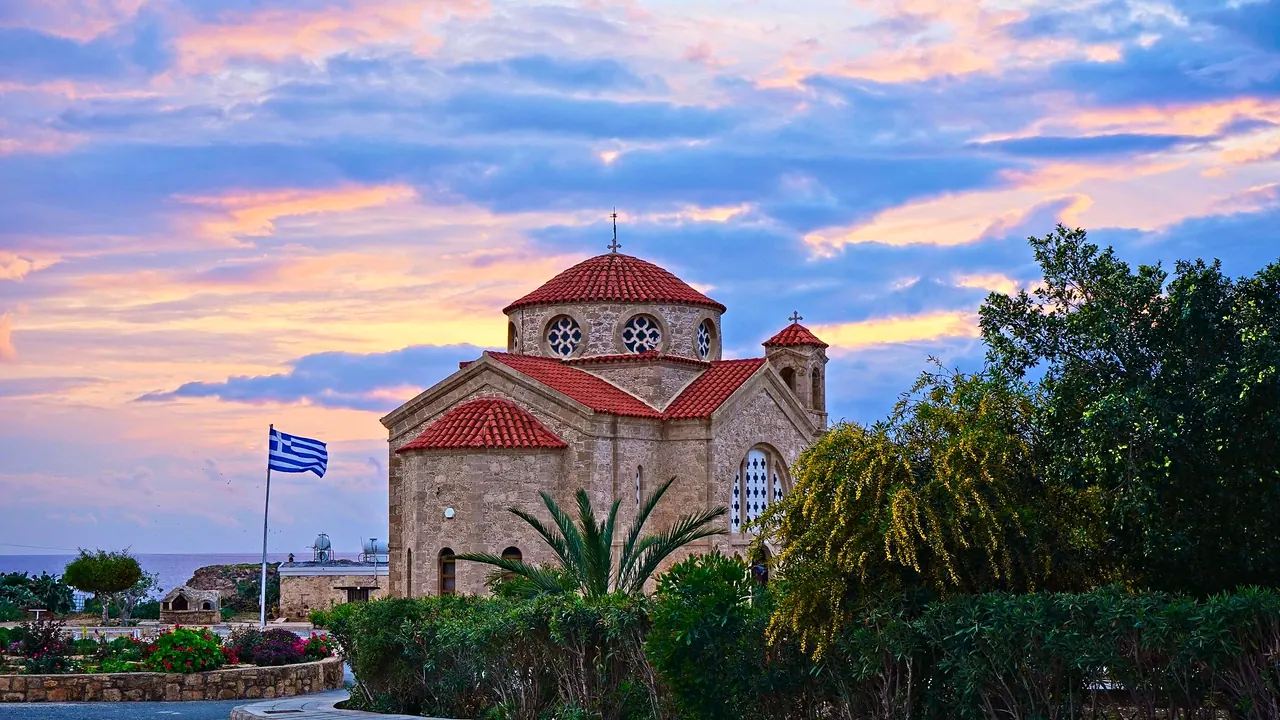
Photos: Lebanon by Soly Moses, Pexels License; Cyprus by chris clark, Pexels License.
Lebanon or Cyprus?
Our verdict in twelve categories, each scored against the same fixed benchmark cities, and the climate month by month, so you can choose for your trip.
Choose Lebanon for
- food and drink
- live music and the arts
- shopping
Lebanon suits travellers who plan a trip around the table and the past. That means long mezze meals in Beirut, Tripoli and Zahle, Roman temples at Baalbek, Phoenician Byblos and Tripoli's Mamluk souks, then late nights in Mar Mikhael and Gemmayzeh. It asks more of you, with a driver for most outings and heavy traffic around Beirut. In return, almost the whole country can be seen from one base in the capital.
Choose Cyprus for
- families
- beaches
- getting around
For a week of sun and sea, Cyprus is the easier choice. The pale sand and shallow water at Protaras and Ayia Napa, resort hotels with pools and kids' clubs, buses between the main towns and widely spoken English make it much more forgiving with children, or for anyone who wants to unwind rather than organise. Its sights and food are good but not the main event, and a hire car opens up Troodos and the Akamas.
Scoreboard
Twelve categories on one fixed scale from 0 to 100. The shaded stretch is the gap between the two.
Your match
Pick a travel style or drag the sliders, and both match scores follow your weighting.
Too close to call, 2 points apart
Wins on food and drink and live music and the arts with your weighting.
Wins on families and beaches with your weighting.
What matters to you?
Category by category
What the scores mean for a trip.
Beaches & swimming
Cyprus has the better beaches by some way. In the southeast around Protaras and Ayia Napa, Nissi Beach and Fig Tree Bay have pale sand running into shallow turquoise water. The west adds broad Coral Bay and wilder Lara on the Akamas coast, where turtles nest. Here the beach can be the whole point of the trip.
Lebanon's sea is just as warm, but much of the swimming happens from private beach clubs with decks and ladders rather than on sand. In the north, Batroun's rocky coves and the public beach below Byblos are the best options. Tyre's beach inside its reserve in the south has the finest sand, while Beirut's own shore is rocky and urban.
Where in Lebanon: Batroun, Tyre, Byblos
Where in Cyprus: Ayia Napa and Protaras, Cape Greco, Paphos and Coral Bay, Akamas Peninsula
Food & drink
Both countries eat in long runs of small plates, but Lebanon's table is broader and is a reason to travel in its own right. Beirut ranges from shawarma counters and family kitchens in Achrafieh to ambitious cooking in Mar Mikhael. Tripoli is the place for knefeh, Zahle has its riverside restaurants on the Berdawni, and the Bekaa has old wine estates.
Cyprus's meze leans on halloumi, sheftalia, kleftiko and souvla, and it is best in inland family tavernas rather than on resort seafronts. The wine villages above Limassol and the sweet Commandaria are a real draw, but there is little street food or fine dining.
Where in Lebanon: Beirut, Tripoli, Zahle and the Bekaa Valley, Byblos
Where in Cyprus: Limassol and its wine villages, Nicosia, Troodos Mountains, Larnaca
Culture & sights
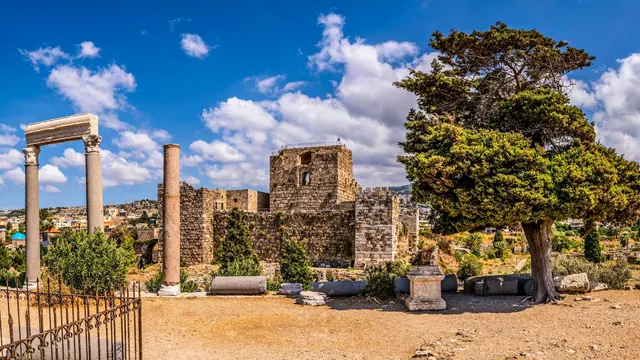
Lebanon has the weightier sites. Baalbek's Roman temples are among the largest ever built, and Byblos stacks Phoenician, Roman and Crusader layers by its harbour. Tripoli keeps a whole Mamluk old city under its citadel, and Tyre, Anjar and Beiteddine are still to come.
Cyprus spreads its past more thinly, but it rewards a curious traveller. There are the mosaics of Kato Paphos, Kourion's theatre above the sea and the painted churches of Troodos. Walled Nicosia has the Cyprus Museum, and Bellapais and Salamis lie across the crossing points to the north.
Where in Lebanon: Baalbek, Byblos, Tripoli, Tyre
Where in Cyprus: Paphos, Troodos Mountains, Nicosia, Kourion
Nightlife
Beirut gives Lebanon the edge. Mar Mikhael and Gemmayzeh have long strips of bars, Badaro is more local, and summer rooftop clubs run until dawn. Dressing up is part of the night. In summer, beach parties at Batroun carry the scene up the coast.
Cyprus splits in two. Ayia Napa is a summer party resort for young groups and quiet in winter. Limassol's marina and old-town cocktail bars keep a more grown-up scene going all year, and Nicosia's walled old town fills with small student bars.
Where in Lebanon: Beirut, Batroun, Faraya
Nature & outdoors
Lebanon has the bigger mountains. They rise steeply from the coast to over 3,000m, so snow and sea are rarely more than an hour apart. The Qadisha Valley's gorge of cliff monasteries below the Bsharri cedars and the Chouf's forested cedar ridges make finer walking country than anything on Cyprus. The Lebanon Mountain Trail, walked in stages between villages, and winter skiing at Mzaar Kfardebian and the Cedars give it more range.
Its lower slopes are heavily built, though, so the real walking starts higher up.\n\nCyprus has the pine-covered Troodos around Mount Olympos, where waterfalls such as Caledonia and cooler air are a relief when the coast is baking. It also has the wild Akamas peninsula with the Avakas Gorge. Its other strength is underwater: Cyprus is a real diving destination, with the Zenobia wreck off Larnaca and reefs on both coasts, whereas Lebanon's outdoors belongs to the mountains rather than the sea.
Where in Lebanon: Qadisha Valley, Chouf, Mount Lebanon
Where in Cyprus: Troodos Mountains, Akamas Peninsula, Cape Greco, Larnaca coast for diving
Day trips
Both are small enough to see from one base, but Lebanon packs more into a day out from Beirut. Byblos and Tripoli lie up the coast, Sidon and Tyre to the south, and Beiteddine and Deir el Qamar in the Chouf. Over the mountains are Zahle, Anjar and the Bekaa wineries. The catch is the traffic out of the capital, and a driver is the usual way to go.
In Cyprus the outings are gentler. There are Troodos villages such as Omodos and Kakopetria, and Lefkara with its lace. From Nicosia you can cross north to Kyrenia's harbour and Bellapais. A hire car or an organised tour does most of the work.
Where in Lebanon: Byblos, Bekaa Valley, Chouf, Sidon
Where in Cyprus: Troodos villages, Nicosia, Kyrenia and Bellapais, Lefkara
Good for families
Cyprus is much the easier choice with children. Protaras and Ayia Napa have gently shelving sand and calm water, and resort hotels come with pools and kids' clubs. Water parks, an aquarium and a zoo fill the days in between.
Lebanon welcomes children warmly but has little built for them. Jeita Grotto's boat ride and the Harissa cable car above Jounieh are the classic outings, and Batroun's beach club pools help. Traffic and missing pavements make everyday logistics tiring.
Where in Lebanon: Jounieh, Batroun
Getting around
Neither country has a railway, but Cyprus is the easier place to move around. Inter-city buses link Nicosia, Limassol, Larnaca, Paphos and Ayia Napa, the motorways are good, and the old centres are pleasant on foot. A hire car covers the rest, with traffic driving on the left.
Lebanon relies on shared service taxis and minibuses that run without route maps, so most visitors use a driver or ride-hailing apps. Byblos is the simplest outing. In Beirut, Hamra and Gemmayzeh are walkable, though pavements are often blocked.
Where in Lebanon: Beirut, Byblos
Shopping & style
Lebanon has more to shop for. Beirut is a city of couture ateliers and gold shops, with small design boutiques in Achrafieh and Mar Mikhael. Tripoli's covered souks sell olive-oil soap, copper and gold.
In Cyprus, shopping mostly means malls and chains in Limassol and Nicosia, with Ledra Street the main shopping street. The buys worth carrying home are Lefkara lace and silverwork, halloumi and Commandaria.
Where in Lebanon: Beirut, Tripoli, Sidon
Affordability
Lebanon comes out a little cheaper, but only if you plan for it. Street food, bakeries and guesthouses cost little, and Tripoli, the Chouf villages and Zahle are good value. Beirut's restaurants, beach clubs and better hotels, on the other hand, are priced like Southern Europe, and paying a driver adds up.
Cyprus stays steadier in the middle. Taverna meze is generous and apartments in Paphos and Larnaca are good value. Limassol and the high-season resorts cost more, and most visitors also need a hire car.
Where in Lebanon: Tripoli, Chouf, Bekaa Valley
Live music & performing arts
Lebanon's summer festivals give it the clear lead, with concerts and dance among the temples at Baalbek, in the palace courtyard at Beiteddine and beside Byblos harbour. Outside summer, Beirut has a philharmonic, small theatres, and live jazz and Arabic music in Hamra.
Cyprus offers a handful of good evenings, such as drama in the ancient theatre at Kourion and opera in the harbour square at Paphos. The rest of the time it is mostly village festivals and taverna music.
Where in Lebanon: Baalbek, Beiteddine, Byblos, Beirut
Wellness & relaxation
Cyprus is the better place to slow down. The large beach hotels around Limassol and Paphos have plenty of resort spas and indoor pools, the Troodos villages are calm, and the coast is unhurried outside July and August.
Lebanon's restful side is up in the hills, in the guesthouses of the Chouf, the Qadisha and the Bekaa, with cool air and long meals away from Beirut's noise. Otherwise spas are hotel spas, and the old hammams of Tripoli and Sidon rarely still work as baths.
Where in Lebanon: Chouf, Qadisha Valley, Bekaa Valley
Where in Cyprus: Troodos Mountains, Limassol, Paphos, Nicosia
When should you go?
Pick your month, and for a country the place in it. The climate figures are measured averages, not a forecast.
Beirut (Lebanon) in July
Paphos (Cyprus) in July
Daytime high, °C
Rainfall in the month, mm
Where the figures come from
Paphos (Cyprus) has no rain gauge within 25 km of the centre, so its rainfall comes from a gridded climate dataset read at the destination rather than from a gauge further away.
Temperature and rainfall are climate normals, averaged over the years shown. Beirut (Lebanon): 1991-2020 (sunshine 1961-1990) normals, Beyrouth Aeroport (8.3 km from centre). Paphos (Cyprus): 1991-2020 normals, Paphos Airport (8.4 km from centre).
The two coasts run on almost the same calendar. At Beirut and Paphos alike the sea warms up in June, reaches about 28°C in August and stays pleasant for swimming through October and into November. July to September is hot on both coasts, with highs around 31°C. That is fine for the beach but heavy going for long walks through Beirut's streets or the sites at Kato Paphos. Beirut is at its sunniest from May to August.
The real difference is winter rain. Beirut's rain begins in October and builds to about 178mm in January, against 98mm at Paphos, so a winter trip is drier on the Cypriot coast. In both countries, April, May and October are the best months for sightseeing, eating outdoors and walking in the Qadisha or the Troodos.
Which traveller are you?
For a food and nightlife trip, Lebanon is the clear pick. Beirut's mezze tables, Tripoli's sweets and Zahle's riverside restaurants beat Cyprus's tavernas for range, and Mar Mikhael's bars and summer rooftop clubs make the nights last until dawn.
On a culture and arts trip, Lebanon again has the edge. Baalbek's temples, Phoenician Byblos and Mamluk Tripoli are bigger sights than anything on Cyprus, and summer festival nights among the ruins add live performance to the sightseeing.
On a family trip with children, choose Cyprus. Gently shelving sand at Protaras, resort pools and kids' clubs, water parks and easy buses take the strain, while Lebanon's traffic, missing pavements and reliance on drivers make days with children tiring.
More comparisons
Each shares a side with Lebanon or Cyprus.
Where else could you go?
Set Lebanon or Cyprus against any other country.