Cyprus
Larnaca
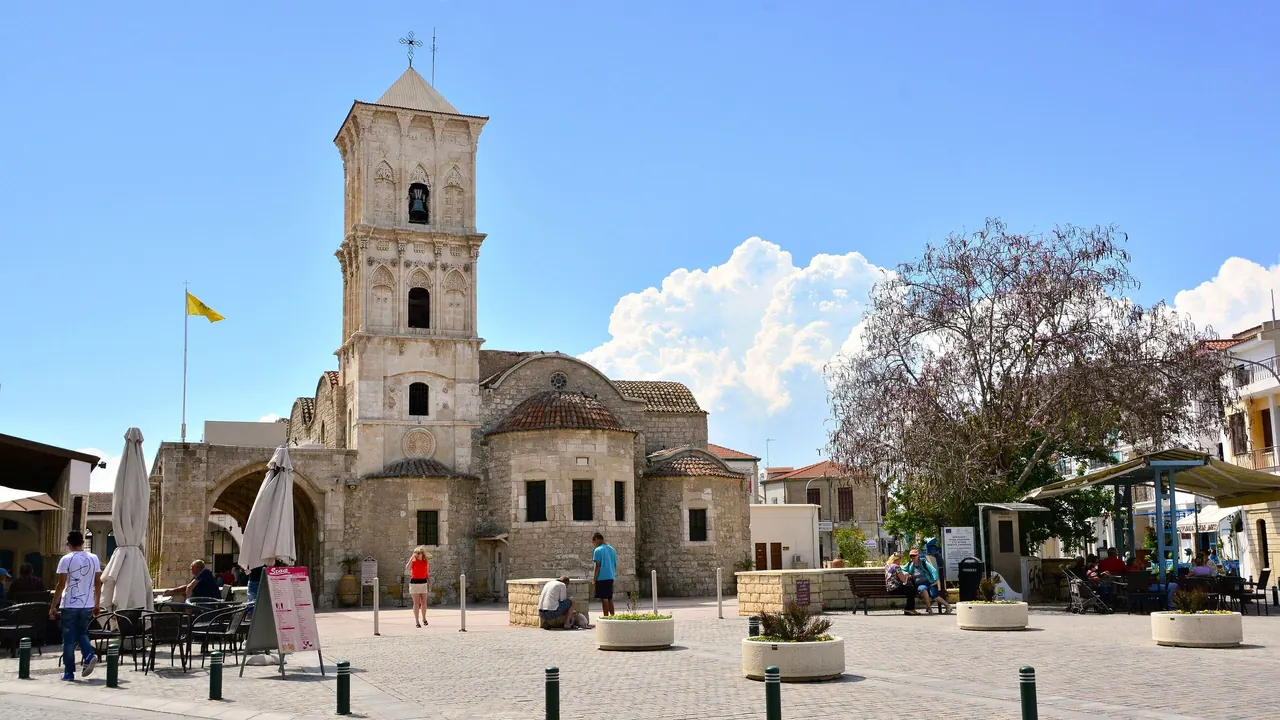
The Church of Saint Lazarus and its square
- Beaches77
- Day trips68
- Families62
Photo: Mike McBey, CC BY 2.0, cropped
Match
47
Every category weighted equally
- Beach & sun52
- Culture & arts42
- Food & nightlife42
- Family trip54
- Outdoors53
- Relax & unwind50
- Shopping & style42
- On a budget48
Larnaca in twelve categories
Our verdict on each, scored 0 to 100 against the same fixed benchmark cities, so a score means the same thing on every page.
Beaches & swimming. Scores 77 out of 100.
Food & drink. Scores 47 out of 100.
Culture & sights. Scores 35 out of 100.
Nightlife. Scores 32 out of 100.
Nature & outdoors. Scores 55 out of 100.
Day trips. Scores 68 out of 100.
Good for families. Scores 62 out of 100.
Getting around. Scores 47 out of 100.
Shopping & style. Scores 28 out of 100.
Affordability. Scores 54 out of 100.
Live music & performing arts. Scores 20 out of 100.
Wellness & relaxation. Scores 38 out of 100.
Larnaca category by category
Beaches & swimming
77Beach life sits at the centre of a Larnaca stay. Finikoudes, the palm-lined town beach, runs along the promenade right in front of the old centre, with fine greyish sand and shallow, calm water where you can walk a long way out. Mackenzie Beach, south towards the airport, is livelier and lined with beach bars, with planes passing low overhead. East of town, the long strips around Oroklini and Dhekelia are quieter and backed by resort hotels.
The sea is among the warmest in the Mediterranean, around 27°C in late summer, and you can swim from May well into November. The town beaches are pleasant rather than beautiful. For the white sand and clear turquoise water of Nissi Beach in Ayia Napa or Fig Tree Bay in Protaras, you drive or take the bus for about forty minutes to an hour.
Food & drink
47Eating in Larnaca means Cypriot meze, a long run of small plates that moves from dips, halloumi and village salads to grilled sheftalia, souvla and slow-baked kleftiko. Fish tavernas cook the day's catch near the old fishing harbour and along the coast towards Mazotos, and the best meals are often in village tavernas a short drive inland. Coffee is a serious habit, either thick Cypriot coffee in old men's kafeneia or iced frappé on the seafront.
The range stops there. The Finikoudes promenade is lined with cafés and international menus aimed at visitors, fine dining is thin, and anyone wanting variety heads to Nicosia or Limassol. Try Commandaria, the island's sweet dessert wine, and the local Keo beer.
Culture & sights
35Larnaca has a few sights of real interest and can be seen in a day or two. The Church of Saint Lazarus, a stone Byzantine church from the ninth century with a fine carved wooden iconostasis, sits at the heart of the old town and is said to hold the saint's tomb. On the edge of the Salt Lake, Hala Sultan Tekke is one of the most revered mosques in the Islamic world, set among palm trees on the water's edge.
The town stands on ancient Kition, whose excavated Phoenician temple foundations can be visited, and the small Larnaca Fort, the Pierides Museum and the district archaeological museum fill out the picture. The old Turkish quarter of Skala, with its pottery workshops, is pleasant to wander.
Nightlife
32Nights in Larnaca are relaxed. In summer the Finikoudes promenade and the lanes behind it fill with cocktail bars and cafés that stay open late, and Mackenzie Beach has beach bars with DJs and a younger crowd. In winter the town quietens considerably. There is little in the way of serious clubbing in Larnaca itself; people who want that make the trip to Ayia Napa, the island's party resort, about forty minutes east, and stay late there.
Nature & outdoors
55The landscape around Larnaca is low, dry and sunbaked, but there is more to do outdoors than first appears. The Salt Lake on the edge of town fills in winter and draws thousands of flamingos, with a flat walking path along its shore. Offshore lies the wreck of the Zenobia, a ferry that sank in 1980 and is one of the best known wreck dives in the world, so diving is a real draw.
An hour east, Cape Greco has sea caves, cliffs and coastal trails above clear water, good for kayaking and snorkelling. The Troodos mountains, with pine forest, nature trails and winter snow, are about ninety minutes away. Summer heat makes hiking hard from June to September; spring and autumn are the seasons for it.
Day trips
68Larnaca sits in the middle of the island's south coast, which puts much of Cyprus within reach. Nicosia is about forty minutes away, with its Venetian walls, old town and the crossing point on Ledra Street into the northern half of the divided capital. Lefkara, a stone village famous for its lace and silverwork, and the Neolithic settlement of Choirokoitia, a UNESCO site, are both around half an hour inland. The hilltop monastery of Stavrovouni is close by.
Limassol and the ruins of Kourion above the sea make another good day, while Paphos, with its mosaics and Tombs of the Kings, and the painted churches of the Troodos are a long day by car. From the north, Famagusta's walled old town can be reached through a crossing point. Intercity buses reach the main towns, but a car makes everything easier.
Good for families
62Larnaca is easy with children. The town beach at Finikoudes shelves very gently, so small children can paddle safely, and the promenade has playgrounds, ice cream and space to run. The town is small, calm and safe, and the airport is only a few minutes away, which shortens travel days.
Attractions made for children are few in town itself. A camel park near Mazotos and the flamingos on the Salt Lake are popular outings, and Ayia Napa, about forty minutes away, has a large waterpark. July and August are very hot, so the beach and the pool tend to fill the middle of the day. Spring and early autumn are kinder.
Getting around
47The centre of Larnaca is small and flat, and the seafront, the old town, Saint Lazarus and the fort are all an easy walk from one another. The airport is just south of town, a short taxi or bus ride away. Beyond that, things get harder. Cyprus has no railway, local bus routes are limited, and intercity buses link Larnaca with Nicosia, Limassol and Ayia Napa but not much else. Most visitors who want to see villages, the mountains or quieter beaches rent a car. Cyprus drives on the left.
Shopping & style
28Shopping in Larnaca is modest. Ermou and Zinonos Kitieos streets in the centre have high-street chains, shoe shops and jewellers, and there is a mall on the edge of town. The more interesting buys are local crafts: lace and silver filigree from nearby Lefkara, pottery from the workshops in the old Skala quarter, halloumi, loukoumi and bottles of Commandaria. For serious fashion or design, people go to Nicosia or Limassol.
Affordability
54Larnaca is a moderately priced town, neither a bargain nor expensive. Meze in a local taverna is generous for what you pay, coffee and bakery snacks such as halloumi pies cost little, buses are cheap and most sights charge modest entry or nothing. Prices are highest along the Finikoudes promenade, where cafés and restaurants aim at visitors, and a few streets back or in the villages inland a meal costs noticeably less.
Beachfront hotels in July and August cost more, and a rental car, which most visitors want for exploring, is a real extra. Out of season, from November to March, rooms are much cheaper.
Live music & performing arts
20There is little to attend in Larnaca. The municipal theatre hosts Greek-language plays and occasional concerts, and in summer the Larnaca Festival brings open-air music and dance to the fort and other outdoor stages. Some tavernas have live Greek bouzouki music on weekend nights. For the island's orchestras, theatre and larger concerts, Nicosia is the place to go.
Wellness & relaxation
38Larnaca has no bathing culture of its own, and the spas are mostly in the large resort hotels along the coast east of town. What it offers instead is pace. Life moves slowly here: long coffees on the seafront, evening strolls along the promenade, a gentle winter with mild sun and few crowds. It suits a quiet, unhurried stay better than a dedicated spa trip.
When should you go?
Pick a month to see what it is like. The climate figures are measured averages, not a forecast.
Larnaca in July
Daytime high, °C
Rainfall in the month, mm
The whole year
Shaded against this city’s own year: the deepest cell is its best month for that figure and the palest its weakest.
Temperature and rainfall are climate normals, averaged over the years shown. Larnaca: 1991-2020 normals, Larnaca Airport (3.7 km from centre).
Before you go
| Measure | Larnaca |
|---|---|
| Official language | Turkish, Greek, Modern Greek |
| Currency | Euro (EUR) |
| Sockets | G240 V, 50 Hz |
| Driving side | Left |
| Time zone | UTC+2, UTC+3 in summer |
| Emergency number | 112 |
| Elevation | 26 m |
| Main airport | Larnaca International Airport (LCA)5 km from centre112 non-stop destinations |
| Public holidays this year | 17 days |
By the numbers
| Measure | Larnaca |
|---|---|
| City population | 59,200 |
| People per km² | 1,868 |
| Museums within 10 km | 4 |
| UNESCO World Heritage sites within 50 km | 2 |
| Swim season, months above 21 °C | 6 months |
Compare Larnaca with
Every comparison with a written verdict behind it.