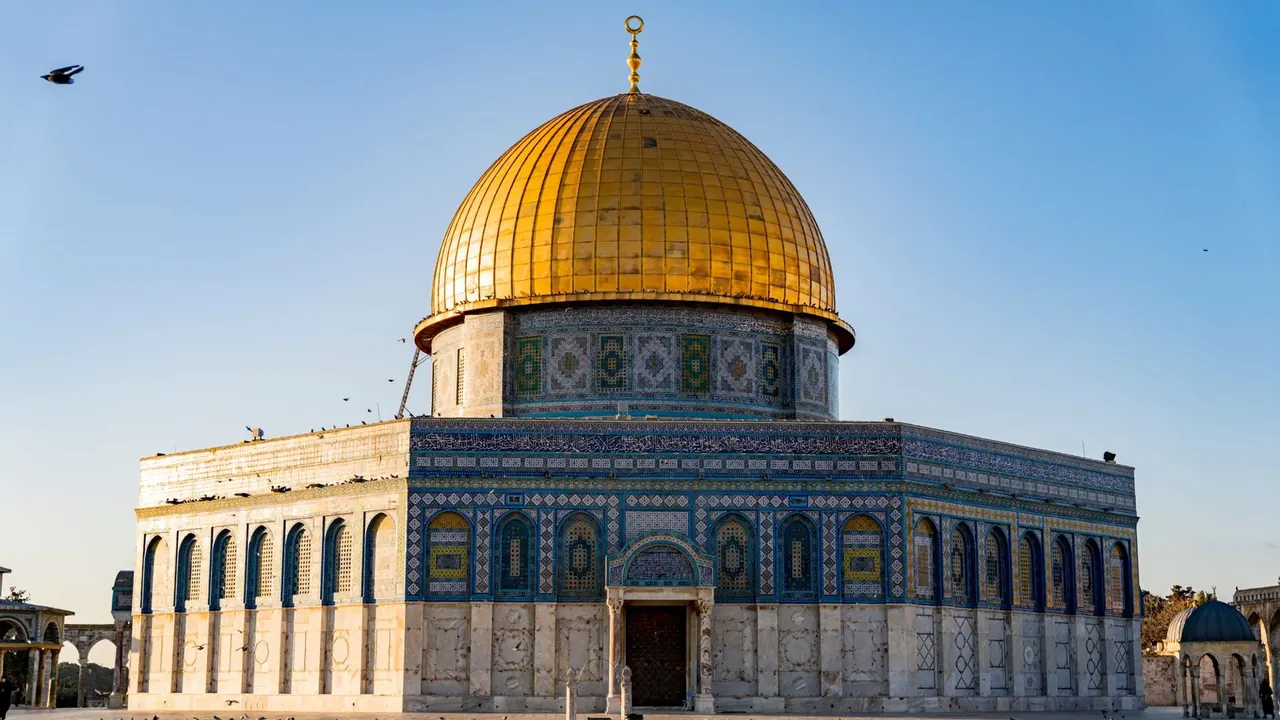
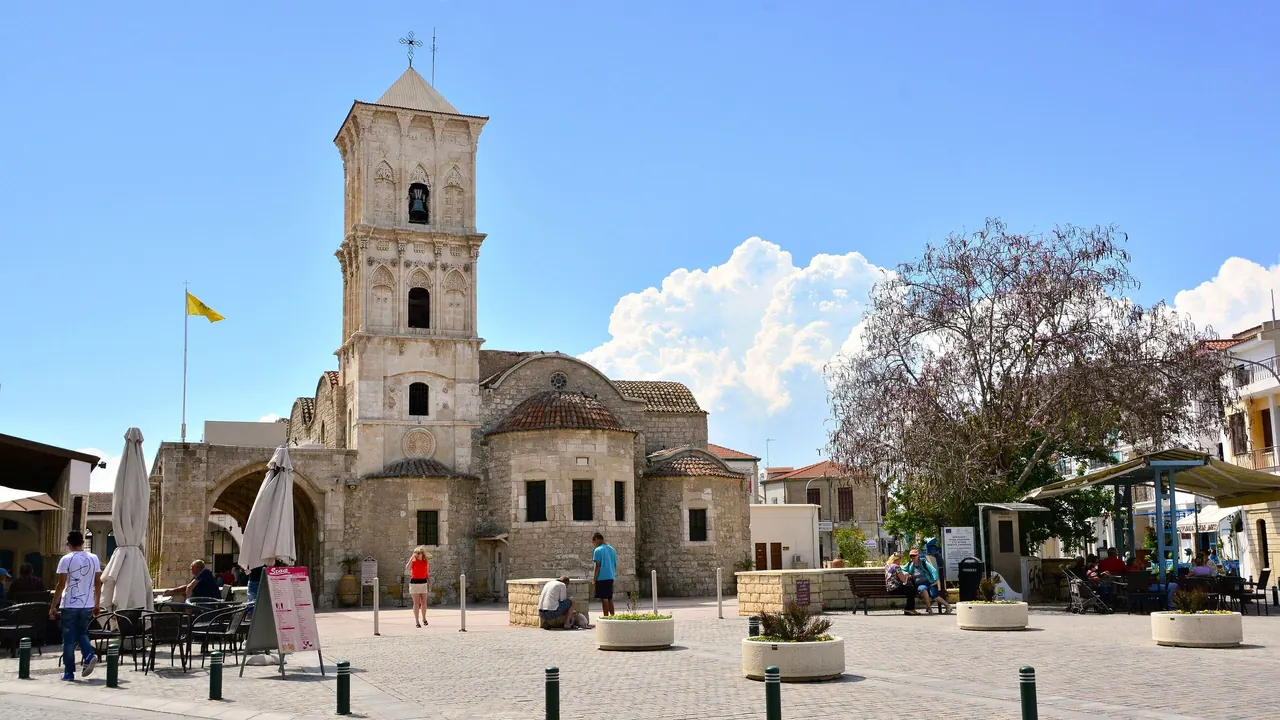
Photos: Jerusalem by Yasir Gürbüz, Pexels License; Larnaca by Mike McBey, CC BY 2.0, cropped.
Jerusalem or Larnaca?
Our verdict in twelve categories, each scored against the same fixed benchmark cities, and the climate month by month, so you can choose for your trip.
Choose Jerusalem for
- culture and sights
- shopping
- live music and the arts
Jerusalem is the choice for a trip built around history, faith and ideas. The Old City's holy sites, the excavations beneath them, the Israel Museum and Yad Vashem will fill several intense days, and Bethlehem, Masada and the Dead Sea are close enough to add to them. It suits travellers who want to be absorbed and challenged, and who can accept high costs and a city that shuts down for Shabbat.
Choose Larnaca for
- beaches
- prices
- families
For sun, sea and an easy pace, Larnaca is the better fit. The town beach is right in front of the old centre, the water stays warm well into autumn, and children can paddle safely in the shallows. Its sights take a day or two, so it works best as a relaxed base for swimming, eating meze and driving out across Cyprus, and it costs noticeably less than Jerusalem.
Scoreboard
Twelve categories on one fixed scale from 0 to 100. The shaded stretch is the gap between the two.
Your match
Pick a travel style or drag the sliders, and both match scores follow your weighting.
Wins on culture and sights and shopping with your weighting.
Wins on beaches and prices with your weighting.
What matters to you?
Category by category
What the scores mean for a trip.
Beaches & swimming
Larnaca is a proper beach town and Jerusalem is not. In Larnaca you can step from the old town onto the palm-lined sand at Finikoudes, try the beach bars of Mackenzie, or drive to the white sand of Ayia Napa and Protaras. The town beaches are more pleasant than beautiful, but swimming fits easily into any day.
From Jerusalem the sea is a day trip. You take the train to Tel Aviv for long sandy beaches, or go down to the Dead Sea to float on rocky, salty shores. Both are worth doing, but neither replaces a beach on the doorstep.
Food & drink
Jerusalem offers more range. Mahane Yehuda market turns from spice stalls into grills at night, Arab hummus counters and knafeh sit alongside Kurdish, Iraqi and Yemenite Jewish cooking, and the Judean Hills supply the wine. Do plan around kosher menus and the Shabbat closures in the west of the city.
Larnaca's food is good but simpler. Cypriot meze, fish by the harbour and village tavernas inland are the pleasures, with Commandaria to finish. Beyond that the seafront menus are written for visitors, and for variety you have to go to Nicosia or Limassol.
Culture & sights
This is where the two differ most. Jerusalem's walled Old City puts the Western Wall, the Holy Sepulchre and the Dome of the Rock within a square kilometre, with Bronze Age excavations below and the Israel Museum and Yad Vashem beyond the walls. It needs several days and repays them.
Larnaca's sights are fewer and quieter: the Byzantine church of Saint Lazarus, Hala Sultan Tekke by the Salt Lake, the remains of Phoenician Kition and the potteries of Skala. They are pleasant to see, and a day or two covers them.
Nightlife
Neither city is made for big nights out, but Jerusalem gives you a little more to do after dark. Once the stalls of Mahane Yehuda close, many of them turn into small bars and grills, there are pubs around Nahalat Shiva and Jaffa Road, and students keep a few places busy on weeknights. Friday evenings are quiet because of Shabbat, and for clubbing people take the train to Tel Aviv.
Larnaca's evenings are slower and depend on the season. In summer you get cocktails along the Finikoudes promenade and DJs at the Mackenzie Beach bars, but the town goes quiet in winter, and anyone after a club night heads to Ayia Napa.
Nature & outdoors
The outdoors is about equally rewarding in both, but very different. Jerusalem sits between the wooded Judean Hills and the desert, so you get spring walks around Sataf and Ein Karem, the Wadi Qelt canyon, the oasis at Ein Gedi and a dawn climb up to Masada.
Larnaca's appeal is the coast and wildlife. Flamingos winter on the Salt Lake, the Zenobia wreck is a famous dive, and Cape Greco suits kayaking and snorkelling, with the Troodos forests further away. Divers will find nothing like this in Jerusalem.
Day trips
Both make good bases, but Jerusalem has richer places within reach. Bethlehem lies just south, and Masada with Qumran, Jericho, old Jaffa, Caesarea and Acre add up to a dense chain of biblical and Crusader history. Some West Bank sites involve a checkpoint, so many visitors go with a guide.
From Larnaca you can explore Cyprus: divided Nicosia, Lefkara lace, Neolithic Choirokoitia, Kourion and, on a long day, the mosaics of Paphos. Most of these are much easier with a hire car.
Good for families
Larnaca is the easier choice with children. The gently shelving town beach is safe for paddling, the promenade has playgrounds, the town is calm and the airport is minutes away. The flamingos, a camel park and the Ayia Napa waterpark round out the outings.
Jerusalem welcomes children warmly and has the Biblical Zoo, the aquarium and the Bloomfield Science Museum. Still, the stepped Old City lanes defeat a stroller and the holy sites ask for quiet, so it suits older children better than toddlers.
Getting around
Jerusalem has the better public transport. A light rail runs past the Old City walls to Yad Vashem, buses cover the rest, and a fast train reaches Tel Aviv and the airport. The catch is Shabbat, when everything stops, and the hilly, stepped streets of the centre.
Larnaca's centre is small, flat and easy on foot, but beyond it you need a car. There is no railway and the buses are limited, so most visitors drive, on the left.
Shopping & style
Jerusalem gives a shopper more to do. You can bargain for olive wood and spices in the Old City souq, buy Armenian painted ceramics and silver Judaica, and find the international brands on the Mamilla promenade. Larnaca's high streets are ordinary, and the best things to take home are Lefkara lace and filigree, Skala pottery and halloumi. Neither city is a fashion destination.
Affordability
Larnaca is clearly the cheaper stay. Taverna meals are generous, buses and sights cost little, and from November to March rooms become much cheaper, although a hire car adds to the bill.
Jerusalem is expensive for hotels, sit-down meals and drinks, especially around the festivals. Free holy sites, falafel and market lunches, and eating in the Arab neighbourhoods help, but a comfortable trip still costs a lot.
Live music & performing arts
Jerusalem has the fuller calendar, with the Jerusalem Symphony Orchestra, the Jerusalem Theatre, the Israel Festival and summer concerts in the Sultan's Pool below the walls, although most drama is in Hebrew. Larnaca has little beyond Greek plays at the municipal theatre, the summer festival at the fort and bouzouki nights in tavernas.
Wellness & relaxation
Neither is a spa destination, but they rest you in different ways. Jerusalem is tense and crowded, and its real wellness draw is an hour away at the Dead Sea, with mineral mud and buoyant water, plus the strange calm of Shabbat. Larnaca's spas are in resort hotels, and its strength is simply slowness: long coffees by the sea and quiet, mild winters.
When should you go?
Pick your month. The climate figures are measured averages, not a forecast.
Jerusalem in July
Larnaca in July
Daytime high, °C
Rainfall in the month, mm
Where the figures come from
Jerusalem has no rain gauge within 25 km of the centre, so its rainfall comes from a gridded climate dataset read at the city rather than from a gauge further away.
Temperature and rainfall are climate normals, averaged over the years shown. Jerusalem: 1991-2020 (sunshine 1981-2010) normals, Jerusalem (1.8 km from centre). Larnaca: 1991-2020 normals, Larnaca Airport (3.7 km from centre).
Larnaca is the warmer of the two all year and the one for swimming. Its sea is warm enough from May into November, peaking around 27°C, though July and August reach 33°C, which makes midday sightseeing hard work. Winter is mild and sunny, with most rain falling from November to February.
Jerusalem sits high in the hills and is noticeably cooler. Winter is chilly and wet, with January around 12°C and its wettest month at 109mm, so the lanes of the Old City can be cold and slippery. April, May, October and early November are the best months for walking the city, while June to September are completely dry and hot, so desert outings are best started at sunrise. The coast near Tel Aviv is warm enough for a beach day from late spring to autumn.
Which traveller are you?
On a beach and sun trip, Larnaca wins easily. Finikoudes beach is a short walk from your room, the shallow water is calm, and Nissi Beach and Fig Tree Bay are a short drive away. In Jerusalem the sea means a full day out to Tel Aviv.
For a culture and arts trip, Jerusalem has no rival here. The Old City's four quarters, the City of David tunnels, the Israel Museum and the Dead Sea Scrolls give you days of serious sightseeing, while Larnaca's Saint Lazarus and Kition fill an afternoon or two.
On a tight budget, Larnaca makes the money go further. Taverna meze is generous, buses are cheap and winter rooms cost far less. Jerusalem's hotels and restaurants are expensive, and only its free holy sites and market lunches soften the cost.
Before you go
| Measure | Jerusalem | Larnaca |
|---|---|---|
| Official language | Hebrew | Turkish, Greek, Modern Greek |
| Currency | New Israeli Sheqel (ILS) | Euro (EUR) |
| Sockets | CHM230 V, 50 Hz | G240 V, 50 Hz |
| Driving side | Right | Left |
| Time zone | UTC+2, UTC+3 in summer | UTC+2, UTC+3 in summer |
| Emergency number | Police 100, fire 102 | 112 |
| Elevation | 754 m | 26 m |
| Main airport | Ben Gurion International Airport (TLV)42 km from centre111 non-stop destinations | Larnaca International Airport (LCA)5 km from centre112 non-stop destinations |
| Public holidays this year | - | 17 days |
By the numbers
| Measure | Jerusalem | Larnaca |
|---|---|---|
| City population | 1,050,151 | 59,200 |
| People per km² | 8,374 | 1,868 |
| Museums within 10 km | 69 | 4 |
| UNESCO World Heritage sites within 50 km | 7 | 2 |
| Swim season, months above 21 °C | 7 months | 6 months |
Where else could you go?
Every comparison below shares a destination with this one, so you can follow Jerusalem or Larnaca somewhere new.
- Tel Avivvs Jerusalem
- Limassolvs Larnaca
- Ammanvs Jerusalem
- Paphosvs Larnaca
- Petravs Jerusalem
- Alanyavs Larnaca