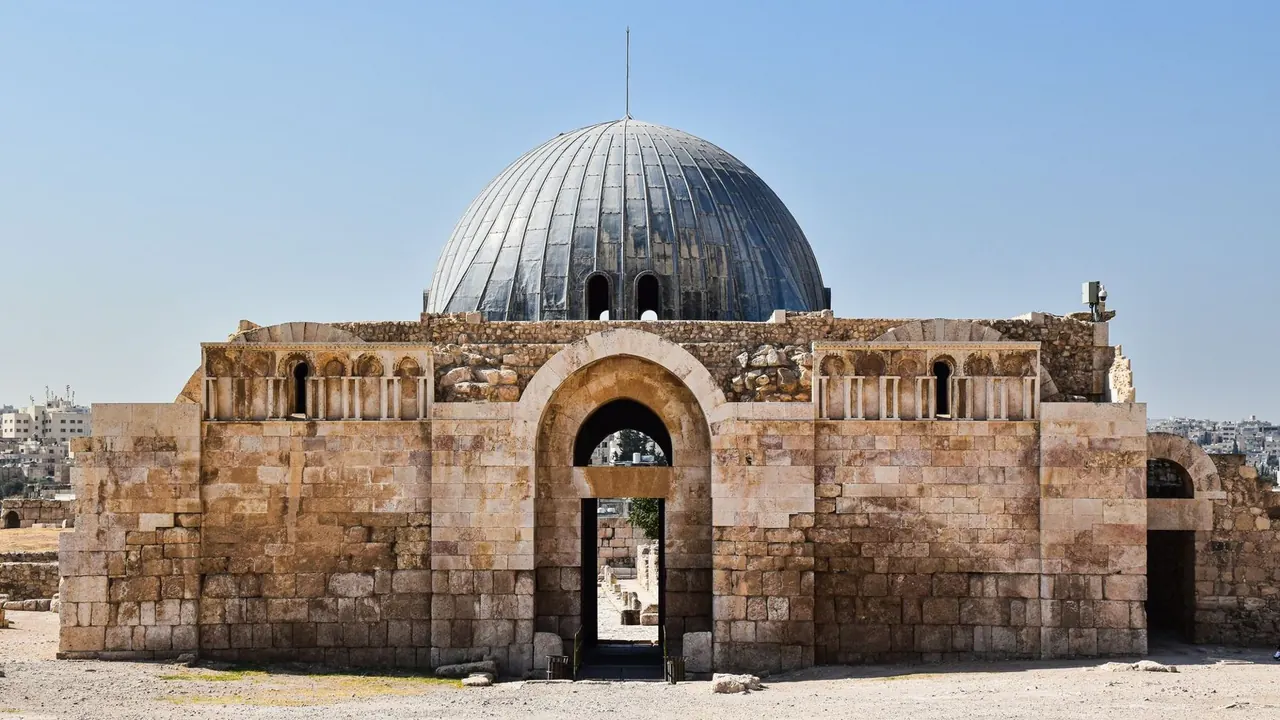
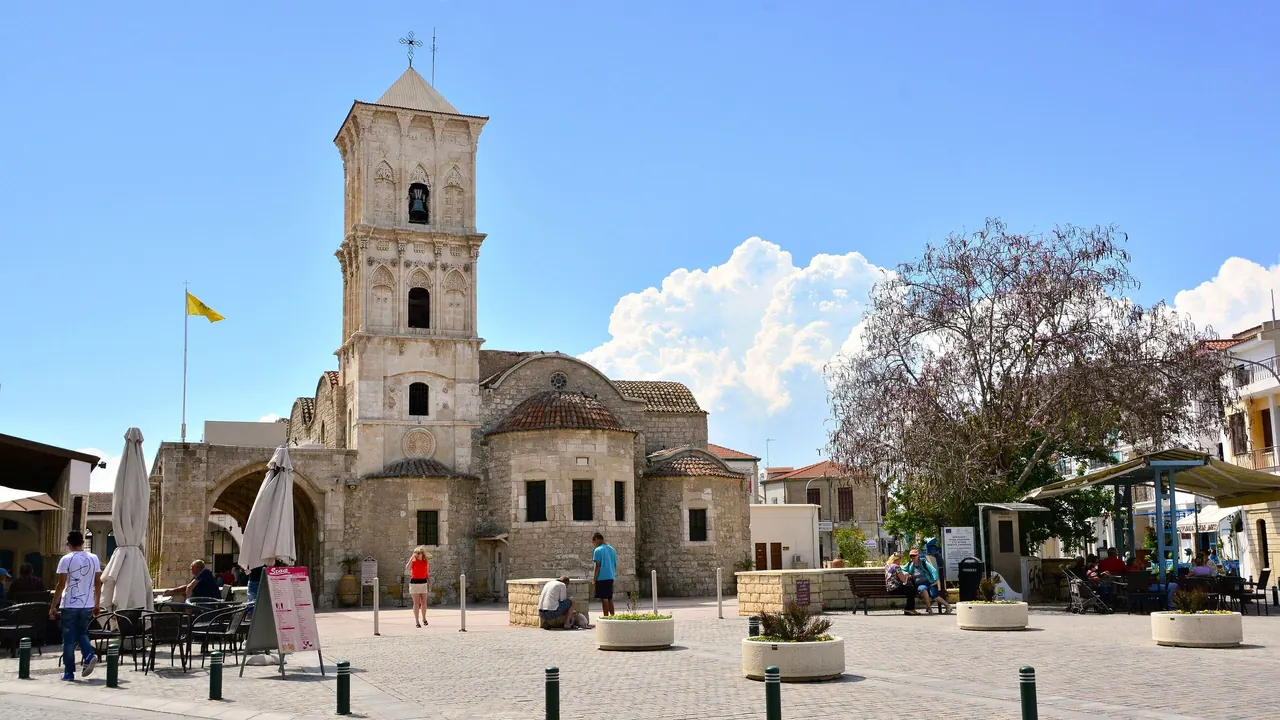
Photos: Amman by AXP Photography, Pexels License; Larnaca by Mike McBey, CC BY 2.0, cropped.
Amman or Larnaca?
Our verdict in twelve categories, each scored against the same fixed benchmark cities, and the climate month by month, so you can choose for your trip.
Choose Amman for
- culture and sights
- wellness
- food and drink
Amman is the choice for travellers who want history and flavour more than sand. The city has the Citadel and the Roman Theatre, the downtown breakfast places and knafeh shops, and Jerash, Madaba and the desert castles all within a day's reach. It works best as a base for a few busy days of sightseeing. Expect to get around by taxi rather than on foot, and to spend your evenings over tea rather than drinks.
Choose Larnaca for
- beaches
- families
- getting around
Larnaca wins easily for a slow, warm stay by the water. Its gentle town beach is right in front of the old centre, the sea stays swimmable for much of the year, and the airport is a few minutes away. That makes it the easier pick for families and for anyone who wants to dive, swim and eat meze without a packed itinerary. Its sights are fewer and quieter, though, and its food is narrower.
Scoreboard
Twelve categories on one fixed scale from 0 to 100. The shaded stretch is the gap between the two.
Your match
Pick a travel style or drag the sliders, and both match scores follow your weighting.
Too close to call, 2 points apart
Wins on culture and sights and wellness with your weighting.
Wins on beaches and families with your weighting.
What matters to you?
Category by category
What the scores mean for a trip.
Beaches & swimming
This is where the two part company most sharply. Amman sits in the desert hills with no shore of its own. The Dead Sea, about an hour below, is a novelty afternoon of floating and mud rather than a swim, and real sea and coral mean a separate trip to Aqaba.
Larnaca is built around its beaches. The shallow, palm-lined Finikoudes beach runs right along the old centre, Mackenzie has beach bars, and the quieter strips stretch east towards Dhekelia. The town sand is pleasant rather than striking, but the turquoise bays of Ayia Napa and Protaras are within an hour.
Food & drink
Amman is the better place to eat. Downtown serves falafel, hummus and fuul from early morning, there is hot knafeh and manakish from the bakeries, and you can try mansaf at a family table. Up in Jabal Amman and Weibdeh, cafés and modern Arab restaurants add a second layer.
Larnaca has one strong card, the long Cypriot meze. It also has good fish near the old harbour and village tavernas inland. Beyond those the range thins quickly, and the seafront menus are written for visitors.
Culture & sights
Amman has more to see. The Temple of Hercules and the Umayyad Palace stand on the Citadel above the Roman Theatre and the Odeon. The Jordan Museum adds the Dead Sea Scrolls and the 'Ain Ghazal statues, enough for two or three full days.
Larnaca's sights are fewer and quieter: the Church of Saint Lazarus with its carved iconostasis, Hala Sultan Tekke beside the Salt Lake, and the foundations of Phoenician Kition. They fill a day or two at an easy pace.
Nightlife
Neither is a party town, but the evenings feel different. Amman's nights revolve around cafés, shisha and tea, with families out late on Rainbow Street, and drinking is a discreet affair in a few rooftop bars and hotels. Larnaca's evenings are seasonal and drink-led. Cocktail bars line the summer promenade and Mackenzie has DJ beach bars, then it goes quiet in winter, and serious clubbing means heading to Ayia Napa.
Nature & outdoors
Larnaca has more outdoors within easy reach. You can watch flamingos on the Salt Lake in winter or dive the Zenobia wreck offshore. Cape Greco has sea caves for kayaking and snorkelling, and the pine-covered Troodos is about ninety minutes away.
Amman's best scenery is the steep drop to the Dead Sea. There are also the wade-through gorge of Wadi Mujib in the warmer months and the oak woods of Ajloun in spring. Jordan's great landscapes, Dana and Wadi Rum, are too far to return from the same day.
Day trips
Both make good bases, but Amman's outings carry more weight. Jerash is one of the finest Roman provincial cities to survive, under an hour away. Madaba's mosaic map, Mount Nebo, the Baptism Site, Umm Qais and the frescoed desert castle of Qasr Amra are all in range.
From Larnaca you can reach divided Nicosia, Lefkara's lace village, Neolithic Choirokoitia and the clifftop ruins of Kourion. They make varied days, though Paphos and the Troodos churches stretch the drive.
Good for families
Larnaca is the more practical choice with children. The sea at Finikoudes is shallow for a long way out, and the promenade gives them room to run. The town is small and calm, the airport is minutes away, and the Ayia Napa waterpark is close.
Amman is just as safe, and children are made very welcome in its cafés. But the children's museum and the malls are about all there is for them, and the hills and broken pavements are hard work with small ones.
Getting around
Larnaca is easier to get around. Its centre is small and flat, so the seafront, Saint Lazarus and the fort are all a stroll apart. A rental car is still needed for villages and mountains.
Amman is spread across steep hills with patchy pavements and no metro. Only downtown and the stairways up to Weibdeh really work on foot, so visitors rely on cheap taxis and ride-hailing apps.
Shopping & style
Amman gives shoppers more to explore. You can browse the spice stalls and the gold souk downtown. Around Rainbow Street, cooperative shops sell Palestinian embroidery, Hebron glass and Bedouin rugs, the kind of things worth carrying home.
Larnaca's high streets mostly offer chains and jewellers. The buys with character come from nearby Lefkara's lace and silver and the potters of Skala.
Affordability
Overall costs are close, but they rise in different places. In Amman the street food, coffee and taxis are very cheap, while alcohol, private drivers and the entry fees foreigners pay at the big sites push the total up. In Larnaca a taverna meze is generous for its price, but a rental car is a real extra and summer beachfront rooms cost noticeably more than winter ones.
Live music & performing arts
Neither city is a stage for the arts, though Amman has a little more. The Royal Cultural Centre and small venues in Weibdeh offer oud and Arab indie music, and the summer Jerash Festival fills the Roman theatres with singers and folk troupes. Larnaca has Greek-language plays at the municipal theatre, open-air shows at the fort in summer and bouzouki in the tavernas at weekends.
Wellness & relaxation
Amman offers more ways to unwind, but most of them are out of town. The Dead Sea resort spas offer mineral mud and floating an hour away, and the Ma'in hot springs pour down a canyon nearby. The city itself has hammams.
Larnaca has little spa culture beyond its resort hotels. Its strength is pace: slow coffees on the seafront and quiet winter strolls, a calm that hilly, traffic-heavy Amman lacks.
When should you go?
Pick your month. The climate figures are measured averages, not a forecast.
Amman in July
Larnaca in July
Daytime high, °C
Rainfall in the month, mm
Temperature and rainfall are climate normals, averaged over the years shown. Amman: 1994-2020 (sunshine 1981-2010, rainfall 1981-2010) normals, Amman Airport (6 km from centre). Larnaca: 1991-2020 normals, Larnaca Airport (3.7 km from centre).
Amman is a highland city with a real winter. Daytime highs drop to about 13°C in January, and most of the year's rain falls between December and February. Spring is the sweet spot, from April to May, when the rain has stopped and the hills are pleasant to walk. October is just as good. From June to September it is completely dry and sunny, but the afternoons reach 33°C, which makes long walks round the sights tiring.
Larnaca is milder in winter, at around 17°C in January, though December is its wettest month at about 98mm. Its summer heat is the same as Amman's. The difference is the sea. It is warm enough to swim from May, reaches 27°C in August and September, and stays comfortable into November. Choose Larnaca from late spring to autumn for the beach, and Amman in spring or autumn for walking.
Which traveller are you?
On a beach and sun trip, Larnaca is the clear answer. Finikoudes is a walk from your hotel, and Mackenzie and the eastern strips give you choice. Ayia Napa's white sand is an easy run away, while Amman's nearest water is the Dead Sea, where you float rather than swim.
For a culture and arts trip, Amman offers far more. You have Roman ruins on the Citadel, a theatre cut into the hillside and Dead Sea Scrolls in the Jordan Museum. Jerash, Madaba and Mount Nebo are close enough for day trips, which puts Larnaca's handful of churches and excavations in the shade.
On a family trip with young children, Larnaca is much easier. The town beach shelves gently, the promenade has playgrounds and the airport transfer is short. Amman welcomes children warmly but has few attractions for them, and its steep streets defeat pushchairs.
Before you go
| Measure | Amman | Larnaca |
|---|---|---|
| Official language | Arabic | Turkish, Greek, Modern Greek |
| Currency | Jordanian Dinar (JOD) | Euro (EUR) |
| Sockets | BCFGJ230 V, 50 Hz | G240 V, 50 Hz |
| Driving side | Right | Left |
| Time zone | UTC+3 | UTC+2, UTC+3 in summer |
| Emergency number | 911 | 112 |
| Elevation | 776 m | 26 m |
| Main airport | Queen Alia International Airport (AMM)26 km from centre98 non-stop destinations | Larnaca International Airport (LCA)5 km from centre112 non-stop destinations |
| Public holidays this year | - | 17 days |
By the numbers
| Measure | Amman | Larnaca |
|---|---|---|
| City population | 4,007,526 | 59,200 |
| People per km² | 2,385 | 1,868 |
| Museums within 10 km | 8 | 4 |
| UNESCO World Heritage sites within 50 km | 3 | 2 |
| Swim season, months above 21 °C | - | 6 months |
Where else could you go?
Every comparison below shares a destination with this one, so you can follow Amman or Larnaca somewhere new.