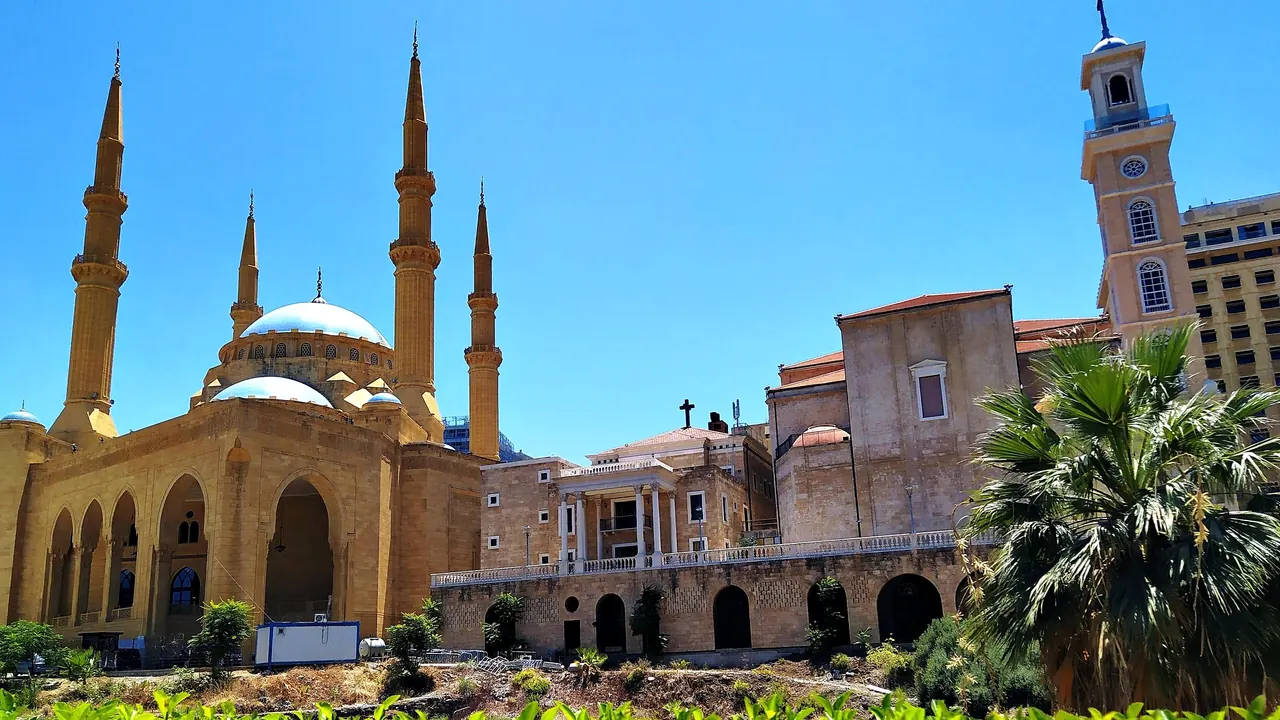
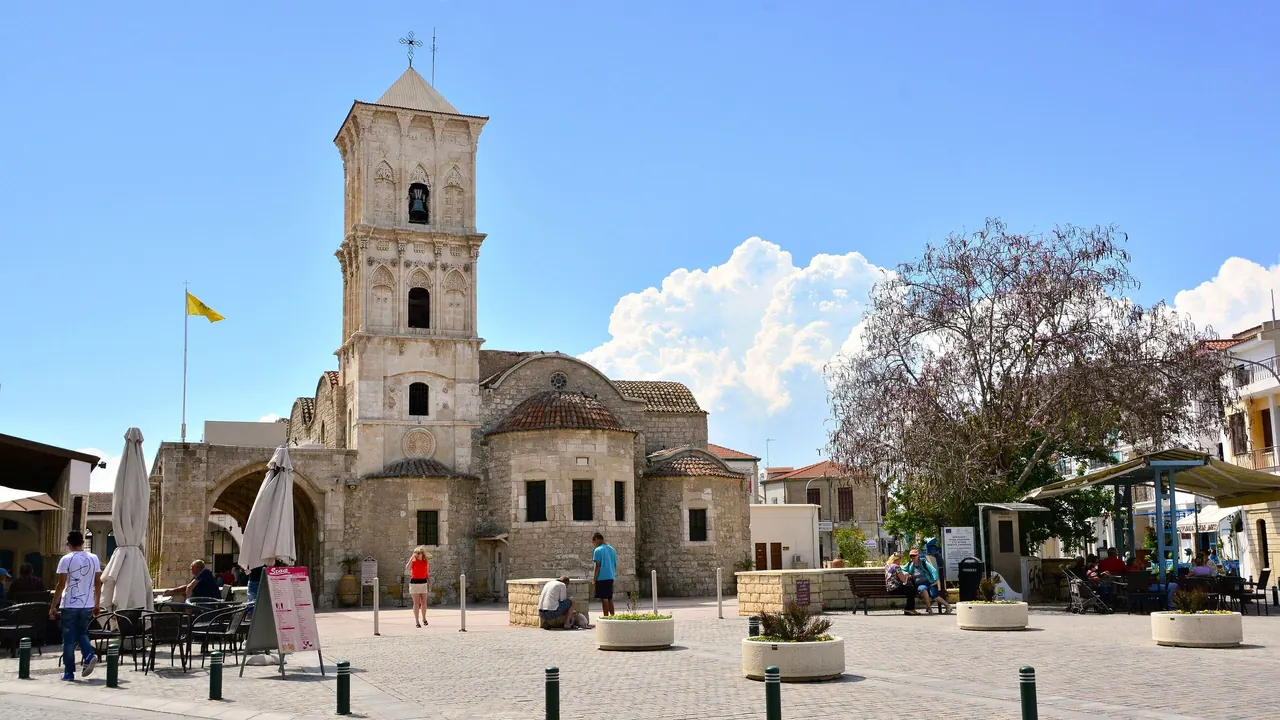
Photos: Beirut by Radosław Botev, CC BY 3.0 PL, cropped; Larnaca by Mike McBey, CC BY 2.0, cropped.
Beirut or Larnaca?
Our verdict in twelve categories, each scored against the same fixed benchmark cities, and the climate month by month, so you can choose for your trip.
Choose Beirut for
- nightlife
- food and drink
- shopping
Beirut is the choice for travellers who plan a trip around the table and the night. Long mezze lunches, bar-hopping in Mar Mikhael and Gemmayzeh until the small hours, and days out to Baalbek, Byblos and the mountains give it far more depth than Larnaca. You pay for that in effort: there is no metro, the pavements are hard going, the traffic is heavy and the city rarely slows down.
Choose Larnaca for
- families
- beaches
- getting around
Larnaca suits an easy beach stay, especially with children. Calm, shallow water at Finikoudes sits right in front of the old town, the airport is minutes away, and the pace is slow enough to switch off. There is much less to eat, see and do after dark, but the town asks very little of you in return.
Scoreboard
Twelve categories on one fixed scale from 0 to 100. The shaded stretch is the gap between the two.
Your match
Pick a travel style or drag the sliders, and both match scores follow your weighting.
Wins on nightlife and food and drink with your weighting.
Wins on families and beaches with your weighting.
What matters to you?
Category by category
What the scores mean for a trip.
Beaches & swimming
Larnaca is the better place for the sea. Its sand beach runs along the promenade in the heart of town, with calm shallow water, livelier Mackenzie Beach to the south and Nissi Beach and Fig Tree Bay within an hour.
Beirut's own shore is mostly rock and concrete platforms, and Ramlet al-Baida's water quality is unreliable, so a swim there usually means paying to enter a private beach club or driving to Byblos, Batroun or the Jiyeh coast. The water off Beirut is just as warm in late summer. The difference is that beach days there need planning.
Food & drink
Food is one of the main reasons to choose Beirut. The mezze culture, za'atar manakish at breakfast, knafeh shops, Armenian grills in Bourj Hammoud, modern Lebanese dining rooms in Achrafieh and Bekaa wine together give it a range Larnaca cannot match.
Larnaca's Cypriot meze, harbour fish tavernas and village kitchens inland are good and generous. Beyond that the choice is narrow, and the seafront menus lean towards visitors. Eat inland or near the fishing harbour, and save your more ambitious meals for Beirut.
Culture & sights
Beirut has more to see, although war has broken up its old city. The National Museum's Phoenician sarcophagi and Roman mosaics, the Sursock Museum's modern art and the restored streets around Place de l'Etoile give you two or three full days, and the bullet-marked buildings tell a recent history of their own.
Larnaca can be covered in a day or so. The Byzantine Church of Saint Lazarus, Hala Sultan Tekke on the Salt Lake and the foundations of ancient Kition are worth seeing, but they are single sights rather than a whole city to explore.
Nightlife
Beirut is one of the great late-night cities of the region. Its bars fill Mar Mikhael and Gemmayzeh, the electronic clubs near the port run until dawn, and in summer the beach-club parties go on into the night. People dress up, and bottle service matters at the bigger venues.
Larnaca's evenings are cocktails on Finikoudes and DJ beach bars at Mackenzie, and they quieten a lot in winter. Anyone who wants to dance until morning has to travel to Ayia Napa.
Nature & outdoors
Beirut has little green space of its own, but the mountains rising behind it change that. Pine forest and villages above 1,000m are within an hour, there is skiing at Faraya and Mzaar in winter, the Jeita Grotto is close by, and the Qadisha Valley and Cedars are further out.
Larnaca's surroundings are flatter and drier. Its strengths lie by the water: winter flamingos on the Salt Lake, the famous Zenobia wreck dive offshore and the sea caves of Cape Greco. The Troodos mountains are about ninety minutes away, so a mountain walk takes a little more effort from Larnaca.
Day trips
From Beirut, a small country gives you an unusual amount of history within two hours: Baalbek's huge Roman temples, Crusader Byblos, the sea castle at Sidon, Tyre's waterfront ruins and the Beiteddine palace. Check conditions before going south or into the Bekaa, and set off early to beat the traffic.
Larnaca's central position makes it a sound base for Cyprus. Nicosia's walled old town, Lefkara's lace village, Choirokoitia and Kourion are easy days out. The sites are fewer and generally less grand than Lebanon's, but the roads are calmer.
Good for families
Larnaca is the easier place to bring children. The town beach shelves gently, the promenade has playgrounds and room to run, the town is small and calm, and flamingos, a camel park and the Ayia Napa waterpark make good outings.
Beirut makes children welcome at every restaurant table, and the Jeita Grotto and the Harissa cable car are good outings. Moving around is the problem: broken pavements and fierce traffic make a pushchair hard work. It suits older children better.
Getting around
Neither city has a metro or a railway, but Larnaca is much simpler to manage. Its flat centre puts the seafront, Saint Lazarus and the fort within a short walk of each other, and intercity buses reach Nicosia, Limassol and Ayia Napa.
In Beirut you can walk within Hamra or Gemmayzeh, but between districts you face steep streets, few crossings and heavy traffic, so ride-hailing and shared service taxis do most of the work. In both places, day trips really need a car or a driver.
Shopping & style
Beirut is the stronger city for shopping. It has internationally known couture houses, designer boutiques in Gemmayzeh and Saifi Village, the open-air Beirut Souks downtown, and the jewellers and spice sellers of Bourj Hammoud.
In Larnaca, the high-street chains on Ermou and Zinonos Kitieos are ordinary. The things worth taking home are crafts: Lefkara lace and silver filigree, pottery from Skala, and bottles of Commandaria.
Affordability
The two are not far apart, and Larnaca is slightly the cheaper of the two. Taverna meze is generous for what you pay, buses cost little, and rooms are much cheaper from November to March, although most visitors will want to budget for a hire car.
In Beirut, costs depend on how you spend your time. Manakish, falafel and neighbourhood mezze are very cheap, but the cocktail bars, clubs and beach-club entry fees that draw many visitors there cost about what they would in Southern Europe.
Live music & performing arts
Beirut has more live music and performance, though on a small scale: Lebanese Philharmonic concerts in churches and university halls, Arabic-language theatre and cabaret in Hamra, and jazz and electronic sets in small venues. Its big moment is the summer festival season at Baalbek, Beiteddine and Byblos.
Larnaca offers little beyond Greek-language plays at the municipal theatre, the open-air summer festival at the fort and bouzouki nights in some tavernas. For anything larger, people go to Nicosia.
Wellness & relaxation
Neither city has a bathing tradition you would travel for, and in both, spa time means hotel spas. The real difference is pace. Larnaca is slow and quiet, with long coffees on the seafront and gentle winter sun, which suits a restful stay.
Beirut is loud and late, with generators running and traffic all day. To rest there, you head up to a guesthouse in the cool stone villages of the Shouf.
When should you go?
Pick your month. The climate figures are measured averages, not a forecast.
Beirut in July
Larnaca in July
Daytime high, °C
Rainfall in the month, mm
Temperature and rainfall are climate normals, averaged over the years shown. Beirut: 1991-2020 (sunshine 1961-1990) normals, Beyrouth Aeroport (8.3 km from centre). Larnaca: 1991-2020 normals, Larnaca Airport (3.7 km from centre).
Both cities have the same eastern Mediterranean pattern, with long dry summers and wet winters, but the details differ. From June to September almost no rain falls in either city and the sea is warm enough for long swims. Beirut's water peaks slightly warmer at about 28°C, while Larnaca's afternoons are the hotter of the two, reaching 33°C in July and August, too hot for walking in the middle of the day. In both cities May and October are the most comfortable months for combining the beach with sightseeing.
Winter is where they part. Beirut is much wetter: the rain arrives in October, and January brings about 178mm, so winter there means grey spells and fewer clear days. Larnaca gets less than half that rain and noticeably more sunshine from November to March, so a mild winter break works there in a way it rarely does in Beirut.
Which traveller are you?
On a food and nightlife trip, Beirut wins easily. Its mezze, street bakeries and Armenian grills in Bourj Hammoud are far richer than Larnaca's taverna meze, and its bars and dawn-closing clubs outclass the relaxed promenade cafés across the water.
On a family trip with young children, Larnaca is the easier choice. Finikoudes shelves gently enough for toddlers to paddle, the flat centre suits a pushchair and the airport is close. In Beirut, broken pavements and aggressive traffic mean taking a taxi almost everywhere.
For a beach and sun trip, choose Larnaca. You can swim from the town beach in front of the old centre from May into November, and Ayia Napa's white sand is under an hour away. In Beirut, swimming usually means paying to enter a club and driving along the coast.
Before you go
| Measure | Beirut | Larnaca |
|---|---|---|
| Official language | Arabic | Turkish, Greek, Modern Greek |
| Currency | Lebanese Pound (LBP) | Euro (EUR) |
| Sockets | ABCG220 V, 50 Hz | G240 V, 50 Hz |
| Driving side | Right | Left |
| Time zone | UTC+2, UTC+3 in summer | UTC+2, UTC+3 in summer |
| Emergency number | Police 112/160, ambulance 140, fire 175 | 112 |
| Elevation | 0 m | 26 m |
| Main airport | Beirut Rafic Hariri International Airport (BEY)8 km from centre54 non-stop destinations | Larnaca International Airport (LCA)5 km from centre112 non-stop destinations |
| Public holidays this year | - | 17 days |
By the numbers
| Measure | Beirut | Larnaca |
|---|---|---|
| City population | 2,421,354 | 59,200 |
| People per km² | - | 1,868 |
| Museums within 10 km | 15 | 4 |
| UNESCO World Heritage sites within 50 km | 2 | 2 |
| Swim season, months above 21 °C | 7 months | 6 months |
Where else could you go?
Every comparison below shares a destination with this one, so you can follow Beirut or Larnaca somewhere new.