Lebanon
Beirut
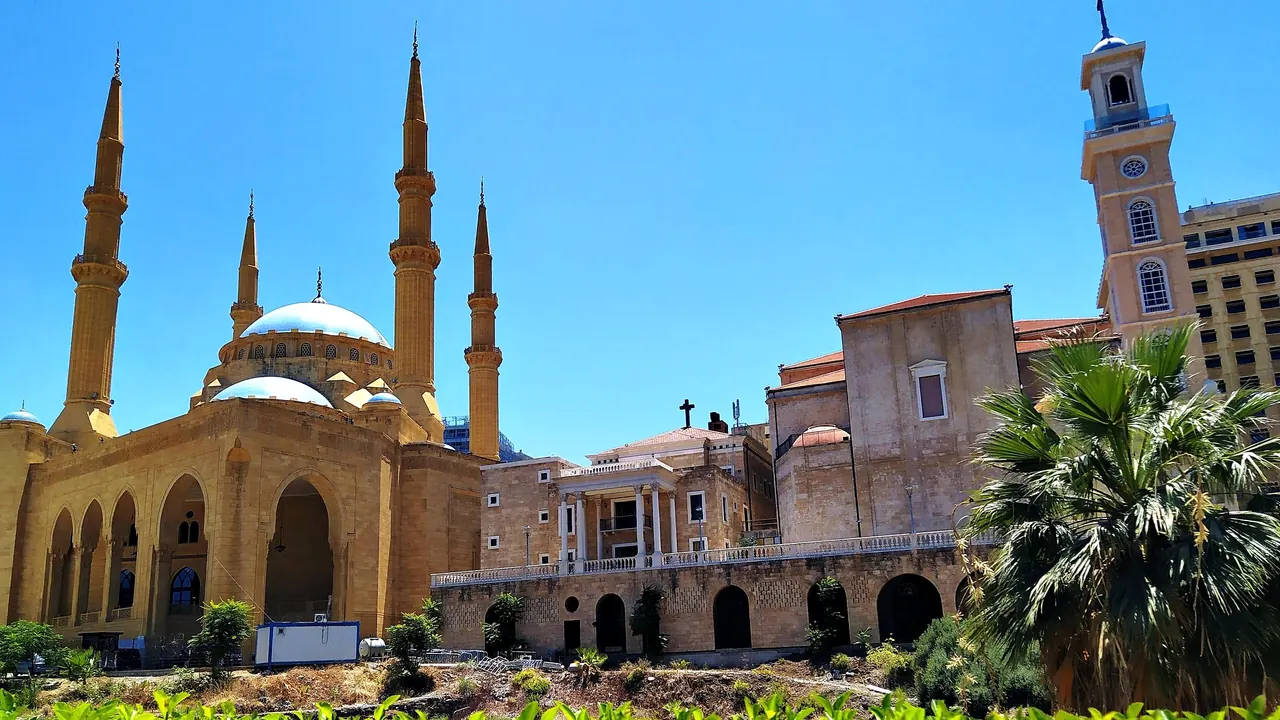
The Mohammad Al-Amin Mosque beside St George Maronite Cathedral
- Nightlife85
- Food & drink84
- Day trips83
Photo: Radosław Botev, CC BY 3.0 PL, cropped
Match
57
Every category weighted equally
- Beach & sun57
- Culture & arts57
- Food & nightlife61
- Family trip54
- Outdoors61
- Relax & unwind55
- Shopping & style57
- On a budget56
Beirut in twelve categories
Our verdict on each, scored 0 to 100 against the same fixed benchmark cities, so a score means the same thing on every page.
Beaches & swimming. Scores 58 out of 100.
Food & drink. Scores 84 out of 100.
Culture & sights. Scores 58 out of 100.
Nightlife. Scores 85 out of 100.
Nature & outdoors. Scores 76 out of 100.
Day trips. Scores 83 out of 100.
Good for families. Scores 36 out of 100.
Getting around. Scores 28 out of 100.
Shopping & style. Scores 56 out of 100.
Affordability. Scores 48 out of 100.
Live music & performing arts. Scores 46 out of 100.
Wellness & relaxation. Scores 27 out of 100.
Beirut category by category
Beaches & swimming
58The Mediterranean off Beirut is warm from June to October, reaching about 28°C in late summer. The city shore is mostly rock, though. Along the Corniche, locals swim off the rocks and concrete platforms, and the one long public sand beach, Ramlet al-Baida, is popular but its water quality is unreliable. Most visitors who want to swim do it the Lebanese way, at private beach clubs with pools, sunbeds and a day-long social scene. These stretch north and south of the city.
The cleaner water and more appealing shores are along the coast, around Byblos, Batroun and the Jiyeh coast to the south, each under an hour away when traffic allows. Beach days are a real part of a summer stay, but they mean a drive and an entrance fee rather than a walk to the sand.
Food & drink
84Eating is one of the best reasons to come. The Lebanese table means long meals of mezze: hummus, moutabal, tabbouleh heavy with parsley, raw kibbeh, grilled halloumi and charred meats, with arak or a bottle from the Bekaa vineyards on the side. Street food is just as good, with manakish baked with za'atar or cheese for breakfast, falafel and shawarma counters, and sweets shops piled with knafeh and syrup-soaked pastries.
The range runs from bakeries in Hamra and Armenian grill and sausage places in Bourj Hammoud to polished modern Lebanese dining rooms in Achrafieh and Mar Mikhael. There are also seafood restaurants along the coast and a weekly farmers' market selling village produce. Coffee is taken strong with cardamom, and lunches on a mountain terrace above the city are a weekend ritual.
Culture & sights
58Beirut's sights are fewer than its long history suggests, because war and rebuilding have broken up much of the old city. The National Museum is the highlight, with Phoenician sarcophagi, Roman mosaics and finds from across the country. The Sursock Museum is a white Ottoman-era villa in Achrafieh used for modern and contemporary art, and the archaeology museum at the American University adds a smaller collection.
Downtown, the restored Ottoman and French Mandate streets around Place de l'Etoile sit beside the Roman baths, the blue-domed Mohammad al-Amin Mosque and St George's Cathedral. Elsewhere, the city's interest is in its streets: Gemmayzeh's stairways and old houses, bullet-marked buildings, and the Pigeon Rocks off Raouche. Two or three days cover the main sights.
Nightlife
85Going out is central to Beirut's identity, and the city stays up very late. The densest bar streets are in Mar Mikhael and Gemmayzeh, where small cocktail and wine bars spill onto the pavement and the crowd moves from one to the next until the early hours. Hamra has a cheaper, student-heavy scene, and Badaro has a quieter neighbourhood bar strip.
The clubs start late and run until dawn, from underground electronic venues in the old industrial area by the port to open-air rooftop clubs in summer. Beach clubs along the coast host day parties that go on into the night. People dress up, tables and bottle service matter at the bigger venues, and weekends in summer, when the diaspora comes home, are the liveliest of the year.
Nature & outdoors
76The city itself is short of green: Horsh Beirut is the only large park, and the Corniche walk along the sea, with views of the Pigeon Rocks, is the main open space. The appeal is the mountains that rise steeply behind the coast. Within an hour you are among pine forests and villages at over 1,000m, and in winter the ski slopes of Faraya and Mzaar are close enough for a day, sometimes with a swim on the coast the same weekend.
The Jeita Grotto's limestone caverns are half an hour north. Paragliders launch above Jounieh Bay, and sections of the long-distance Lebanon Mountain Trail make good day hikes. Further out, about two hours, are the Qadisha Valley's cliffs and the Cedars and Shouf forests. Spring and autumn are the best seasons, because summer on the coast is humid. Traffic makes every outing slower than the map suggests.
Day trips
83Day trips are Beirut's great strength, because a small country puts a remarkable range of history within two hours. Byblos, under an hour north, has a Crusader castle and layers of ruins going back millennia above a small fishing harbour. Baalbek, across the mountains in the Bekaa Valley, has some of the largest Roman temples ever built. On the same route are the Umayyad ruins of Anjar and the Bekaa wineries.
To the south, Sidon has a sea castle and old souks, and Tyre has extensive Roman ruins by the water. In the Shouf hills, the Beiteddine palace and the stone village of Deir el-Qamar make an easy pair. Batroun and the monasteries of the Qadisha Valley lie north. Before heading to the south or the Bekaa, check local conditions, and set off early to beat the traffic.
Good for families
36Children are welcome and fussed over everywhere in Beirut, and restaurants are relaxed about families at the table. Little in the city is built for children, though. The Corniche is the best place for a walk, a bike or scooter ride and street snacks by the sea, and the beach clubs with their pools are where Lebanese families spend summer days. Outside the city, the Jeita Grotto and the cable car up to Harissa above Jounieh are easy outings that children enjoy.
Getting around is the hard part. Pavements are narrow, broken or blocked by parked cars, crossings are few, and the drivers are aggressive, so pushchairs are a struggle and most trips mean a taxi. It suits families with older children who are happy with long meals and the occasional ruin.
Getting around
28Beirut has no metro or tram, and the buses and minivans run on routes a visitor will struggle to work out. Most people rely on ride-hailing apps, ordinary taxis, or the shared 'service' taxis that pick up passengers heading the same way. Within a district, walking works well: Hamra, Downtown, Gemmayzeh and Mar Mikhael are each easy on foot, and the Corniche makes a long seafront walk.
Between districts, though, there are steep streets, broken pavements, wide roads with few crossings, and heavy traffic that builds through the day. Day trips mean a hired car, a driver or an organised tour. Driving yourself is possible but demanding, given the traffic and loose lane discipline.
Shopping & style
56Beirut is a style-conscious city, and shopping reflects that. It is home to several internationally known couture and bridal houses, and the small boutiques of Gemmayzeh, Mar Mikhael and Saifi Village sell work by Lebanese fashion, jewellery and furniture designers. Downtown, the Beirut Souks is a modern open-air mall on the site of the old markets, and Verdun and Achrafieh have the department stores and larger malls.
For something more local, Bourj Hammoud, the Armenian quarter, is full of jewellers, leather workers, spice shops and fabric sellers. The weekly farmers' market sells soaps, preserves and village crafts. What Beirut lacks is a historic covered bazaar in the city itself; for that, go to the old souks of Sidon, Tripoli or Byblos.
Affordability
48Beirut is a mid-priced city for visitors, not a budget one. In Mar Mikhael, Achrafieh and Downtown, sit-down restaurants, cocktail bars, clubs and good hotels cost roughly what they would in Southern Europe. Beach clubs charge entrance fees that add up over a summer stay.
Everyday food is where the city is kind to a budget. Manakish, falafel, shawarma and bakery breakfasts are cheap and excellent, and the mezze in neighbourhood places in Hamra or Bourj Hammoud is good value. Taxis and shared rides are inexpensive over short distances, and museum entry is modest. A visitor who eats locally and skips the clubs spends far less than one who follows the city's polished going-out scene.
Live music & performing arts
46Beirut's performing arts are lively but small in scale. The Lebanese Philharmonic gives regular classical concerts, often in churches and university halls. A handful of independent theatres in Hamra stage Arabic-language plays, cabaret and stand-up, and some of the cabarets revive the old Arabic music-hall repertoire. There is also a steady stream of jazz, Arabic fusion, indie and electronic acts in small venues around Hamra and Mar Mikhael.
The highlight of the year is the summer festival season outside the city. Baalbek stages concerts among its Roman temples, and Beiteddine and Byblos host international and Arab stars in palace courtyards and by the sea. Classical music, opera and big-budget theatre are limited.
Wellness & relaxation
27Beirut is not a restful city. It is loud, fast and full of traffic and generators, and the local idea of relaxing usually involves a long lunch and a late night. The old hammam tradition has nearly disappeared, so spa time means hotel spas and the massage and beauty salons that are part of a well-groomed city's routine.
To slow down, Lebanese families head up into the mountains, where the stone villages of the Shouf and the pine-covered slopes are cooler and quieter in summer. Guesthouses and boutique hotels there make a calm base for a night or two. Sunset walks on the Corniche are the city's own gentle ritual.
When should you go?
Pick a month to see what it is like. The climate figures are measured averages, not a forecast.
Beirut in July
Daytime high, °C
Rainfall in the month, mm
The whole year
Shaded against this city’s own year: the deepest cell is its best month for that figure and the palest its weakest.
Temperature and rainfall are climate normals, averaged over the years shown. Beirut: 1991-2020 (sunshine 1961-1990) normals, Beyrouth Aeroport (8.3 km from centre).
Before you go
| Measure | Beirut |
|---|---|
| Official language | Arabic |
| Currency | Lebanese Pound (LBP) |
| Sockets | ABCG220 V, 50 Hz |
| Driving side | Right |
| Time zone | UTC+2, UTC+3 in summer |
| Emergency number | Police 112/160, ambulance 140, fire 175 |
| Elevation | 0 m |
| Main airport | Beirut Rafic Hariri International Airport (BEY)8 km from centre54 non-stop destinations |
By the numbers
| Measure | Beirut |
|---|---|
| City population | 2,421,354 |
| Museums within 10 km | 15 |
| UNESCO World Heritage sites within 50 km | 2 |
| Swim season, months above 21 °C | 7 months |
Compare Beirut with
Every comparison with a written verdict behind it.