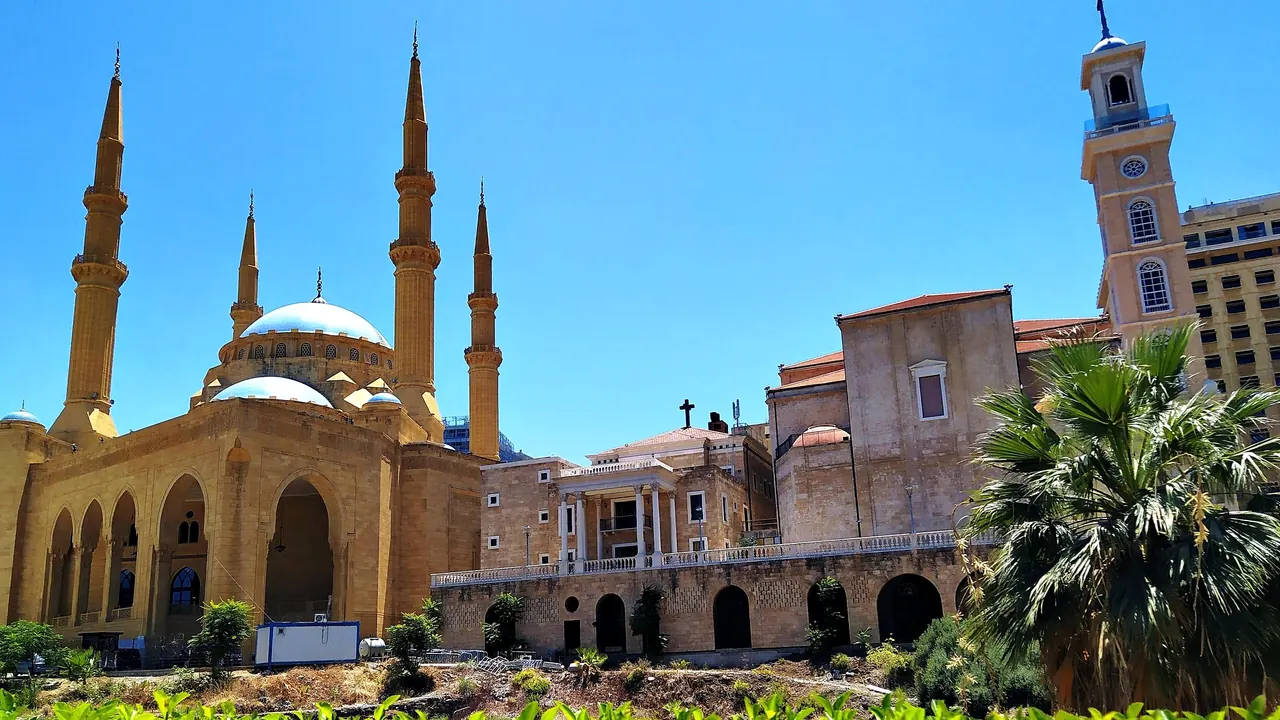
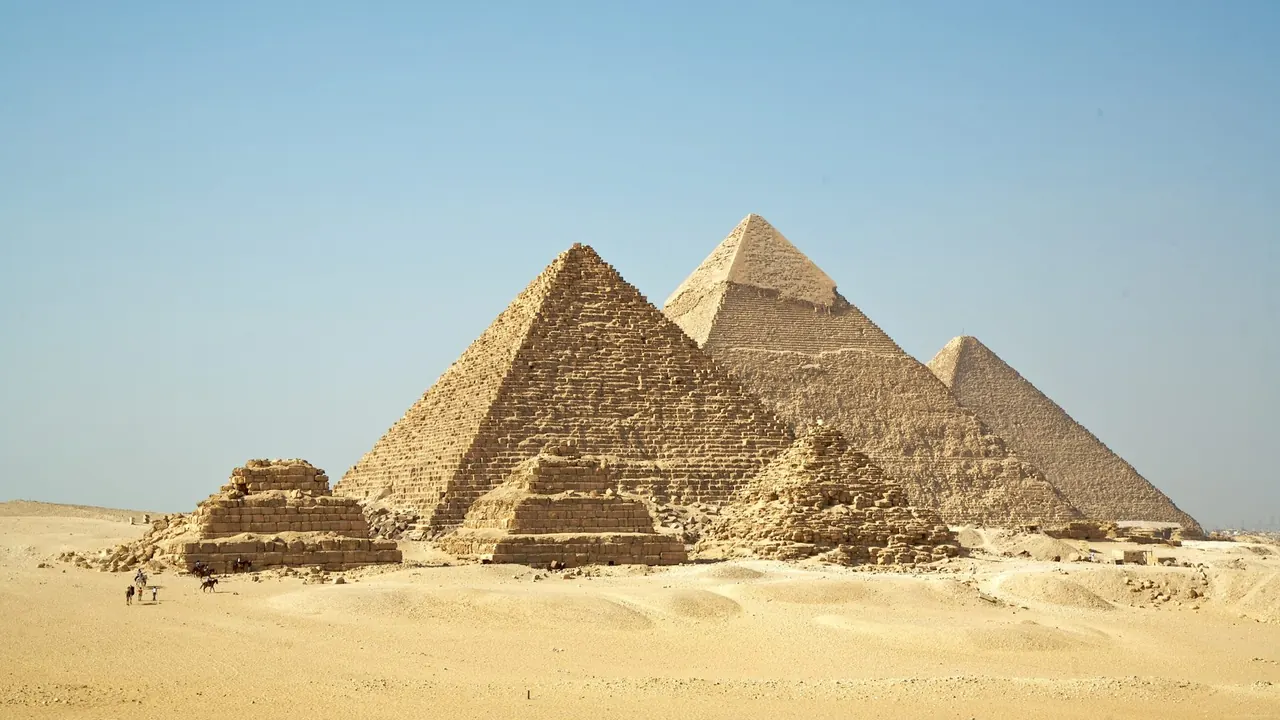
Photos: Beirut by Radosław Botev, CC BY 3.0 PL, cropped; Cairo by Ricardo Liberato, CC BY-SA 2.0, cropped.
Beirut or Cairo?
Our verdict in twelve categories, each scored against the same fixed benchmark cities, and the climate month by month, so you can choose for your trip.
Choose Beirut for
- beaches
- nature and the outdoors
- nightlife
Beirut is the choice if you travel to eat, go out and move between sea and mountains in the same week. Long mezze lunches, bars that stay full until the early hours, summer beach clubs and quick escapes to Byblos, Baalbek or the pine-covered hills make it a city to live in for a few days rather than to tick off. It costs more than Cairo and has fewer great sights within the city, but its pleasures are easier to enjoy.
Choose Cairo for
- prices
- culture and sights
- getting around
Cairo rewards travellers who come for history and are willing to work for it. The pyramids, the great antiquities museums and the medieval lanes of Islamic Cairo add up to more heritage than most countries can show, and a stay costs very little. You trade that for noise, heat, traffic and a quiet night out built around tea and shisha rather than cocktails, so it suits curious, patient visitors more than anyone looking to unwind.
Scoreboard
Twelve categories on one fixed scale from 0 to 100. The shaded stretch is the gap between the two.
Your match
Pick a travel style or drag the sliders, and both match scores follow your weighting.
Wins on beaches and nature and the outdoors with your weighting.
Wins on prices and culture and sights with your weighting.
What matters to you?
Category by category
What the scores mean for a trip.
Beaches & swimming
Beirut is the only one of the two where the sea is part of the stay. In summer the water is warm, locals swim off the rocks along the Corniche, and the private beach clubs north and south of the city make a whole day of it. The cleaner shores near Byblos and Batroun are under an hour away.
Cairo has nothing comparable. The Nile is not for swimming, the Red Sea at Ain Sokhna is a resort-lined weekend trip about 130km away, and in the city a swim means a hotel pool.
Food & drink
Beirut eats better. Its strength is the long Lebanese meal of mezze, grilled meats and arak or Bekaa wine, and it runs from Hamra bakeries and Bourj Hammoud's Armenian grills to polished dining rooms in Achrafieh, with mountain-terrace lunches at weekends.
Cairo's food is cheaper and simpler, and mostly eaten on the street: ful and taameya for breakfast, koshari at lunch, feteer and stuffed pigeon. The traditional ahwa is a pleasure in its own right, but fine dining is thin and wine and beer are not part of everyday meals the way they are in Beirut.
Culture & sights
Here Cairo is in another league. The pyramids and Sphinx at Giza, Tutankhamun's treasures and the royal mummies, the medieval mosques and madrasas along Al-Muizz Street and the Citadel above them, and the churches of Coptic Cairo need many days.
Beirut's long history has survived in fragments. The National Museum's Phoenician sarcophagi and the Sursock Museum's modern art are worth seeing, and Downtown's restored streets and Roman baths make a good walk, but two or three days cover the main sights.
Nightlife
Beirut is one of the great going-out cities of the region, and Cairo is not. Beirut's cocktail and wine bars spill onto the pavements of Mar Mikhael and Gemmayzeh, the clubs by the port and on summer rooftops run until dawn, and people dress up for it.
Cairo stays up just as late, but the night belongs to tea, shisha and backgammon in the ahwas and to families strolling the Nile corniche. Its drinking scene is limited to Zamalek, the big hotels and a few river boats, and it is pricey for the city.
Nature & outdoors
Beirut has the landscape Cairo lacks. Within an hour of the coast you are in pine forests and mountain villages above 1,000m, with the Jeita Grotto, paragliding over Jounieh Bay and stretches of the Lebanon Mountain Trail nearby, and skiing at Faraya in winter. The Qadisha Valley and the cedars are further out.
Cairo's outdoors is desert. Al-Azhar Park and a felucca at sunset are the city's breathing space, Wadi Degla offers dry canyons, and the Fayoum's lakes and dunes are two hours away. Summer heat rules out most of it.
Day trips
Both cities have great excursions, but Beirut's are more varied. In a small country you can reach Phoenician and Crusader Byblos, the Roman temples of Baalbek, Sidon's sea castle, Tyre's seaside ruins and the Beiteddine palace, often combined with wineries or mountain villages.
From Cairo the outings are mostly pharaonic: the Step Pyramid at Saqqara, the quiet pyramids of Dahshur and the ruins of Memphis. Wadi Natrun's monasteries and a long day in Alexandria broaden things. From either city, plan on a driver or a tour.
Good for families
Neither city is easy with children, and they are hard in similar ways: broken pavements, aggressive traffic and few places built for kids, though people in both are warm towards families. What differs is the payoff.
In Beirut it is the gentle stuff: scooters on the Corniche, beach-club pools in summer, the Jeita Grotto and the cable car to Harissa. Cairo offers the pyramids, a camel ride and the mummies, which children remember for years, but it comes with touts and heat, so go between November and March.
Getting around
Cairo is slightly easier, mainly because it has a metro. It links Tahrir Square with Coptic Cairo and Heliopolis while the traffic sits still above it, and river taxis cross the Nile. Beirut has no metro or tram and buses visitors can't follow, so you depend on ride-hailing, taxis and shared service taxis.
In both cities the traffic is heavy, crossings are scarce and walking works only within a district. Beirut's Hamra, Gemmayzeh and the Corniche are pleasant on foot, as are Cairo's Zamalek and Al-Muizz Street.
Shopping & style
Both offer similarly good shopping, but in different styles. Beirut is about design and fashion: couture and bridal houses, small designer boutiques in Gemmayzeh and Saifi Village, and the jewellers and leather workers of Bourj Hammoud. It has no historic bazaar of its own.
Cairo has the bazaar Beirut lacks. Khan el-Khalili has been trading for centuries, and around it are the hand-stitched appliqué of the Street of the Tentmakers and the coppersmiths' alley. Expect to haggle and to need patience.
Affordability
Cairo is far cheaper. Meals, the metro, ride-hailing and comfortable hotels in Zamalek or downtown cost little. The main extras are the higher entry fees foreigners pay at the big sites, plus tips and guides.
Beirut is mid-priced. Its restaurants, bars and good hotels cost roughly what they would in Southern Europe, and beach-club fees add up. You can still save by eating manakish and neighbourhood mezze in Hamra, but the city's best-known pleasures are the expensive ones.
Live music & performing arts
The two are on a similar level, with different strengths. Cairo has a formal stage at the Opera House on Gezira Island, with a symphony orchestra and ballet, and the whirling tanoura in the medieval Wikala of al-Ghouri is a striking evening.
Beirut's scene is smaller but looser: jazz, Arabic fusion and electronic acts in Hamra and Mar Mikhael, cabaret reviving the old music-hall songs, and in summer, concerts among the temples of Baalbek and in the courtyards of Beiteddine.
Wellness & relaxation
Neither city is restful, but Beirut gives you more ways to slow down. Its stone villages in the Shouf and the cool, pine-covered mountain slopes are close enough for a quiet night or two, and a sunset walk on the Corniche is a daily ritual.
Cairo's noise and dust hardly ease. Calm comes from a Nile-side hotel spa, a felucca or a historic courtyard garden, and real rest usually means leaving for the Red Sea or an oasis.
When should you go?
Pick your month. The climate figures are measured averages, not a forecast.
Beirut in July
Cairo in July
Daytime high, °C
Rainfall in the month, mm
Temperature and rainfall are climate normals, averaged over the years shown. Beirut: 1991-2020 (sunshine 1961-1990) normals, Beyrouth Aeroport (8.3 km from centre). Cairo: 1991-2020 normals, Helwan (21.9 km from centre).
Beirut has a proper beach season from June to October, when the sea warms to about 28°C by late summer and the days are long, dry and sunny. July and August are hot and humid, with highs near 31°C, which makes city walking hard work. Rain starts in October and winter is wet and greyer, with around 178mm in January, so April, May and late October into November are the best months for sightseeing and mountain trips.
Cairo almost never rains, so its calendar is all about heat. From May to September it is too hot for long days at the pyramids or in the old city, peaking around 36°C in July and August. November to March is the time to go, with highs from about 19°C and plenty of winter sun. That makes the two cities complementary: Cairo is at its most pleasant while Beirut is at its wettest, and Beirut's summer by the sea is when Cairo is hardest to bear.
Which traveller are you?
On a culture and arts trip, Cairo wins easily. Giza, the antiquities museums, Islamic Cairo and Coptic Cairo could fill a week, with tanoura dancing and the Opera House in the evenings. Beirut's National Museum and Sursock take a couple of days.
For a food and nightlife trip, Beirut is the better choice. The mezze table, Bekaa wines and Armenian grills come before late nights in the bars of Mar Mikhael and Gemmayzeh and clubs that run until dawn. Cairo's evenings centre on coffeehouses, with little drinking.
On a trip with a tight budget, Cairo goes much further. Street food, the metro, ride-hailing and mid-range hotels cost very little. Beirut can be done cheaply on manakish and shawarma, but its restaurants, bars and beach clubs are priced like Southern Europe.
Before you go
| Measure | Beirut | Cairo |
|---|---|---|
| Official language | Arabic | Arabic |
| Currency | Lebanese Pound (LBP) | Egyptian Pound (EGP) |
| Sockets | ABCG220 V, 50 Hz | CF220 V, 50 Hz |
| Driving side | Right | Right |
| Time zone | UTC+2, UTC+3 in summer | UTC+2, UTC+3 in summer |
| Emergency number | Police 112/160, ambulance 140, fire 175 | Police 122, ambulance 123, fire 180 |
| Elevation | 0 m | 23 m |
| Main airport | Beirut Rafic Hariri International Airport (BEY)8 km from centre54 non-stop destinations | Cairo International Airport (CAI)17 km from centre127 non-stop destinations |
| Public holidays this year | - | 15 days |
By the numbers
| Measure | Beirut | Cairo |
|---|---|---|
| City population | 2,421,354 | 9,801,536 |
| People per km² | - | 18,564 |
| Museums within 10 km | 15 | 48 |
| UNESCO World Heritage sites within 50 km | 2 | 2 |
| Swim season, months above 21 °C | 7 months | - |
Where else could you go?
Every comparison below shares a destination with this one, so you can follow Beirut or Cairo somewhere new.