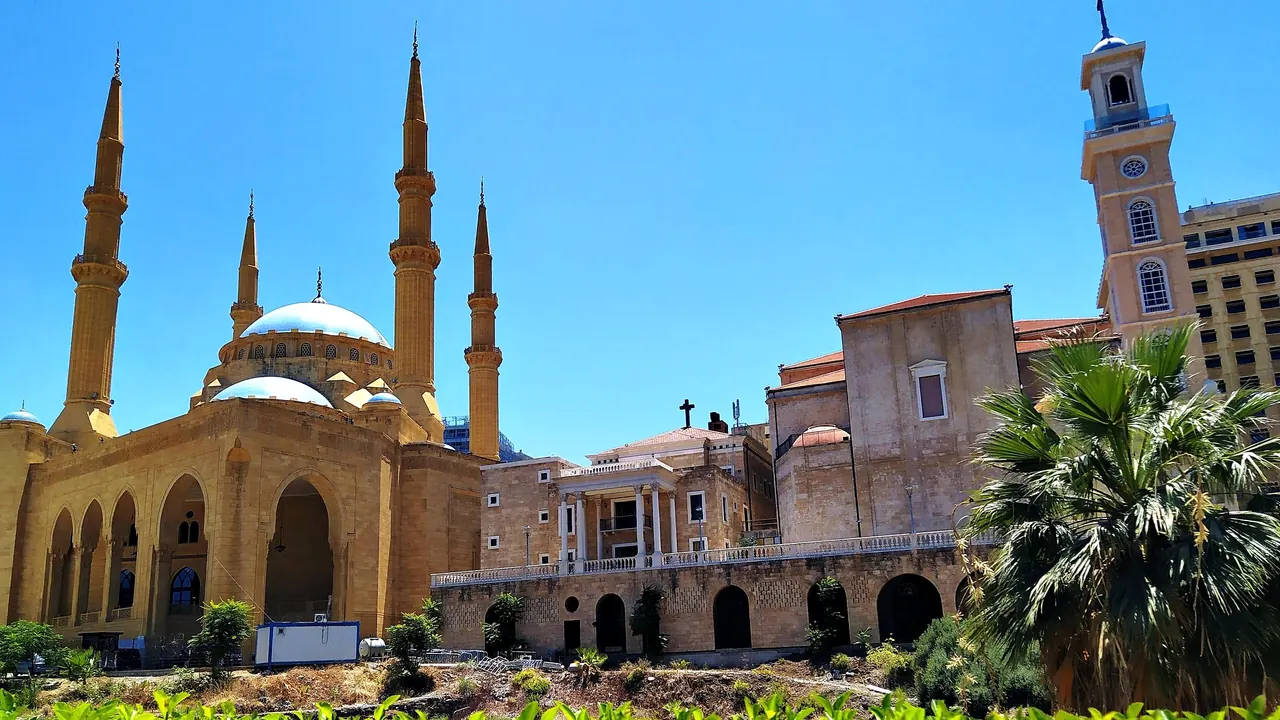
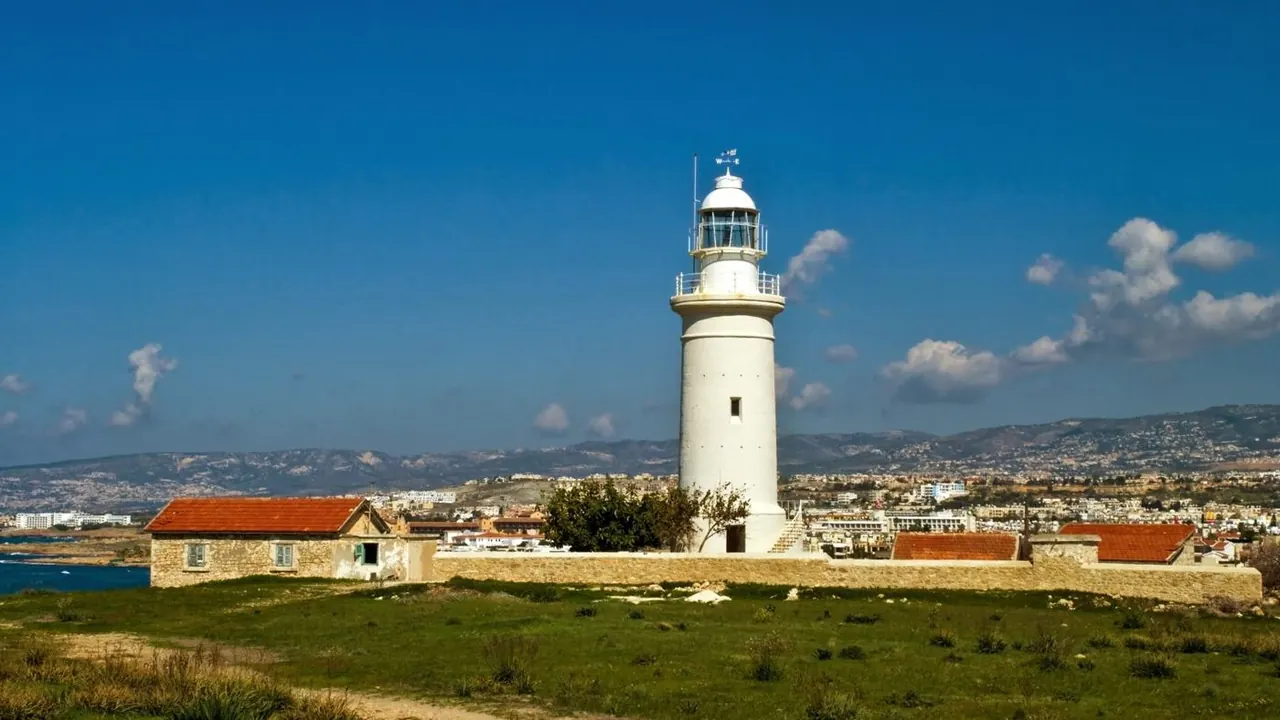
Photos: Beirut by Radosław Botev, CC BY 3.0 PL, cropped; Paphos by Nikodem Nijaki, CC BY-SA 3.0, cropped.
Beirut or Paphos?
Our verdict in twelve categories, each scored against the same fixed benchmark cities, and the climate month by month, so you can choose for your trip.
Choose Beirut for
- nightlife
- food and drink
- shopping
Beirut suits travellers who plan their days around the table and their nights around the bar. Long mezze lunches, late evenings in Mar Mikhael and Gemmayzeh, and Baalbek, Byblos and the mountains all within reach make it a rich and intense city trip. It works best for adults who don't mind taxis, traffic and very late nights.
Choose Paphos for
- families
- beaches
- wellness
Families, and anyone who wants an easy week of sea and sun, will be happier in Paphos. The water is clear, Coral Bay's sand is shallow, the resorts have pools and the pace is calm, so slower days come easily. The Roman mosaics and the Akamas coast give you a change of scene. Eating out and going out are far quieter than in Beirut, though.
Scoreboard
Twelve categories on one fixed scale from 0 to 100. The shaded stretch is the gap between the two.
Your match
Pick a travel style or drag the sliders, and both match scores follow your weighting.
Wins on nightlife and food and drink with your weighting.
Wins on families and beaches with your weighting.
What matters to you?
Category by category
What the scores mean for a trip.
Beaches & swimming
Neither city has much of a beach in town. Beirut's shore is rock and concrete platforms off the Corniche, and Ramlet al-Baida, its only long stretch of sand, has unreliable water. Kato Paphos has short strips of sand and shingle with rocky entries. The real difference is how far you have to go for good swimming.
In Beirut a beach day usually means a private club with pools and sunbeds, or a drive to Byblos, Batroun or the Jiyeh coast. From Paphos, Coral Bay's shallow sandy crescent is a short bus ride away and Lara Bay offers wild, undeveloped coast. That makes the sea the centre of a Paphos stay, not an outing.
Food & drink
Beirut is one of the Mediterranean's great eating cities, and here Paphos is well behind. Both share a meze tradition, but Beirut adds manakish bakeries and falafel counters, the Armenian grills of Bourj Hammoud, polished modern Lebanese dining rooms in Achrafieh and Mar Mikhael, and wine from the Bekaa.
In Paphos the good cooking is in the family tavernas of Ktima and the hill villages, with kleftiko, halloumi and wines from the Laona area. Much of the food around the harbour is aimed at package tourists. Expect to drive inland for a memorable meal, and don't expect street food or fine dining.
Culture & sights
The two are broadly level on sights, but what they offer is different. Beirut gives you a museum city and its streets: Phoenician sarcophagi at the National Museum, contemporary art in the Sursock villa, the restored lanes around Place de l'Etoile and the war-marked stairways of Gemmayzeh.
Paphos is concentrated ancient history. The UNESCO-listed Archaeological Park, with the House of Dionysus mosaics, and the rock-cut Tombs of the Kings lie close together by the sea. Each takes two or three days. Choose Beirut for a modern city layered over its past, and Paphos for Roman floors where they were laid.
Nightlife
Beirut goes out properly, and late. Cocktail and wine bars spill onto the pavements in Mar Mikhael and Gemmayzeh, electronic clubs near the port run until dawn, and summer adds rooftop clubs and beach-club day parties. Dressing up is part of the night.
Paphos has one main strip, Bar Street in Kato Paphos, with pubs, karaoke and a few clubs that suit groups on a sun-and-party week. Much of it shuts from November to March. Otherwise, evenings there mean a drink by the harbour and a long taverna dinner.
Nature & outdoors
Both have mountains and coast within reach, and Beirut has the edge for range. Within an hour of the city you are among pine forests and villages above 1,000m. Close by are the Jeita Grotto, paragliding over Jounieh Bay, sections of the Lebanon Mountain Trail, and winter skiing at Faraya and Mzaar, near enough for a day. Traffic slows every outing, though.
Paphos is gentler and centred on the coast. It has the roadless Akamas peninsula, where turtles nest, the short walk through Avakas Gorge and diving on local wrecks. The Troodos mountains are about an hour and a half inland. In both places, spring and autumn are the seasons for walking.
Day trips
Beirut is the stronger base for day trips because so much major history lies within two hours. You can reach Baalbek's huge Roman temples, Byblos, Anjar, Sidon's sea castle, Tyre's ruins by the water and the Beiteddine palace. Start early, use a driver, and check conditions before heading south or into the Bekaa.
Paphos has a good, easier circuit by hire car. It takes in Kourion on its cliff, the Sanctuary of Aphrodite, the painted churches of the Troodos and the wine villages around Omodos. The longest outing is Nicosia, a walled capital divided between south and north.
Good for families
Beirut is warm towards children but has little built for them. The Corniche, beach-club pools, the Jeita Grotto and the cable car up to Harissa are the main treats. Broken pavements and aggressive traffic make pushchairs hard work, so the city suits older children who are happy at long meals.
Paphos is far easier with a family. Coral Bay's shallow sand, resort pools and kids' clubs, a water park and boat trips fill the days, the promenade is easy with a pushchair, and tavernas welcome children late into the evening.
Getting around
Neither city has a metro, and both lean on cars, but Paphos is simpler. In Beirut you can walk within Hamra, Downtown, Gemmayzeh or Mar Mikhael. Between districts, steep streets, broken pavements and heavy traffic mean using ride-hailing or the shared 'service' taxis, and day trips need a driver or a tour.
In Paphos the flat promenade of Kato Paphos is pleasant to walk, and buses run up to Ktima and out to Coral Bay. A hire car covers the rest. The roads are good and you drive on the left, without Beirut's chaos.
Shopping & style
Beirut is a genuine shopping city for anyone who cares about style. There are designer boutiques in Gemmayzeh, Mar Mikhael and Saifi Village, well-known couture houses, the Beirut Souks, and malls in Verdun. Bourj Hammoud adds jewellers, leather workers and spice shops.
Paphos has little beyond the covered municipal market in Ktima and the beachwear shops on the seafront. Its best buys are lace, pottery, honey and wine, bought in the villages where they are made.
Affordability
Overall the two cost about the same, but the money goes in different places. In Beirut, excellent street food and short taxi rides keep everyday costs low, while cocktail bars, clubs and beach-club fees push spending up to Southern European levels. In Paphos, meze dinners and buses are fair value, but hiring a car is close to essential and seafront hotels cost much more in July and August, so the easiest saving is to come outside high summer.
Live music & performing arts
Beirut has a small but year-round stage. The Lebanese Philharmonic plays in churches and university halls, Hamra has Arabic theatre and cabaret, and small venues host jazz, Arabic fusion and electronic acts. In summer there are the festivals at Baalbek, Beiteddine and Byblos.
Paphos has little regular programme beyond Cypriot folk music at taverna nights. Its one standout is the Aphrodite Festival, an open-air opera staged in front of the harbour castle in early autumn.
Wellness & relaxation
Beirut is loud and congested and stays up late, and its hammam tradition has nearly gone. Rest there means a hotel spa, a sunset walk on the Corniche, or a night or two in a guesthouse in the Shouf mountains. Paphos is the calmer stay, with spas and indoor pools at the resort hotels, slow walks along the promenade and quiet villages inland. It is most restful once the summer crowds have left the coast.
When should you go?
Pick your month. The climate figures are measured averages, not a forecast.
Beirut in July
Paphos in July
Daytime high, °C
Rainfall in the month, mm
Where the figures come from
Paphos has no rain gauge within 25 km of the centre, so its rainfall comes from a gridded climate dataset read at the city rather than from a gauge further away.
Temperature and rainfall are climate normals, averaged over the years shown. Beirut: 1991-2020 (sunshine 1961-1990) normals, Beyrouth Aeroport (8.3 km from centre). Paphos: 1991-2020 normals, Paphos Airport (8.4 km from centre).
Through the summer the two are close. Rain all but stops from June to September, and daytime highs reach about 31°C by August. In both places the sea is warm enough for swimming from June, peaks at 28°C in late summer and stays swimmable into November. Midsummer is heavy going for walking the streets. Beirut is the harder of the two, with its humid coast and heat that holds through September, when Paphos is starting to ease. Beirut's long summer days bring well over 300 hours of sunshine a month from May to August.
Winter is where they part. Both stay mild, with highs in the high teens, but Beirut is much the wetter. About 178mm of rain falls there in January, against roughly 98mm in Paphos. For sightseeing and walking, April, May and October suit both cities, and spring is also when Beirut's mountains are at their best.
Which traveller are you?
For a food and nightlife trip, Beirut wins easily. Mezze lunches, manakish breakfasts and the Armenian grills of Bourj Hammoud lead into the bars of Mar Mikhael and Gemmayzeh and clubs that run until dawn. Paphos has village tavernas and a single resort bar strip.
On a family trip with young children, Paphos is the easier choice. Coral Bay's shallow sand, hotel pools with kids' clubs, the water park and a promenade made for pushchairs all suit small children. In Beirut, broken pavements and heavy traffic turn most outings into a taxi ride.
For a beach and sun trip, Paphos puts the sea at the centre. The water is clear, stays swimmable into November, and Coral Bay is a short ride away. Beirut's rocky shore means paying for a beach club or driving to Byblos or Batroun for cleaner water.
Before you go
| Measure | Beirut | Paphos |
|---|---|---|
| Official language | Arabic | Turkish, Greek, Modern Greek |
| Currency | Lebanese Pound (LBP) | Euro (EUR) |
| Sockets | ABCG220 V, 50 Hz | G240 V, 50 Hz |
| Driving side | Right | Left |
| Time zone | UTC+2, UTC+3 in summer | UTC+2, UTC+3 in summer |
| Emergency number | Police 112/160, ambulance 140, fire 175 | 112 |
| Elevation | 0 m | 72 m |
| Main airport | Beirut Rafic Hariri International Airport (BEY)8 km from centre54 non-stop destinations | Paphos International Airport (PFO)8 km from centre55 non-stop destinations |
| Public holidays this year | - | 17 days |
By the numbers
| Measure | Beirut | Paphos |
|---|---|---|
| City population | 2,421,354 | 35,961 |
| People per km² | - | 1,987 |
| Museums within 10 km | 15 | 4 |
| UNESCO World Heritage sites within 50 km | 2 | 2 |
| Swim season, months above 21 °C | 7 months | 6 months |
Where else could you go?
Every comparison below shares a destination with this one, so you can follow Beirut or Paphos somewhere new.