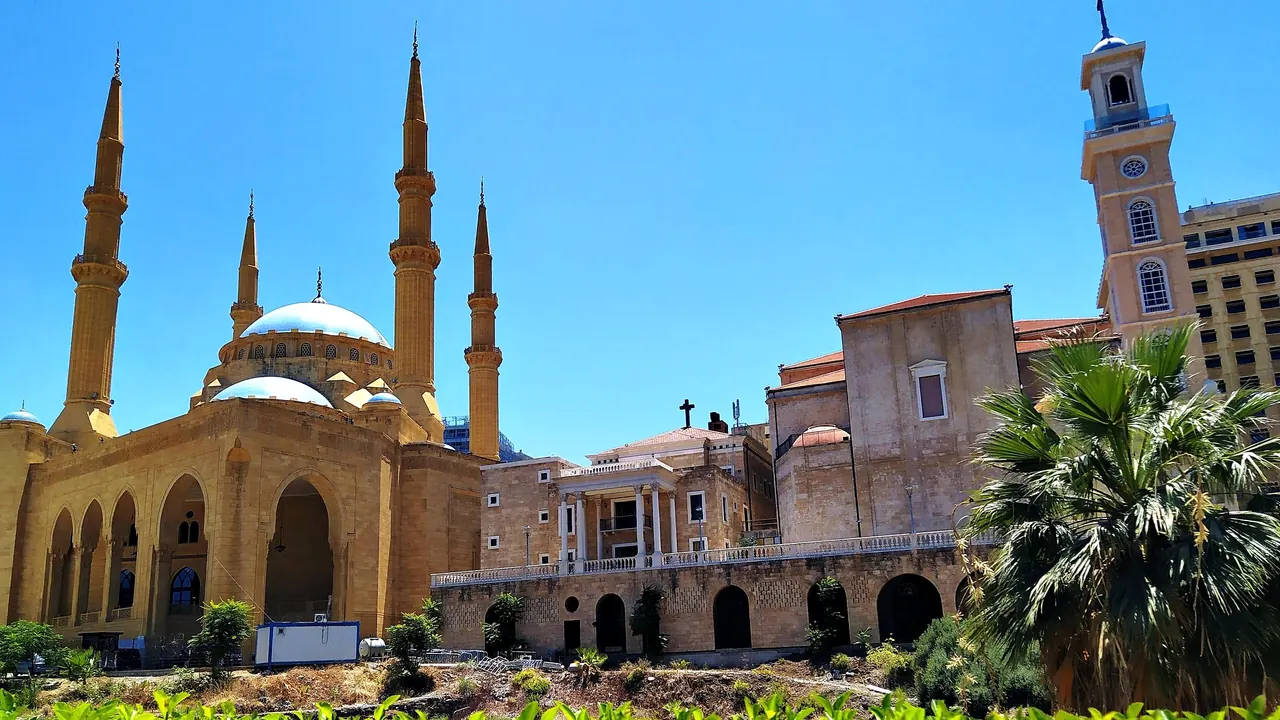
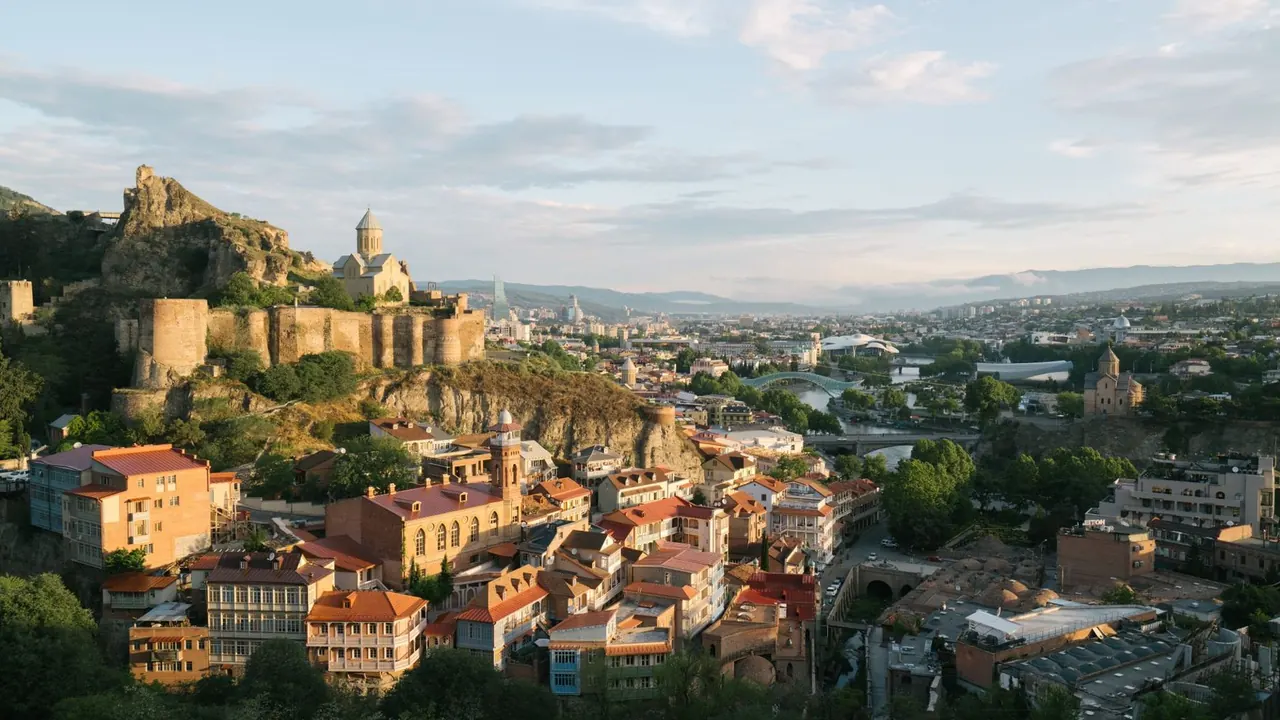
Photos: Beirut by Radosław Botev, CC BY 3.0 PL, cropped; Tbilisi by ArtHouse Studio, Pexels License.
Beirut or Tbilisi?
Our verdict in twelve categories, each scored against the same fixed benchmark cities, and the climate month by month, so you can choose for your trip.
Choose Beirut for
- beaches
- nature and the outdoors
- nightlife
Beirut suits a summer trip that mixes the Mediterranean with long Lebanese meals and late nights. Swimming at beach clubs or up the coast at Byblos, mezze lunches and bar-hopping in Mar Mikhael fill the days. Baalbek, Sidon and the mountain villages are all within a couple of hours, so it also works as a base for seeing a whole country. Expect to rely on taxis and to spend roughly what you would in Southern Europe once you go out in style.
Choose Tbilisi for
- wellness
- prices
- getting around
Travellers on a tighter budget, or those who would rather walk than drive, will be happier in Tbilisi. Its old town of wooden balconies and early churches is compact enough to explore on foot, with a metro to fill the gaps, and Georgian food and qvevri wine cost little. Evenings can end in a private sulphur bath or at the opera. There is no sea, though, and the going-out scene is narrower, built around serious techno clubs rather than Beirut's every-night bar life.
Scoreboard
Twelve categories on one fixed scale from 0 to 100. The shaded stretch is the gap between the two.
Your match
Pick a travel style or drag the sliders, and both match scores follow your weighting.
Too close to call, level with your weighting
Wins on beaches and nature and the outdoors with your weighting.
Wins on wellness and prices with your weighting.
What matters to you?
Category by category
What the scores mean for a trip.
Beaches & swimming
Beirut is a Mediterranean city with a proper swimming season, although the city shore is mostly rock. People swim off the Corniche platforms or pay for a day at a beach club with pools and sunbeds. The better water and sand lie up and down the coast at Byblos, Batroun and Jiyeh.
Tbilisi has nothing comparable. The Black Sea is about five hours away, so a summer dip means the Tbilisi Sea reservoir, Turtle Lake or a hotel pool. That is fine for cooling off but no reason to choose the city.
Food & drink
Both are cities people travel to eat in, but Beirut offers more variety. It has long mezze lunches and manakish breakfasts, Armenian grills in Bourj Hammoud, seafood on the coast and polished modern Lebanese cooking in Achrafieh and Mar Mikhael, with arak or Bekaa wine alongside.
Tbilisi's table is narrower but just as distinctive: khinkali, Adjarian khachapuri, walnut sauces and shoti bread from clay ovens. Amber qvevri wine from Kakheti is a draw of its own. Cooking from other parts of the world and fine dining are thin on the ground.
Culture & sights
These two are evenly matched, but they show their history in different ways. War has broken up much of old Beirut, so its best moments sit in museums, above all the Phoenician sarcophagi and Roman mosaics of the National Museum and the art of the Sursock Museum. A restored downtown around Place de l'Etoile adds to these.
Tbilisi's appeal is the old city itself. Crooked lanes, carved balconies and sixth-century Anchiskhati sit below the Narikala walls, with Art Nouveau Sololaki close by, and the Colchian gold in the national museum is the main collection piece. Each takes two or three days.
Nightlife
Beirut wins on range and stamina. Mar Mikhael and Gemmayzeh fill with pavement wine and cocktail bars every night, clubs by the port and on summer rooftops run until dawn, and coastal beach clubs host day parties. People dress up, and bottle service matters at the big venues.
Tbilisi's reputation rests on a few serious techno clubs in industrial and Soviet-era buildings, with strict doors and a crowd there to dance. Around them are relaxed wine bars in Sololaki and courtyard bars near Marjanishvili. On nights without a big club event, the city goes noticeably quiet.
Nature & outdoors
Beirut itself has little green beyond Horsh Beirut and the Corniche, but its mountains are remarkably close. Pine forests and villages above 1,000m are an hour away, the Jeita Grotto is nearer still, and in winter Faraya and Mzaar make skiing an easy day out, sometimes with a swim on the coast the same weekend.
Tbilisi has more green inside the city, with the funicular to Mtatsminda and trails from Turtle Lake into Tbilisi National Park. The big scenery of the Greater Caucasus starts about two hours north at Gudauri, and Kazbegi deserves an overnight stay rather than a day trip.
Day trips
Few capitals can match Beirut for day trips. Phoenician Byblos is under an hour away, and the colossal Roman temples of Baalbek, the Umayyad town of Anjar, Sidon's sea castle and Tyre's seaside ruins all lie within about two hours. Check conditions before going south or to the Bekaa.
Tbilisi has a strong set of its own, with more monasteries and wine than ancient ruins. Mtskheta is just half an hour away, and there are full days among Kakheti's qvevri cellars and walled Sighnaghi, the rock-cut town of Uplistsikhe and the desert cave monastery of David Gareja.
Good for families
Neither city is built around children, but Tbilisi offers them a little more. The funicular to the Mtatsminda amusement park and its Ferris wheel, the cable car to Narikala, the zoo and the Vake and Dedaena parks give families easy outings in town. Steep cobbles, underpasses with stairs and summer heat still make pushchairs hard work.
In Beirut, family days mostly mean the Corniche, beach club pools and trips out to the Jeita Grotto or the Harissa cable car. Broken pavements and few crossings mean you will take taxis everywhere.
Getting around
Tbilisi is the easier city to move around. Its centre runs compactly from the Old Town through Sololaki to Rustaveli Avenue, and a two-line Soviet metro covers the main axis. Ride-hailing is cheap for everything else.
Beirut has no metro or tram, and visitors rarely manage the buses and minivans. Hamra, Gemmayzeh and Mar Mikhael are pleasant on foot, but getting between them means taxis or shared 'service' cars in heavy traffic. In both cities, day trips are best done with a driver or a tour.
Shopping & style
Beirut is the better city for clothes and design. Lebanese couture and bridal houses, designer boutiques in Gemmayzeh, Mar Mikhael and Saifi Village, and malls in Verdun and Achrafieh give real choice. Bourj Hammoud adds Armenian jewellers, leather workers and spice shops.
Tbilisi's shopping is mostly about taking Georgia home. The Dry Bridge flea market is full of Soviet badges and old silver, and there are cloisonné enamel workshops, carpets and qvevri wine and chacha for the flight. Beyond a few local designers in Vera and Sololaki, the choice is thin.
Affordability
Tbilisi is much cheaper day to day. A big Georgian meal with wine, a guesthouse room, a metro ride or a trip across town by ride-hailing all cost little, and most churches are free. Only boutique hotels, cocktails and imported goods approach European levels.
Beirut can be cheap if you live on manakish, falafel and neighbourhood mezze in Hamra or Bourj Hammoud. Its polished side is a different matter: Achrafieh restaurants, clubs, good hotels and repeated beach club fees cost about what they would in Southern Europe.
Live music & performing arts
Tbilisi has more to see on an ordinary night. The Moorish-style Opera and Ballet Theatre runs a full season, and national ensembles perform athletic Georgian folk dance. UNESCO-recognised polyphonic singing fills concerts and church services, and the Gabriadze marionette theatre stages puppet plays that need no translation.
Beirut's scene is smaller and more informal: Lebanese Philharmonic concerts in churches, Hamra's theatres and cabarets, and jazz and Arabic fusion in small bars. Its big moments come in summer, when Baalbek, Beiteddine and Byblos stage festival concerts among ruins and palace courtyards.
Wellness & relaxation
Tbilisi has a genuine bathing tradition, which Beirut has lost. Under the brick domes of Abanotubani, the city's sulphur springs still feed historic bathhouses where you can take a private hot pool and a kisi scrub. Slow courtyard dinners round out a gentle evening, even though the streets themselves are steep and loud.
Beirut's hammams have nearly disappeared, leaving hotel spas and beauty salons in a city of traffic and generators. Real calm means a sunset walk on the Corniche or a night or two in a Shouf village guesthouse.
When should you go?
Pick your month. The climate figures are measured averages, not a forecast.
Beirut in July
Tbilisi in July
Daytime high, °C
Rainfall in the month, mm
Temperature and rainfall are climate normals, averaged over the years shown. Beirut: 1991-2020 (sunshine 1961-1990) normals, Beyrouth Aeroport (8.3 km from centre). Tbilisi: 1991-2020 (sunshine 1961-1990) normals, Tbilisi (13.8 km from centre).
Beirut is a summer and shoulder-season city. From June to October the sea is warm enough for proper swimming, reaching 28°C in late summer, and June to September is almost completely dry. July to September is hot and humid on the coast, so April, May and October are kinder for walking the streets and heading into the mountains, although October is when the rain returns. Winter stays mild, but November to March is wet, with January the wettest month at about 178mm.
Tbilisi has sharper seasons. January highs are around 7°C, and in July and August the valley reaches 32°C, too hot for comfortable afternoons on the steep streets. The best walking weather falls between the two extremes, from late April to early June and again in September and October, when days are warm rather than hot. The drawback of the spring window is that May is the wettest month, at about 97mm, so expect showers. Beirut has more sunshine all year round. Tbilisi's winters are drier than Beirut's but grey and cold.
Which traveller are you?
For a beach and sun trip, Beirut is the only real choice. The Mediterranean is warm from June to October, with beach clubs along the city's coast and cleaner sand around Byblos and Batroun. Tbilisi is inland, and the Black Sea is a five-hour journey.
On a trip on a tight budget, Tbilisi goes much further. Generous Georgian meals with wine, guesthouses, metro rides and most churches cost little or nothing. In Beirut, street food is cheap, but bars, clubs, hotels and beach club fees quickly approach Southern European levels.
For a relaxing and wellness trip, Tbilisi has the edge thanks to the sulphur baths of Abanotubani. You can book a private hot pool and a kisi scrub there, in a tradition centuries old. Beirut is loud and fast, its hammams have nearly gone, and calm means escaping to the Shouf.
Before you go
| Measure | Beirut | Tbilisi |
|---|---|---|
| Official language | Arabic | Georgian |
| Currency | Lebanese Pound (LBP) | Lari (GEL) |
| Sockets | ABCG220 V, 50 Hz | CF220 V, 50 Hz |
| Driving side | Right | Right |
| Time zone | UTC+2, UTC+3 in summer | UTC+4 |
| Emergency number | Police 112/160, ambulance 140, fire 175 | 112 |
| Elevation | 0 m | 575 m |
| Main airport | Beirut Rafic Hariri International Airport (BEY)8 km from centre54 non-stop destinations | Tbilisi International Airport (TBS)15 km from centre64 non-stop destinations |
| Public holidays this year | - | 17 days |
By the numbers
| Measure | Beirut | Tbilisi |
|---|---|---|
| City population | 2,421,354 | 1,331,485 |
| People per km² | - | 1,849 |
| Museums within 10 km | 15 | 29 |
| UNESCO World Heritage sites within 50 km | 2 | 1 |
| Swim season, months above 21 °C | 7 months | - |
Where else could you go?
Every comparison below shares a destination with this one, so you can follow Beirut or Tbilisi somewhere new.