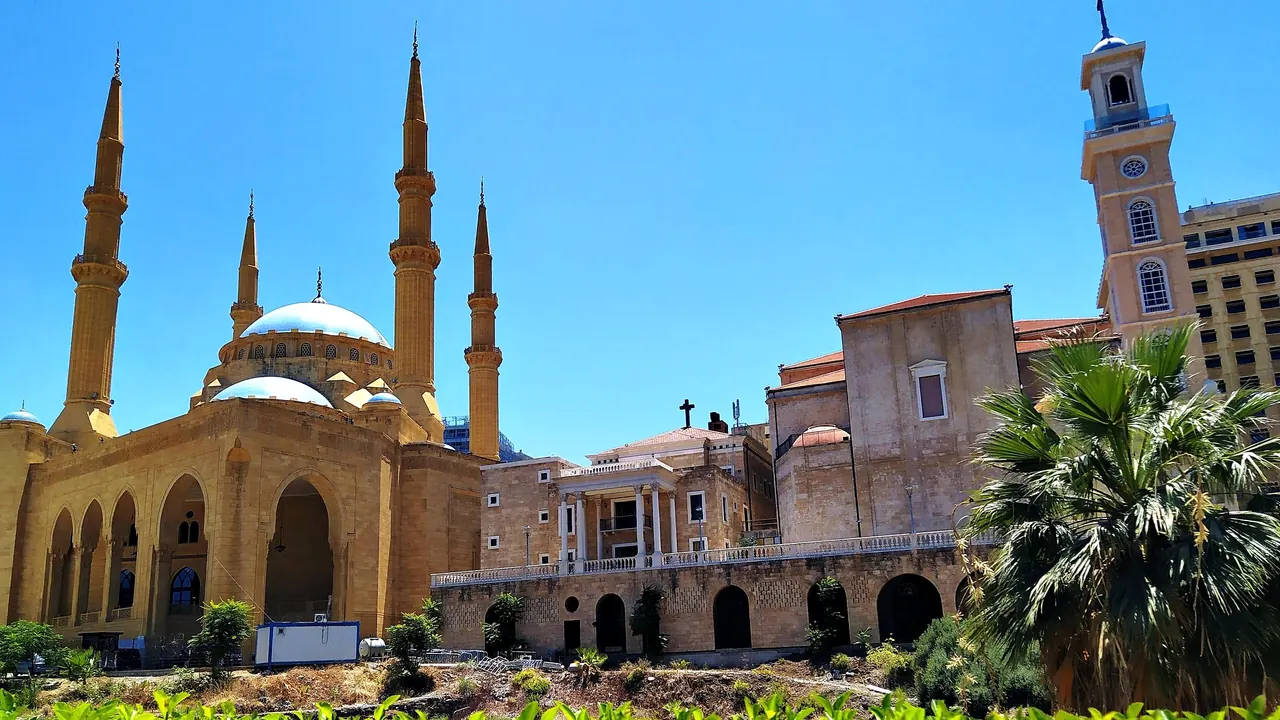
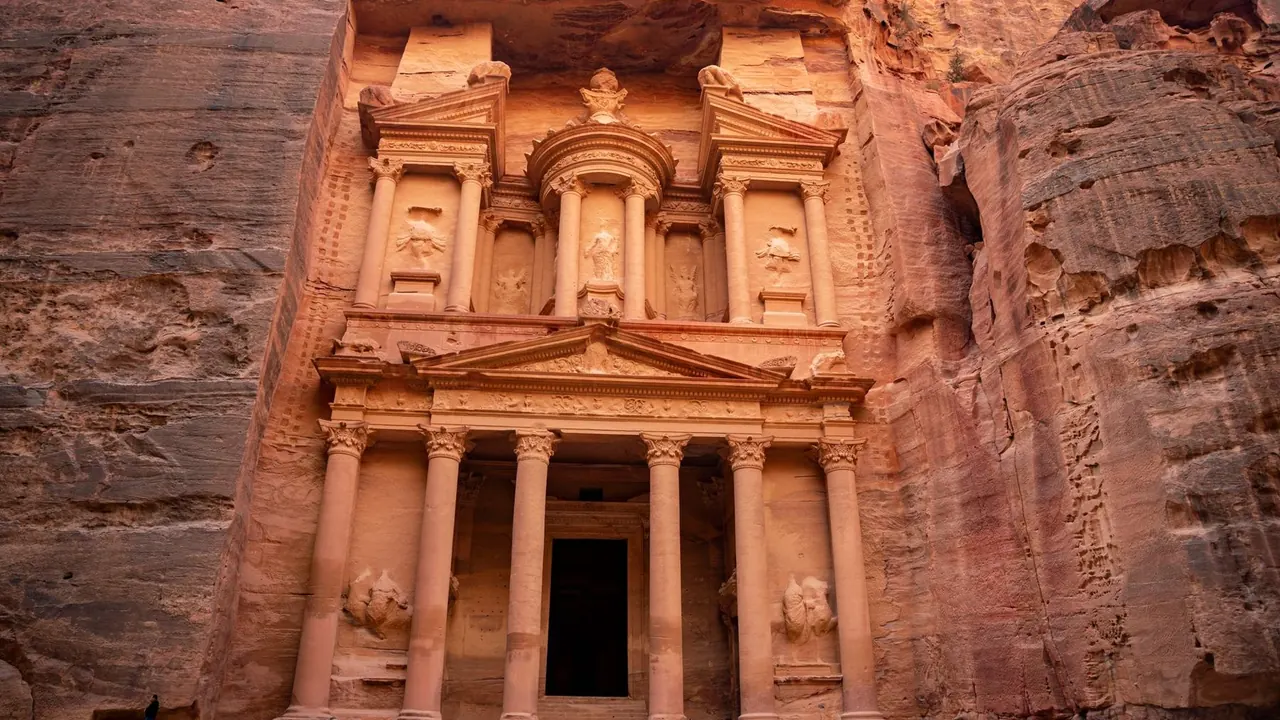
Photos: Beirut by Radosław Botev, CC BY 3.0 PL, cropped; Petra by Yasir Gürbüz, Pexels License.
Beirut or Petra?
Our verdict in twelve categories, each scored against the same fixed benchmark cities, and the climate month by month, so you can choose for your trip.
Choose Beirut for
- nightlife
- food and drink
- beaches
Beirut suits travellers who want a city to live in for a week: long mezze lunches, bars in Mar Mikhael that run into the small hours, summer days at a beach club, and a small country's worth of Roman temples, Crusader castles and mountain villages within reach each morning. It works best as a base, for people who like to eat well, stay out late and head out on day trips.
Choose Petra for
- culture and sights
- nature and the outdoors
- wellness
Petra is the choice for a trip built around one extraordinary place. Come to spend two or three days on foot through the Siq, the Royal Tombs and the climb to the Monastery, then walk out into the sandstone ridges or carry on to Wadi Rum. The evenings are quiet and early, so it rewards walkers and anyone fascinated by the ancient world far more than anyone hoping for a night out or a beach.
Scoreboard
Twelve categories on one fixed scale from 0 to 100. The shaded stretch is the gap between the two.
Your match
Pick a travel style or drag the sliders, and both match scores follow your weighting.
Wins on nightlife and food and drink with your weighting.
Wins on culture and sights and nature and the outdoors with your weighting.
What matters to you?
Category by category
What the scores mean for a trip.
Beaches & swimming
Beirut gives you a real summer swimming season, though not a sandy city beach. Locals dive off the rocks and platforms along the Corniche, and most visitors pay to spend the day at a beach club with pools and sunbeds, or drive up to Batroun and Byblos for cleaner water.
Petra is in the mountains, so swimming there means a hotel pool if yours has one. The Red Sea and its reefs at Aqaba are about two hours south, which makes them a separate leg of a Jordan trip rather than a beach day.
Food & drink
The two share a table on paper, with hummus, mutabbal, falafel and knafeh in both places, but in Beirut that table is one of the main reasons to visit. Long mezze lunches with arak, Armenian grills in Bourj Hammoud, Hamra bakeries and polished Lebanese dining rooms in Achrafieh give you a different kind of meal every day.
Wadi Musa feeds hikers rather than food lovers. Hotel buffets and roadside restaurants serve mansaf and maqluba, and the memorable moments are simpler: sage tea at a stall inside the site, zarb from a Bedouin pit oven, or a cooking class. Alcohol is mostly confined to hotels.
Culture & sights
Petra is the one people cross continents for. Walking through the Siq to the Treasury, then on past the Royal Tombs and up the steps to the Monastery, is among the great experiences of the ancient world, and the site needs two or three days.
Beirut's history is deep but war has broken it up. The National Museum's Phoenician sarcophagi and the Sursock's modern art are the highlights, alongside Downtown's Roman baths, mosque and cathedral, while much of the interest lies in the stairways and scarred buildings of Gemmayzeh. It makes a good introduction to the region, not a destination in itself for sights.
Nightlife
Beirut is one of the great going-out cities of the Mediterranean. Wine and cocktail bars spill onto the pavements of Mar Mikhael and Gemmayzeh, clubs near the port run until dawn, and summer adds rooftops and beach-club parties.
Petra has almost nothing after dark. Wadi Musa is conservative and tired by nine, with dinner, a shisha on a terrace and perhaps a beer in a hotel bar, so anyone wanting a night out should save it for Amman.
Nature & outdoors
Both are excellent for the outdoors, but the landscapes could hardly be more different. From Beirut you drive up into green mountains: pine forests and villages above 1,000m, the caverns of Jeita, the Qadisha cliffs and the Cedars, plus winter skiing at Faraya and Mzaar, though traffic stretches every outing.
At Petra you walk out of your door into desert rock. Trails run from the site itself to the High Place of Sacrifice and Jebel Haroun, the back route from Little Petra to the Monastery is superb, and Dana's ibex slopes and Wadi Rum's red sands are close by for climbing and nights under the stars.
Day trips
Beirut is a far better base for excursions. Within two hours you can reach Byblos's harbour and castle, the vast temples of Baalbek, the Umayyad ruins at Anjar, the sea castle of Sidon, Roman Tyre and the Shouf palace at Beiteddine, each a full and different day.
From Petra the choice is thinner: Shobak castle and Dana village make a pair, Wadi Rum is the obvious outing, and Kerak or Aqaba sit about two hours away. Jerash, Madaba and the Dead Sea are too far and belong to a stay in Amman.
Good for families
Neither is easy with small children, but Beirut gives families more to do. The Corniche is good for scooters and snacks by the sea, beach clubs with pools fill summer days, and the Jeita Grotto and the cable car up to Harissa are easy wins. Broken pavements and fierce traffic, though, mean taxis instead of pushchairs.
Petra is an adventure for sturdy older children who will enjoy scrambling into tombs, but the walks are long, hot and shadeless, and Wadi Musa has nothing aimed at children. If you hire camels or donkeys, choose carefully, as the animals are not always well treated.
Getting around
Both are hard work, for different reasons. Beirut has no metro or tram, so you walk within Hamra, Downtown or Mar Mikhael and take ride-hailing cars or shared service taxis between them, losing time to traffic and steep, broken streets.
At Petra the challenge is your legs: the archaeological park is covered on foot over long distances and steep climbs, the town sits uphill from the gate, and anything beyond needs a driver or a rental car.
Shopping & style
Beirut is a style-conscious city with real shopping. You will find couture and bridal houses, Lebanese designers' boutiques in Gemmayzeh and Saifi Village, malls in Verdun, and jewellers, leather workers and spice sellers in Bourj Hammoud, though the old covered souks are in Sidon or Tripoli rather than the capital.
Petra offers souvenirs: Bedouin silver and bead jewellery along the trails, and sand bottles and scarves in Wadi Musa. The women's cooperatives selling embroidery are the buys worth making.
Affordability
Overall costs are similar, but they fall in different places. In Beirut your evenings decide the bill: cocktail bars, clubs and beach-club entry cost about what they would in Southern Europe, while manakish, shawarma and neighbourhood mezze stay cheap.
At Petra the big expense is fixed at the gate, as the site charges foreigners one of the steepest entry fees anywhere, which a multi-day ticket or a Jordan pass softens. Rooms and local food are fairly priced after that, and drivers to Wadi Rum or Dana add up.
Live music & performing arts
Beirut has a real stage, if a small one. The Lebanese Philharmonic plays in churches and university halls, Hamra's independent theatres put on Arabic plays and cabaret, and small venues host jazz and Arabic fusion. The summer festivals at Baalbek, Beiteddine and Byblos bring big names to remarkable settings.
Petra has a single performance worth going to: Petra by Night, when candles line the Siq and Bedouin musicians play the rababa before the Treasury. Beyond that, there are only hotel dinner shows.
Wellness & relaxation
Neither is a place to rest, but they tire you in different ways. Beirut wears on the nerves with traffic, generators and late nights, and its hammams have nearly gone, so pampering there means a hotel spa or one of the massage and beauty salons that a well-groomed city keeps busy. Those are better for an hour of polish than for recovery. The real calm is up in the hills, at a guesthouse in a Shouf village among the pines, or on the Corniche at sunset.
Petra wears out the body instead, and the evenings in Wadi Musa are still. Its answer is the bathhouse. After a day on the Monastery steps, steam and a scrub do more for aching legs than anything on Beirut's salon menu, even though the bathhouses are a tourist import rather than a local custom. For a proper spa stay, the Dead Sea belongs to a different part of a Jordan trip.
When should you go?
Pick your month. The climate figures are measured averages, not a forecast.
Beirut in July
Petra in July
Daytime high, °C
Rainfall in the month, mm
Where the figures come from
Petra's temperatures are measured 34 km from the centre, at Ma'An.
Petra's station stands 219 m above the city centre, so the centre is likely a little warmer than the figures say.
Petra has no rain gauge within 25 km of the centre, so its rainfall comes from a gridded climate dataset read at the city rather than from a gauge further away.
Temperature and rainfall are climate normals, averaged over the years shown. Beirut: 1991-2020 (sunshine 1961-1990) normals, Beyrouth Aeroport (8.3 km from centre). Petra: 1991-2020 normals, Ma'An (33.9 km from centre).
Beirut is a summer coast. From June to October the sea is warm enough for swimming, peaking at about 28°C in August and September, and the rainless summer months are long and sunny, if humid. The first showers come in October, and from November to February the rain is heavy, with January the wettest month at around 178mm. Spring and autumn are the pleasant seasons for walking the streets and heading up into the mountains.
Petra is far drier and gets more sunshine for most of the year, especially in winter, though Beirut matches it in high summer. Its seasons are also more extreme. July and August reach about 35°C, too hot for long hikes through the site, while winter days are cool at around 14°C and the nights can be cold. March to May and October to November suit the trails. If you are combining the two, October works best: Beirut's sea is still warm at around 26°C, and Petra's days have cooled enough for walking.
Which traveller are you?
On a food and nightlife trip, Beirut wins easily. Mezze tables with Bekaa wine, manakish for breakfast and a bar crawl through Gemmayzeh ending in a club by the port at dawn have no counterpart in Wadi Musa, where evenings end early.
For a beach and sun trip, Beirut is the only real option of the two. Summer brings warm sea, beach clubs with pools and cleaner coves at Batroun and Byblos, while Petra's nearest swim is the Red Sea at Aqaba, two hours away.
On a culture and arts trip built around great sights, Petra is the stronger draw, with its rock-cut Treasury, tombs and Monastery filling several days. If concerts and theatre matter to you, though, Beirut's summer festivals and Hamra stages offer far more.
Before you go
| Measure | Beirut | Petra |
|---|---|---|
| Official language | Arabic | Arabic |
| Currency | Lebanese Pound (LBP) | Jordanian Dinar (JOD) |
| Sockets | ABCG220 V, 50 Hz | BCFGJ230 V, 50 Hz |
| Driving side | Right | Right |
| Time zone | UTC+2, UTC+3 in summer | UTC+3 |
| Emergency number | Police 112/160, ambulance 140, fire 175 | 911 |
| Elevation | 0 m | 850 m |
| Main airport | Beirut Rafic Hariri International Airport (BEY)8 km from centre54 non-stop destinations | King Hussein International Airport (AQJ)90 km from centre5 non-stop destinations |
By the numbers
| Measure | Beirut | Petra |
|---|---|---|
| City population | 2,421,354 | - |
| Museums within 10 km | 15 | 2 |
| UNESCO World Heritage sites within 50 km | 2 | 1 |
| Swim season, months above 21 °C | 7 months | - |
Where else could you go?
Every comparison below shares a destination with this one, so you can follow Beirut or Petra somewhere new.