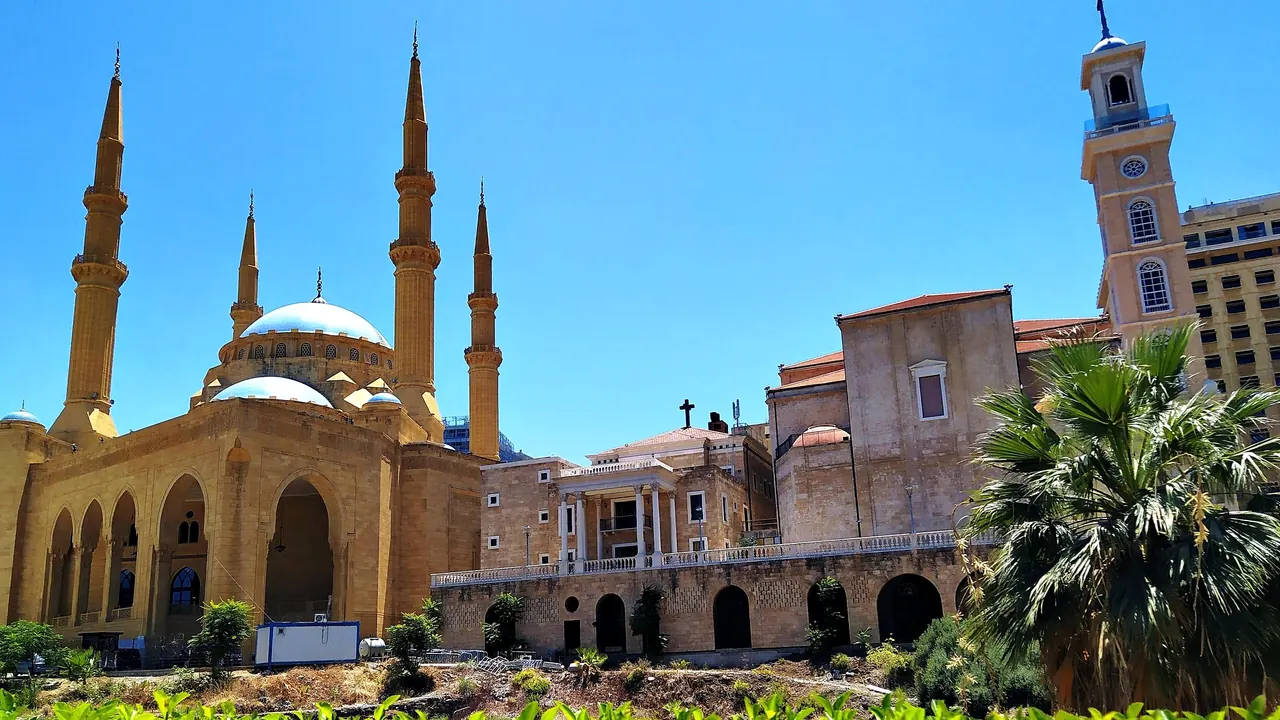
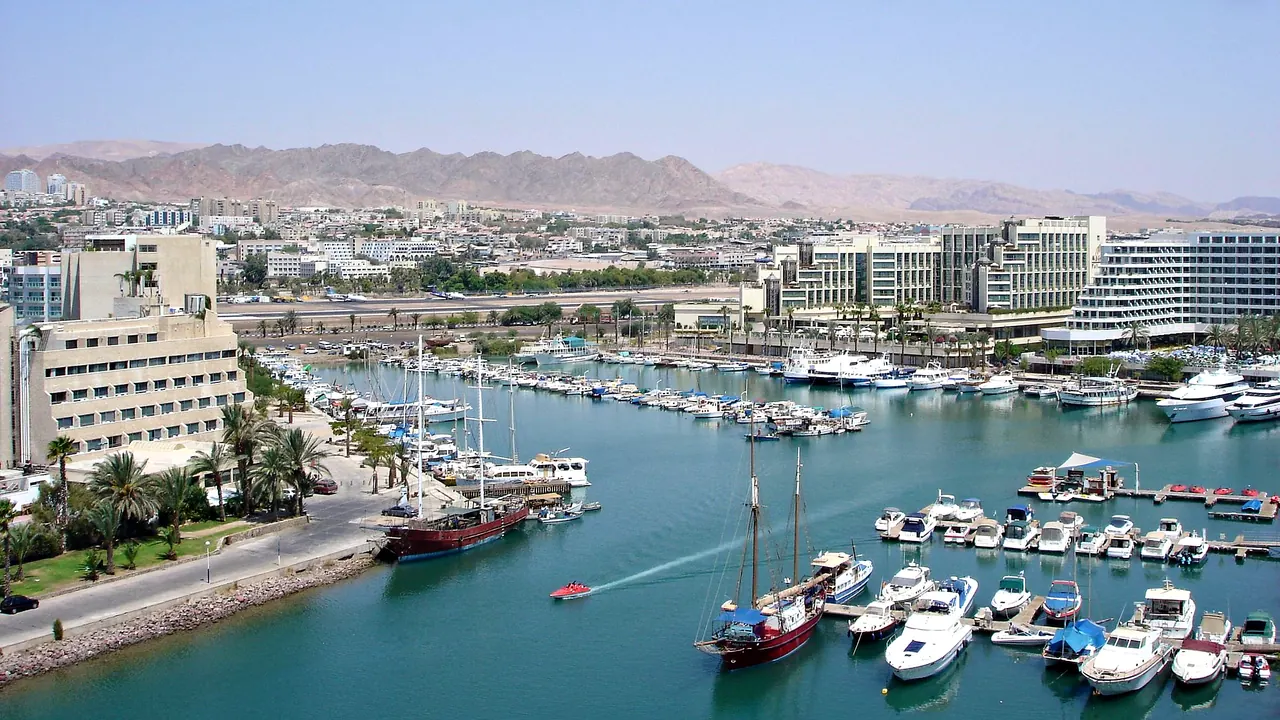
Photos: Beirut by Radosław Botev, CC BY 3.0 PL, cropped; Eilat by Tango7000, Public domain.
Beirut or Eilat?
Our verdict in twelve categories, each scored against the same fixed benchmark cities, and the climate month by month, so you can choose for your trip.
Choose Beirut for
- culture and sights
- food and drink
- nightlife
Beirut suits travellers who judge a trip by what they eat, drink and see. Its mezze tables and the late bar streets of Mar Mikhael and Gemmayzeh are among the best in the region. From the city you can reach Byblos, Baalbek, Sidon and the mountain villages in a day. It asks for patience in return: heavy traffic, broken pavements and a taxi for almost every move between districts.
Choose Eilat for
- families
- getting around
- beaches
For sun, sea and an easy pace, Eilat is the simpler choice, especially in winter when Beirut is wet and cool. The Red Sea is calm, clear and warm, the reef starts at the end of a jetty, and the compact hotel strip is set up for families. There is little history, food culture or arts to fill the evenings, and it costs more than Beirut. It works best as a week of swimming, snorkelling and desert walks rather than a city trip.
Scoreboard
Twelve categories on one fixed scale from 0 to 100. The shaded stretch is the gap between the two.
Your match
Pick a travel style or drag the sliders, and both match scores follow your weighting.
Wins on culture and sights and food and drink with your weighting.
Wins on families and getting around with your weighting.
What matters to you?
Category by category
What the scores mean for a trip.
Beaches & swimming
Beirut's shore is mostly rock and concrete platforms, and the water quality at Ramlet al-Baida, its one long sand beach, is unreliable. Swimming therefore means paying for a beach club or driving to Byblos, Batroun or the Jiyeh coast. It is a summer pleasure that takes some organising.
Eilat is built around the sea. North Beach is a few minutes' walk from the hotels, and at Coral Beach you step off a jetty onto the reef, in water that stays clear and swimmable even in midwinter. The sand is coarse and the strip is short and crowded at weekends, but for simply getting into good water, Eilat wins easily.
Food & drink
Food is one of the widest gaps between the two. Beirut has a whole cuisine to explore, from za'atar manakish at breakfast and Armenian sausages in Bourj Hammoud to long mezze meals with arak or Bekaa wine and modern Lebanese cooking in Achrafieh.
Eilat eats like a resort, with hotel buffets and fish, steak and pizza on the promenade, all aimed at visitors. Its best meals are at the plain hummus counters and falafel stands away from the hotels. They are good, but a food lover runs out of new places within a few days.
Culture & sights
War has broken up much of Beirut's old city, but there is still a good deal to see. The National Museum has Phoenician sarcophagi, the Sursock villa shows contemporary art, and downtown has the Roman baths and the Mohammad al-Amin Mosque, with the old stairways of Gemmayzeh close by.
Eilat has almost nothing of this kind. It is a young town of hotel towers and malls, and anyone after history has to go out into the desert to Timna or cross the border.
Nightlife
Going out is taken seriously in Beirut. Mar Mikhael and Gemmayzeh are packed with small cocktail and wine bars, Hamra is cheaper and full of students, and the clubs by the port and on summer rooftops run until dawn. People dress up for the evening.
Eilat's nights depend on who is in town. On summer weekends and during school breaks, young Israelis fill the lagoon and promenade for beach parties and pop and dance clubs. Midweek in the quieter months it can feel thin, and there is no bar culture of the kind Beirut has.
Nature & outdoors
Both are good for the outdoors, in very different ways. Beirut has little green in town apart from Horsh Beirut and the Corniche, but the Jeita Grotto's caverns are half an hour north and pine-covered mountains above 1,000m are an hour away. About two hours out lie the Qadisha Valley's cliffs and the cedar forests, and in winter there is skiing at Faraya and Mzaar. That range through the year gives Beirut a slight edge.
Eilat's outdoors are desert and reef. The coral starts at the edge of town and dive centres line the coast road. Inland, the Red Canyon and Timna's sandstone formations offer walks among red rock, with views over four countries from the ridges, and spring and autumn bring the bird migration. In summer the heat limits hiking to dawn.
Day trips
Beirut has an exceptional list of outings within about two hours. There are the Crusader castle and ruins of Byblos, the Roman temples of Baalbek, Anjar and the Bekaa wineries, Sidon's sea castle, Tyre's ruins, and Beiteddine paired with Deir el-Qamar. Traffic and local conditions need planning, but the choice is wide.
Eilat has really one great trip: Petra, across the Jordanian border, which makes a long but unforgettable day. Aqaba and Timna are shorter outings. Beyond those, the empty Negev keeps the rest of Israel out of easy reach.
Good for families
Children are made a real fuss of in Beirut and restaurants welcome them, but little in the city is built for families. Narrow, broken pavements and heavy traffic make pushchairs hard work. The Corniche, beach club pools, the Jeita Grotto and the Harissa cable car are the main treats.
Eilat is where Israeli families go on vacation, and it shows. There are a calm sea, hotel pools and kids' clubs, the underwater observatory at Coral World, glass-bottom boats and the Dolphin Reef. Its limit is the summer heat, so late autumn to spring is the time to bring small children.
Getting around
In Beirut, Hamra, Downtown, Gemmayzeh and Mar Mikhael are each easy on foot. Moving between them means steep streets, few crossings and heavy traffic, though, so ride-hailing and shared service taxis do most of the work.
Eilat is much simpler. The hotels, North Beach, the promenade and the malls are all a short walk apart, and a taxi covers the few kilometres south to the reef beaches, although walking at midday in summer is punishing. In both places, leaving town means a car, a driver or a tour.
Shopping & style
Beirut has the more interesting shopping. Lebanese designers sell from boutiques in Gemmayzeh, Mar Mikhael and Saifi Village, the city is home to well-known couture and bridal houses, and the jewellers, leather workers and spice sellers of Bourj Hammoud give it a local side. What it lacks is an old covered bazaar in the city itself.
Eilat's draw is tax-free shopping in its malls. Most of it is chain fashion, electronics and cosmetics that a visitor from abroad could buy at home, and the one local find is jewellery set with blue-green Eilat stone.
Affordability
Beirut is the cheaper of the two, though it is not a budget city. Its smart restaurants, clubs and beach clubs cost about what they would in Southern Europe, but manakish, falafel, neighbourhood mezze and short taxi rides are cheap.
Eilat is expensive across the board, with hotels, eating out, drinks and diving all costing more than at typical European resorts. Staying midweek or in the quieter months, renting a self-catering apartment and eating at hummus counters all bring the cost down, and the VAT exemption helps a little.
Live music & performing arts
Beirut has a modest but real scene. The Lebanese Philharmonic plays in churches and university halls, Hamra has Arabic-language theatre and cabaret, and jazz and electronic acts play small venues. The high point is summer, when Baalbek, Beiteddine and Byblos hold concerts among ruins and in palace courtyards.
Eilat has its long-running jazz festival by the Red Sea and occasional big concerts during the Jewish holy days. The rest of the year there is little beyond hotel shows and musicians in the bars, and no theatre or classical season.
Wellness & relaxation
Neither is a spa destination, but Eilat is the easier place to switch off. Its resorts have pools, quiet gardens and spas offering Dead Sea mineral treatments, and a midweek winter stay in warm sun is genuinely restful, though festival weeks bring crowds and noise.
Beirut is loud, with traffic, generators and late nights, and its hammams have mostly gone. Rest there means a hotel spa, a sunset walk on the Corniche or a night or two in a guesthouse in a Shouf village.
When should you go?
Pick your month. The climate figures are measured averages, not a forecast.
Beirut in July
Eilat in July
Daytime high, °C
Rainfall in the month, mm
Temperature and rainfall are climate normals, averaged over the years shown. Beirut: 1991-2020 (sunshine 1961-1990) normals, Beyrouth Aeroport (8.3 km from centre). Eilat: 1991-2020 normals, Eilat (0.9 km from centre).
Beirut follows the Mediterranean year. The sea is warm enough for proper swimming from June to October, reaching about 28°C in late summer. June to September are dry and very sunny, but from July to September the coast is humid and the highs in the low 30s make midday walking hard work. October brings the first rains, about 63mm, though it stays warm. April, May and October are the most comfortable months for exploring the city and the mountains. From November to March the rain sets in properly, with January the wettest month, and the days are mild rather than warm.
Eilat's best months are the opposite. Rain hardly registers at any time of year, and winter stays sunny with highs in the low 20s. The sea never drops much below 21°C, so November to March is beach season there while Beirut is grey and wet. From May to September the desert heat reaches 40°C, too hot for walking or hiking except at dawn, although the sea is still inviting. March and November suit anyone who wants both the reef and the trails.
Which traveller are you?
On a food and nightlife trip, Beirut is the clear pick. Long mezze lunches, bakeries in Hamra and Armenian grills in Bourj Hammoud lead into bar-hopping in Mar Mikhael and clubs that run until dawn. Eilat offers resort buffets and a mainstream promenade scene.
For a culture and arts trip, choose Beirut. The National Museum, the Sursock Museum and the Roman baths downtown fill a couple of days, and Byblos, Baalbek and Tyre are within reach. Eilat has almost no history in town and no theatre or concert season.
On a family trip with young children, Eilat works much better. The sea is calm, the hotels have pools and kids' clubs, and Coral World shows children the reef through glass. In Beirut, broken pavements and heavy traffic make pushchairs and short walks a struggle.
Before you go
| Measure | Beirut | Eilat |
|---|---|---|
| Official language | Arabic | Hebrew |
| Currency | Lebanese Pound (LBP) | New Israeli Sheqel (ILS) |
| Sockets | ABCG220 V, 50 Hz | CHM230 V, 50 Hz |
| Driving side | Right | Right |
| Time zone | UTC+2, UTC+3 in summer | UTC+2, UTC+3 in summer |
| Emergency number | Police 112/160, ambulance 140, fire 175 | Police 100, fire 102 |
| Elevation | 0 m | 16 m |
| Main airport | Beirut Rafic Hariri International Airport (BEY)8 km from centre54 non-stop destinations | Ramon International Airport (ETM)20 km from centre2 non-stop destinations |
By the numbers
| Measure | Beirut | Eilat |
|---|---|---|
| City population | 2,421,354 | 51,935 |
| People per km² | - | 612 |
| Museums within 10 km | 15 | 6 |
| UNESCO World Heritage sites within 50 km | 2 | 2 |
| Swim season, months above 21 °C | 7 months | 12 months |
Where else could you go?
Every comparison below shares a destination with this one, so you can follow Beirut or Eilat somewhere new.