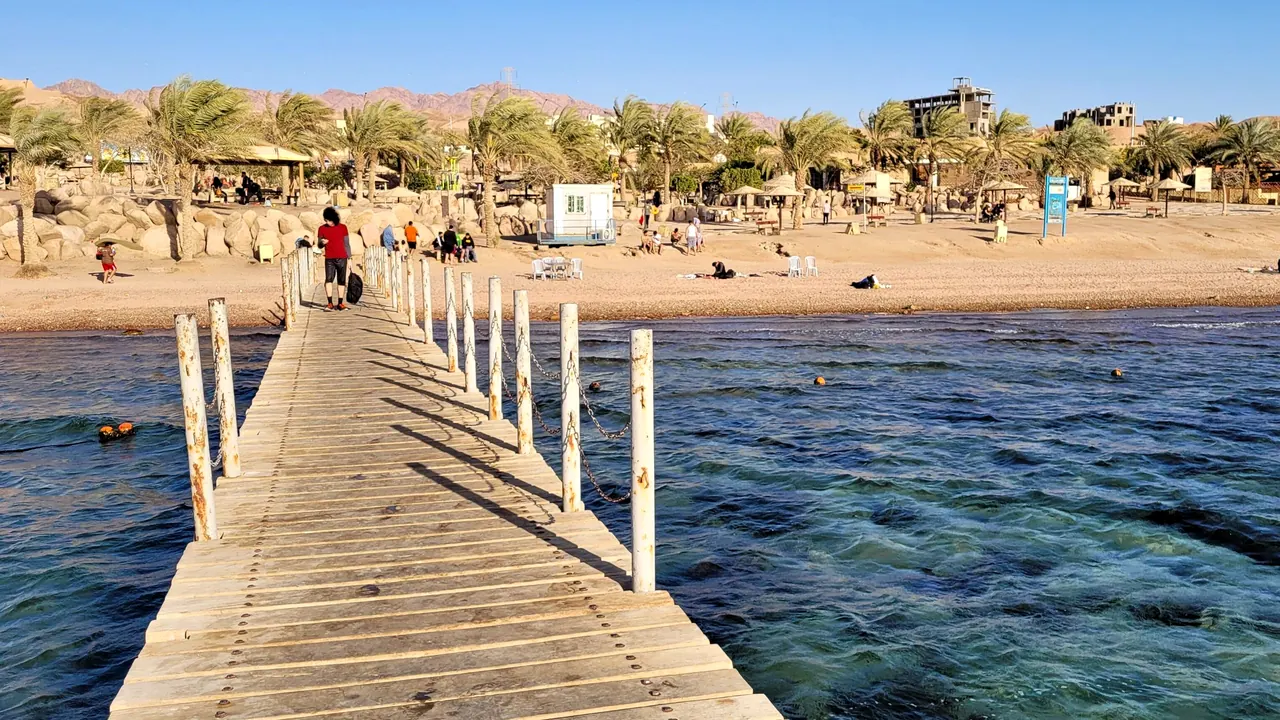
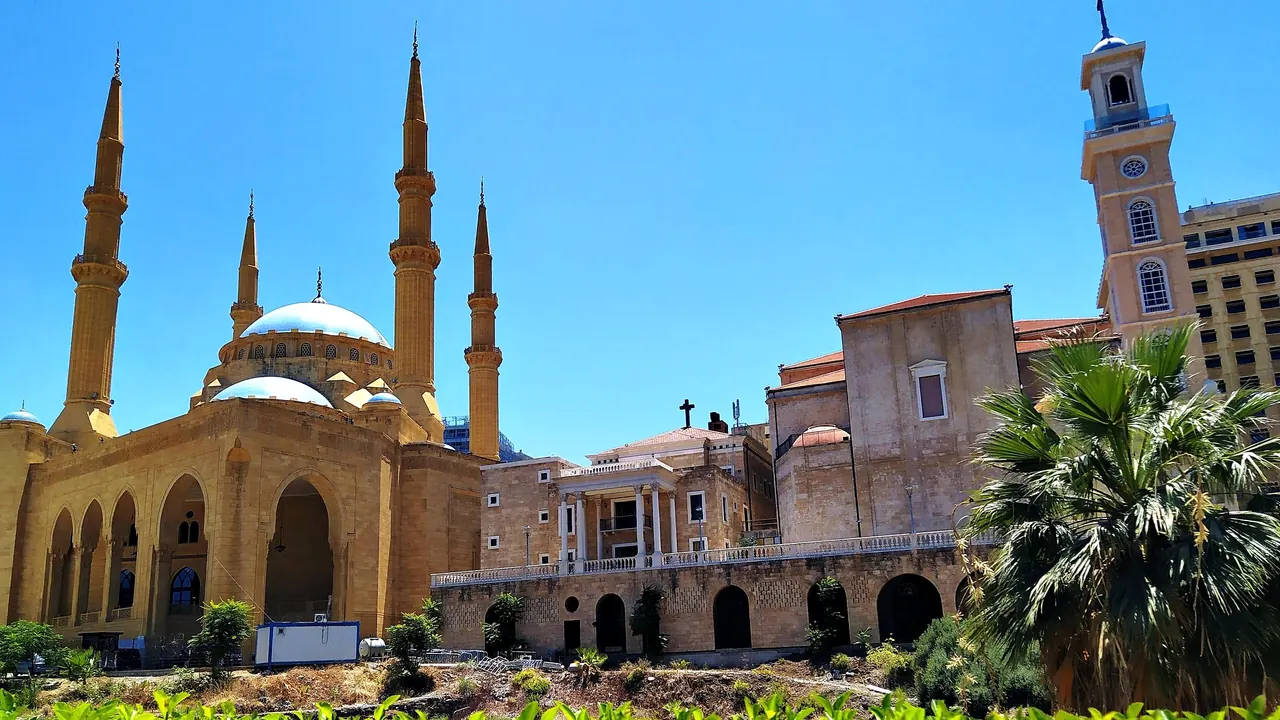
Photos: Aqaba by عباد ديرانية, CC BY-SA 4.0, cropped; Beirut by Radosław Botev, CC BY 3.0 PL, cropped.
Aqaba or Beirut?
Our verdict in twelve categories, each scored against the same fixed benchmark cities, and the climate month by month, so you can choose for your trip.
Choose Aqaba for
- wellness
- beaches
- families
Aqaba suits a slow, warm-water trip: snorkelling and diving straight off the shore south of town, a night or two in a Wadi Rum desert camp, and an early start for Petra. It is the easier choice for families who want a resort pool and a calm sea, and for anyone escaping a northern winter. The evenings are quiet, though, and the town has little to eat or see beyond a morning's sights.
Choose Beirut for
- nightlife
- food and drink
- live music and the arts
Travellers who want a city to live in for a few days will be happier in Beirut. It offers long mezze lunches, bar-hopping in Mar Mikhael and Gemmayzeh until the small hours, and a couple of strong museums. Its real reach lies outside the city: Byblos, Baalbek, Sidon and Tyre are all within two hours, and the mountains rise behind the coast. Expect traffic, noise and little rest, and beach days that mean a drive and a club fee.
Scoreboard
Twelve categories on one fixed scale from 0 to 100. The shaded stretch is the gap between the two.
Your match
Pick a travel style or drag the sliders, and both match scores follow your weighting.
Wins on wellness and beaches with your weighting.
Wins on nightlife and food and drink with your weighting.
What matters to you?
Category by category
What the scores mean for a trip.
Beaches & swimming
Neither city has the long sandy beach of a classic resort, and Aqaba's advantage is the water. The Gulf is clear, calm and warm all year, and coral starts a few metres out along the South Beach strip, so every swim can turn into snorkelling. The town beaches are narrow and conservative, so most visitors use the resort and beach-club stretches south of town and at Tala Bay.
Beirut's shore is mostly rock. Locals swim off the platforms along the Corniche, and the water at Ramlet al-Baida is unreliable. Swimming there is a summer affair at private beach clubs, or a drive up the coast to Byblos and Batroun, although the all-day social scene at those clubs is something Aqaba does not have.
Food & drink
Beirut is one of the great places to eat in the region, and Aqaba does not try to compete. In Beirut a day can include breakfast at a Hamra bakery, an Armenian grill in Bourj Hammoud for lunch and a long mezze dinner with Bekaa wine in Achrafieh or Mar Mikhael, with a mountain-terrace lunch at the weekend.
Aqaba's best meal is sayadieh, or fish chosen by weight near the old town. Otherwise it offers falafel, shawarma and hotel buffets. Its one advantage is cheaper alcohol, thanks to the tax-free status.
Culture & sights
Beirut has much more to see, even though war has broken up its old city. The Phoenician sarcophagi and Roman mosaics of the National Museum, the contemporary art in the Sursock villa and the restored streets around Place de l'Etoile fill two or three days, with Gemmayzeh's stairways and the bullet-marked buildings adding street-level history.
Aqaba's fort, the low walls of Ayla and the early church site take a morning. Anyone there for heritage spends the day at Petra instead.
Nightlife
This is the widest gap between the two. Beirut goes out late and dresses up for it: wine and cocktail bars line Mar Mikhael and Gemmayzeh, Hamra has cheaper student bars, electronic clubs fill the old industrial area by the port, and rooftop clubs run until dawn in summer.
Aqaba's evenings mean a walk on the corniche, a shisha café and an early night before a dive. Drinking happens in resort bars and diver pubs, with the odd beach-club DJ night in the cooler months.
Nature & outdoors
Both have outstanding outdoors close at hand, but of quite different kinds. In Aqaba it is under the water and in the desert: shore dives at the Japanese Garden, a cargo ship and a tank sunk as artificial reefs, and the red sandstone valleys and Bedouin camps of Wadi Rum about an hour away.
Beirut's outdoors is in the mountains behind the coast. Pine forest is within an hour, Faraya and Mzaar have skiing in winter, and there are the Jeita Grotto caverns, paragliding above Jounieh, and the Qadisha Valley and the Cedars further out. In Beirut the obstacle is traffic; in Aqaba it is the summer heat.
Day trips
Beirut has far more choice. Within two hours lie the Crusader castle and harbour of Byblos, the huge Roman temples of Baalbek, Anjar and the Bekaa wineries, the sea castle at Sidon, the Roman ruins of Tyre, and the Beiteddine palace with Deir el-Qamar. That is enough for a different outing every day of a week, though conditions in the south and the Bekaa are worth checking first.
Aqaba has one outstanding trip, Petra with Little Petra, and little else that is easy. Eilat and the Sinai both mean border formalities.
Good for families
Aqaba is the easier choice for a family, mainly because it works as a resort. It has a calm, shallow sea, glass-bottomed boats that show children the reef, and hotels with pools and kids' clubs. A night in a Wadi Rum camp is an adventure for older children, though the summer heat rules out midday outings.
Children are just as welcome at the table in Beirut, and the Corniche, the Jeita Grotto and the Harissa cable car make good outings. However, broken pavements, few crossings and aggressive drivers make pushchairs hard work and turn most trips into a taxi ride.
Getting around
Neither city has public transport that a visitor can rely on, and both depend on taxis. Aqaba is the simpler of the two. Its centre is small, the resorts sit along one coast road, and the roads are good enough to hire a car for Petra and Wadi Rum. Heat is the main obstacle to walking.
Beirut's districts are pleasant on foot within themselves, but moving between Hamra, Downtown and Mar Mikhael means steep streets, wide roads and heavy traffic. Driving out of the city yourself is demanding.
Shopping & style
Beirut is the place to shop. It has the boutiques of Lebanese designers in Gemmayzeh, Mar Mikhael and Saifi Village, internationally known couture houses, malls in Verdun and Achrafieh, and the jewellers, leather workers and fabric sellers of Bourj Hammoud.
Aqaba's market streets sell spices, dates, Dead Sea products and layered sand bottles, plus tax-free electronics and perfume. It has no fashion shopping and little genuine craft.
Affordability
Both cities have two price levels, cheap street food with a much dearer layer above it, and Aqaba is slightly kinder overall. Its town-centre hotels, fish meals and taxis cost little, and drinks are cheaper thanks to the tax-free status. Dive courses, desert tours and Petra entry still add up.
In Beirut, manakish and neighbourhood mezze in Hamra are bargains. But the restaurants, cocktail bars and hotels of Achrafieh and Mar Mikhael charge Southern European prices, so a trip built around going out costs far more there than a quiet one.
Live music & performing arts
Beirut has a real, if small, scene. There are Lebanese Philharmonic concerts in churches, Arabic theatre and revived music-hall cabaret in Hamra, jazz and indie nights in Mar Mikhael, and summer festivals among the temples of Baalbek and at Beiteddine and Byblos. Aqaba offers hotel lounge bands and Bedouin music around a Wadi Rum fire, and little more.
Wellness & relaxation
Aqaba is the place to unwind. The pace is slow, traditional Turkish baths in the town offer steam, scrub and massage, and the south-coast resort spas use Dead Sea mud and salt. Warm, dry winter days suit a quiet week by the water.
Beirut is loud and stays up late, and its hammam tradition has nearly gone. Rest there means a hotel spa, a sunset walk on the Corniche or a night in a guesthouse in the cooler Shouf villages.
When should you go?
Pick your month. The climate figures are measured averages, not a forecast.
Aqaba in July
Beirut in July
Daytime high, °C
Rainfall in the month, mm
Temperature and rainfall are climate normals, averaged over the years shown. Aqaba: 1991-2020 normals, Eilat (5.8 km from centre). Beirut: 1991-2020 (sunshine 1961-1990) normals, Beyrouth Aeroport (8.3 km from centre).
Aqaba is a winter-sun place. It hardly rains at any time of year, winter days reach about 21°C, the sun shines far more often than in Beirut, and the Gulf stays warm enough to swim and snorkel through the coolest months. Spring and autumn are warmer still and good for both the reefs and Wadi Rum. From June to September the afternoons climb to 40°C, which is too hot for walking the town or the desert in daytime.
Beirut's year runs the other way. Winter is its wet season, with around 178mm of rain in January and a sea too cool for most swimmers, though there is snow in the mountains for skiing. May, June and September are the best months for the city and for day trips: dry and warm, without the humidity of high summer. From July to September the sea reaches about 28°C for beach days. In October the days and the water are still warm, but the rains return, with about 63mm in the month, and they grow heavier towards winter. Both cities are sunny and dry in summer, but only Aqaba is properly warm in winter.
Which traveller are you?
On a beach and sun trip, Aqaba is the clear pick, especially outside high summer. The Red Sea stays warm enough to swim all winter, coral begins steps from the shore, and the Tala Bay resorts provide loungers and shade. Beirut's swimming is rocky and only for summer.
For a food and nightlife trip, Beirut is in a different league. Days revolve around mezze, manakish and Bekaa wine, and nights move from the small bars of Mar Mikhael to clubs that run until dawn. Aqaba offers simple fish dinners and early nights.
On a culture and arts trip, choose Beirut. The National Museum, the Sursock Museum, concerts and the Hamra theatres, plus day trips to Byblos, Baalbek and Tyre, fill a week with history and performance. Aqaba's own sights take a morning, though Petra lies within reach.
Before you go
| Measure | Aqaba | Beirut |
|---|---|---|
| Official language | Arabic | Arabic |
| Currency | Jordanian Dinar (JOD) | Lebanese Pound (LBP) |
| Sockets | BCFGJ230 V, 50 Hz | ABCG220 V, 50 Hz |
| Driving side | Right | Right |
| Time zone | UTC+3 | UTC+2, UTC+3 in summer |
| Emergency number | 911 | Police 112/160, ambulance 140, fire 175 |
| Elevation | 6 m | 0 m |
| Main airport | King Hussein International Airport (AQJ)9 km from centre5 non-stop destinations | Beirut Rafic Hariri International Airport (BEY)8 km from centre54 non-stop destinations |
By the numbers
| Measure | Aqaba | Beirut |
|---|---|---|
| City population | 140,000 | 2,421,354 |
| People per km² | 3,733 | - |
| Museums within 10 km | 5 | 15 |
| UNESCO World Heritage sites within 50 km | 2 | 2 |
| Swim season, months above 21 °C | 12 months | 7 months |
Where else could you go?
Every comparison below shares a destination with this one, so you can follow Aqaba or Beirut somewhere new.