Israel
Eilat
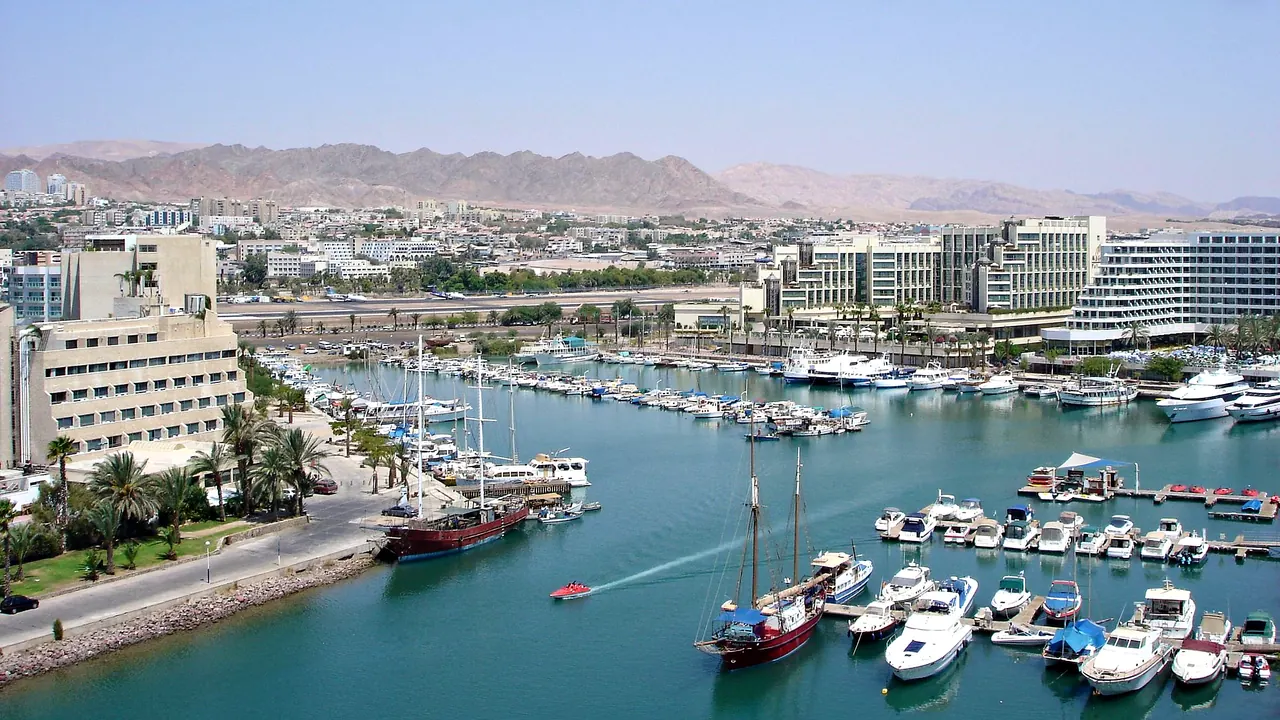
The marina and hotels below the Eilat Mountains
- Beaches80
- Nature & outdoors70
- Families66
Photo: Tango7000, Public domain
Match
44
Every category weighted equally
- Beach & sun49
- Culture & arts35
- Food & nightlife38
- Family trip49
- Outdoors49
- Relax & unwind47
- Shopping & style40
- On a budget41
Eilat in twelve categories
Our verdict on each, scored 0 to 100 against the same fixed benchmark cities, so a score means the same thing on every page.
Beaches & swimming. Scores 80 out of 100.
Food & drink. Scores 36 out of 100.
Culture & sights. Scores 9 out of 100.
Nightlife. Scores 45 out of 100.
Nature & outdoors. Scores 70 out of 100.
Day trips. Scores 43 out of 100.
Good for families. Scores 66 out of 100.
Getting around. Scores 55 out of 100.
Shopping & style. Scores 40 out of 100.
Affordability. Scores 22 out of 100.
Live music & performing arts. Scores 16 out of 100.
Wellness & relaxation. Scores 42 out of 100.
Eilat category by category
Beaches & swimming
80Eilat exists for its short stretch of Red Sea shore. The water is warm almost all year, about 21°C in midwinter and 27°C in late summer, and it is calm and very clear. North Beach, in front of the big hotels and the lagoon, is the sociable town beach with loungers and watersport rentals. South along the coast road, Coral Beach and the reserve beaches let you step off a jetty straight onto a living reef, which makes snorkelling as much a part of swimming here as lying on the sand.
The coastline is only a few kilometres long and squeezed between the port, the border and the mountains. The sand is often coarse or gravelly, and the central beaches fill up on weekends and during Israeli school breaks. Winter is the season most foreign visitors come for, when the sun is reliable and the sea is still pleasant enough to swim in.
Food & drink
36Eating in Eilat is resort eating. Hotel breakfast and dinner buffets take up a large share of meals, and along the promenade and in the marina area there are fish restaurants, steakhouses, sushi and pizza aimed at visitors. The best meals are generally the simple Israeli ones: hummus counters, grilled meat on skewers with salads, fresh fish from the Red Sea, and shawarma and falafel in the older neighbourhoods away from the hotels.
There is no market culture or local cuisine to speak of, and a food lover will soon run out of new places to try. Most people eat well enough here, but no one chooses Eilat for its food.
Culture & sights
9Eilat is a young resort and port town with almost no historic architecture, museums or landmarks of its own. The town is made up of hotel towers, malls and residential blocks, and its best-known attractions are marine rather than cultural. A visitor interested in history needs to travel out to the ancient copper workings in the desert or across the border, because there is very little to see in town.
Nightlife
45Israelis think of Eilat as a party town, and on summer weekends and during school breaks that reputation holds. The promenade and the area around the lagoon fill with bars, pubs and late beach parties, and a handful of clubs keep going well past midnight. Many big hotels also run their own lounges and bars.
The scene relies on crowds of young domestic visitors, and on midweek nights in the quieter months it can feel thin. It is mostly mainstream: pop and dance music, beer and cocktails by the water. You won't find a particular local style or a distinctive bar culture here.
Nature & outdoors
70Eilat sits where red granite mountains meet a coral sea, and its outdoor life is split between the two. Underwater, the reef at the southern end of town and along the coast towards the border is one of the most easily reached in the world. Diving centres line the coast road, and introductory dives and night dives are routine. The Dolphin Reef shelters a resident pod in a natural bay.
Inland, the Eilat Mountains reserve has marked trails through colourful sandstone canyons, the Red Canyon among them, with wide views over four countries from the ridges. Timna Park, about half an hour north, adds giant sandstone formations and desert walks. The town is also on one of the great bird migration routes, and the spring and autumn passages draw birders from far away. From roughly June to September, midday temperatures above 40°C confine hiking to dawn.
Day trips
43Eilat's one great day trip lies across the Jordanian border. Petra, the rock-cut Nabataean city, can be reached in about two hours from the crossing just north of town, and organised day tours make the border formalities manageable. It is a long and tiring day, but a remarkable one. Aqaba, on the Jordanian side, is an easy shorter outing with a fort and a souk.
On the Israeli side the choice is limited. Timna has ancient copper mines and an Egyptian shrine among its rock formations, and the kibbutzim of the Arava valley can be visited. Beyond those, the empty Negev separates Eilat from the rest of the country, and the Dead Sea and Masada are too far for a comfortable day.
Good for families
66Eilat is where Israeli families go on vacation, and it is set up for them. The sea is calm and warm, with no strong surf, and the big hotels have pools, kids' clubs and family rooms. The Coral World underwater observatory lets children look at the reef without getting wet, through glass below the waterline, and has shark and turtle tanks. Glass-bottom boats, snorkelling off the jetties and the Dolphin Reef keep children busy, and in one of the malls there is an ice rink.
The main drawback is the climate. Summer days are often too hot for small children to be outside except early and late. Late autumn to spring is much more comfortable. Apart from the sea, there are few attractions designed for children.
Getting around
55The heart of Eilat is small. The hotels around the lagoon, North Beach, the promenade and the main malls are all within a short walk of each other, and in the cooler months walking is the easiest way to get around. The reef beaches and diving centres are several kilometres south along the coast road towards the Egyptian border. Local buses and taxis cover that run, and taxis are the usual choice.
In summer, walking any distance at midday is exhausting. Getting out to Timna, the mountain trails or the Arava means hiring a car or booking a tour. The airport lies outside town to the north and is reached by bus or taxi.
Shopping & style
40Eilat is a VAT-free zone, and many Israelis come partly to shop. The large malls near the lagoon and the waterfront have chain fashion, electronics, cosmetics and sportswear. The beach promenade is lined with stalls selling sunglasses, swimwear and trinkets. The local speciality is Eilat stone, a blue-green copper mineral set into jewellery.
If you are travelling from abroad, there is little that you could not find at home. There are no luxury streets, independent boutiques, design shops or real markets. Shopping here fills an evening or a hot afternoon but is not a reason to come.
Affordability
22Eilat is an expensive place to stay. Beach hotels charge high rates during Jewish festivals, school vacations and summer weekends, and eating out, drinks, diving and tours all cost well above typical European resort prices. The town's VAT exemption takes the edge off restaurant bills and shopping, and rooms are noticeably cheaper midweek and in the quieter months. To keep costs down, look for self-catering apartments and simple guesthouses away from the beachfront, and eat at hummus counters and falafel stands rather than the promenade restaurants.
Live music & performing arts
16Eilat offers little performing arts for a visitor to attend. The town is known for a jazz festival by the Red Sea, which has a long history here. Concerts by well-known Israeli performers sometimes take place during the Jewish festivals and the summer season. For the rest of the year, live entertainment means hotel shows, musicians in the promenade bars and the occasional touring act. The town has no theatre, opera or classical season, so anyone who wants a proper night of music or drama will be disappointed.
Wellness & relaxation
42Eilat is a place to slow down rather than to take the waters. Most of the larger hotels have spas offering massage, hammam-style steam rooms and treatments using Dead Sea minerals, and several resorts are built around pools and quiet gardens. The real draw is reliable winter warmth and long, unhurried days in the sun. The town has no bathing culture of its own, though.
It can feel peaceful midweek in the quieter months. During the Jewish festivals and school vacations, when the town fills with families and young crowds, the noise makes it much less restful.
When should you go?
Pick a month to see what it is like. The climate figures are measured averages, not a forecast.
Eilat in July
Daytime high, °C
Rainfall in the month, mm
The whole year
Shaded against this city’s own year: the deepest cell is its best month for that figure and the palest its weakest.
Temperature and rainfall are climate normals, averaged over the years shown. Eilat: 1991-2020 normals, Eilat (0.9 km from centre).
Before you go
| Measure | Eilat |
|---|---|
| Official language | Hebrew |
| Currency | New Israeli Sheqel (ILS) |
| Sockets | CHM230 V, 50 Hz |
| Driving side | Right |
| Time zone | UTC+2, UTC+3 in summer |
| Emergency number | Police 100, fire 102 |
| Elevation | 16 m |
| Main airport | Ramon International Airport (ETM)20 km from centre2 non-stop destinations |
By the numbers
| Measure | Eilat |
|---|---|
| City population | 51,935 |
| People per km² | 612 |
| Museums within 10 km | 6 |
| UNESCO World Heritage sites within 50 km | 2 |
| Swim season, months above 21 °C | 12 months |
Compare Eilat with
Every comparison with a written verdict behind it.