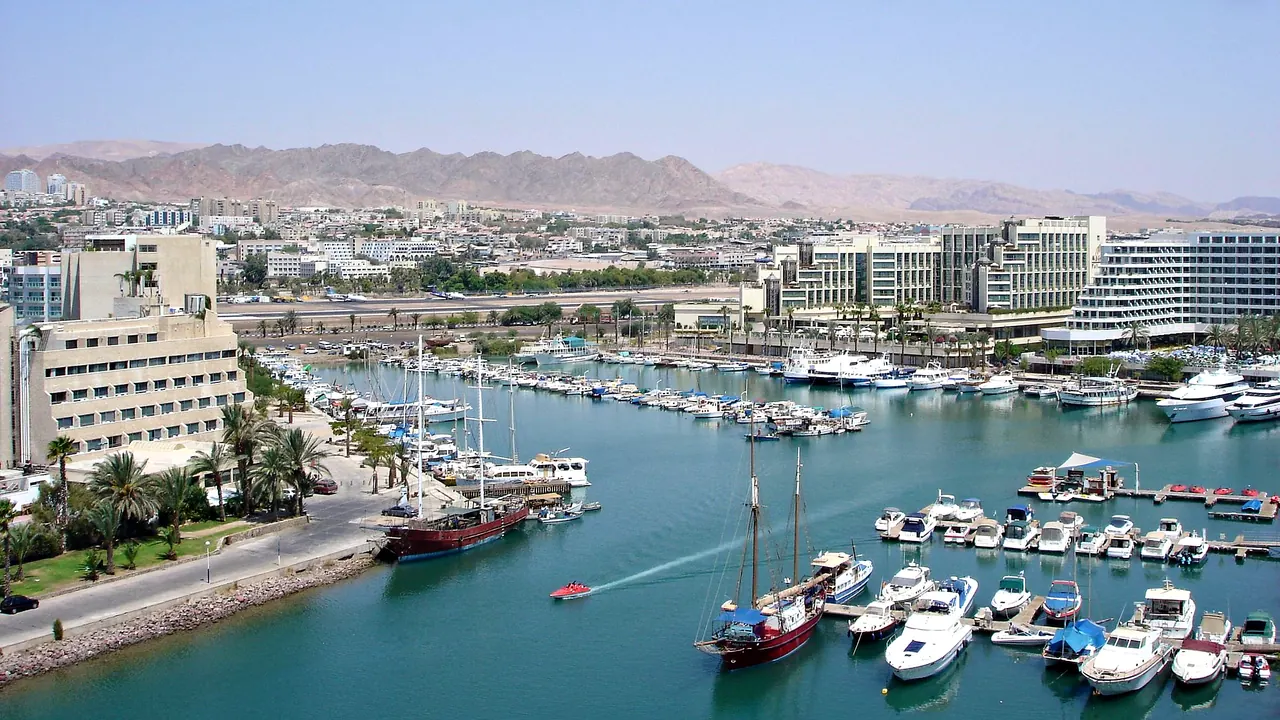
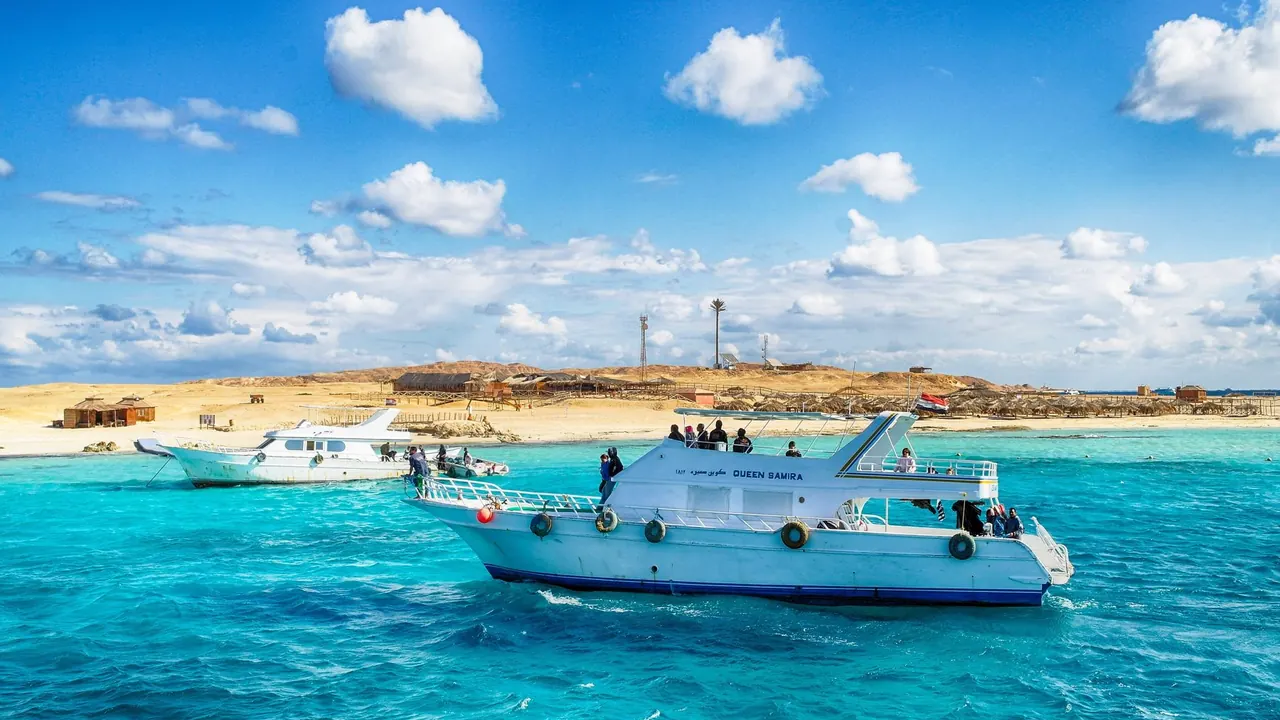
Photos: Eilat by Tango7000, Public domain; Hurghada by Andrey Korchagin, CC BY-SA 2.0, cropped.
Eilat or Hurghada?
Our verdict in twelve categories, each scored against the same fixed benchmark cities, and the climate month by month, so you can choose for your trip.
Choose Eilat for
- getting around
- shopping
- day trips
Eilat suits travellers who want a compact resort where they can walk from hotel to beach to promenade, step off a jetty onto the reef and still have desert canyons close at hand. It costs a good deal more, but it repays that with VAT-free shopping, an easier town to get around and Petra within reach for one big day out across the Jordanian border.
Choose Hurghada for
- prices
- culture and sights
- beaches
Hurghada is the choice when the budget matters more than anything else. All-inclusive resorts strung along a long coast, cheap diving and boat trips to the Giftun islands make a week of sun and sea far less costly. The trade-off is a sprawling town best seen from the hotel shuttle, and Luxor sits a long road away.
Scoreboard
Twelve categories on one fixed scale from 0 to 100. The shaded stretch is the gap between the two.
Your match
Pick a travel style or drag the sliders, and both match scores follow your weighting.
Too close to call, 1 point apart
Wins on getting around and shopping with your weighting.
Wins on prices and culture and sights with your weighting.
What matters to you?
Category by category
What the scores mean for a trip.
Beaches & swimming
Both give you warm, clear Red Sea water almost all year, but the shoreline is very different. Eilat has only a few kilometres of coast, squeezed between the port and the border. The sand is coarse and the beaches crowded at weekends, yet at Coral Beach you can step off a jetty straight onto a living reef.
Hurghada has around 40km of coast, though almost all of it belongs to the resorts, so your beach is whatever your hotel has. The softest sand is on the Giftun islands and in the southern bays towards Makadi, and the north wind can make the afternoon sea choppy.
Food & drink
Neither is a place to travel for the food, and in both the hotel buffet does much of the work. Eilat's best meals are Israeli staples, hummus counters, grilled skewers and falafel in the older neighbourhoods, and alcohol is easy to find at the promenade restaurants.
Hurghada's local cooking lives in El Dahar, with koshary, ful and taameya, and at the fishing harbour, where you pick your fish from the ice. Outside the hotels and tourist venues, drinking is harder.
Culture & sights
Both are young resort towns with little history of their own, though Hurghada has slightly more to see. It has the Hurghada Museum with its pharaonic pieces, the El Mina mosque and the Coptic cathedral, and El Dahar's market streets show ordinary Egyptian life. Eilat is mostly hotel towers and malls, and its history lies out in the desert at the Timna copper workings.
Nightlife
Both offer mainstream resort nights rather than a local scene, but the crowds differ. Eilat fills with young Israelis on summer weekends and school breaks, with bars around the lagoon and beach parties late into the night, then goes quiet midweek in the cooler months.
Hurghada's going-out strip is Sheraton Road and the marina, with shisha lounges, big beach clubs and foam parties in high season. Many visitors never leave the hotel disco, and the town behind the strip is quiet after dark.
Nature & outdoors
Both are excellent for reefs, but the land around them is very different. Eilat pairs its easily reached reef and Dolphin Reef with real hiking in the Eilat Mountains, in the Red Canyon and at Timna. It also sits on a major bird migration route.
Hurghada looks out to sea. Boat trips to the Giftun reefs bring turtles and sometimes dugongs, famous wrecks lie within reach, and the steady wind draws kitesurfers to El Gouna and Soma Bay. Inland, the desert means quad bikes and stargazing rather than trails.
Day trips
Eilat has the stronger day out. Petra is about two hours beyond the nearby Jordanian crossing, and Aqaba makes an easy shorter trip. It is a long day, but it fits into one.
From Hurghada, the great outing is Luxor, with Karnak and the Valley of the Kings, but the road takes about four hours each way, so an overnight stay often makes more sense. Closer by, there is little beyond a stroll around El Gouna's marina.
Good for families
Both work well for families who stay close to the water, and both are too hot for small children at midday in summer. Eilat's stand-out is Coral World, where children see the reef through glass below the waterline. It also has an ice rink, and the compact centre is easy to manage with a pushchair.
Hurghada's resorts do more inside the gates, with water slides and full water parks. Outside them, broken pavements, traffic and pushy sellers make the town harder going with children.
Getting around
Eilat is far easier. The lagoon hotels, North Beach, the promenade and the malls are all a short walk apart, and a quick taxi ride takes you to the reef beaches to the south.
Hurghada spreads along one coast road for tens of kilometres, with few pavements and crossings that can be stressful. You rely on shared minibuses, taxis where the fare has to be agreed first, and hotel shuttles.
Shopping & style
Eilat has the better shopping, mainly because it is a VAT-free zone. Big malls near the lagoon sell chain fashion, electronics and sportswear, and Eilat stone jewellery is a genuine local speciality. Hurghada's shopping is souvenir bargaining in El Dahar and along Sheraton Road, for spices, alabaster and galabeyas, with sellers who can be insistent.
Affordability
Here the two are far apart. Hurghada is among the cheapest warm-sea beach vacations anywhere. All-inclusive deals cover most of the bill, and diving courses, boat trips, local food and minibuses all cost little.
In Eilat, hotels, meals, drinks and diving cost more than at typical European resorts, especially during festivals and school breaks. Midweek stays, self-catering apartments and hummus counters help bring costs down.
Live music & performing arts
Neither has a theatre or a concert season, but Eilat has a little more for music lovers. Its long-running Red Sea jazz festival and occasional summer concerts by Israeli stars beat anything Hurghada offers. Hurghada's performances are tourist shows: belly dancing, and tanoura dancers spinning at folklore evenings and desert-camp dinners.
Wellness & relaxation
Both are about rest in the sun, with hotel spas instead of any local bathing tradition. Eilat's spas lean on Dead Sea mineral treatments, and its reliable winter warmth is its main appeal, though festival crowds can make it noisy.
Hurghada's resort hammams and Red Sea salt rituals cost little, but quality varies from hotel to hotel. The calm stops at the resort gate, because the town outside is noisy.
When should you go?
Pick your month. The climate figures are measured averages, not a forecast.
Eilat in July
Hurghada in July
Daytime high, °C
Rainfall in the month, mm
Temperature and rainfall are climate normals, averaged over the years shown. Eilat: 1991-2020 normals, Eilat (0.9 km from centre). Hurghada: 1991-2020 normals, Hurguada (15.2 km from centre).
Neither place gets rain worth planning around, so the year is shaped by heat. Both are at their best from about October to April. Winter afternoons are mild, around 21°C in Eilat in January and a degree warmer in Hurghada, and the sea stays swimmable, though Hurghada's water is usually a touch warmer. Eilat gets plenty of sunshine even in its darkest months, which is why winter is its main season for foreign visitors.
Summer is harder in Eilat. Highs reach 40°C there in July and August, which rules out walking or hiking except at dawn. Hurghada peaks a few degrees lower, at about 37°C, and the north wind takes some of the edge off, although it can also make the sea choppy in the afternoon. In late summer both seas are at their warmest, close to 29°C off Hurghada. Spring and late autumn are the sweet spot in both: warm water, comfortable days and evenings you can enjoy outside.
Which traveller are you?
On a beach and sun trip, Hurghada has the edge. Eilat offers a short, crowded strip of coarse sand. Hurghada has a 40km coast, softer beaches on the Giftun islands and around Makadi, and a sea that stays a little warmer through winter.
For an outdoors trip, Eilat gives you land and sea together. You can snorkel off the Coral Beach jetties, then walk the sandstone canyons of the Eilat Mountains and Timna or watch the spring bird migration. Inland from Hurghada, the desert means quad bikes rather than trails.
On a trip on a tight budget, Hurghada is far cheaper. In Eilat, beach hotels, diving and promenade meals all cost more than at European resorts. In Hurghada, an all-inclusive package covers rooms, meals and many drinks, and dives and boat trips cost little.
Before you go
| Measure | Eilat | Hurghada |
|---|---|---|
| Official language | Hebrew | Arabic |
| Currency | New Israeli Sheqel (ILS) | Egyptian Pound (EGP) |
| Sockets | CHM230 V, 50 Hz | CF220 V, 50 Hz |
| Driving side | Right | Right |
| Time zone | UTC+2, UTC+3 in summer | UTC+2, UTC+3 in summer |
| Emergency number | Police 100, fire 102 | Police 122, ambulance 123, fire 180 |
| Elevation | 16 m | 11 m |
| Main airport | Ramon International Airport (ETM)20 km from centre2 non-stop destinations | Hurghada International Airport (HRG)9 km from centre113 non-stop destinations |
| Public holidays this year | - | 15 days |
By the numbers
| Measure | Eilat | Hurghada |
|---|---|---|
| City population | 51,935 | 214,247 |
| People per km² | 612 | - |
| Museums within 10 km | 6 | 1 |
| UNESCO World Heritage sites within 50 km | 2 | 0 |
| Swim season, months above 21 °C | 12 months | 12 months |
Where else could you go?
Every comparison below shares a destination with this one, so you can follow Eilat or Hurghada somewhere new.
- Aqabavs Eilat
- Sharm el-Sheikhvs Hurghada
- Petravs Eilat
- Dahabvs Eilat
- Dahabvs Hurghada
- Sharm el-Sheikhvs Eilat